





Brass Hinged Cabinet
A brass hinged cabinet is a robust storage piece distinguished by prominent metalwork, offering practical corner organisation and period character.
Brass Hinged Cabinet
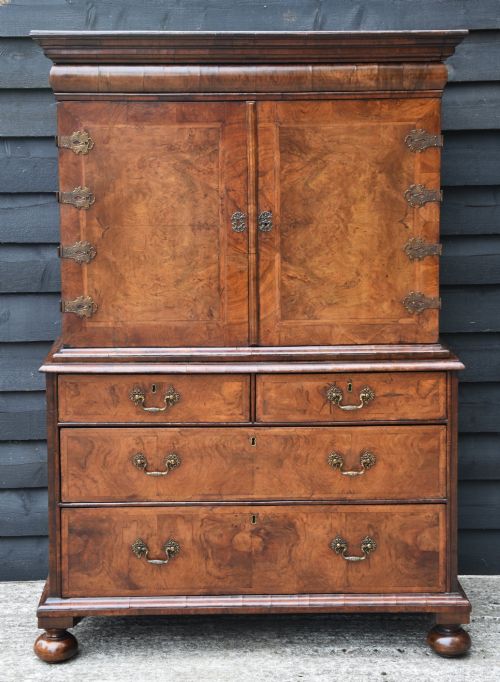
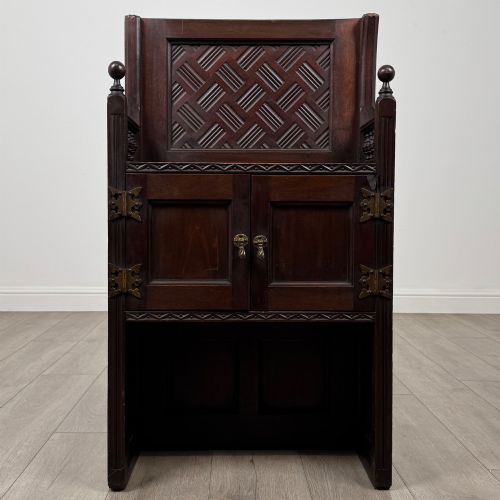
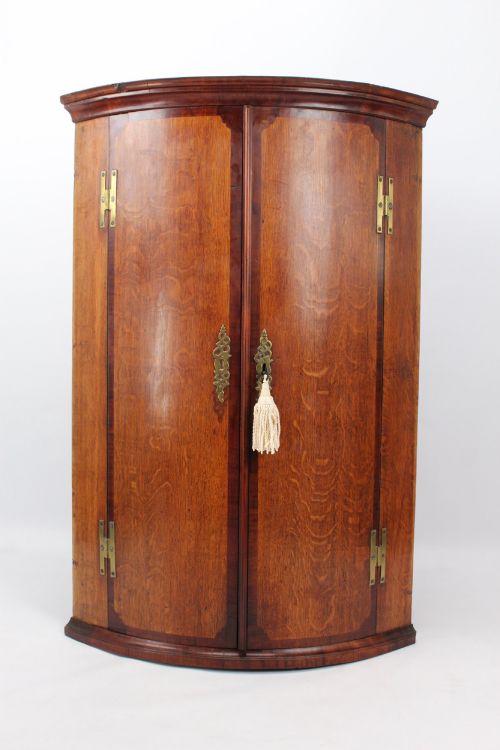
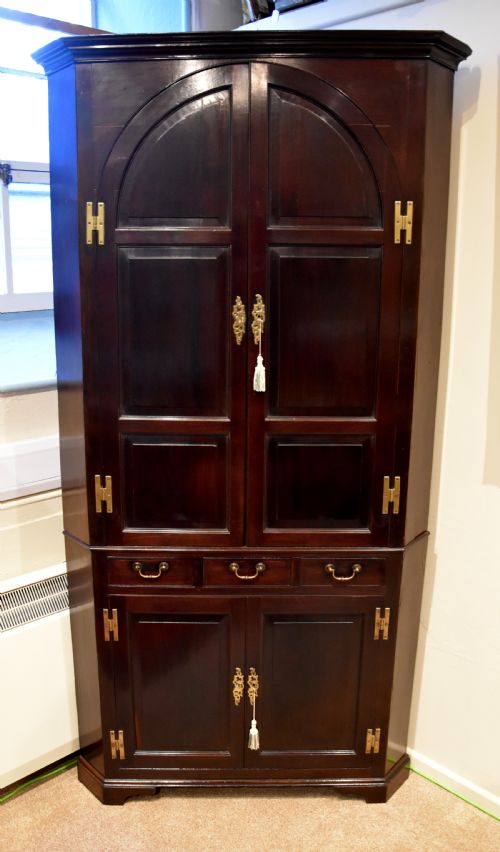
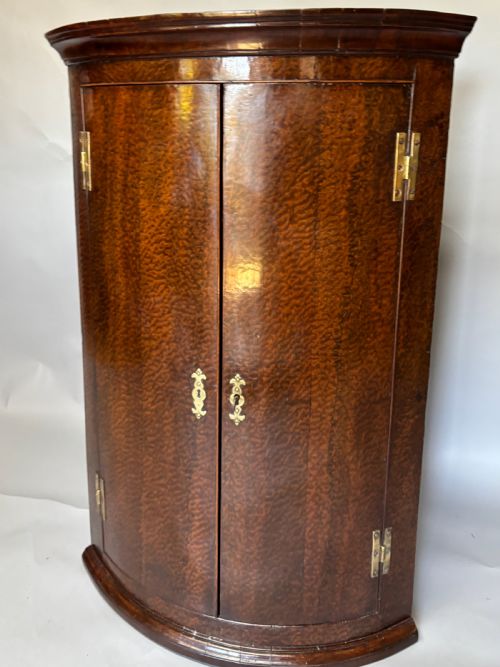
A brass hinged cabinet typically takes the form of a corner cupboard or wall-mounted unit designed to maximise domestic space in older rooms. The selection spans robust Georgian oak and mahogany hanging pieces alongside later walnut cocktail variants.
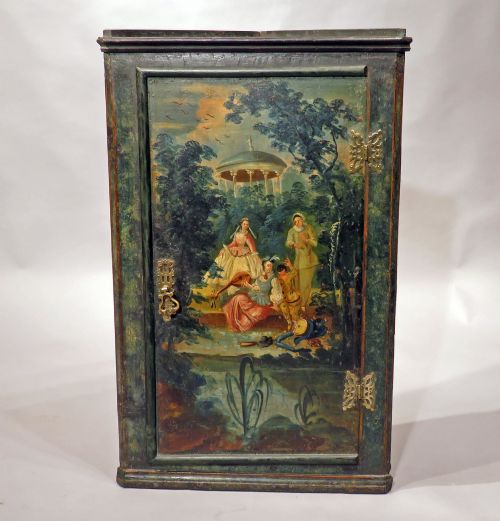
Buyers will encounter numerous corner cabinets and cupboards featuring timber doors secured by visible brass hinges. These functional items range from simple 18th century painted country pieces to elaborate 1930s burr walnut cocktail cabinets.
The material palette relies heavily on native and imported hardwoods like oak, mahogany, and walnut. Many examples utilise glass panels or painted finishes to complement their specific period styles.
How they were made
Cabinet makers constructed these pieces using solid timbers such as oak, mahogany, and walnut, often applying decorative veneers like burr walnut and flame mahogany to visible exterior surfaces. Joints were traditionally hand-cut to ensure durability over centuries of daily use.
Functional metalwork defined the construction, with brass hinges and escutcheons screwed directly onto the timber doors to support the weight and provide decorative contrast. Glass was incorporated into display sections and fitted securely within wooden frames.
Even the tiniest hardware gets noticed, with Victorian finial door hinges standing shoulder-to-shoulder with grand 17th century chests.
What varies in quality
Quality rests upon the selection and figure of the timber, where dense grain patterns and carefully matched veneers distinguish superior examples from plain utility pieces. The weight and finish of the brass hardware also indicate the original workshop's standard.
Construction methods reveal the tier of the piece, from precise joinery and well-fitted doors to simpler country carpentry. Original hardware and unaltered surfaces elevate the standing of a cabinet among collectors.
John Moyr Smith
The Brass Hinged Cabinet Glossary
- Bow front
- A convex curved cabinet front that projects outward from the corners. This rounded profile requires precise joinery to shape the timber and fit the doors correctly.
- Cocktail cabinet
- A specialised storage piece for drinks, popular during the 1920s and 1930s. These often feature mirrored interiors, pull-out mixing slides, and elaborate burr walnut veneers.
- Hanging cupboard
- A wall-mounted storage unit designed to be secured through the backboards or brackets. They save floor space and typically feature single brass-hinged doors.
- Escutcheon
- A protective metal plate surrounding a keyhole. On these pieces, they are commonly cast from brass to match the prominent door hinges.
Brass Hinged Cabinet: Frequently Asked Questions
Where should I place a corner cabinet?
These cabinets fit neatly into unused room angles, making them ideal for dining rooms or hallways where floor space is limited.
Their triangular footprint draws the eye to neglected corners while providing enclosed storage for glassware or display items.
How do I care for walnut veneer?
Keep walnut furniture away from direct sunlight and strong heat sources to prevent the delicate surface veneers from drying out or lifting.
Dust gently with a soft dry cloth and apply a quality beeswax sparingly to maintain the natural lustre of the timber.
What is a hanging corner cupboard?
A hanging corner cupboard is a compact wall-mounted unit designed to utilise vertical wall space in smaller rooms. They attach directly to wall studs through reinforced interior panels.
These pieces were traditionally used to store provisions, ceramics, or household valuables safely out of the way.
How do I identify a Georgian piece?
Georgian pieces display classic proportions and use timbers such as oak and solid mahogany with straightforward architectural mouldings. Look for hand-cut joinery and period hardware.
The interior construction often reveals secondary softwoods alongside pegged joints characteristic of 18th century cabinet making.