
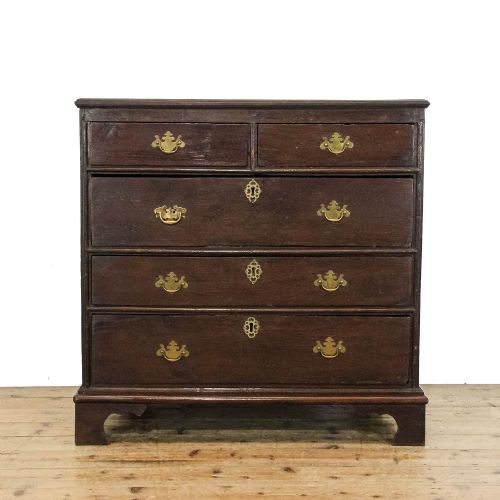
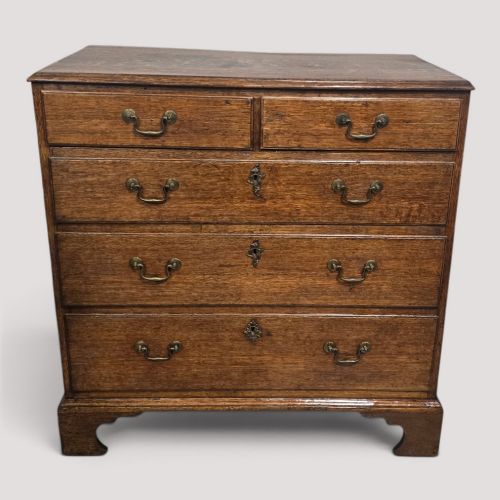
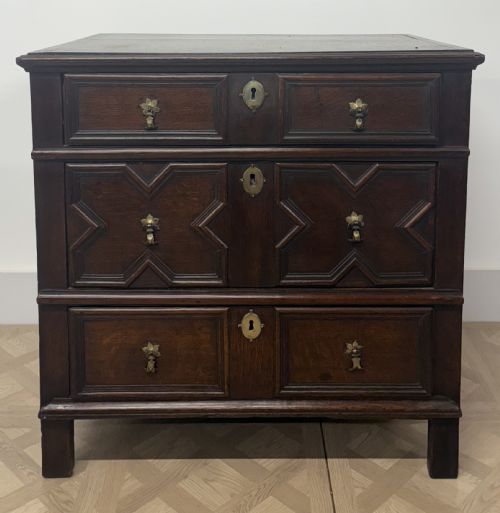
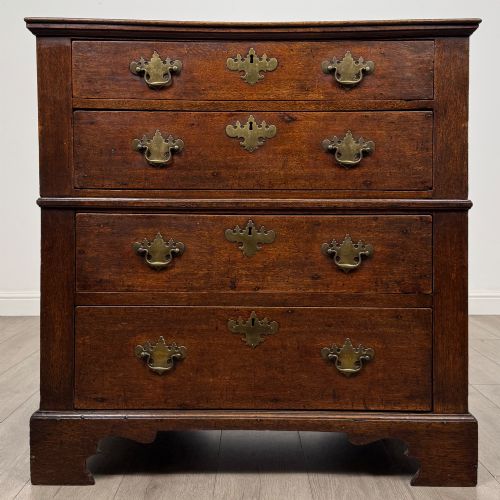
Brass Handle Oak Dresser
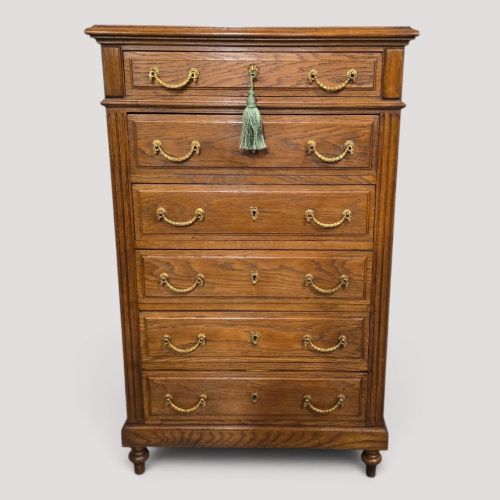
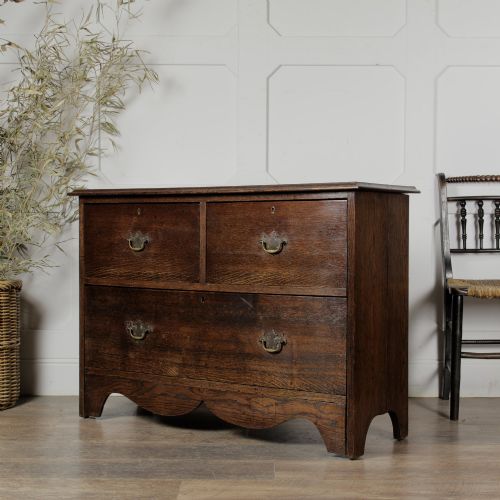
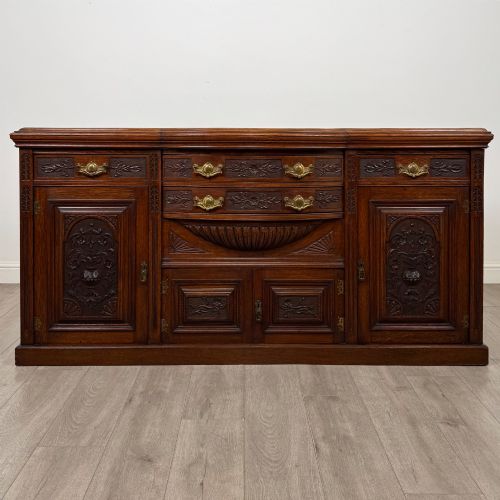
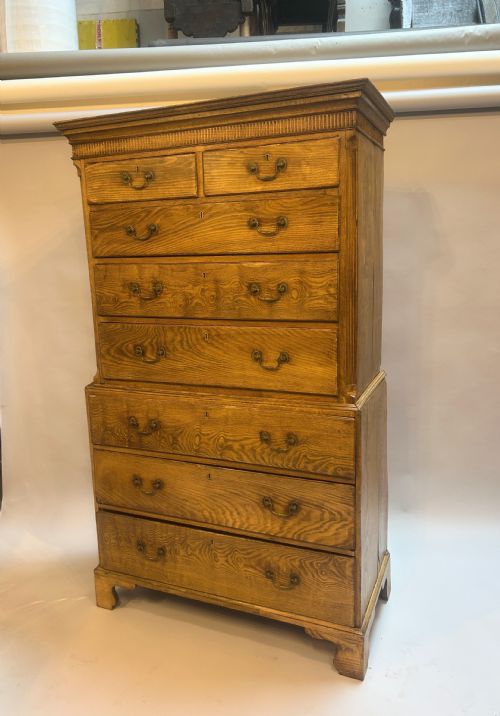
A brass handle oak dresser offers sturdy timber construction paired with traditional metalwork for practical daily storage.

Brass Handle Oak Dresser
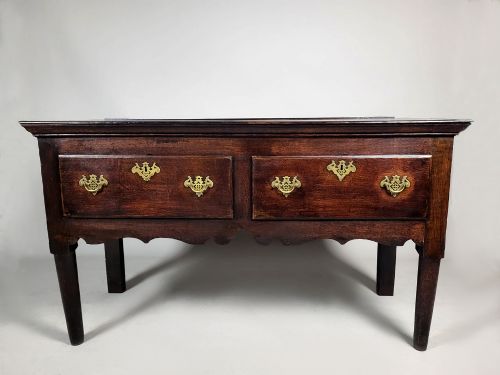
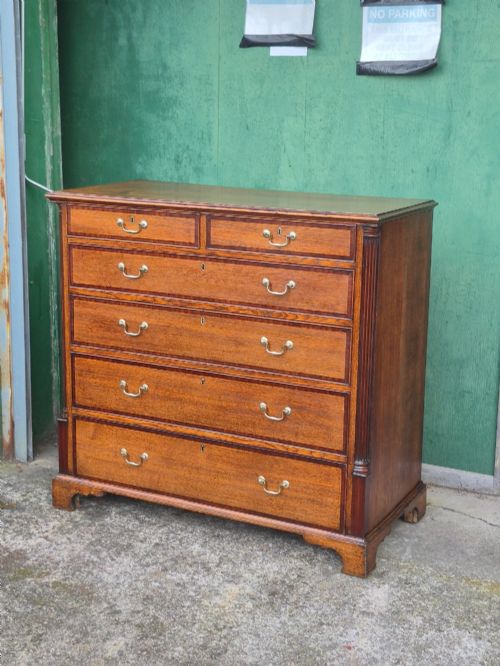
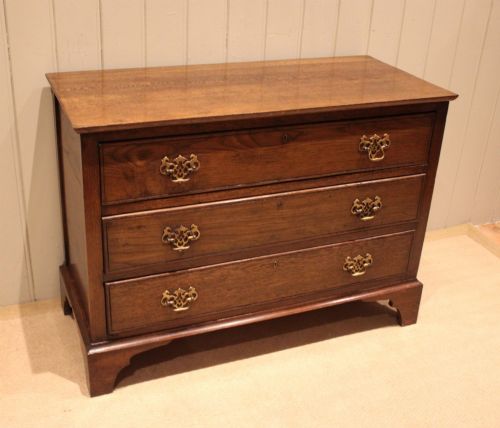
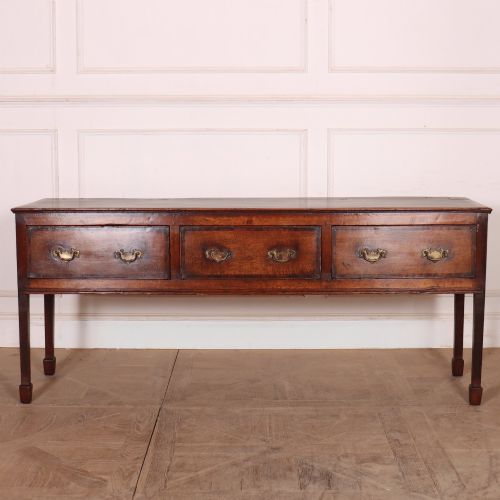
A brass handle oak dresser brings together robust timber storage forms, spanning sideboard bases, tallboys, and multi-drawer chests. When exploring this phrase, buyers encounter substantial pieces intended for domestic utility across centuries of cabinet making.
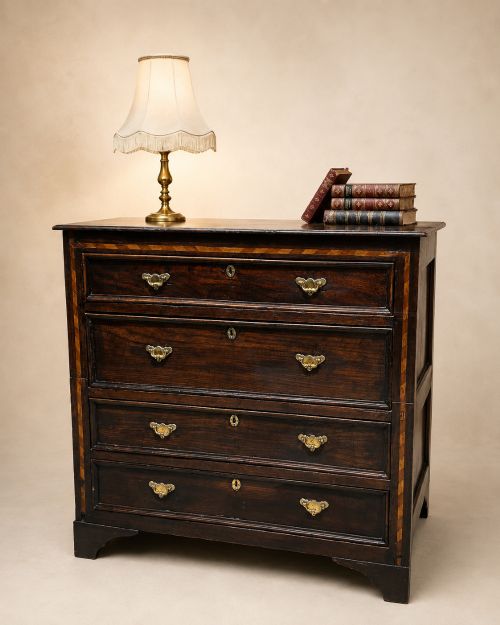
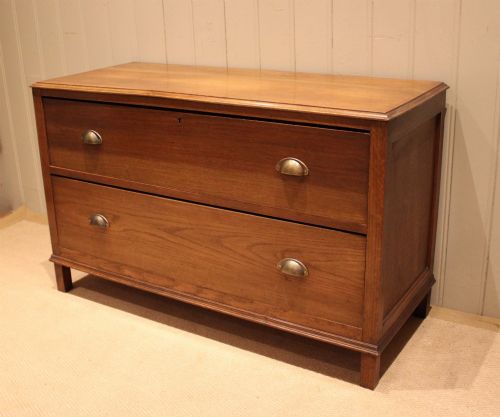
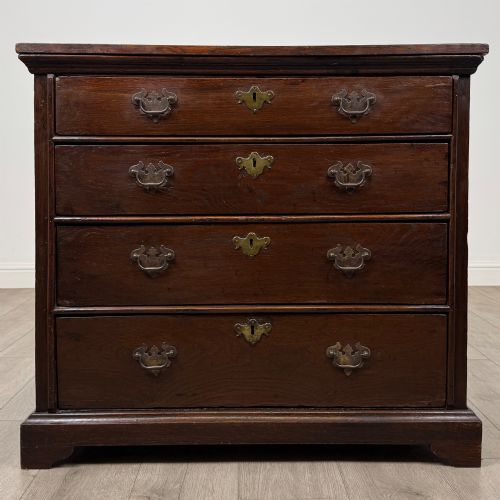
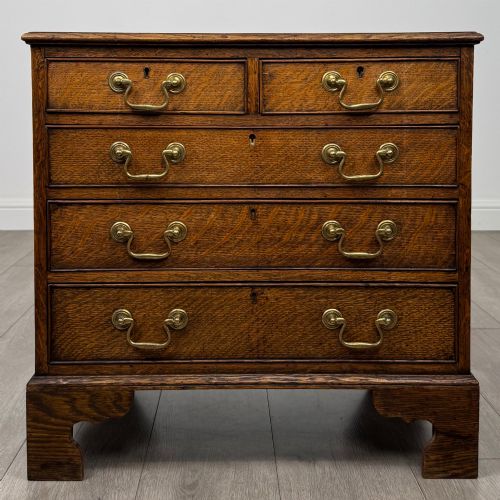
The selection on this page centres heavily on 18th-century and Georgian examples alongside later Victorian and Edwardian interpretations. Dresser bases and chests of drawers predominate, often fitted with original brass drop handles and escutcheons.
How they were made
Joiners built these pieces primarily from solid oak, sometimes integrating secondary timbers such as mahogany, walnut, fruitwood, and elm for contrast or inlay. Surfaces frequently display natural grain patterns enhanced by traditional polishing methods.
Metal hardware such as brass handles and iron fittings were secured to drawer fronts using pinned or threaded posts. Cabinet makers employed bracket feet, crossbanding, and oyster veneering to finish the exterior structure.
Brass Handle Oak Dresser Retail Price Guide 2026
Typical asking prices for brass handle oak dresser among the pieces listed under this phrase on Sellingantiques today, from the lower quarter to the upper quarter. They describe what is for sale here now, not the wider market.
Some drawers retain the ghosts of old contents in their forgotten corners, whispering tales of long-lost Georgian socks and stray buttons.
What varies in quality
The distinction between standard examples and superior items rests upon the retention of original brass hardware and untouched timber patination. Pieces that retain their period handles and unblemished oak surfaces command greater attention.
Fine construction shows in the precision of dovetail joints on drawers and the careful selection of figured timber veneers. Simpler later reproductions contrast with the proportions and joinery found in genuine 17th- and 18th-century workshop output.
The Brass Handle Oak Dresser Glossary
- Dresser base
- A low sideboard or cabinet featuring drawers and cupboards, historically used for serving food and storing kitchen utensils.
- Escutcheon
- A protective brass plate surrounding a keyhole, often matching the style of the drawer handles.
- Crossbanding
- A narrow strip of veneer applied perpendicularly to the grain of the main surface for decorative framing.
- Oyster veneer
- Thin circular cross-sections of branch wood arranged to create an intricate oyster-shell pattern across drawer fronts.
- Bracket foot
- A simple foot shape supporting the corners of a chest or cabinet, mitred at the corner.
Brass Handle Oak Dresser: Frequently Asked Questions
How do I date an oak dresser?
Dating relies on examining construction techniques, timber choice, and hardware styles. Early pieces feature hand-cut dovetails and pegged joints.
Later Victorian and Edwardian examples often display machine-sawn elements and standardised fittings.
Are brass handles original?
Original handles leave distinct ghost marks and matching indentation patterns on the timber behind the backplate. Replacements frequently use slightly different screw hole spacings.
Inspect the interior of the drawer front for filled holes that indicate older hardware.
Where should I place a dresser base?
These low cabinets suit dining rooms, hallways, and living spaces as serving surfaces or media storage units. Their shallow depth allows placement in narrower corridors.
Keep them away from direct heat sources to prevent the oak panels from splitting.
What is the difference between a dresser and a chest of drawers?
A chest of drawers provides vertical storage stacked primarily in horizontal tiers. A dresser base generally offers a lower, wider profile with combinations of drawers and cupboards.
Both forms utilise robust oak construction across the periods represented here.