

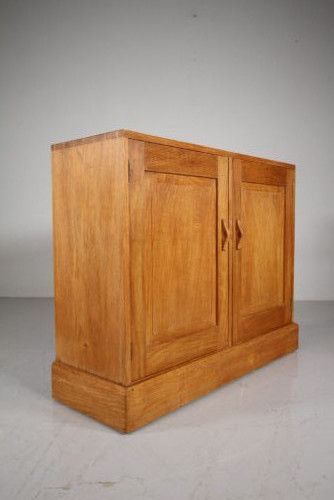
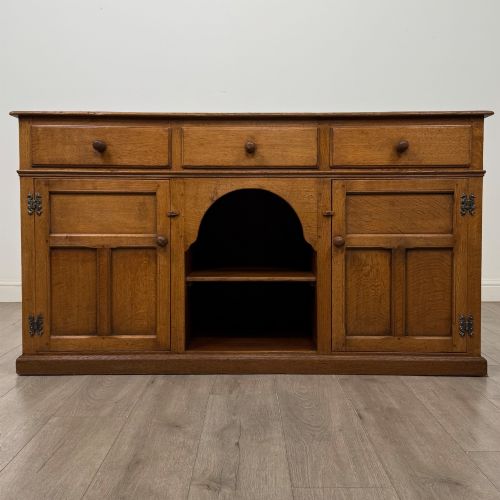
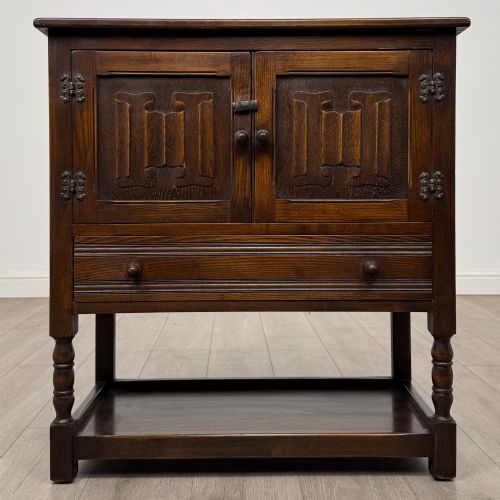
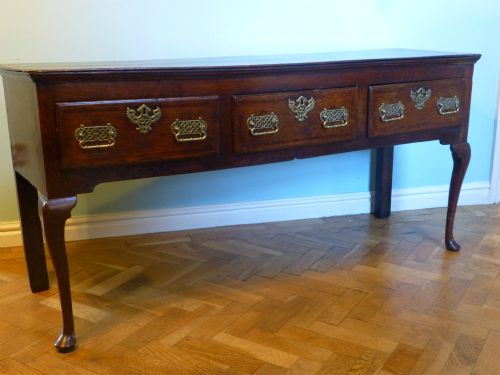



English Oak Credenza
An english oak credenza brings centuries of solid craftsmanship and rich timber into a room.

English Oak Credenza
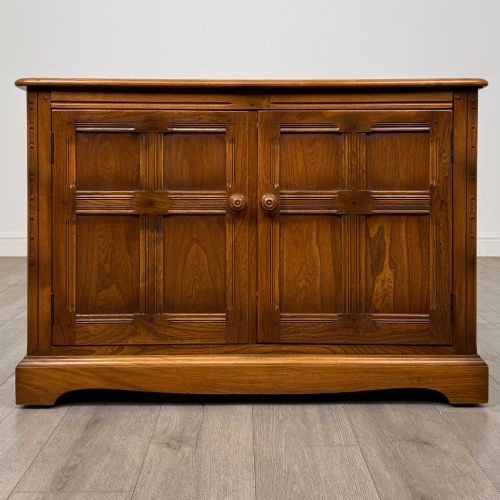
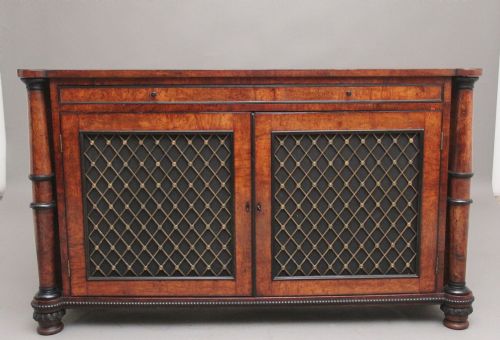
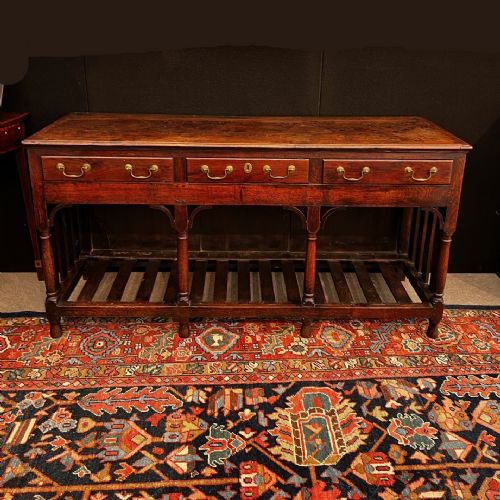
An english oak credenza encompasses heavy timber storage furniture designed for dining rooms and living spaces, drawing heavily from traditional dresser bases, sideboards, and servers. Buyers searching for an english oak credenza encounter pieces spanning the 17th century through to the 1930s, reflecting diverse domestic storage needs across several eras.
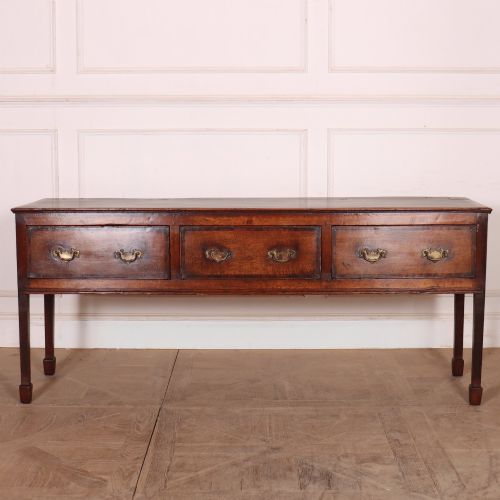
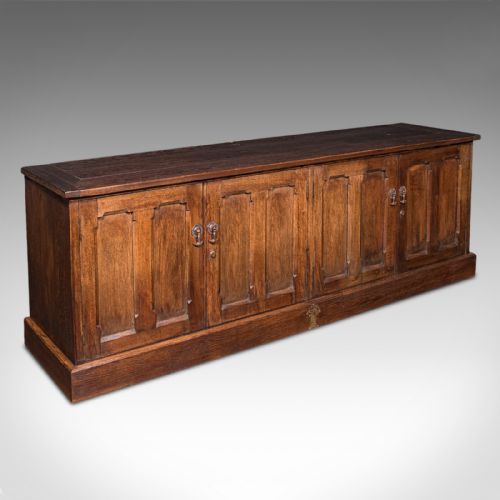
The pieces appearing on this page lean heavily toward 18th-century and 19th-century dresser bases, server units, and cupboards rather than formal mid-century credenzas. Common regional and stylistic variants include Georgian potboard bases, Gothic Revival sideboards, and Arts and Crafts cabinets.
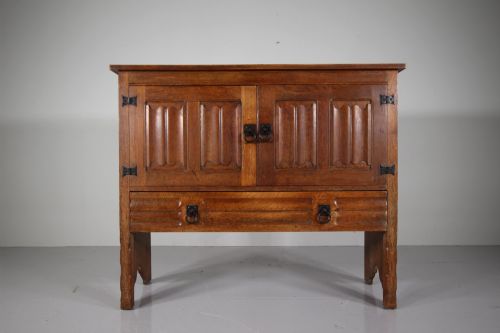
Early examples originate as low servers and potboard dressers with structural drawer configurations, whilst later Edwardian and 20th-century iterations adopt golden oak finishes and linenfold panels. Each form provides robust foundational storage whilst displaying the distinct grain patterns native to English oak.
How they were made
Joinery relies on solid oak boards assembled with traditional frame and panel construction, often incorporating elm for secondary timbers in earlier periods. Structural integrity stems from pegged mortise and tenon joints designed to bear heavy domestic use.
Surface ornamentation utilises contrasting materials such as pollard oak, ebony, and paint to accentuate drawer fronts and cabinet doors. Brass handles, hinges, and iron hardware provide functional contrast to the warm tones of golden and bleached oak surfaces.
Carving techniques range from geometric mouldings seen on 17th-century low dressers to elaborate Green Man motifs and linenfold detailing on Victorian and Edwardian iterations.
English Oak Credenza Retail Price Guide 2026
Typical asking prices for english oak credenza among the pieces listed under this phrase on Sellingantiques today, from the lower quarter to the upper quarter. They describe what is for sale here now, not the wider market.
Victorian cabinetmakers occasionally added carved Green Man faces peering out from dark oak sideboards to watch over the dining room.
What varies in quality
The depth of timber selection and the integrity of the grain dictate visual distinction, with quarter-sawn oak displaying prominent medullary rays that elevate the appearance of the piece. Superior examples maintain original surface patination, reflecting decades of honest wear without harsh chemical stripping.
Structural refinement shows in the crispness of hand-cut mouldings, drawer linings made from matching hardwoods, and the original retention of period brass or iron hardware. Pieces retaining their structural footings and uncompromised potboards sit at the higher end of the range.
The English Oak Credenza Glossary
- Potboard
- An open slatted lower shelf incorporated into the base of a dresser for storing heavy kitchen pottery. This feature distinguishes many 18th-century country pieces.
- Dresser base
- A low wooden sideboard fitted with drawers above cupboards or an open potboard. It served as a primary food preparation and storage surface in historic English homes.
- Pollard oak
- Timber harvested from trees that were pollarded, producing tightly clustered knot patterns and rich burls. Cabinetmakers utilised this highly decorative wood for drawer fronts and panels.
- Linenfold
- A style of wood carving that imitates folded fabric, frequently seen on panels of Edwardian and revival cupboards. This technique creates a textured surface effect.
- Geometrical moulding
- Raised geometric patterns applied to drawer fronts or cabinet doors, characteristic of late 17th-century joinery. It adds depth and shadow to flat wooden surfaces.
English Oak Credenza: Frequently Asked Questions
How do I date an antique oak sideboard?
Dating relies on examining construction methods, hardware types, and decorative motifs such as geometric mouldings or Gothic Revival carving.
Earlier pieces from the 17th and 18th centuries feature hand-pegged joinery and native oak boards, whilst 19th-century examples often introduce pollard veneers and varied brass handles.
Where were these pieces used?
Historic oak server units and dresser bases originated in English dining rooms, kitchens, and country houses for storing culinary wares and serving food.
Today, they function well as credenzas in living rooms, providing deep storage and display surfaces for lamps and decorative objects.
How do I care for oak furniture?
Maintaining antique oak involves dusting with a dry cloth and occasionally applying natural beeswax to nourish the dry timber grain.
Keep wooden furniture away from direct heat sources and strong sunlight to prevent the solid oak panels from splitting.