

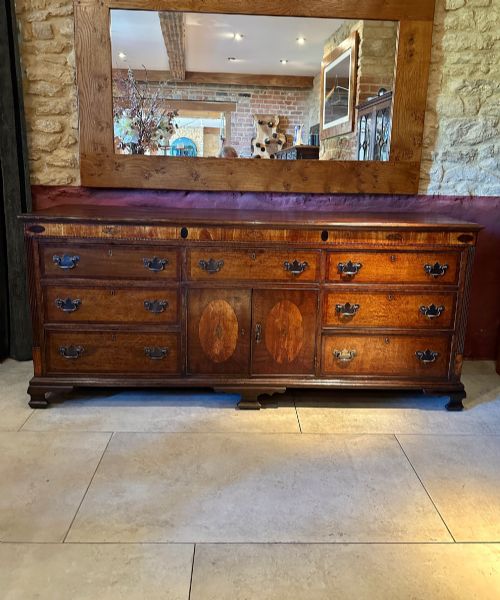


Warm Brown Oak Credenza
A warm brown oak credenza delivers substantial storage alongside rich cabinet timber that grounds a dining room or hallway.
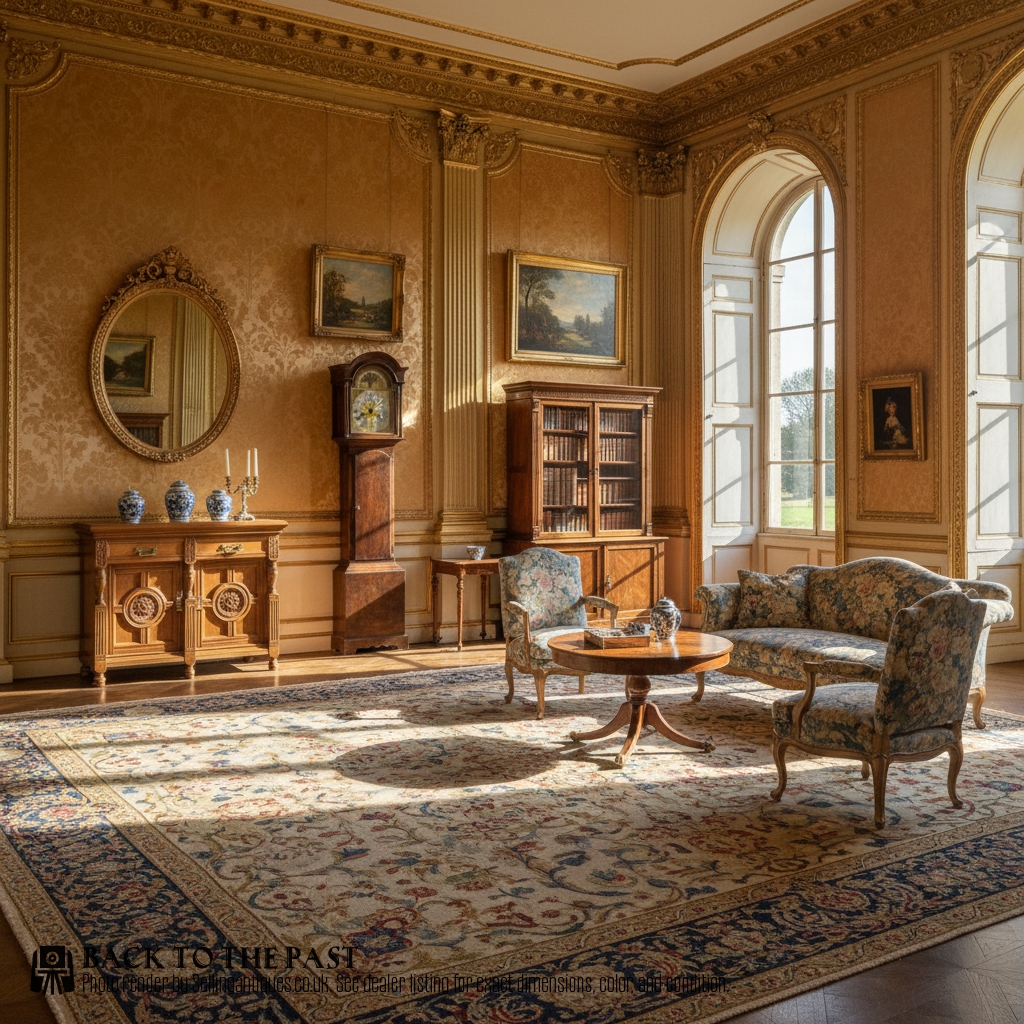
Warm Brown Oak Credenza
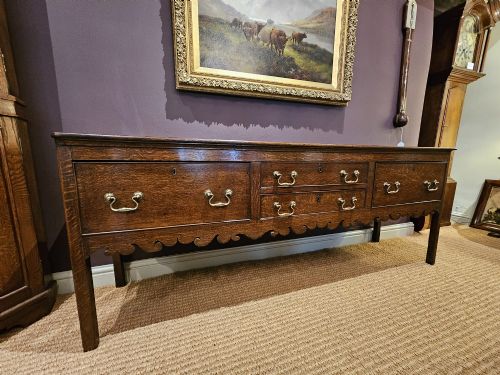
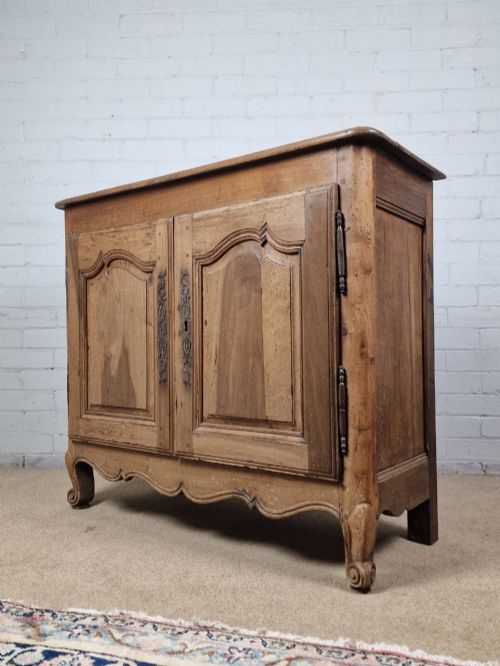
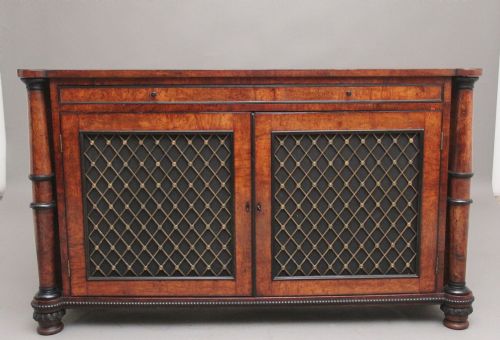
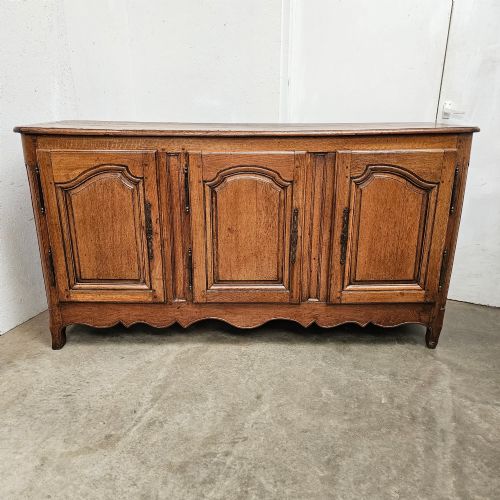
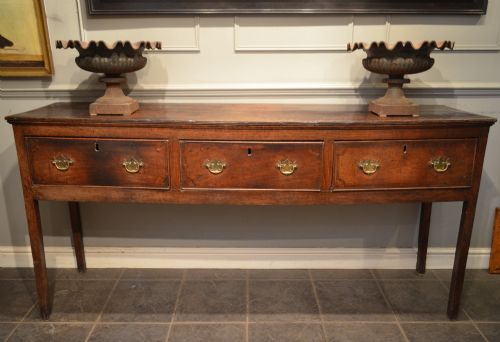
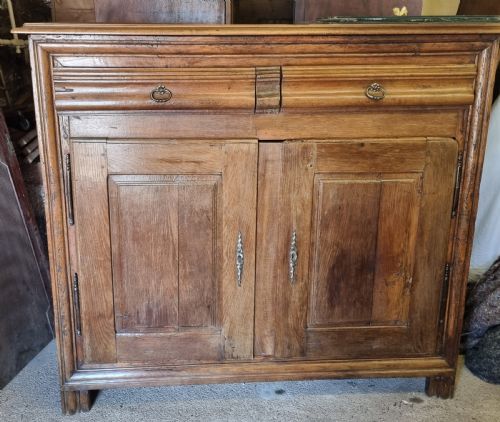
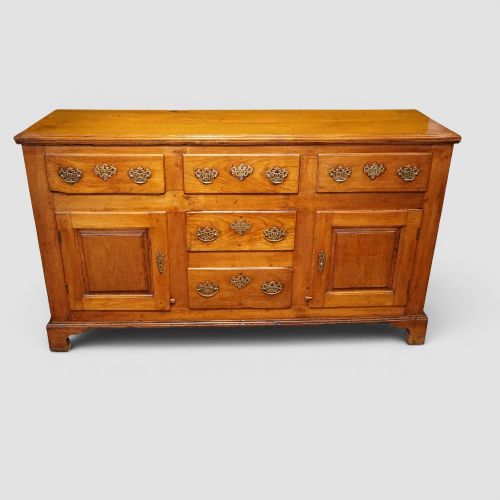
A warm brown oak credenza typically takes the form of a robust sideboard, dresser base, or enfilade originating from various historical periods. These pieces serve practical storage roles while displaying the deep, honest grain of oak.
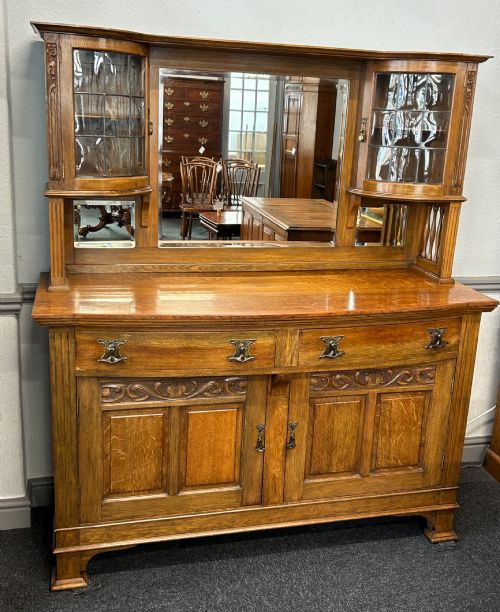
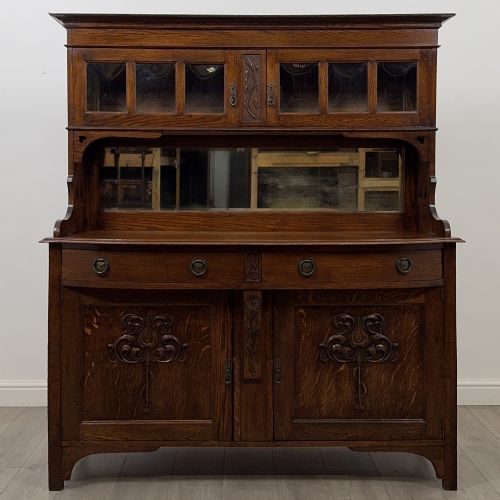
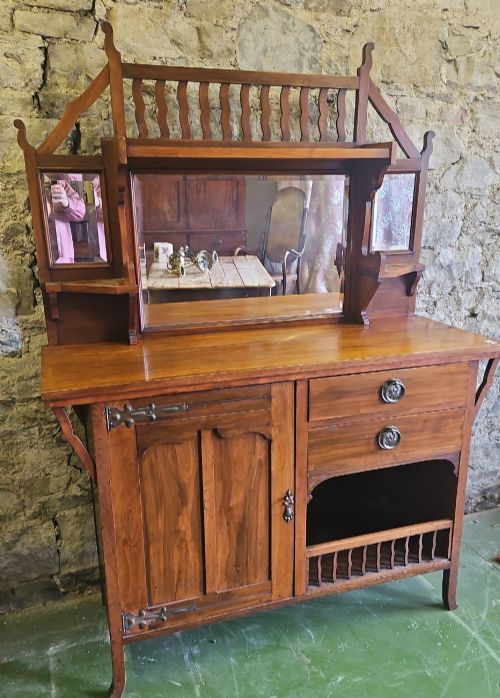
The selections available here span Georgian, Victorian, and Edwardian eras, alongside French Provincial workshops. Buyers encounter everything from low kitchen buffers to elaborate mirror-back sideboards.
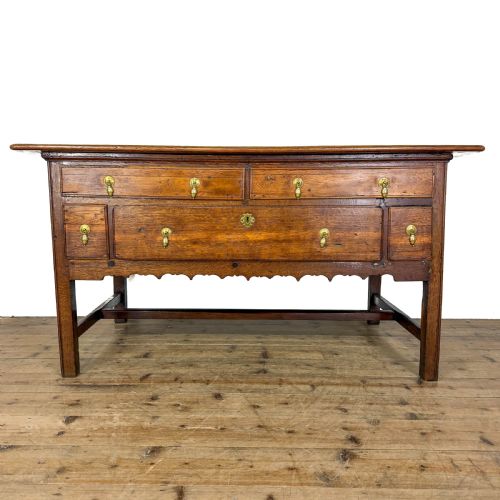
Forms range from simple four-drawer configurations to breakfront dresser bases fitted with pot boards. Each variant brings distinct regional joinery and practical proportions to domestic spaces.
Evaluating craftsmanship and condition
Quality reveals itself in the selection of timber figures, particularly where striking pollard oak or quarter-sawn boards display distinct medullary rays. Superior pieces maintain original brass fittings, unwarped drawer bottoms, and stable timber movement.
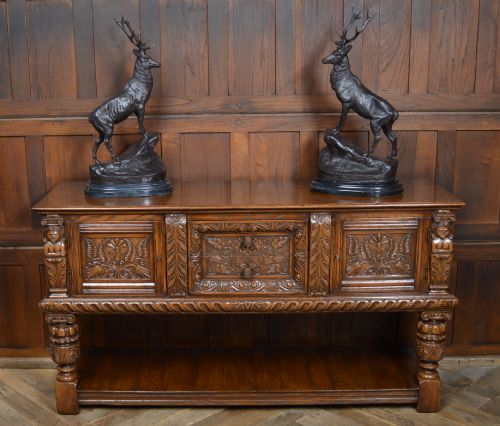
The refinement of carved details and the crispness of mouldings separate standard utility pieces from exceptional workshop outputs. Structural integrity depends on minimal timber shrinkage and tightly fitted doors that hang true on original hinges.
Warm Brown Oak Credenza Retail Price Guide 2026
Typical asking prices for warm brown oak credenza among the pieces listed under this phrase on Sellingantiques today, from the lower quarter to the upper quarter. They describe what is for sale here now, not the wider market.
Housemaid cupboards once stored heavy linens down below while keeping the household domestic staff strictly organised.
Maple and Co·T Simpson and Son
The Warm Brown Oak Credenza Glossary
- Enfilade
- A long sideboard or low cabinet featuring a sequence of doors, traditionally utilised in French interiors for serving or storage. These low buffets offer generous horizontal surface space.
- Dresser Base
- A standalone low cabinet fitted with drawers and cupboards below an open top, designed without the upper plate rack. They function as robust sideboards in modern dining rooms.
- Pot Board
- An open lower shelf built into the base of a dresser, historically designated for storing heavy ceramic pots and copper kitchenware. This lower tier stabilises the entire frame.
- Breakfront
- A cabinet design where the central section projects forward from the flanking flanking wings, creating visual depth and architectural presence. This layout breaks up long linear walls.
- Pollard Oak
- Timber taken from trees that were pollarded, resulting in burr-like clusters of growth rings that create highly decorative swirling patterns. Cabinet makers prized this wood for drawer fronts and panels.
Warm Brown Oak Credenza: Frequently Asked Questions
How do I style a large oak sideboard?
Anchor the heavy timber piece against a neutral wall and balance its visual weight with large framed art or a heavy mirror hung above. Keep the surface uncluttered by grouping simple ceramic vessels or pewter chargers.
Allow the natural wood grain to remain the primary focus by avoiding heavy table runners. Adequate clearance around the cabinet ensures the piece sits comfortably within the room proportions.
Where should I place an enfilade?
An enfilade fits naturally along the longer wall of a dining room, wide hallway, or open-plan living space. Its long horizontal profile helps ground high ceilings and fills expansive wall space effectively.
Ensure there is sufficient clearance for doors and drawers to open fully without obstruction from dining chairs or hallway furniture. Position the cabinet away from direct heat sources to protect the historic oak timber.
How do I care for antique oak furniture?
Dust the timber regularly with a soft, dry cloth and apply a traditional beeswax polish sparingly to maintain the natural lustre of the finish. Avoid silicone-based sprays that can penetrate the open grain and damage the historic patina.
Maintain stable room humidity levels to prevent the solid oak panels from cracking or warping over seasonal shifts. Keep the cabinet out of direct sunlight to protect the warm brown tone from fading.
What is the difference between a sideboard and a dresser base?
A dresser base originates from earlier Georgian and provincial vernacular traditions, featuring heavy plank construction and often an open pot board below. They prioritise utilitarian storage with deep drawers and panelled cupboards.
Sideboards evolved later into more refined dining room furniture, frequently incorporating decorative mirror backs, delicate inlay, and sophisticated Arts and Crafts hardware. Both pieces serve identical practical roles in contemporary homes.