
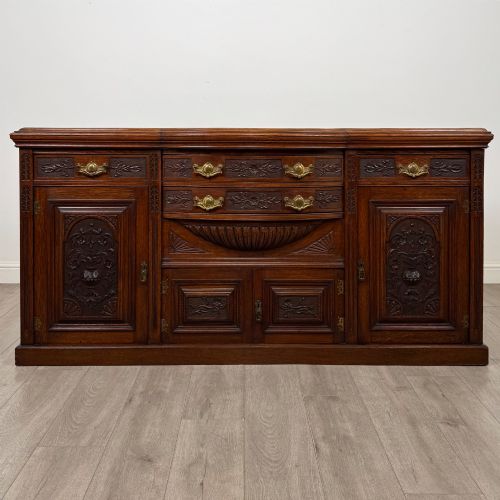
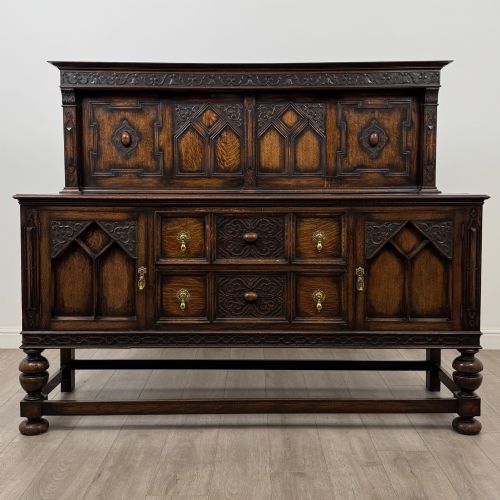
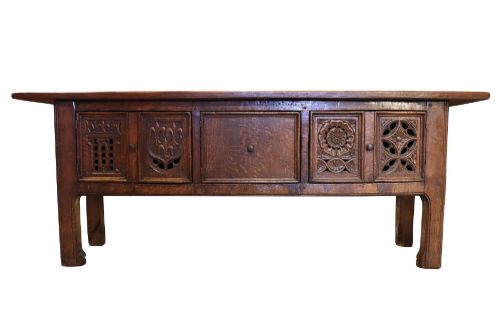
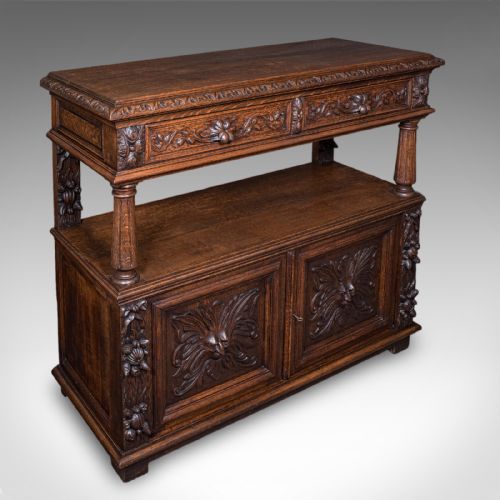
Dark Oak Buffet Server
A dark oak buffet server brings heavy grain and deep colour to a dining room, offering substantial storage for heavy tableware and silver.
Dark Oak Buffet Server
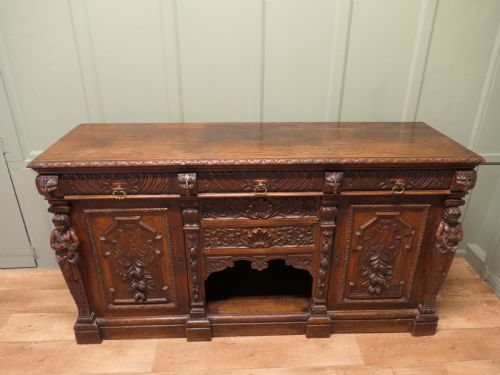
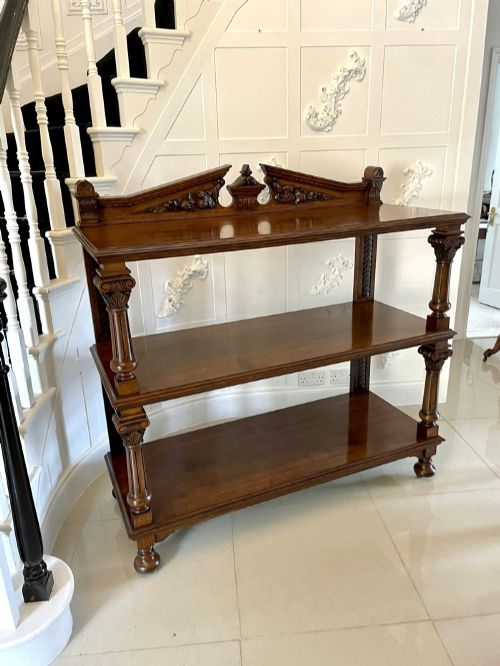
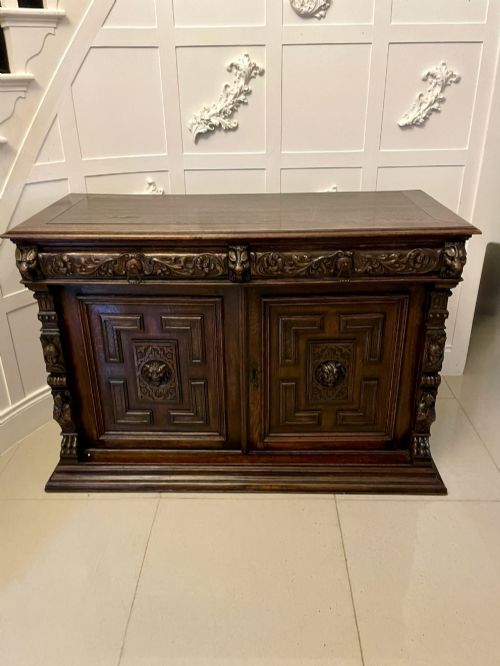
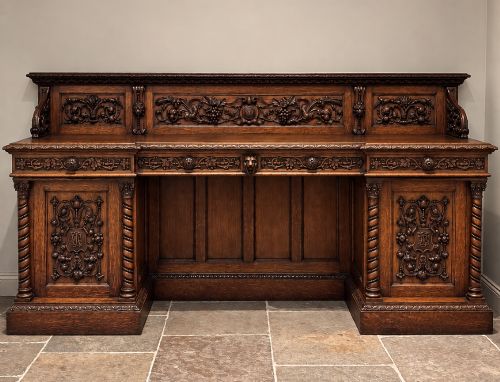
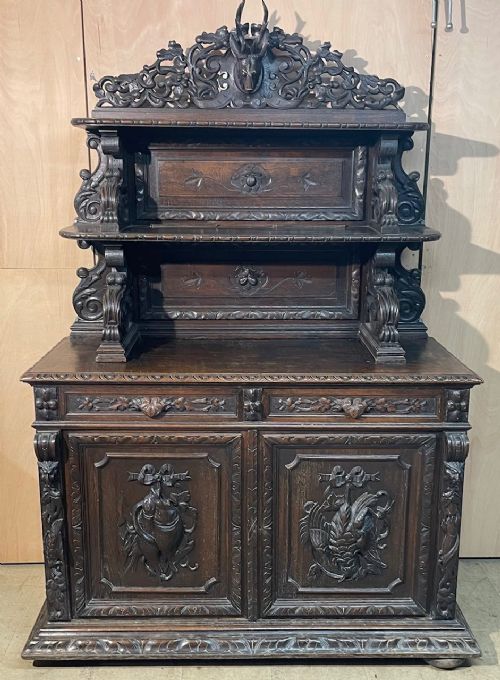
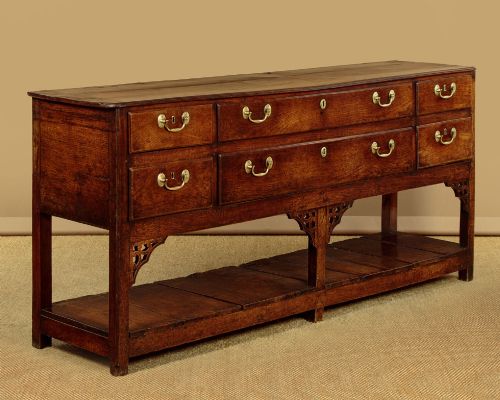
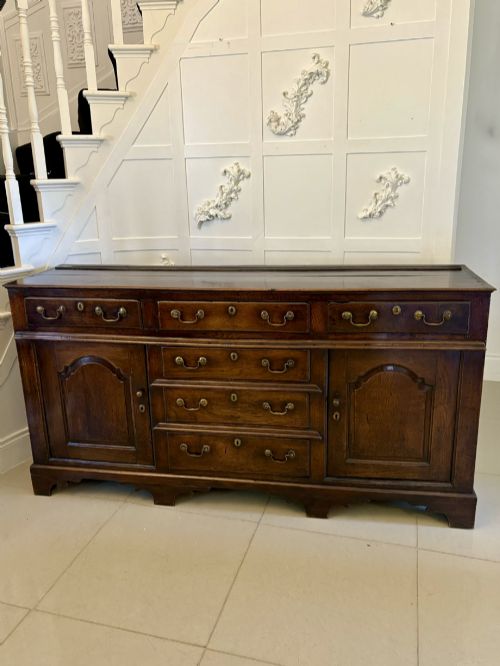
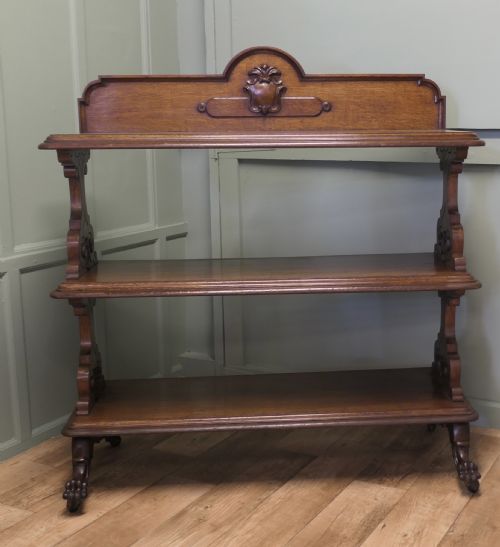
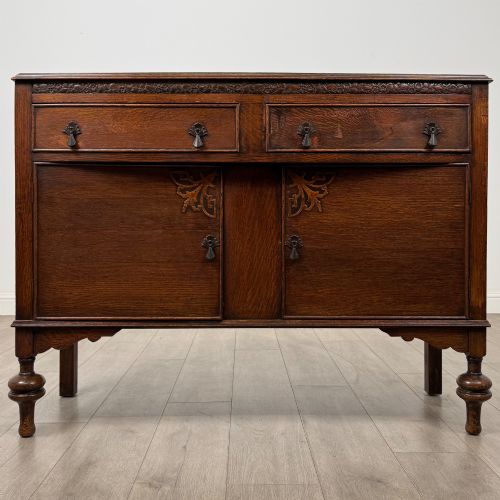
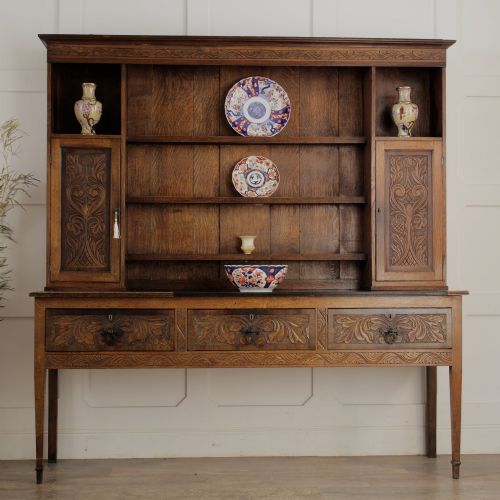
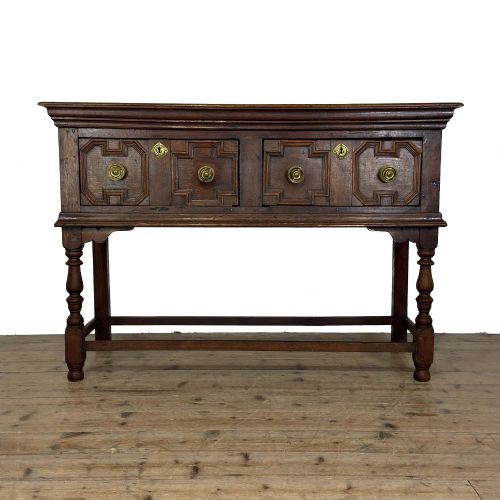
When searching for a dark oak buffet server, buyers encounter heavy timber storage furniture spanning several centuries of British and continental design. The listings on this page include robust sideboards, dresser bases, dumbwaiters, and serving tables built primarily for dining spaces.
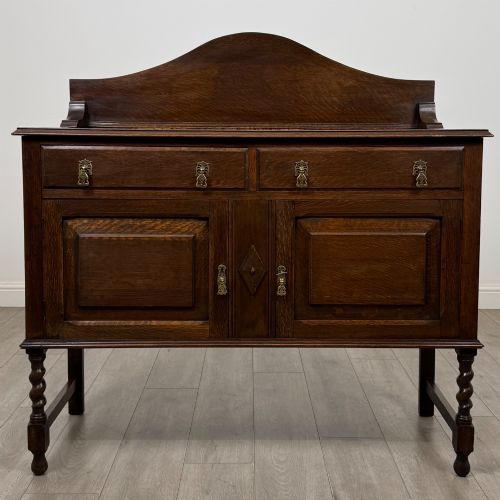
The most common forms on this page date from the eighteenth and nineteenth centuries, alongside revival pieces from the Edwardian era and the nineteen-twenties. These range from simple Georgian potboard bases to heavily carved Victorian and Gothic revival sideboards.
Regional variations appear frequently, including Welsh dressers, Dutch bases, and French hunting servers. Each form provides a flat surface for serving food above enclosed cupboards or rows of drawers.
What varies in quality
Quality in these servers depends on the depth and crispness of the carving, where hand-chiselled detailing displays sharper definition than mechanical or later recarving. The selection of timber also dictates quality, with quarter-sawn oak showing more pronounced medullary rays.
Proportion and structural integrity separate standard utility pieces from finer examples. Pieces retaining original brass hardware, sound drawer linings, and well-fitted doors command greater appreciation among collectors.
Several pieces on this page sport barley-twist legs that appear ready to spin away like giant wooden screws after dinner.
The Dark Oak Buffet Server Glossary
- Dresser base
- A low wooden sideboard fitted with drawers and cupboards below a flat top, historically used for food preparation and serving in large kitchens.
- Potboard
- An open slatted lower shelf built into early dressers and server bases to hold earthenware pots and heavy utensils.
- Barley-twist
- A rounded column carved in a helical screw shape, popular on seventeenth-century furniture and revived during the Victorian and Edwardian periods.
- Court cupboard
- A short enclosed wooden cabinet, often with recessed upper tiers, used for storing cups and dry provisions.
- Gothic Revival
- An architectural and decorative style drawing inspiration from medieval design, characterised by pointed arches, tracery, and heavy mouldings.
Dark Oak Buffet Server: Frequently Asked Questions
What is a dark oak buffet server?
A dark oak buffet server is a heavy wooden storage piece designed for dining rooms to hold serving dishes, cutlery, and glassware.
These items combine a flat top surface for presenting food with enclosed cupboards and drawers underneath.
How do I tell an 18th-century piece from a revival piece?
Eighteenth-century pieces typically display hand-planed surfaces, pegged joinery, and natural timber wear accumulated over centuries of use.
Revival pieces from the Edwardian era or the nineteen-twenties often use machine-cut components and mimic earlier styles such as Jacobean or Gothic.
Where were these servers used?
These servers were traditionally placed in dining halls, large kitchens, and formal reception rooms of country houses and domestic homes.
They functioned as auxiliary tables during large meals and served as permanent storage for household silver and china.
How should I care for dark oak furniture?
Protect the wood by keeping it away from direct heat sources and sudden temperature fluctuations that can cause timber to split.
Apply traditional beeswax periodically to nourish the grain and maintain the deep natural lustre of the oak.