
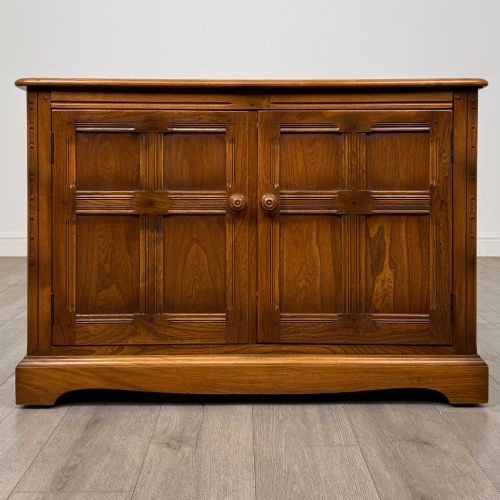
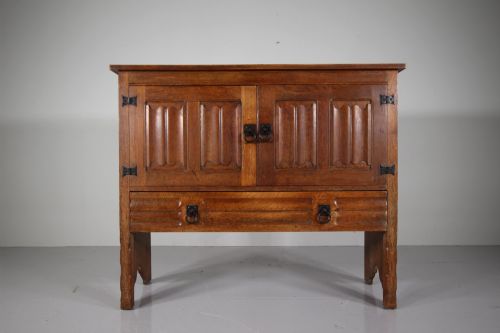
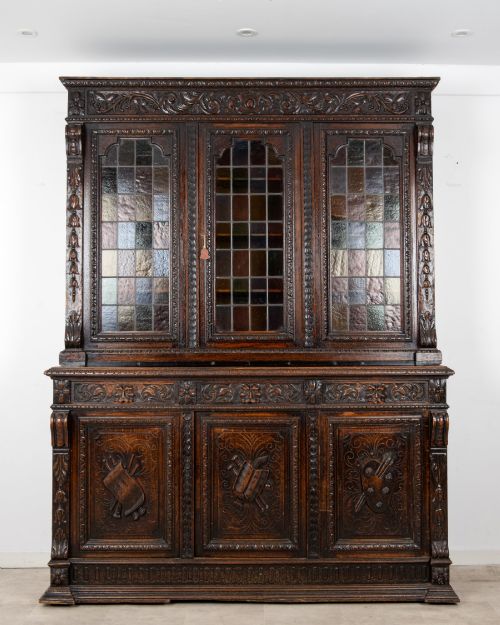
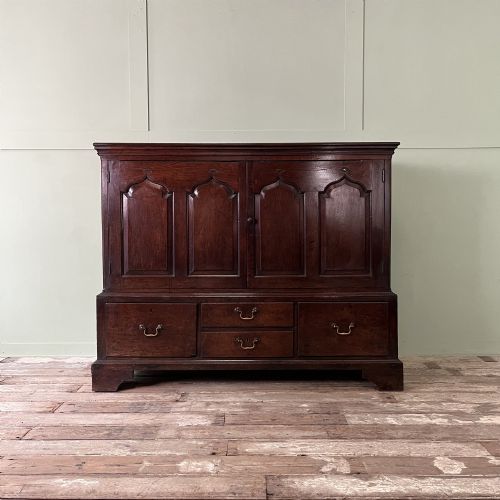
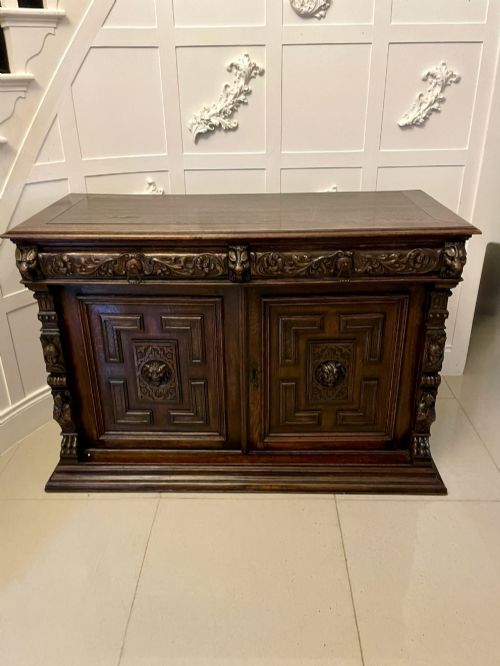
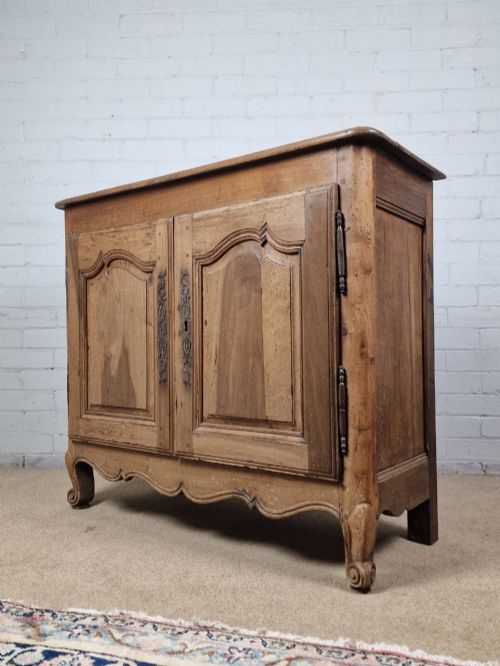
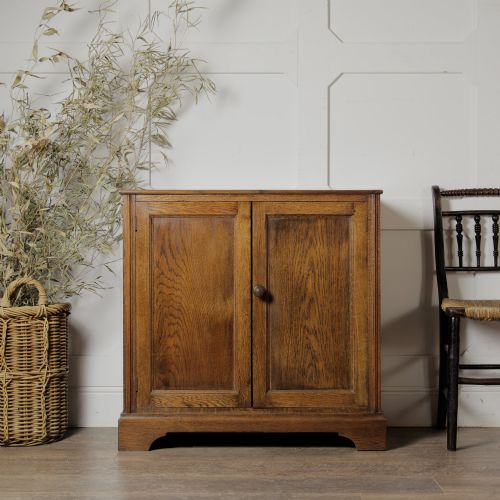
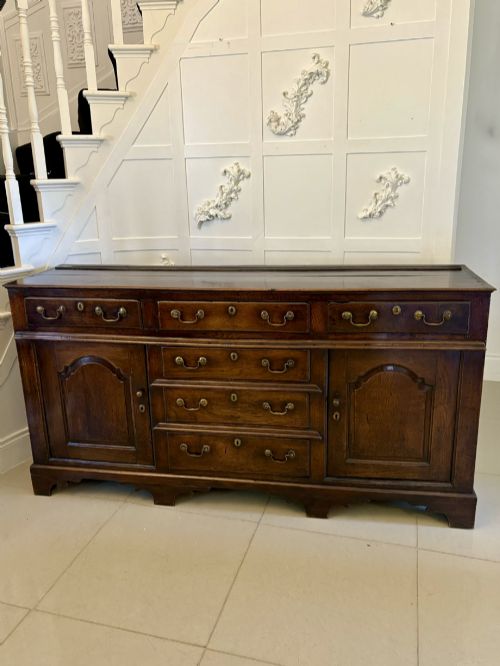
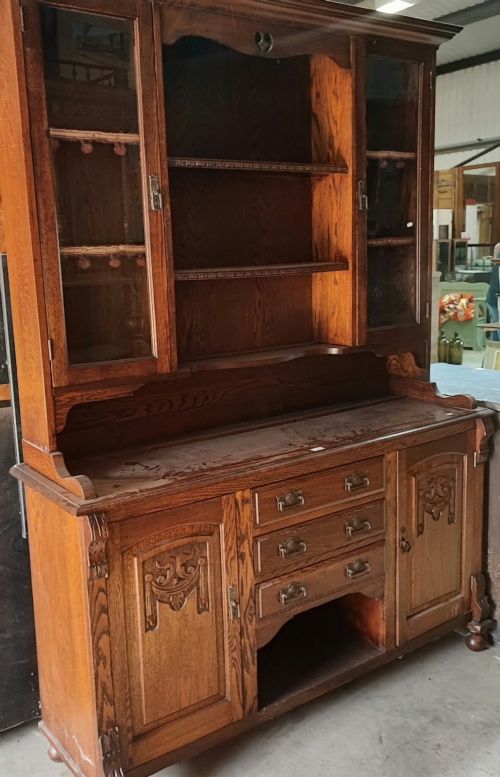
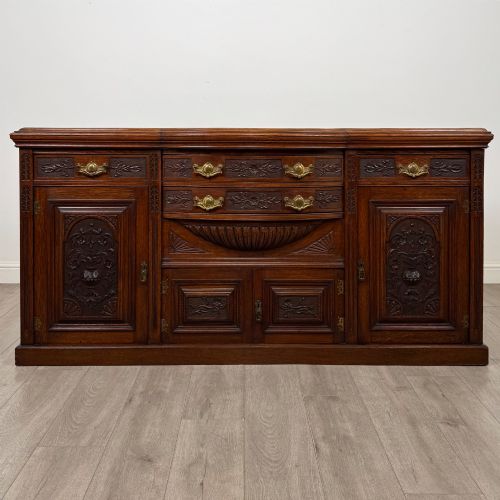
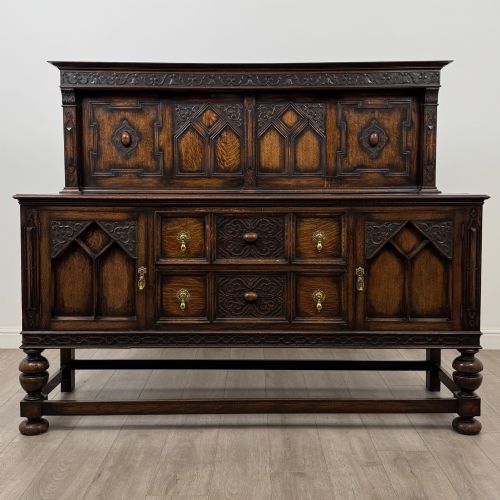
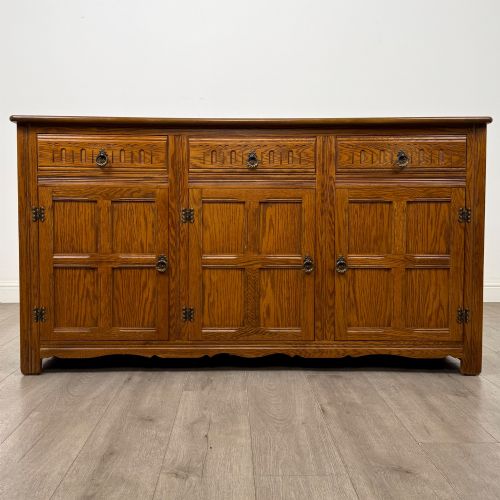
Panelled Oak Sideboard
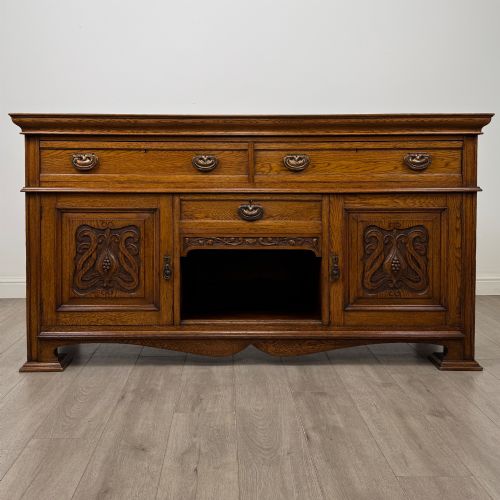
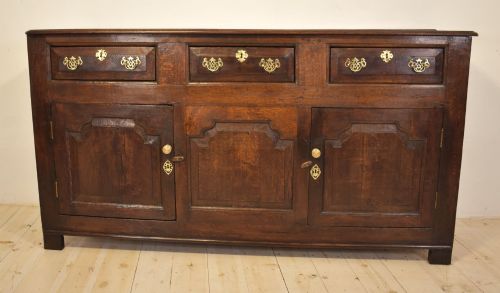
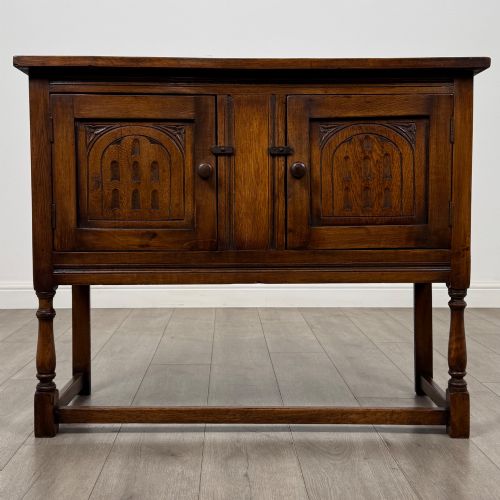
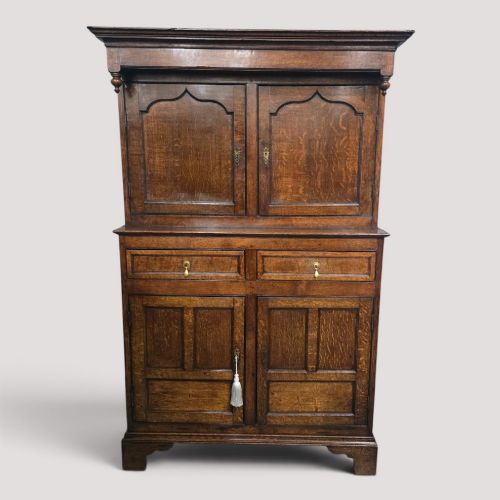
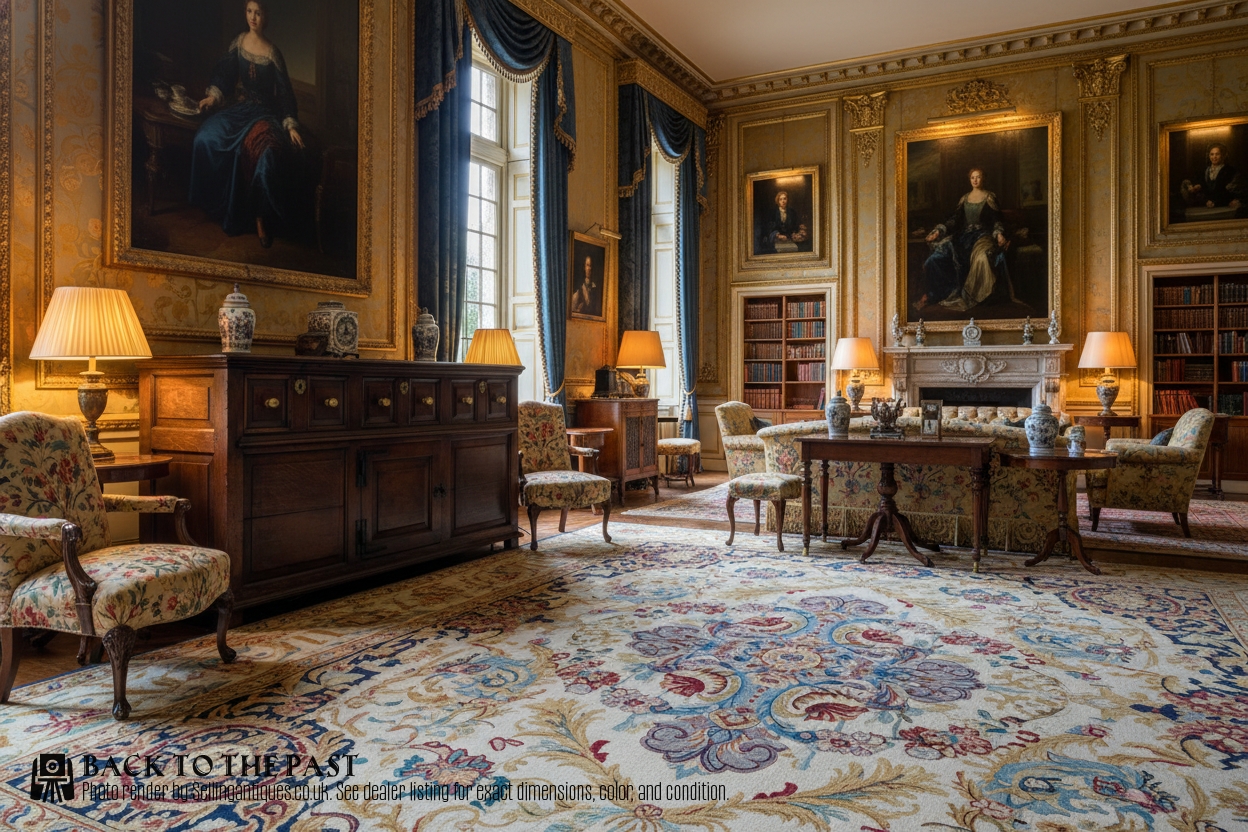
A panelled oak sideboard grounds a room with heavy timber, pegged joinery and centuries of practical utility.
Panelled Oak Sideboard
A panelled oak sideboard brings heavy timber storage into domestic spaces, appearing across periods from the seventeenth century through to the twentieth. When searching for a panelled oak sideboard, buyers encounter robust storage furniture that ranges from vernacular dresser bases and low cupboards to formal revival server units.
The inventory on this page spans foundational English and European eras, including Georgian, Victorian and Edwardian examples alongside earlier seventeenth-century forms. Formats vary between low cupboards, dresser bases with pot boards and geometric panelled cabinets designed for dining rooms and hallways.
How they were made
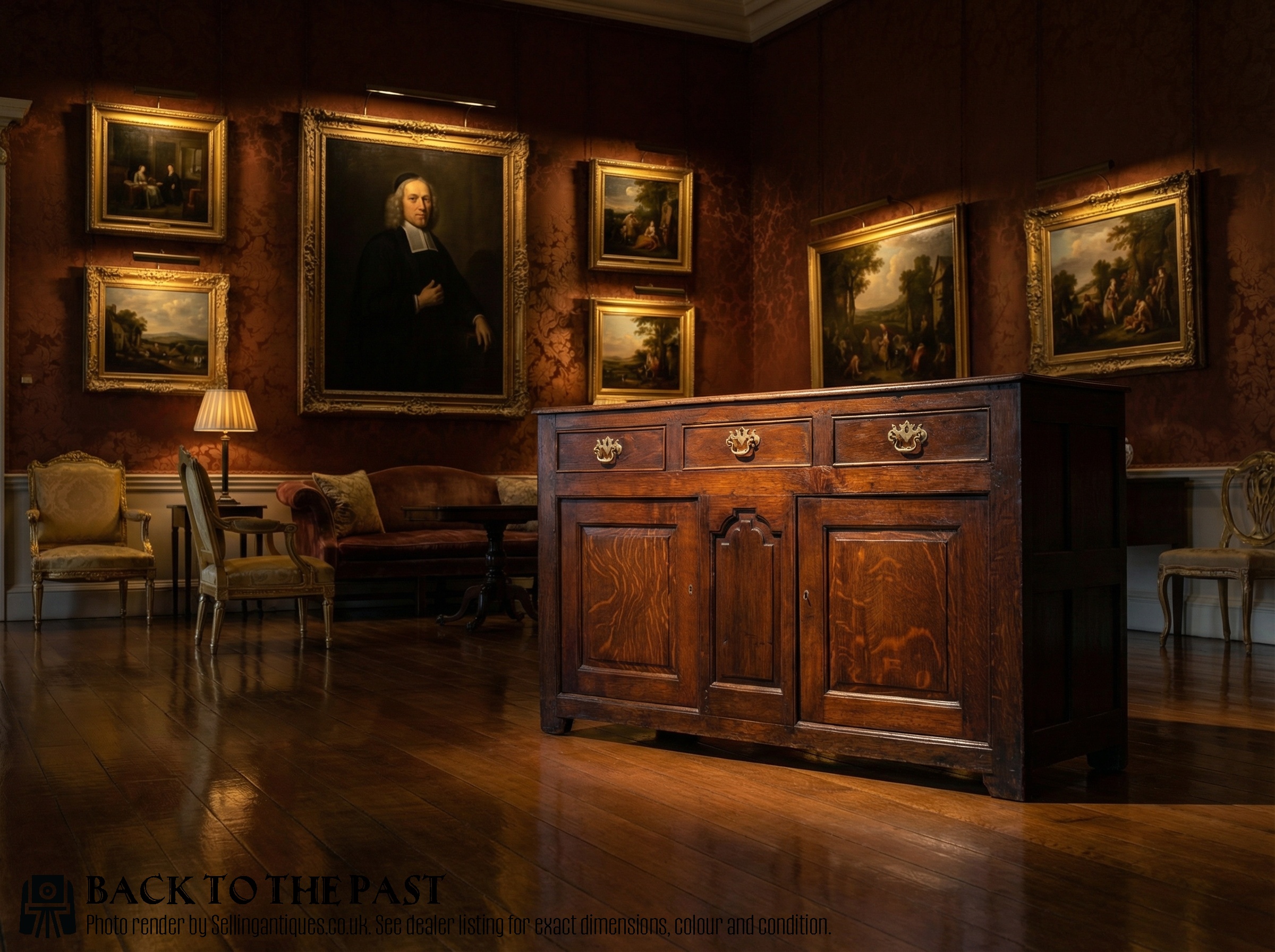
Carpenters constructed these pieces using solid oak, occasionally incorporating secondary timbers like fruitwood or pollard oak for contrast and detail. Construction relied heavily on traditional mortise and tenon joints secured by wooden pegs, complemented by hand-planed panels and iron or brass hardware.
Surface decoration required patient hand-carving, resulting in geometric mouldings, relief panels, and specific regional motifs such as Yorkshire rose carvings. Finishes were traditionally left as natural waxed timber or painted, allowing the grain of the oak to dictate the visual texture.
Panelled Oak Sideboard Retail Price Guide 2026
Typical asking prices for panelled oak sideboard among the pieces listed under this phrase on Sellingantiques today, from the lower quarter to the upper quarter. They describe what is for sale here now, not the wider market.
Some seventeenth-century pieces feature hidden compartments behind carved panels, originally designed to keep family valuables safe from wandering hands.
What varies in quality
Quality rests on the integrity of the timber selection and the precision of the joinery rather than surface sheen alone. Pieces built from dense, quarter-sawn oak with deeply inset, well-fitted panels maintain structural stability far better than later iterations with superficial machine-cut decoration.
The depth and crispness of hand-carving distinguish standard vernacular furniture from finer workshop pieces. Original hardware, intact pot boards, and minimal timber replacement preserve the historical integrity and long-term worth of the cabinet.
The Panelled Oak Sideboard Glossary
- Dresser base
- A low wooden storage unit featuring drawers above cupboards or an open pot board beneath. These pieces served as primary working surfaces in historical kitchens before moving into dining rooms.
- Pot board
- An open lower shelf built into the base of a dresser or sideboard to store heavy earthenware and metal pots. This architectural feature elevates the cabinet floor off damp stone kitchen flags.
- Court cupboard
- A heavy, enclosed two-stage storage cabinet dating from the sixteenth and seventeenth centuries. The upper section is typically recessed behind turned columns.
- Coffer bach
- A small Welsh box or chest featuring a hinged lid, often raised on a drawer base. They were traditionally made as marriage chests or presentation pieces.
- Quarter-sawn oak
- Timber cut radially from the log to expose distinctive flecked grain patterns. This sawing method produces boards that are less prone to warping and shrinkage.
Panelled Oak Sideboard: Frequently Asked Questions
Where should I place a sideboard?
These cabinets suit dining rooms, hallways, and large living spaces where deep storage and a sturdy surface top are useful. Their solid timber construction anchors a room visually.
Ensure adequate clearance for doors and drawers to open fully without striking surrounding furniture.
How do I care for antique oak?
Feed the timber periodically with traditional beeswax to nourish the dry grain and maintain a soft lustre. Avoid placing the cabinet near direct heat sources or strong sunlight.
Dust regularly with a dry, soft cloth rather than using silicone-based sprays.
What is a dresser base?
A dresser base is the lower portion of a traditional dresser, featuring drawers and cupboards without the upper plate rack. They functioned as heavy-duty serving and storage units.
Many survivors now serve as sideboards in modern dining rooms.
How do I date a piece?
Examine the tool marks, joinery methods, and the type of panel construction used throughout the carcass. Hand-sawn boards and pegged joints usually indicate earlier centuries.
Style revivals in the Edwardian and Victorian eras often copied seventeenth and eighteenth-century motifs.
Can I use one in a modern kitchen?
Solid oak storage units provide durable surface space and practical internal volume for contemporary tableware or linens. Their robust construction handles everyday household use easily.
Measure doorways and floor spaces carefully before installation.