


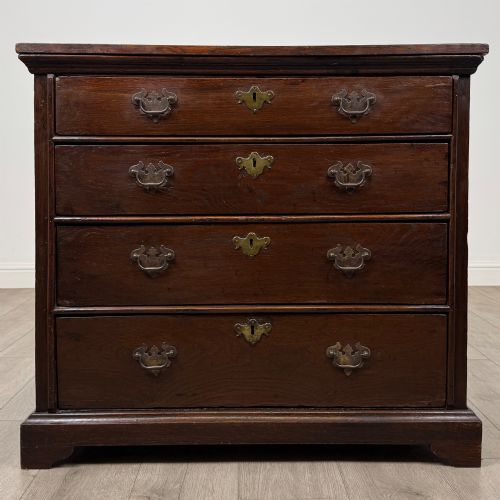
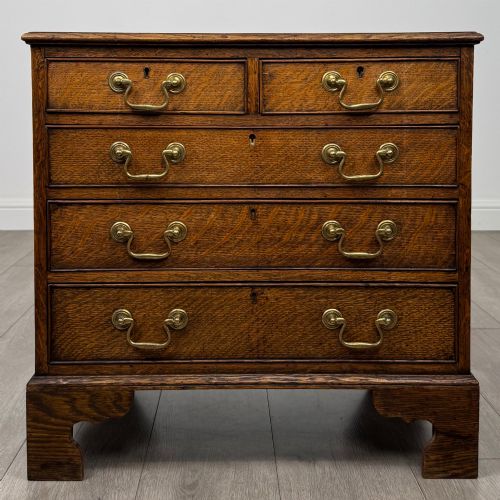
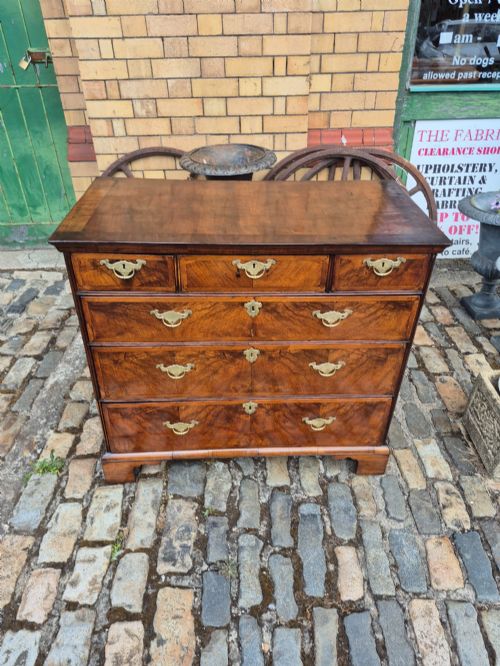
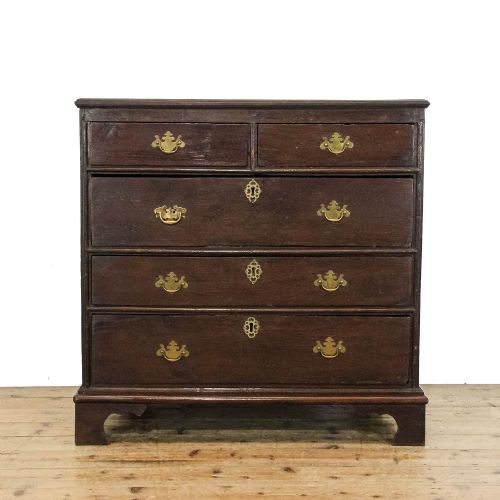
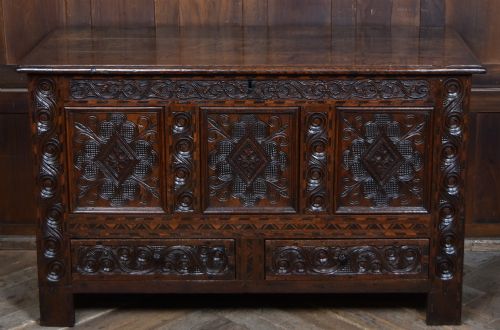
Georgian Oak Storage Chest
A georgian oak storage chest is a heavy utilitarian box built to house household goods, offering honest timber construction that anchors a room.

Understanding the forms
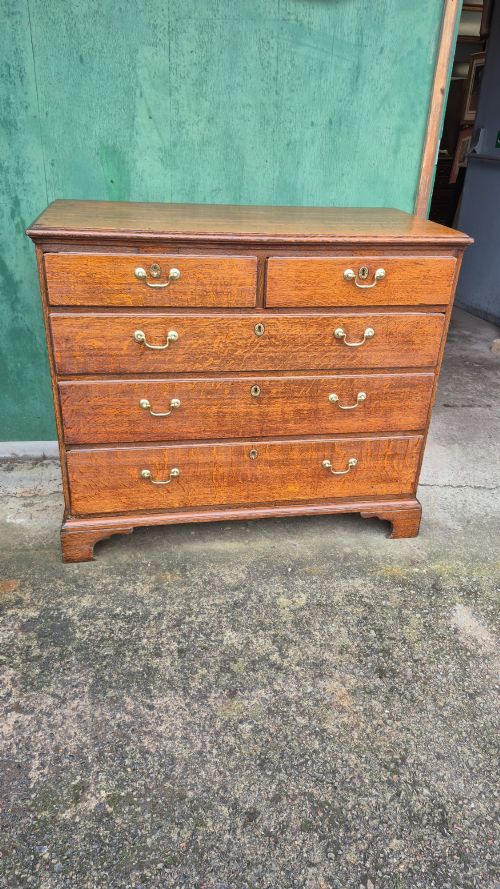
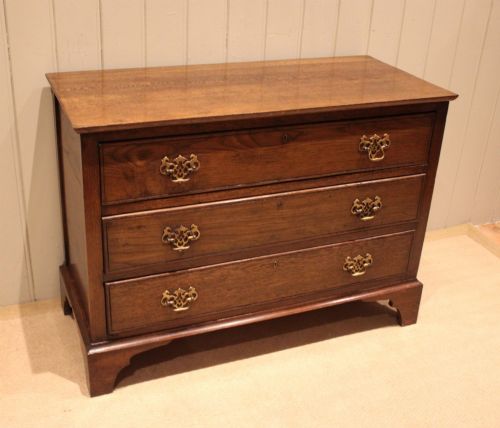
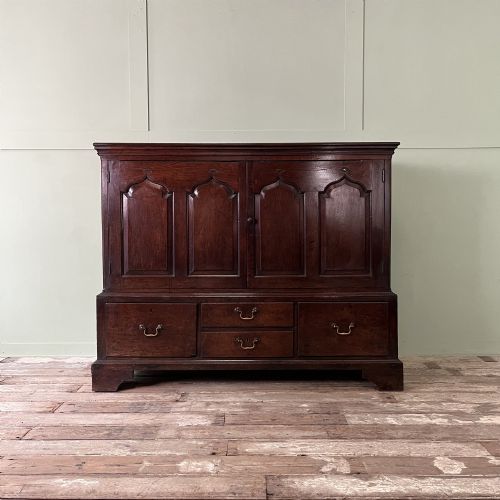
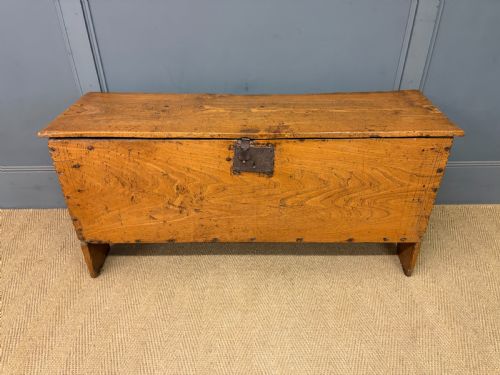
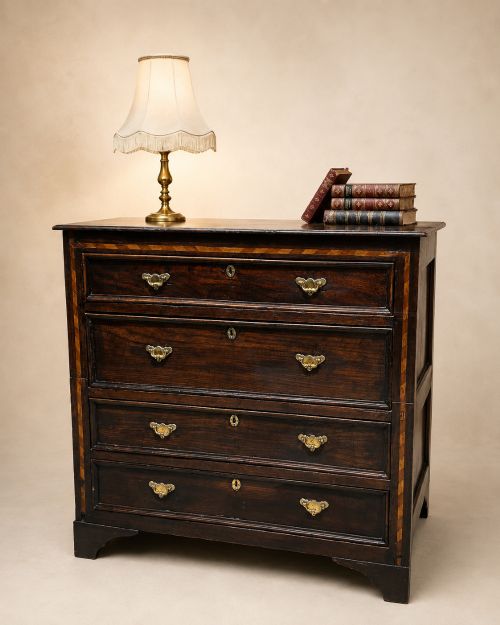
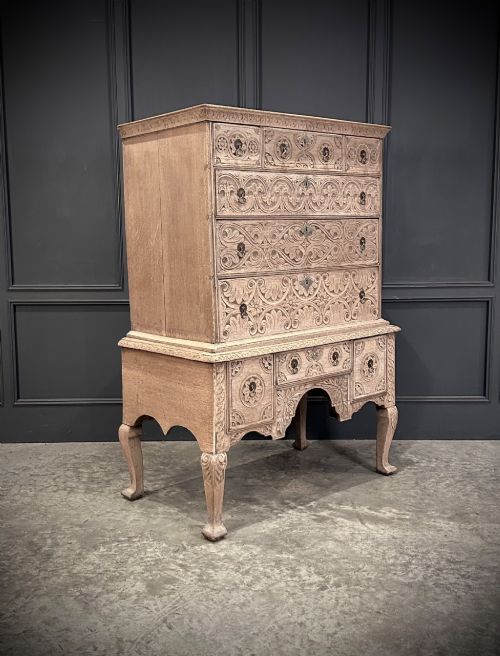
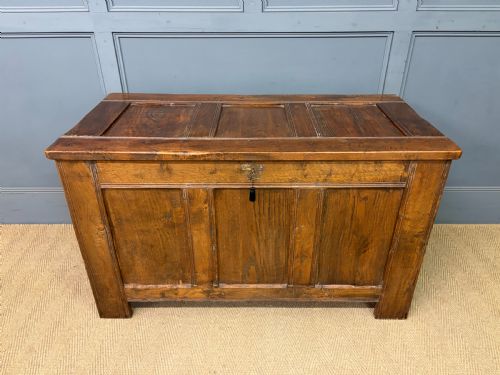
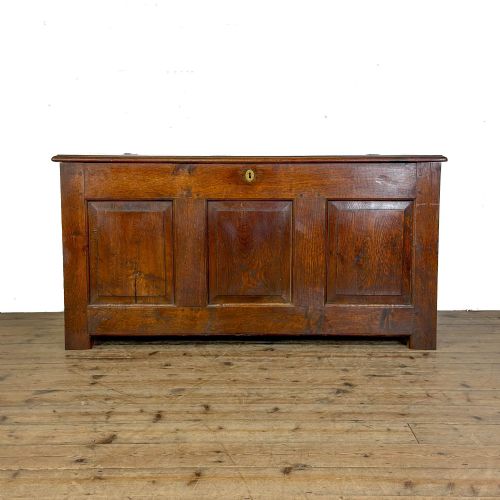
A georgian oak storage chest encompasses several distinct domestic forms, ranging from plain boarded coffers to elaborate mule chests fitted with lower drawers. The pieces seen on this page span straightforward 18th Century coffers and more complex storage furniture featuring dated panels or carved fronts. Buyers searching for a georgian oak storage chest will find heavy trunks designed for linen, blankets, and dry goods.
The objects derive from the Georgian era, with production dates stretching from the early 18th century through to around eighteen hundred. Many examples incorporate lower drawer banks below the main coffer space, bridging the gap between trunk and chest of drawers. Form follows function directly, giving each piece a robust architectural presence suited to traditional interiors.
Materials and construction
Carpenters built these items primarily from solid English oak, chosen for its durability, strength, and distinct grain patterns. Boards were joined using traditional methods suited to heavy domestic use, creating rigid structures designed to endure centuries of handling.
Metalwork played a functional role in the construction, utilising brass and iron for hinges, lock plates, and carrying handles. These hardware elements were fastened securely to the timber body to reinforce stress points and secure the contents.
Retail Price Guide 2026
Typical UK retail prices for georgian oak storage chest, calculated from the Sellingantiques database of over a million retail prices indexed since 2003. This retail price guide relies exclusively on Sellingantiques data; no external sources or auction records are used, so the figures do not describe the wider market.
Listings show these chests span the Georgian period, utilising solid oak construction supplemented by brass and iron hardware.
Assessing the standard
Quality across these items depends on the ambition of the carpentry, distinguishing plain boarded boxes from sophisticated panelled examples with carved detail. Finer pieces demonstrate careful timber selection, showing balanced grain and thoughtful placement of drawer units.
The integration of secondary storage separates standard coffers from mule chests, where the addition of lower drawers requires advanced joinery skills. Hardware choices and the retention of original brass or iron fittings also contribute to the distinction between basic utility trunks and finer domestic furniture.
The Georgian Oak Storage Chest Glossary
- Cofer
- A large heavy box used for storage, typically hinged at the top and constructed from thick timber boards. These represent the earliest form of trunk storage before drawers were integrated.
- Mule chest
- A storage chest featuring one or more drawers built into the base beneath the main coffer compartment. This hybrid form emerged to provide easier access to stored textiles without opening the main lid.
- Boarded construction
- A method of building using plain planks joined at the edges rather than a framed panel structure. It is characteristic of simpler, earlier storage pieces.
- Panelling
- A method of framing timber to allow for natural wood movement without splitting the structure. It appears on the front and sides of finer Georgian chests.
Frequently Asked Questions
What fits inside these chests?
These large storage trunks were traditionally used to house household linens, woolen blankets, and winter clothing. The deep interior compartment accommodates bulky textiles and domestic goods.
Today, owners utilise the generous cavity for storing spare bedding, out-of-season garments, or household items while keeping living spaces visually tidy.
How do I date an 18th century chest?
Dating relies on examining construction techniques, joinery methods, and any inscribed dates or maker's marks carved into the panels. Early pieces often feature boarded construction, while later examples incorporate sophisticated drawer arrangements.
Hardware styles and the type of hinges used also offer clues to the period of manufacture, helping distinguish early Georgian work from later production.
Where should I place a coffer at home?
These robust pieces suit hallways, living rooms, or bedrooms where their flat lids can function as display surfaces. Their solid timber construction allows them to anchor a room as a focal point.
Placing a chest away from direct heat sources and strong sunlight protects the antique oak from drying out or splitting over time.
Are mule chests different from standard coffers?
Mule chests include one or more drawers built into the base beneath the main storage compartment. Standard coffers consist solely of a single top-opening box.
This addition of drawer space makes mule chests more versatile for everyday organisation without needing to lift the heavy lid.