
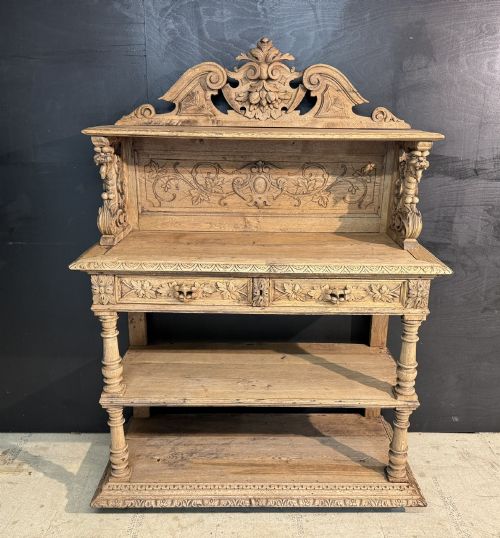


Pale Oak Server
A pale oak server brings warmth and utility to a dining room, offering sturdy surface space and storage rooted in country traditions.
Pale Oak Server
A pale oak server sits among sideboards, dressers, and console tables designed for food preparation and service in domestic settings. These pieces serve as practical furniture items that combine surface utility with storage capacity beneath.
The selections here encompass items from the eighteenth and nineteenth centuries, alongside examples from the early twentieth century. You will encounter English, French, and Spanish origins reflecting distinct regional furniture traditions.
Forms span from dresser bases and console tables to serving tables and drapers tables. The shared characteristic across these variations is the use of oak, often bleached or carved to accentuate the grain.
How they were made
Makers utilised solid timber construction, shaping oak boards for top surfaces and structural frames. Pine occasionally appears in secondary components such as drawer linings.
Carving provides surface decoration on select panels and friezes, executed by hand across the eighteenth and nineteenth century examples. Brass hardware functions as pulls and hinges on opening sections.
Finishing treatments involve bleaching the natural timber to achieve lighter tones, alongside ebonised wood details on specific pieces. These surface alterations highlight the grain pattern of the oak.
Several tables show utilitarian origins in draper shops before finding new lives serving meals in domestic dining rooms.
What varies in quality
The standard of timber selection and joinery determines the structural integrity of each piece. Superior examples display tightly fitted joints and well-balanced proportions across the frame.
Hand carving depth and crispness separate standard utility pieces from finer decorative works. The execution of surface bleaching also influences the visual cohesion of the timber.
The Pale Oak Server Glossary
- Bleached oak
- Timber treated with chemical solutions or light exposure to reduce its natural darkness. This process creates a pale, uniform surface tone popular in nineteenth century furniture.
- Dresser base
- The lower section of a kitchen or dining dresser featuring drawers and cupboards. These units provide enclosed storage and a wide top surface.
- Console table
- A wall-mounted or freestanding table designed to sit flat against a vertical surface. They offer narrow display space in hallways and dining rooms.
- Ebonised wood
- Timber stained or treated to resemble solid ebony. This dark finish provides contrast against lighter oak elements.
Pale Oak Server: Frequently Asked Questions
Where should I place a pale oak server?
These pieces fit naturally in dining rooms or kitchens where surface space is required for serving food or displaying tableware.
They also function effectively in hallways as console tables for holding everyday items.
How do I care for bleached oak surfaces?
Dust regularly with a dry cloth and avoid placing the furniture in direct sunlight to prevent uneven fading.
Use coasters and placemats to protect the wood from moisture and heat damage.
What is the difference between a server and a sideboard?
Servers generally feature lighter proportions and open lower shelves or simpler storage configurations suited for passing food.
Sideboards tend to offer heavier enclosed cabinetry designed primarily for storing dining linens and heavy dinnerware.
How can I identify the period of a server?
Examine the construction methods, tool marks on hidden panels, and the style of any carved ornamentation.
Comparing the hardware and timber finishing techniques with documented examples from the eighteenth and nineteenth centuries aids dating.