



French Provincial Enfilade
These french provincial enfilade pieces are substantial storage sideboards offering both historic utility and rustic charm.
French Provincial Enfilade
When you search for french provincial enfilade, you encounter sideboards and buffets originating from various periods including the nineteenth century, Victorian era, Georgian period, and nineteen-ten. These low cabinets serve primarily as dining room storage for tableware, linens, and provisions, offering broad flat tops for serving food.
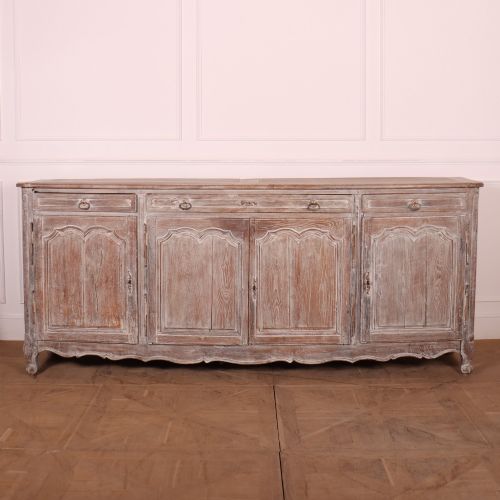
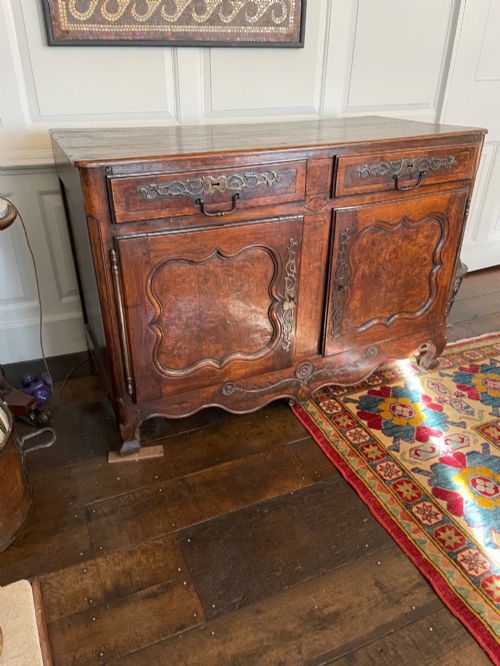
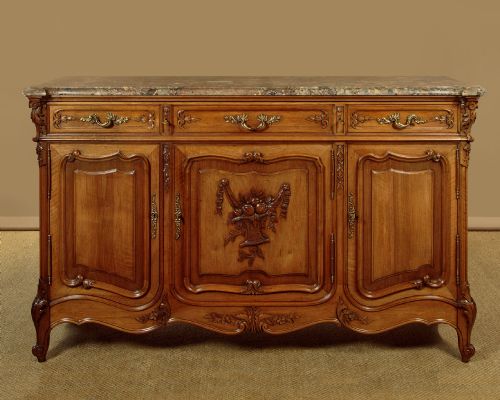
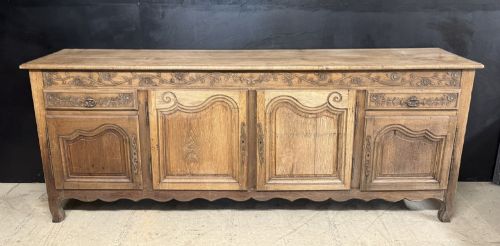
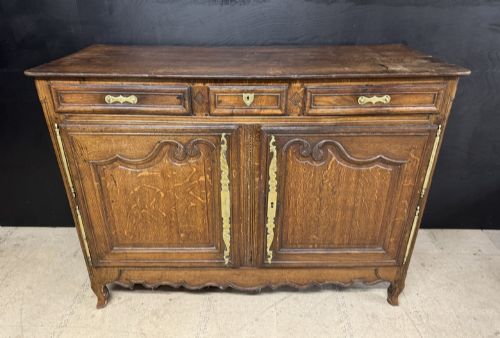
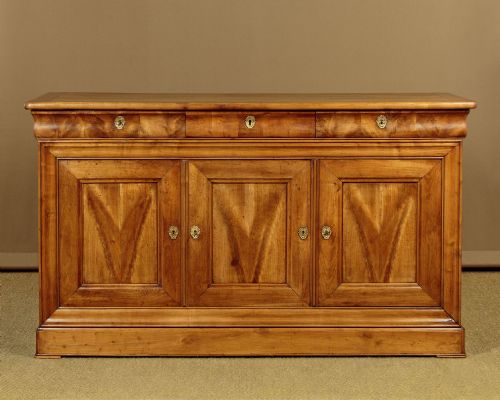
The versions you are most likely to meet on this page span several decades of traditional furniture making and feature regional French provincial styling. They appear in configurations such as a four-door sideboard, an oak buffet, and an early nineteenth century cherry buffet, alongside painted timber finishes.
Each piece reflects the vernacular design traditions of its specific era and region, blending domestic practicality with local craftsmanship. The forms remain remarkably functional for modern interiors, whether used in a dining room, hallway, or living space.
How they were made
Cabinet makers constructed these pieces using a selection of sturdy timbers including oak, cherry, and walnut. These woods were chosen for their durability and grain patterns, providing a robust structural framework capable of enduring daily household use.
Metal elements such as brass, steel, and iron appear in the construction, particularly in hinges, handles, and structural fastenings. Painted finishes were also applied to timber surfaces, offering both protection and a distinct decorative appearance.
French Provincial Enfilade Retail Price Guide 2026
Typical asking prices for french provincial enfilade among the pieces listed under this phrase on Sellingantiques today, from the lower quarter to the upper quarter. They describe what is for sale here now, not the wider market.
Early cabinet makers relied on iron hinges and cherry wood to build sideboards that outlived several generations of dinner parties.
What varies in quality
The distinction between ordinary and superior examples lies in the selection of timber and the precision of the joinery. Finer pieces demonstrate careful selection of oak, cherry, or walnut with harmonious grain matching across doors and drawer fronts.
Hardware implementation and surface treatment also dictate the overall standard of a piece. High quality cabinets display well integrated metalwork in brass, steel, or iron alongside carefully applied paint finishes that complement the underlying wood.
The French Provincial Enfilade Glossary
- Enfilade
- A long sideboard or buffet designed with multiple cabinet doors, typically used for serving and storage in dining spaces.
- Buffet
- A low piece of furniture with cupboards or drawers, traditionally used for holding and serving food.
- Provincial
- A style originating from regional areas outside the capital, often characterised by sturdy construction and simpler ornamentation than court furniture.
- Joinery
- The wooden joints used to assemble the framework and panels of a cabinet without relying entirely on metal fastenings.
French Provincial Enfilade: Frequently Asked Questions
What is an enfilade?
An enfilade is a long sideboard or buffet featuring multiple doors, traditionally utilised for storing dining room items and serving meals.
These low cabinets provide substantial surface area on top alongside enclosed storage underneath.
How do I date a buffet?
Dating a buffet involves examining the construction materials, joinery methods, and characteristic style details from periods such as the nineteenth century or Victorian era.
Different eras employ specific timber selections and hardware conventions that help identify the time of manufacture.
Where should I place an enfilade?
These sideboards suit dining rooms, large hallways, or living spaces where substantial surface space and enclosed storage are required.
Their long proportions allow them to sit comfortably against large walls while offering practical storage capacity.
What woods were used?
Traditional construction relies on hardwoods such as oak, cherry, and walnut, chosen for their strength and appearance.
Some pieces also feature painted timber surfaces alongside metal components in brass, steel, and iron.