

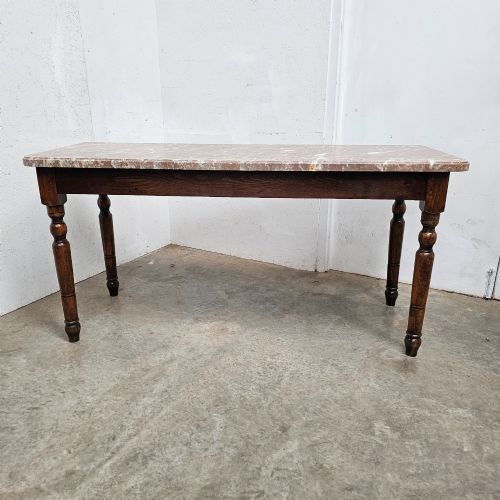
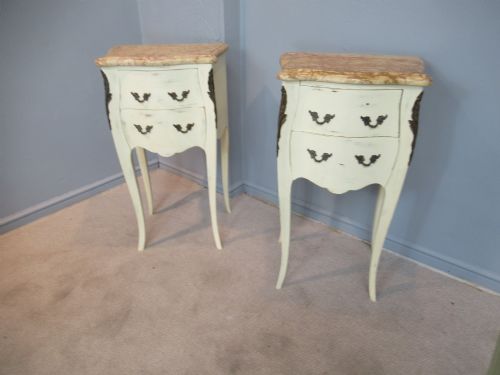
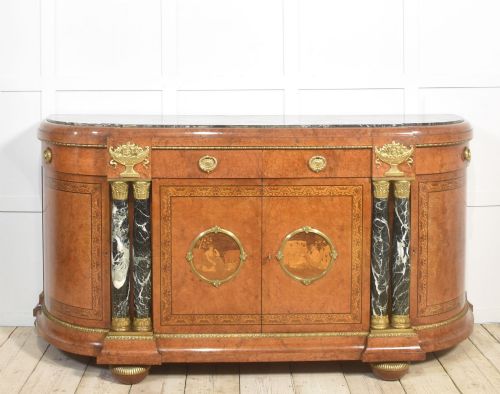
French Marble Top Sideboard
A french marble top sideboard brings substantial continental weight and cool stone utility into a room.
French Marble Top Sideboard
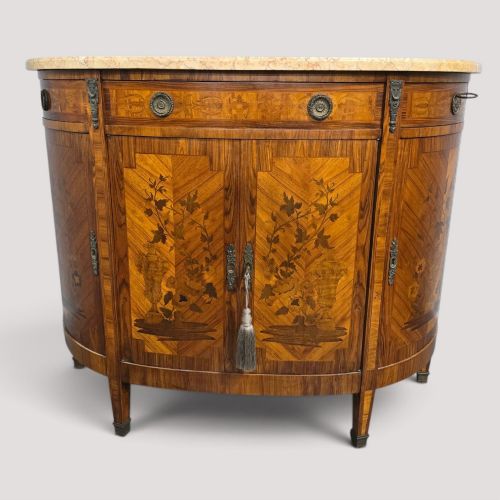
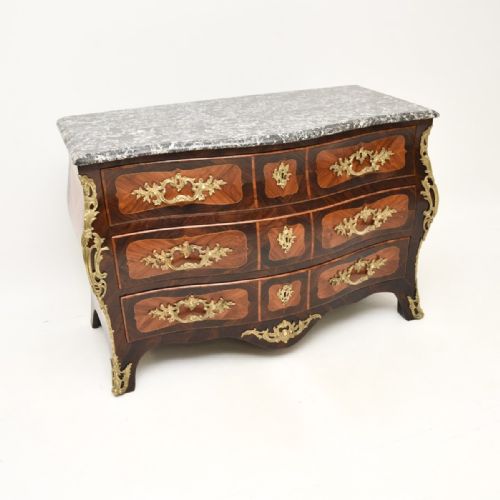
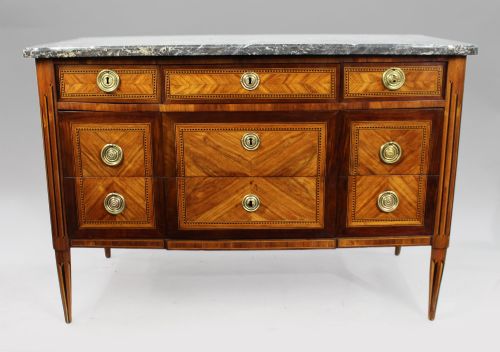
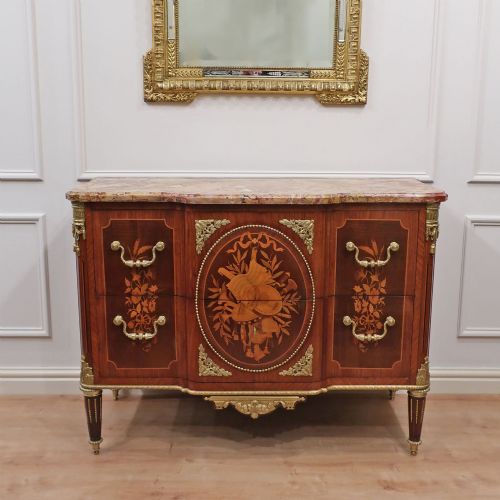
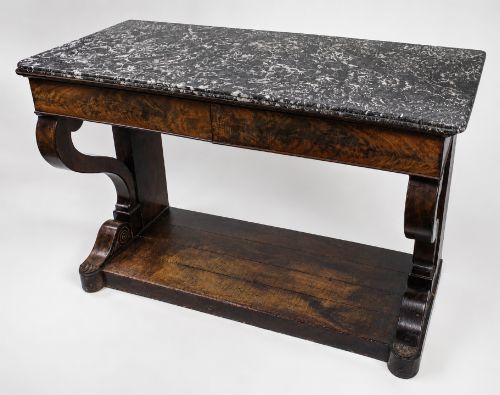
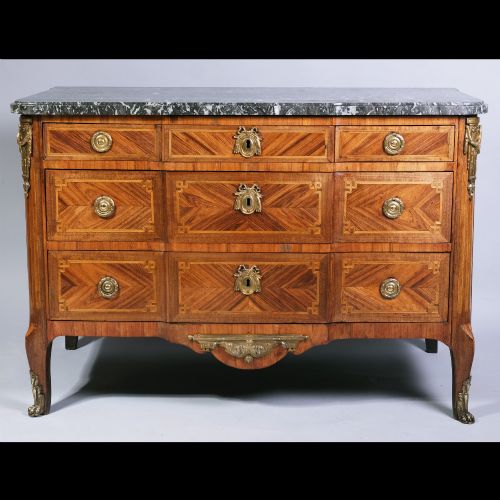
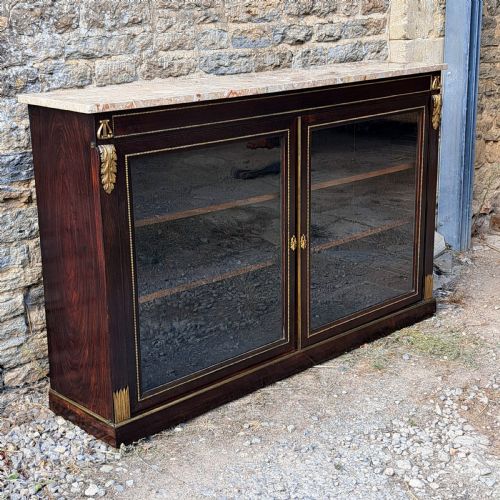
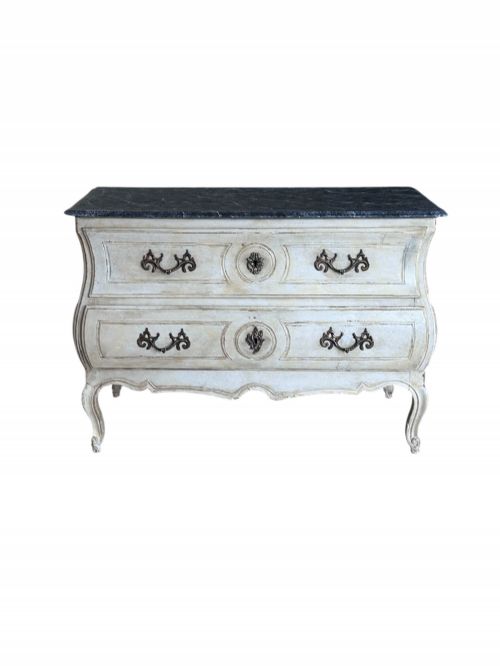
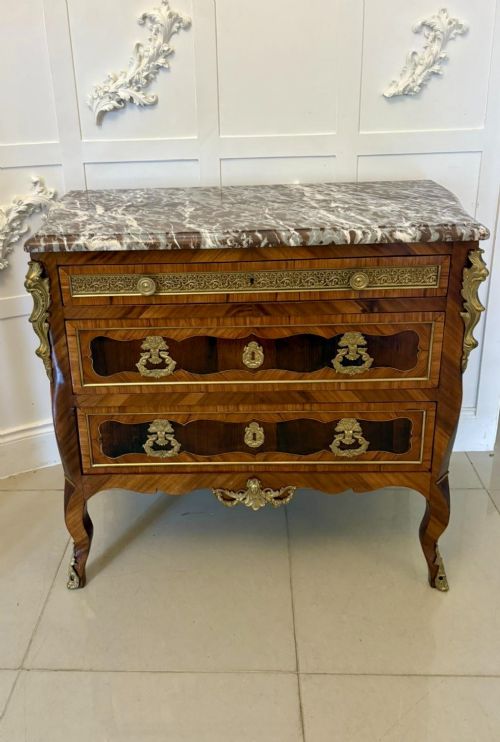
A french marble top sideboard encompasses low commodes, side cabinets, and substantial buffets originating across the eighteenth, nineteenth, and early twentieth centuries. These pieces combine fitted stone surfaces with timber carcases intended for domestic storage and display.
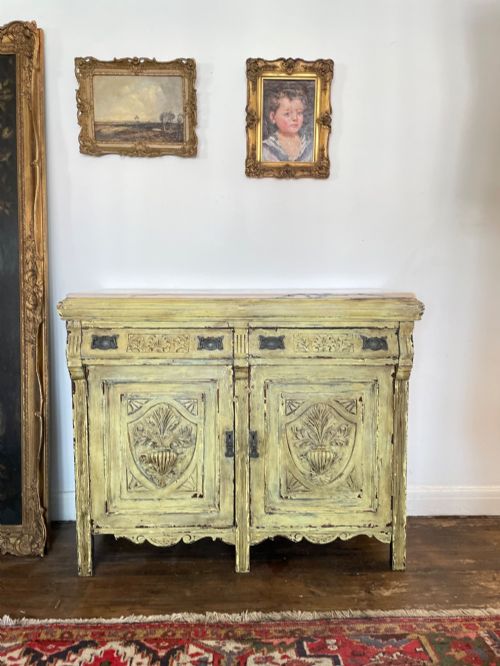
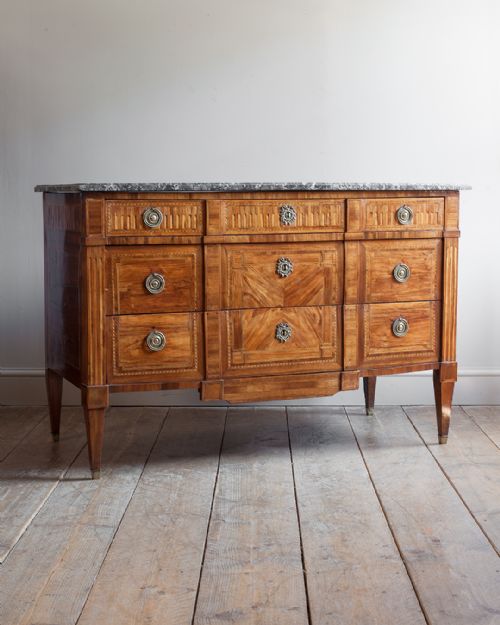
The version most frequently met on this page is the nineteenth century commode or sideboard, frequently finished with marquetry, parquetry, or painted surfaces. Sideboards and credenzas from the later revival periods also appear regularly alongside earlier provincial pieces.
Materials and Construction
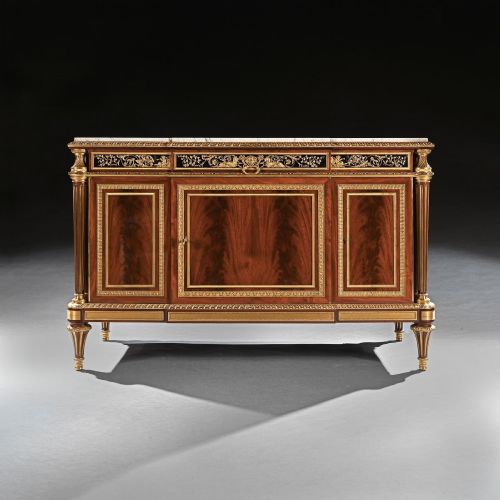
Makers built the foundational carcases from dense timbers such as walnut, oak, mahogany, rosewood, and kingwood, often applying intricate kingwood, tulipwood, or floral marquetry veneers. Ormolu and gilt bronze mounts protect corners and accent structural lines.
Heavy marble slabs, varying from white to pink and scagliola varieties, rest directly upon the timber tops to provide a durable and heat-resistant surface. Brass details and japanned lacquer finishes appear on specific revival and Chinoiserie examples.
Several cabinets emerge under the evocative description of barn finds, retaining layers of country dust alongside their original pink marble.
Judging Quality
The hierarchy of these pieces rests on the precision of the cabinetwork and the integration of the stone top. Superior examples demonstrate tight veneer matching, crisp ormolu chasing, and heavy marble slabs fitted exactly to the timber profile.
Later mass-produced interpretations contrast with workshop-built items through simpler joinery, cast iron rather than bronze mounts, and standard timber carcases lacking hand-cut inlay.
Jacques Bircklé·Henry Dasson
The French Marble Top Sideboard Glossary
- Commode
- A low chest of drawers or cabinet designed for domestic storage. These pieces frequently feature shaped marble tops and decorative veneer work.
- Ormolu
- Gilded bronze mounts applied to furniture for decorative effect. The metal is cast and chased to produce crisp architectural details.
- Marquetry
- The art of applying decorative pieces of veneer to a structural carcase to form geometric or pictorial designs. Craftsmen select contrasting timbers to achieve tonal depth.
- Scagliola
- A composite material made from selenite, glue, and pigments, mimicking natural marble. Artisans inlay this mixture to create intricate patterns.
- Parquetry
- Geometric wood inlay forming repeating patterns across a furniture surface. Squares, triangles, and lozenges create a structured visual texture.
French Marble Top Sideboard: Frequently Asked Questions
What rooms suit these sideboards?
These cabinets function effectively in dining rooms for servingware storage or in living spaces as display surfaces. The stone top provides a practical shelf for daily use.
Their substantial weight and decorative presence allow them to anchor large walls or serve as focal points in hallways.
How do I care for the marble?
Wipe the stone surface regularly with a damp cloth and mild soap to prevent staining from liquids. Avoid acidic cleaners that etch polished marble.
Apply a protective wax periodically to maintain the sheen and guard against moisture penetration.
How are different periods identified?
Eighteenth century examples rely on hand-cut dovetails, dense native timbers, and restrained ormolu mounts. Nineteenth century revival pieces often display heavier proportions and machine-assisted veneers.
Stylistic cues such as Louis XV curves or Louis XVI straight lines help establish the design era.
Can the marble top be removed?
Most marble slabs rest loose upon the timber carcase to allow for safe transport and cleaning. Lifting the stone requires multiple people due to the heavy weight.
Securing the top typically involves gravity rather than permanent adhesives.