
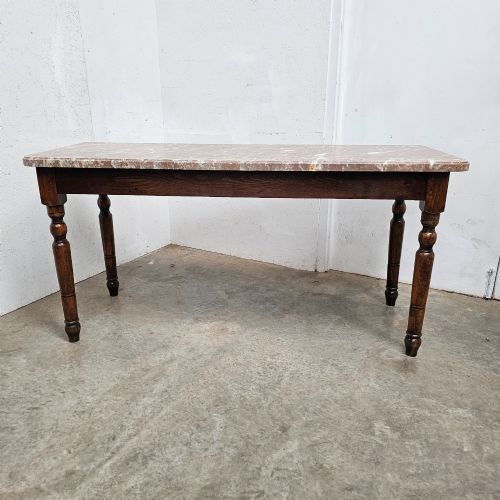


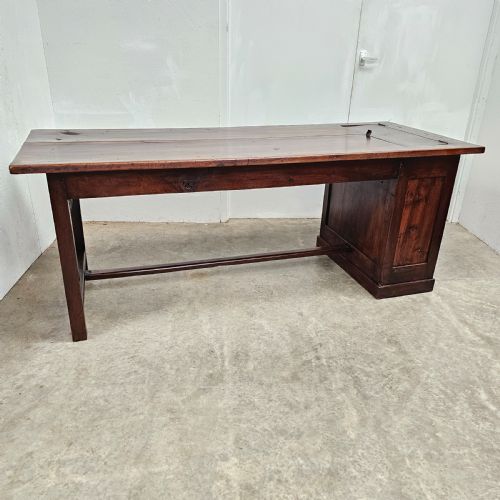


Bakers Prep Table
These bakers prep table examples are sturdy utilitarian surfaces built for food preparation, offering honest character and generous workspace for modern kitchens.
Bakers Prep Table
A bakers prep table is a functional work surface historically designed for kneading dough, pastry work, and general kitchen preparation in domestic and commercial settings. When you search for a bakers prep table, you will encounter pieces predominantly originating from the nineteenth century alongside early twentieth-century examples.
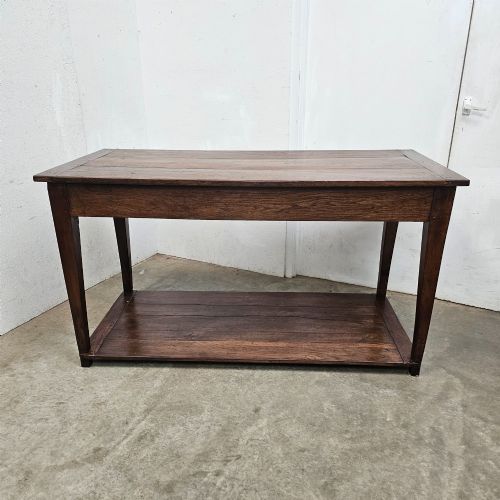
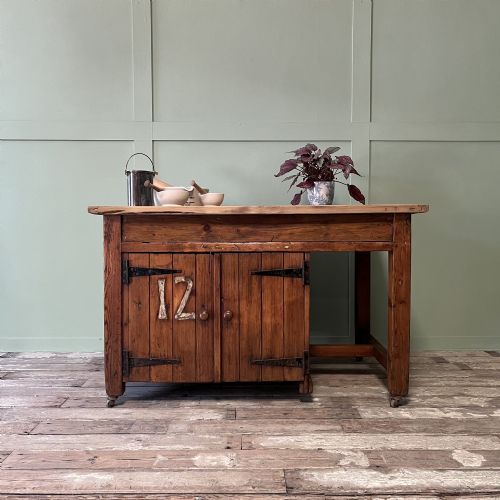
The pieces appearing on this page span several regional styles, notably French provincial, Scandinavian country, and Victorian British country house aesthetics. These tables often double as kitchen tables, console tables, and work tables, reflecting their adaptable utility across different domestic spaces.
Most examples rely on generous proportions, solid timber construction, and specialised working tops suited for culinary tasks. Buyers typically find sturdy pine, oak, and walnut frames paired with heavy stone or wooden boards designed to withstand daily use.
Materials and Construction
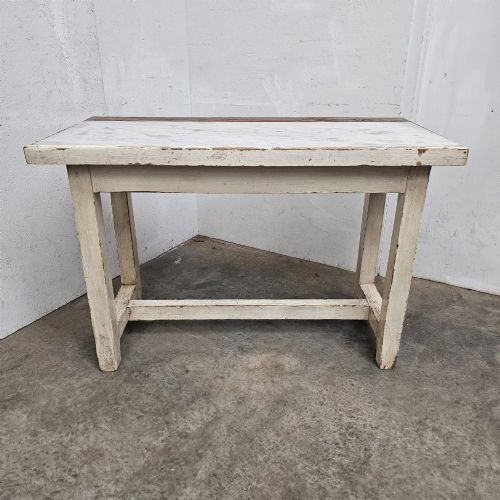
Construction relies heavily on durable timbers such as pine, oak, and walnut, often shaped into solid multi-board tops or sturdy frames. Paint finishes, including original Swedish Falu paint, appear frequently alongside exposed natural wood surfaces.
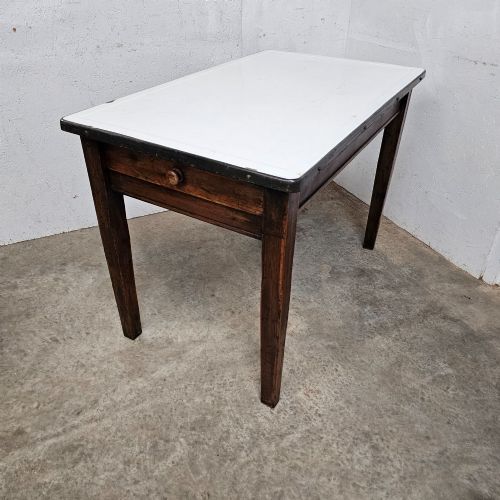
Specialised working surfaces distinguish these pieces, utilising heavy marble, enamel, and thick timber slabs designed to stay cool and stable during pastry and bread preparation. Metal elements such as brass and wrought iron appear in structural fittings and hardware.
Listings feature pieces constructed from pine, oak, walnut, marble, and wrought iron across nineteenth-century and early twentieth-century periods.
Judging Quality and Character
Quality separates simple utility from refined craftsmanship through the selection of materials, such as thick marble slabs or choice two-board timber tops. The integrity of the original joints and the survival of untouched painted surfaces heavily influence the desirability of each piece.
Proportion and scale dictate the visual weight of the table within a room, with larger substantial pieces commanding greater presence. Patina accumulated from decades of genuine kitchen use adds depth that distinguishes superior historical examples from lesser utilitarian items.
The Bakers Prep Table Glossary
- Prep table
- A utilitarian work table designed specifically for culinary tasks such as food assembly and baking. These surfaces prioritise stability and durability over decorative ornamentation.
- Marble top
- A smooth stone surface fitted to a wooden base to provide a cool, hygienic area for rolling pastry and working dough. This material resists moisture and stays naturally chilled.
- Falu paint
- A traditional deep red or dark paint originating in Sweden, composed of copper mine residue and linseed oil. It was widely used to preserve exterior and interior pine woodwork.
- Pastry table
- A specialised workspace often featuring a marble or scrubbed wooden top intended for confectionery and bread making. They frequently incorporate drawers or lower tiers for storing utensils.
Bakers Prep Table: Frequently Asked Questions
What is a bakers prep table?
A bakers prep table is a heavy-duty wooden or stone-topped work surface designed historically for kneading dough and preparing food. They provide stable platforms and generous workspace suited for busy kitchens.
Today, these tables serve as central kitchen islands, dining surfaces, or console tables in residential interiors. Their utilitarian roots bring genuine historical character into modern homes.
How do I clean a marble top?
Marble surfaces require gentle cleaning with warm water and mild, pH-neutral soap to avoid damaging the stone. Harsh chemicals and acidic substances should be kept away from the porous surface.
Regular wiping preserves the natural patina accumulated over decades of kitchen use. Avoid abrasive scouring pads that can dull the polished finish.
Can I use these for daily cooking?
These tables were built for rigorous culinary labour, making them exceptionally well-suited for everyday kitchen tasks. Solid timber and stone surfaces handle regular preparation work with ease.
Treating wooden boards with appropriate food-safe oils helps protect the material from moisture and staining. The sturdy construction ensures they withstand heavy daily use.
How do I identify a 19th-century table?
Nineteenth-century examples display traditional joinery techniques, hand-planed timber boards, and genuine signs of wear consistent with age. Iron hardware and hand-mixed paints offer further clues to their period of origin.
Examining the underside and drawer construction often reveals tool marks left by period craftsmen. Comparing timber shrinkage and patination helps confirm the age of the piece.