
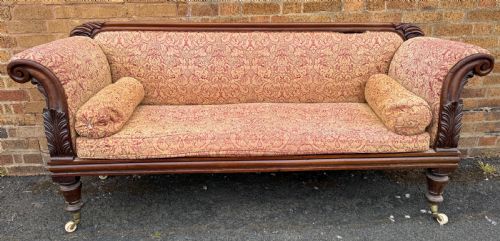


Carved Frame Settee
These pieces unite solid timber and exposed structure with deep comfort, bringing character and architectural presence to a drawing room.
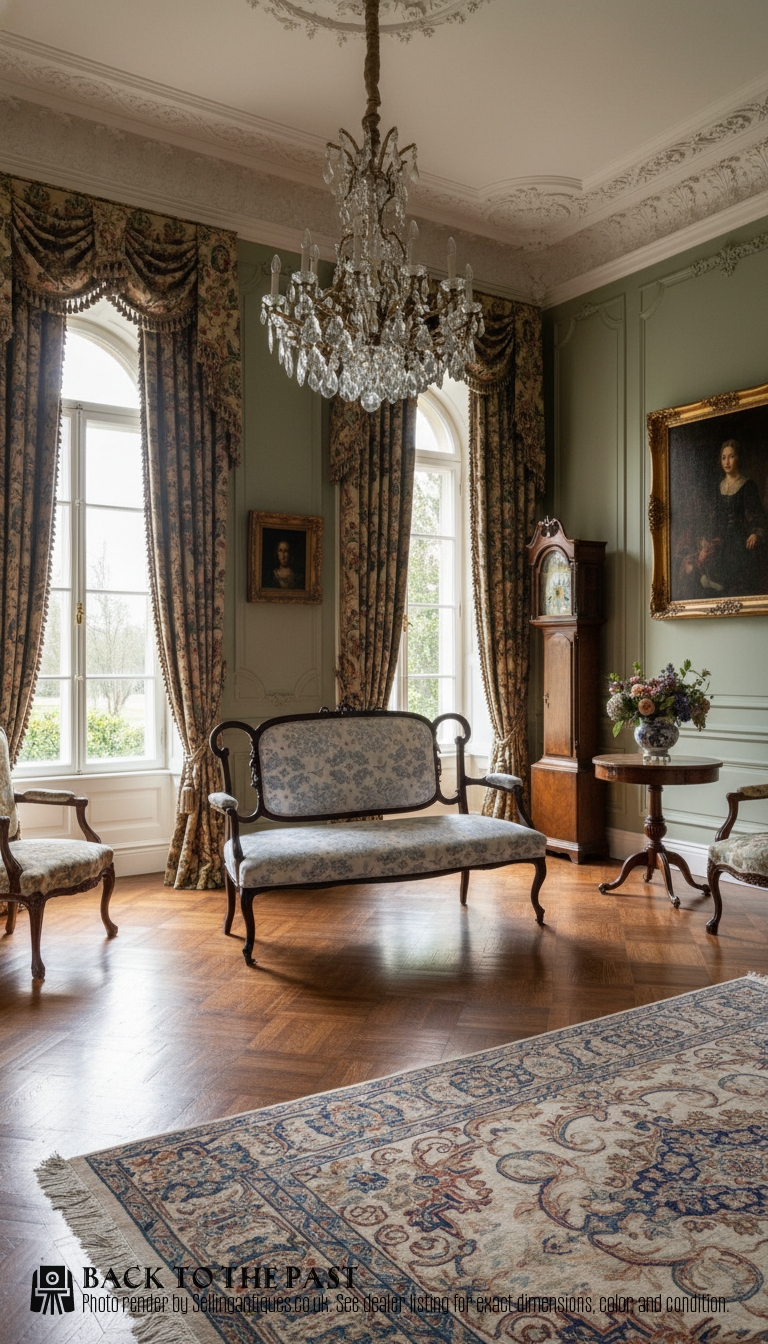
Carved Frame Settee
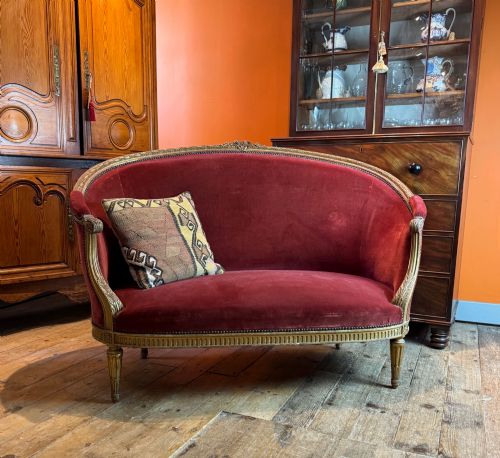
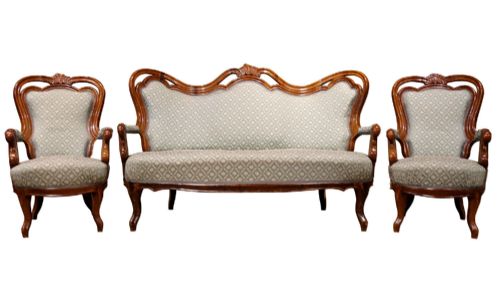
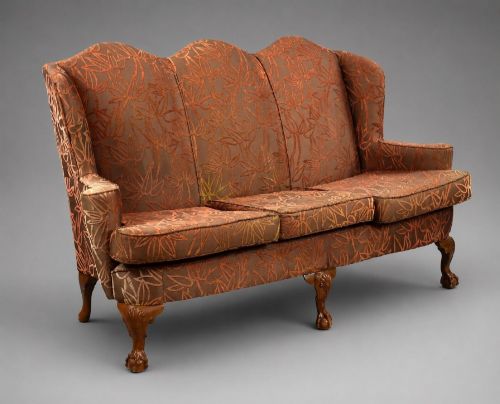
A carved frame settee is an upholstered seat where the structural timber outline remains visible, showcasing decorative joinery and shaped woodwork rather than hiding entirely beneath fabric. When you search for this phrase, you meet forms spanning the nineteenth century alongside Edwardian and later revivals, ranging from compact two-seater salon chairs to large country house sofas.
The styles shift from restrained Regency scroll ends and William IV mahogany to ornate French Rococo Revival, Louis XV, and Louis XVI interpretations in giltwood and walnut. Formats include double-ended sofas, open arm settees, window seats, and chaise longues, each uniting sturdy timber skeletons with generous cushioning.

Materials and construction
The skeletons rely on dense hardwoods like mahogany, walnut, rosewood, and satinwood, selected for structural integrity and carved with motifs appropriate to their period. Giltwood and painted surfaces appear frequently on French models, adding a reflective or softly coloured finish to the structural frame.
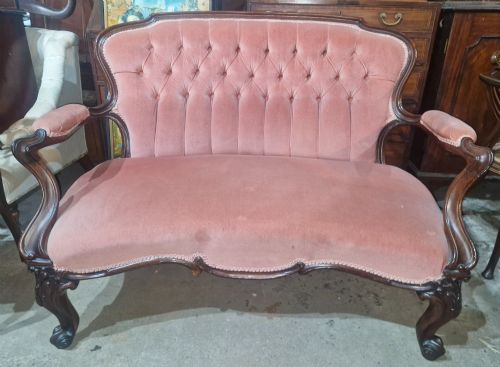
Upholstery fabrics such as velvet, leather, and patterned textiles are secured over traditional webbing and stuffing, often complemented by button backs or decorative brass elements. The visible frame acts as both support and ornament, requiring precise joinery to bear weight while displaying elaborate carvings.
Several pieces arrive ready for re-upholstery, offering a completely blank canvas for adventurous textile choices.
What separates the finest examples
Quality rests in the crispness and depth of the timber carving, where hand-chiselled details show precision and fluidity rather than mechanical uniformity. The choice of primary wood also dictates character, with richly figured mahogany, burl walnut, or original gilt surfaces outperforming plain secondary timbers.
Proportion and structural harmony separate superior pieces from standard workshop output. A well-balanced frame maintains its rigidity and elegance across scroll ends, cabriole legs, or sweeping camelbacks without appearing heavy or cumbersome.
The Carved Frame Settee Glossary
- Scroll-end
- A sofa design where both arms roll outward in a continuous curve. This silhouette defines many Regency and William IV pieces.
- Giltwood
- Timber coated with a thin layer of gold leaf. This finish appears predominantly on French revival salon pieces.
- Cabriole leg
- A furniture leg that curves outward and then tapers inward, ending in a pad or foot. It is characteristic of Louis XV and related revival styles.
- Chaise longue
- An elongated upholstered chair designed for reclining. Many nineteenth-century examples feature a single raised scroll end.
- Button back
- An upholstery technique where buttons are pulled deep into the padding to create a padded diamond pattern. This method adds firmness and texture to Victorian pieces.
Carved Frame Settee: Frequently Asked Questions
How do I style a carved frame settee today?
These pieces anchor a modern drawing room or hallway by introducing historical texture and visible craftsmanship against neutral walls.
Pair them with simple contemporary furnishings to let the exposed woodwork and upholstery stand out without crowding the floor plan.
What is the difference between a settee and a sofa?
Historically, a settee denotes a compact wooden or upholstered seat designed for two or more people, often with a lighter frame.
Sofas in these periods tended to be larger, deeper, and more heavily upholstered for formal reception rooms.
How do I identify a French revival settee?
French revival models, including Louis XV and Rococo styles, display characteristic carved walnut or giltwood frames with flowing floral motifs and cabriole legs.
They often feature serpentine seat rails and painted finishes distinct from heavier English mahogany designs.
Where were these settees originally placed?
Country houses and grand town residences used them in drawing rooms, reception salons, and long galleries for formal seating.
Smaller variants also served in bedrooms, hallways, or specialised window seat alcoves.