
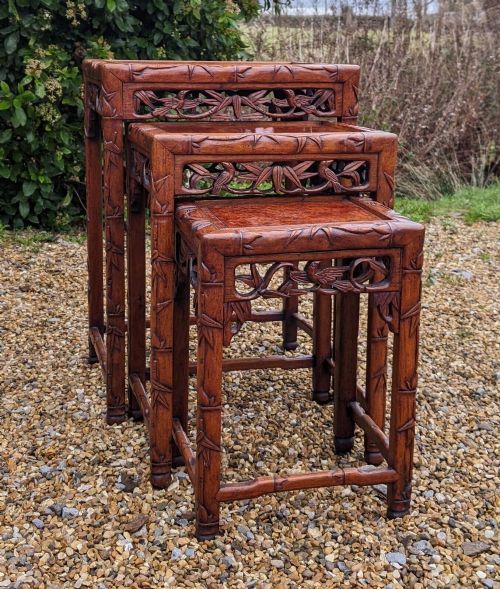
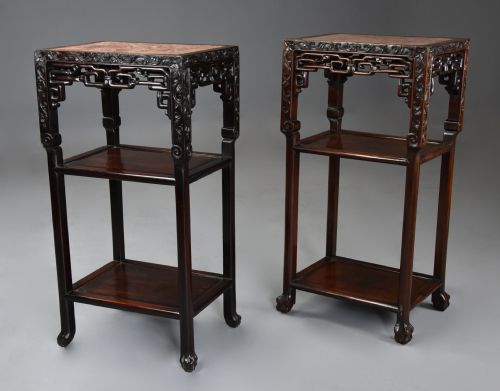
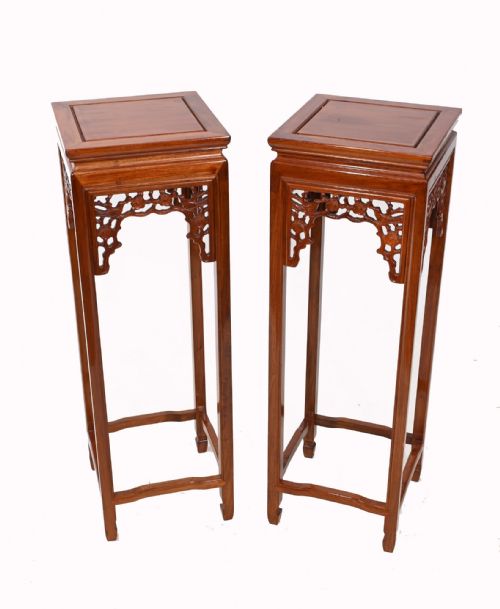
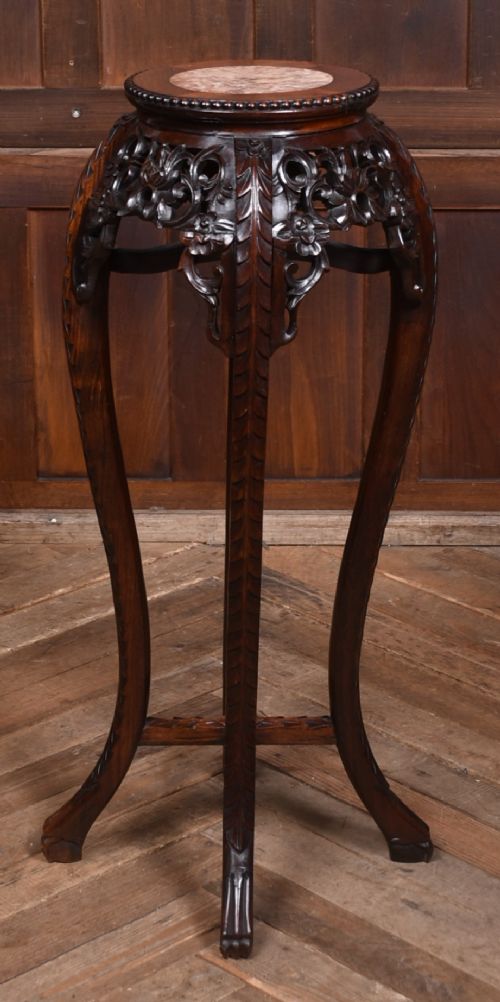



Carved Asian Plant Table
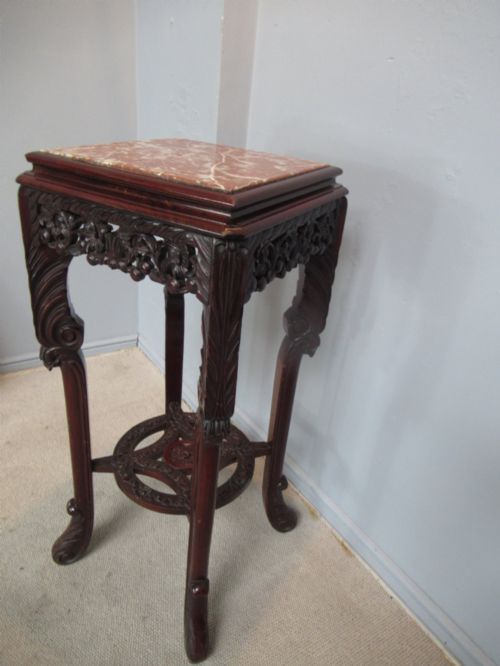
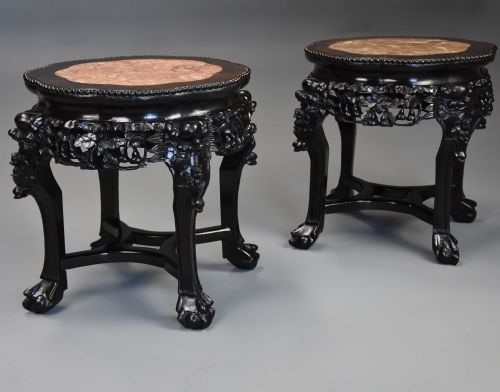
A carved asian plant table brings sculptural form and dense timber into a room, designed to elevate pottery or urns.
Carved Asian Plant Table
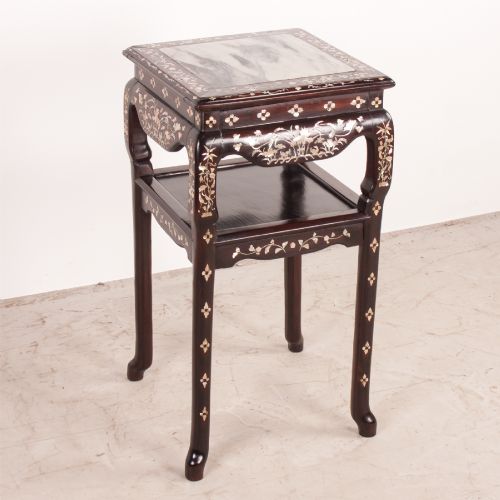
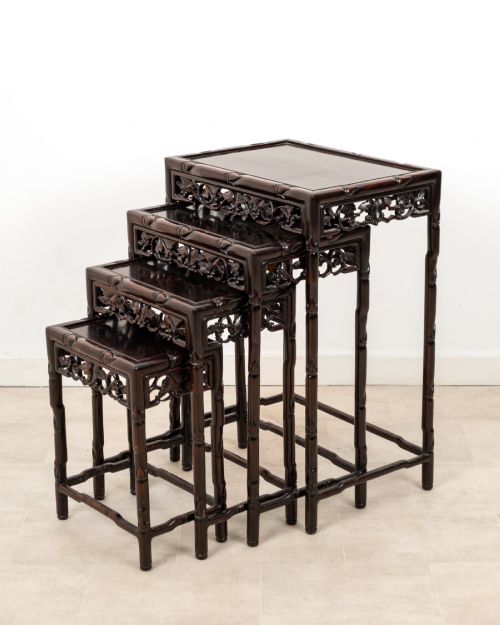
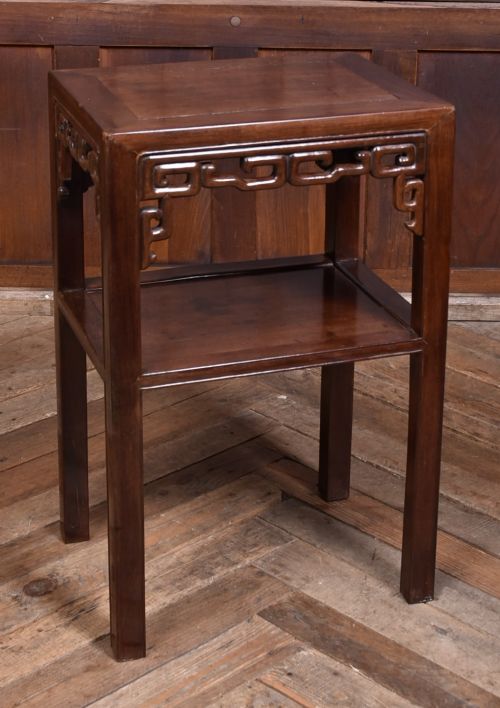
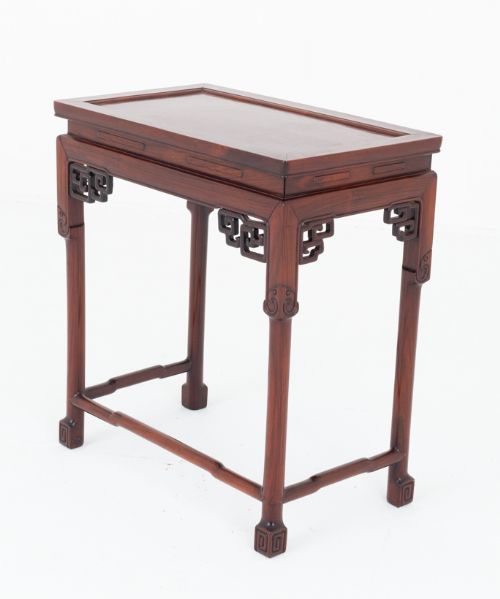
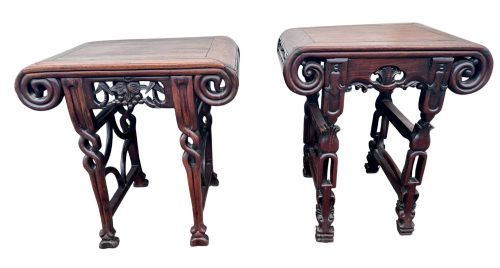
A carved asian plant table serves primarily to elevate planters, vases, and jardiniere vessels within a room. The items on this page span forms such as plant stands, pedestals, occasional tables, stools, and nests of tables.
Most examples originate from Chinese workshops, alongside specific pieces linked to Japanese production from the Meiji period and Anglo-Indian design. The timeline stretches across the nineteenth century into the early twentieth century, taking in Victorian imports and Qing dynasty pieces.
Buyers encounter circular, square, and shaped tops, often set at lower heights for pots or raised for display. Many pieces function equally well as side tables or lamp tables in contemporary interiors.
How they were made
Carpenters utilised dense tropical timbers such as hardwood, rosewood, hongmu, huali, padouk, huanghuali, and rootwood. These heavy woods allow for deep relief carving without compromising structural integrity.
Many tables incorporate inset panels of marble or quartz into the wooden frame, providing a cool, stable surface for damp flower pots. Other variants employ lacquer, paint, or mother of pearl inlay to decorate the surfaces.
Joinery techniques rely on tight interlocking joints suited to heavy materials, supporting the intricate openwork aprons and cabriole or straight legs typical of the style.
Sculpted wooden elephant seats complete with tusks wait patiently to carry small botanical passengers across the floor.
What varies in quality
The depth and crispness of the carving dictate much of the distinction between standard and superior pieces. Hand-carved details showing sharp undercut work and smooth finishing separate master workshops from routine production.
The choice of timber grain and colour uniformity play a major role in the standing of a piece. Dense hardwoods displaying exceptional natural figuring command greater regard than plain or unevenly stained timber.
The Carved Asian Plant Table Glossary
- Hongmu
- A dense, heavy Chinese hardwood often translated as red wood. It forms the basis of many traditional Qing dynasty stands.
- Jardiniere stand
- A tall piece of furniture specifically designed to hold a large ornamental plant pot or flower bowl. These often feature inset marble tops to protect the wood from water.
- Huali
- A fragrant, highly figured Chinese hardwood prized for fine cabinet making. Items fashioned from this timber display notable grain patterns.
- Rootwood
- Timber formed from the root mass of a tree, selected for gnarled, twisting natural shapes. Artisans incorporate these organic contours directly into table bases.
- Padouk
- A sturdy tropical hardwood valued for its strength and reddish hue. It appears frequently in nineteenth century pedestal tables and stands.
Carved Asian Plant Table: Frequently Asked Questions
What is a carved asian plant table used for?
These tables provide a sturdy raised platform for heavy ceramic planters, bronze vases, and decorative urns. They lift botanical displays off the floor to showcase the foliage and protect flooring.
In modern rooms, buyers frequently utilise them as compact side tables, lamp stands, or decorative accents beside seating.
How do I identify a Qing dynasty stand?
Qing dynasty pieces often display traditional motifs such as dragons, prunus blossom, or scrolling foliage carved deeply into dense hardwoods. Construction usually involves heavy timbers like hongmu or huali without modern metal fasteners.
Many incorporate inset marble tops and feature asymmetric or tiered designs characteristic of nineteenth century Chinese cabinet making.
Are marble top plant stands practical?
The inset marble or quartz slab provides a durable, waterproof surface that resists moisture damage from potted plants. It also offers a cool textural contrast against the carved dark hardwood frame.
Maintenance requires only simple dusting and occasional wiping of the stone surface with a damp cloth.
How do I care for antique hardwood tables?
Protect the timber from direct sunlight and sudden temperature shifts to prevent wood movement or splitting. Regular dusting with a soft cloth keeps the finish clean without buildup.
Applying a light coat of appropriate wax periodically helps nourish dense hardwoods like rosewood and padouk.