
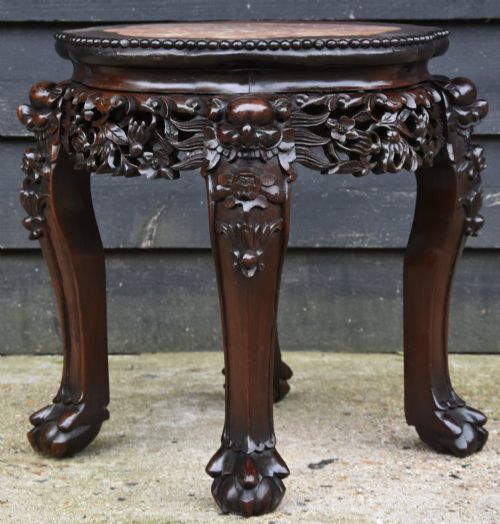
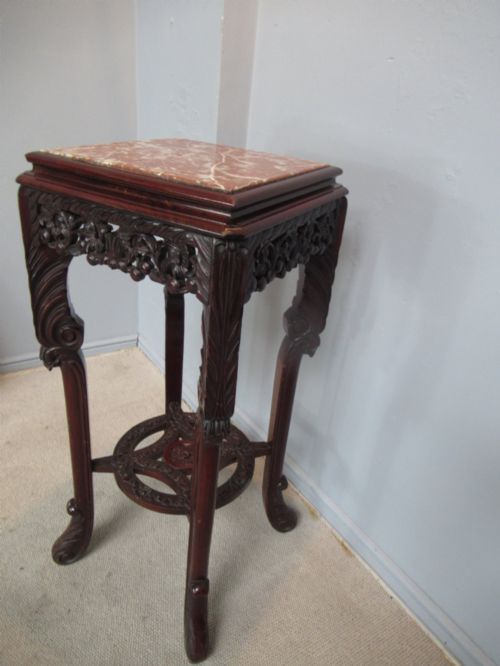
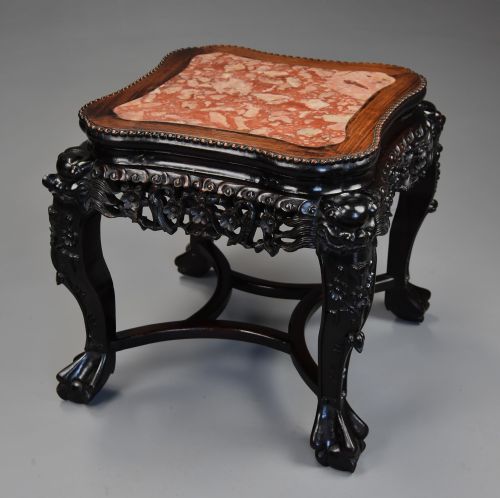
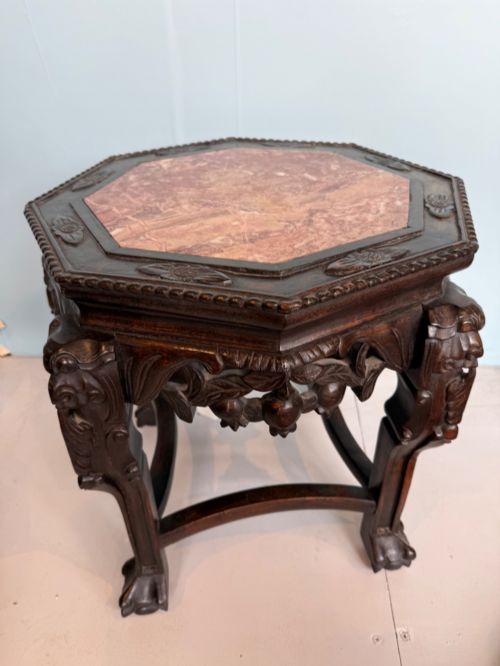

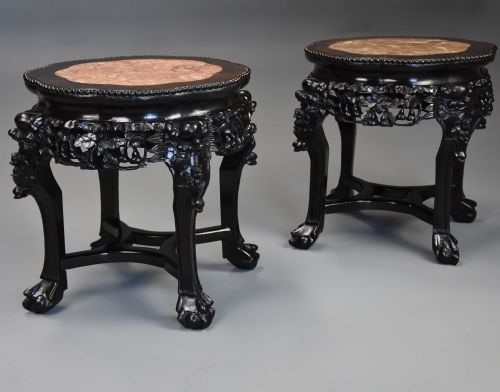


Chinese Carved Bonsai Stand
These dense timber and stone supports elevate miniature trees, bringing the sculptural lines of a chinese carved bonsai stand into domestic interiors.
Chinese Carved Bonsai Stand
A chinese carved bonsai stand serves as a traditional pedestal or low table designed to elevate small decorative trees, planters, and vases within an interior space. The pieces found here predominantly date from the nineteenth century and the Victorian era, aligning with the Qing dynasty and late nineteenth-century Chinese export periods.
Forms vary from low tables and kang or opium tables to tall pedestals, jardiniere stands, and urn supports. These objects function primarily as display platforms, often constructed with square, round, or shaped tops to accommodate specific vessels.
Originating largely from Chinese traditional workshops and later exported to Western markets during the Victorian period, these stands bridge Eastern joinery methods with domestic display requirements of the nineteenth century.
Materials and construction
Makers utilised dense exotic hardwoods including rosewood, hongmu, padouk, huali wood, and mahogany to construct the frames. These heavy timbers allow for deep, undercut carving without compromising the structural integrity of slender legs and aprons.
Many examples incorporate a rouge or white marble inset into the central top surface, providing a cool, stable platform for ceramic pots and bronze vessels. Traditional joinery techniques secure the hardwood frames together without relying on modern metal fasteners.
Assessing craftsmanship and finish
The distinction between ordinary and superior pieces rests upon the crispness and depth of the hand-carving along the apron and legs. Fine examples exhibit undercut floral or foliate motifs with sharp detail, whereas lesser items feature shallow, mechanical carving.
The selection and fitting of the inset marble top also mark a higher grade of manufacture. Tighter grain in the timber and seamless integration between the stone and the surrounding wood indicate superior workshop standards.
The Chinese Carved Bonsai Stand Glossary
- Hongmu
- A dense, dark red-brown traditional Chinese hardwood favoured for high-status furniture and display stands. It takes a fine polish and supports intricate carving.
- Padouk
- A heavy, durable tropical timber with a distinct reddish hue that darkens with age. Artisans utilised it for robust nineteenth-century stands.
- Huali wood
- A fragrant and highly figured hardwood from the rosewood family used in Qing dynasty scholar furniture. Its rich grain patterns make it desirable for display pieces.
- Jardiniere stand
- A tall or low table specifically proportioned to hold a ceramic flower pot or plant container. These stands protect interior surfaces and elevate greenery.
- Kang table
- A low-profile platform table originally used on heated brick beds in northern China for dining or writing. In Western contexts, they function as small coffee or display tables.
Chinese Carved Bonsai Stand: Frequently Asked Questions
What is a chinese carved bonsai stand used for?
These pieces function as elevated display platforms for potted miniature trees, ceramic jardiniere bowls, and decorative bronze vases. They place sculptural objects at a comfortable viewing height.
Historically, scholars and collectors utilised them in studies and reception rooms to focus attention on natural specimens and fine ceramics.
How do I date a nineteenth-century stand?
Dating relies on timber selection, tool marks, and stylistic indicators associated with the Qing dynasty and Victorian trade periods. Heavy dense woods and hand-cut joinery are typical markers.
Later pieces often show standardised machine finishing, whereas nineteenth-century examples display individual variations in carving depth and timber patination.
How do I care for antique hardwood furniture?
Maintaining these dense timbers requires keeping them away from direct heat sources and sudden humidity changes. Consistent indoor climates prevent the wood and marble from splitting.
Occasional dusting with a soft, dry cloth preserves the natural polish of rosewood and hongmu without the need for heavy chemical waxes.