


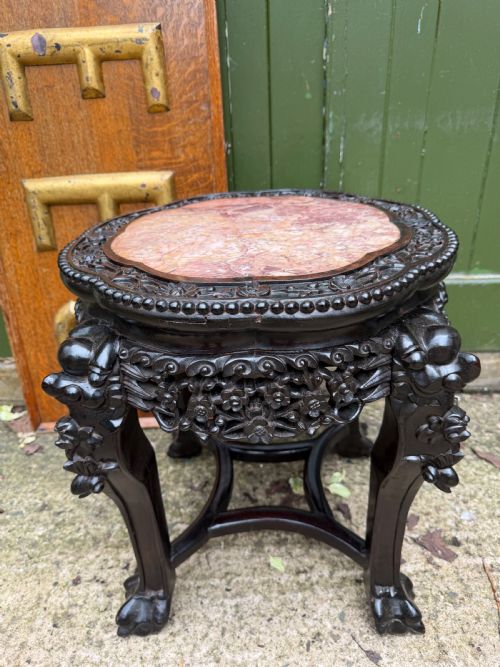

Chinese Carved Marble Table
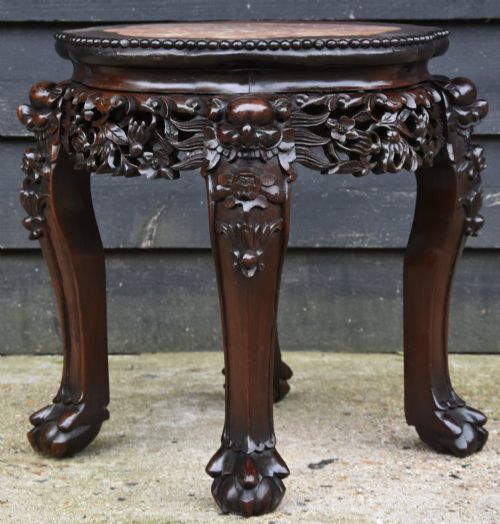
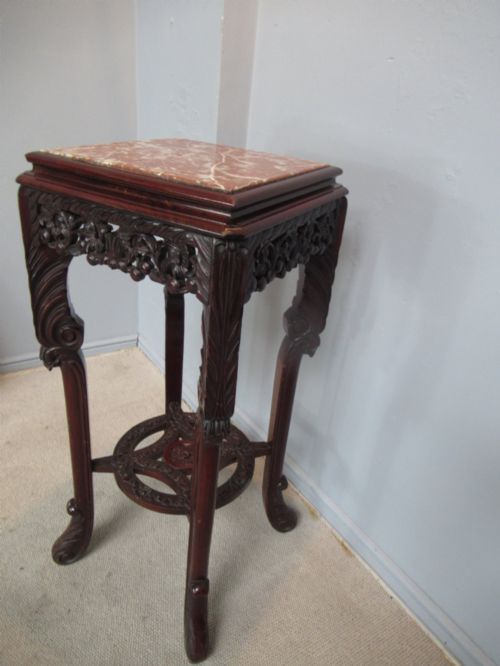
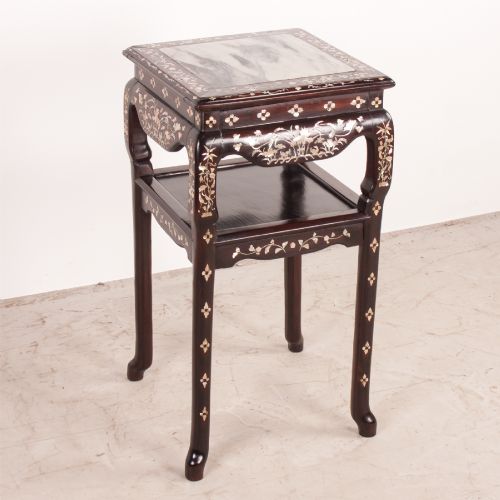
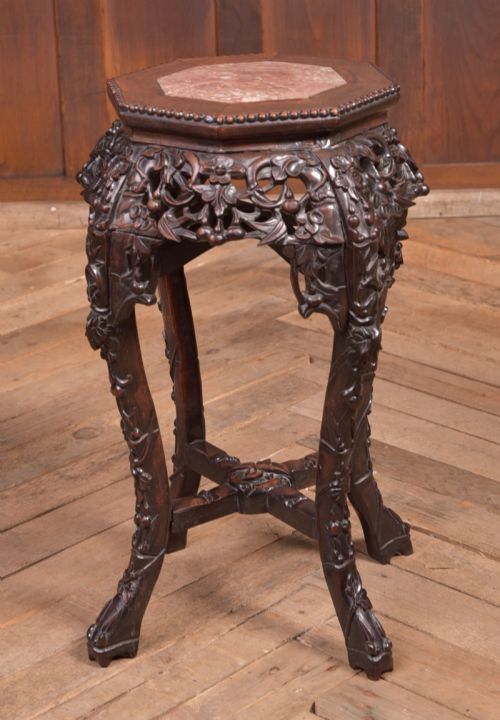
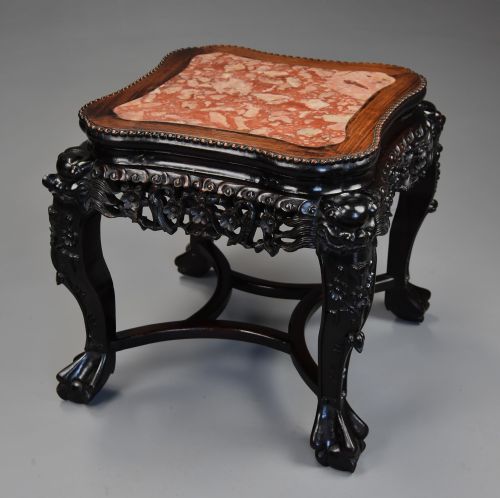
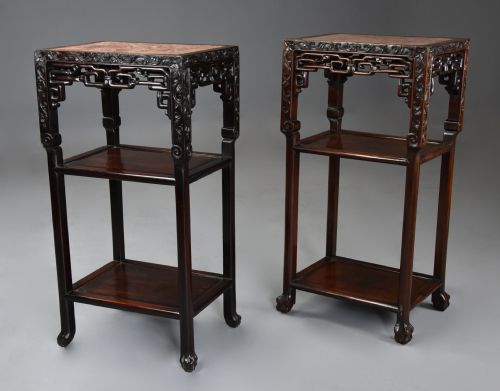
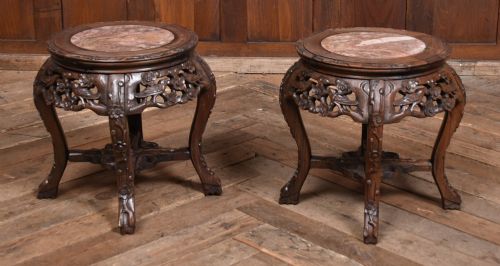
These pieces are a chinese carved marble table, solid hardwood furniture built for holding plants, lamps and ornaments with cool stone surfaces.
Chinese Carved Marble Table
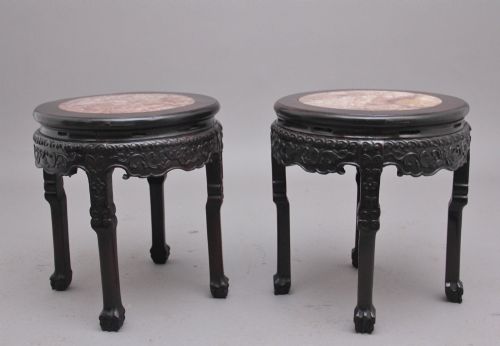
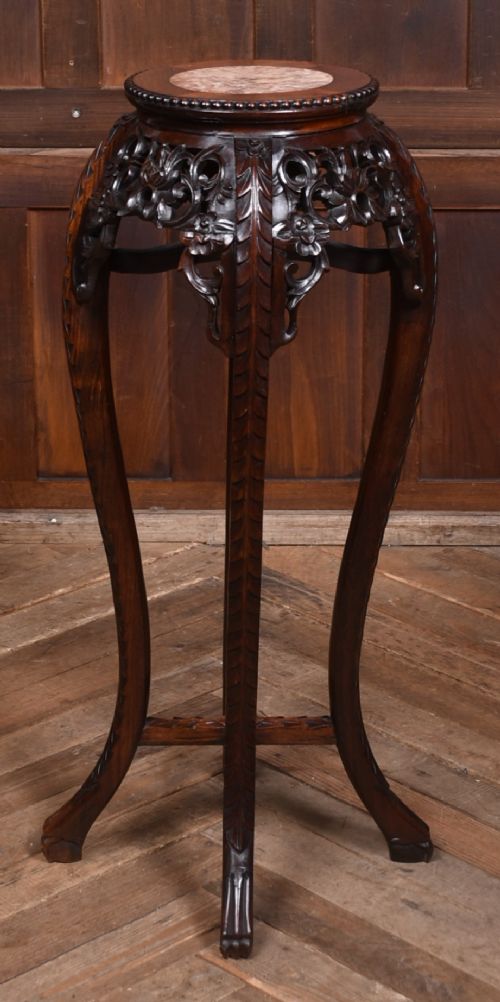
A chinese carved marble table encompasses a wide variety of low stands, plant holders, and occasional furniture rooted in the Qing Dynasty and late nineteenth century export trade. The most common form on this page is the compact jardiniere or pot stand, designed with a circular or shaped top to display heavy ceramic vessels.
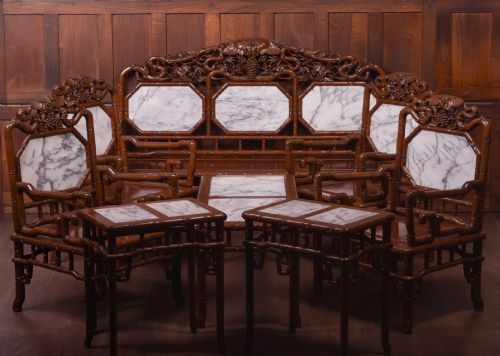
Makers produced these pieces primarily for domestic use in China as well as for Western export markets during the Victorian and Edwardian eras. Buyers encounter everything from small pedestal urn stands to larger rectangular centre tables and matched pairs intended for formal parlours.
Materials and construction methods
Carpenters utilised dense tropical timbers such as rosewood, padouk, and hongmu, often grouping them broadly under carved hardwood or rootwood. These heavy woods provided the structural strength required for deeply undercut frames and complex pierced aprons.
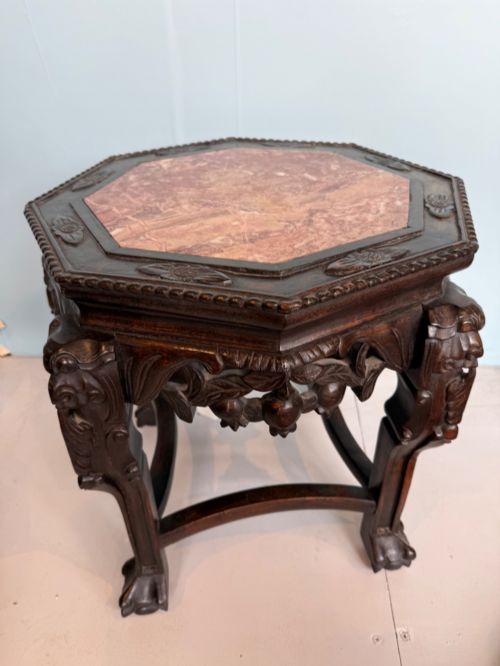
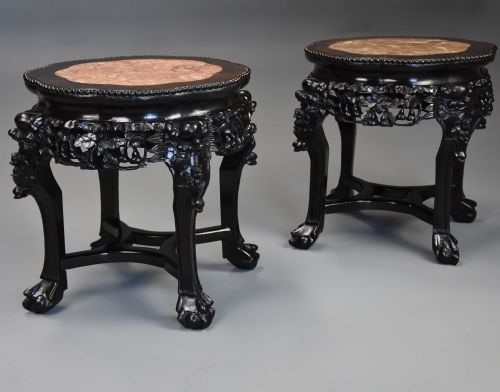
Artisans inset smooth slabs of marble, rouge marble, or occasionally quartz and mother-of-pearl directly into the timber tabletops. The stone panels were chosen for their natural grain and cool contrasting texture against the dark, polished woodwork.
Listings feature items spanning the 19th century, Victorian, and Edwardian periods, constructed from rosewood, padouk, and rootwood.
Distinctions in craftsmanship and design
The standard of a chinese carved marble table depends heavily on the depth and crispness of the hand carving across the apron and legs. Finer examples display deeply undercut floral or zoomorphic motifs without looseness in the joined timber frame.
Material selection also dictates overall grade, with richly figured rouge marble and dense rosewood or hongmu commanding greater attention than plain timber or standard grey stone panels. Matched pairs and unusual multi-tier configurations represent higher tiers of historical output.
The Chinese Carved Marble Table Glossary
- Jardiniere
- A large ornamental pot or planter designed for flowers, which these tables frequently support.
- Hongmu
- A traditional Chinese term translating to red wood, applied to dense, prized dense tropical hardwoods used in fine furniture.
- Rouge marble
- A deep reddish variety of stone with varied white and dark veining, frequently chosen for tabletop inserts.
- Padouk
- A heavy, durable reddish-brown timber utilised widely for carved stands and occasional tables.
- Inset top
- A stone or wood panel fitted flush into a recessed wooden frame within the table surface.
Chinese Carved Marble Table: Frequently Asked Questions
What were these stands originally used for?
These pieces served primarily as elevated platforms for heavy porcelain planters, bronze urns, and decorative table lamps within traditional interiors.
Their sturdy timber construction and cool stone tops protected fine wooden flooring and furniture from dampness and soil.
How do I clean the marble top?
Wipe the stone surface gently using a soft, damp cloth with mild neutral soap if necessary to remove surface dust.
Avoid acidic cleaning agents or harsh chemicals that can etch the polished finish of the marble or stain the surrounding hardwood.
Are these tables from the Qing Dynasty?
Many examples date from the late nineteenth century during the Qing Dynasty or the subsequent export period up to the early twentieth century.
Stylistic markers and construction techniques help differentiate traditional Chinese workshop pieces from later Western reproductions.
Can I use a plant stand as a side table?
The compact surface area and sturdy height make these stands suitable for holding small drinks, books, or bedside lamps.
Ensure the base is sufficiently broad and stable if placing items on taller, narrower pedestal forms.