

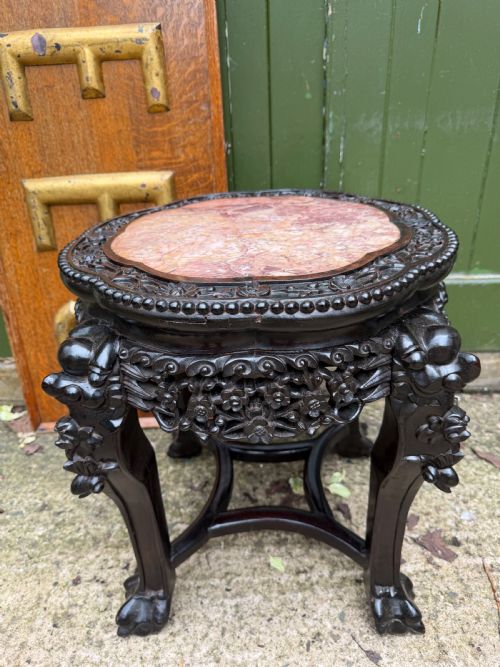


Qing Dynasty Jardiniere Stand
A qing dynasty jardiniere stand elevates heavy ceramic planters and bronze vessels with carved timber and inset stone.
Qing Dynasty Jardiniere Stand
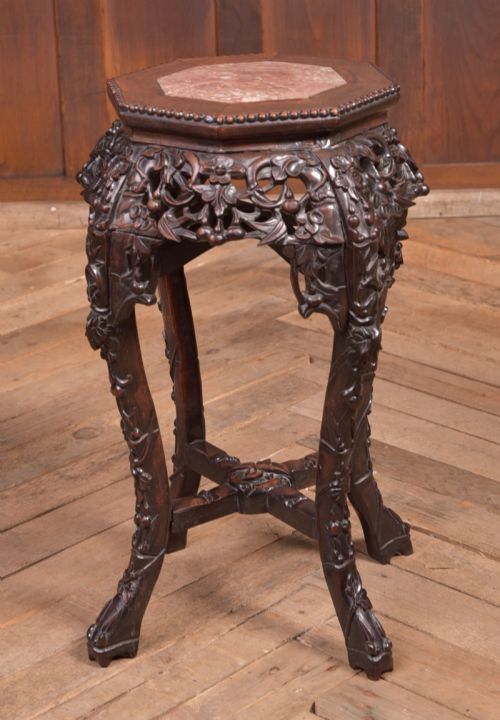
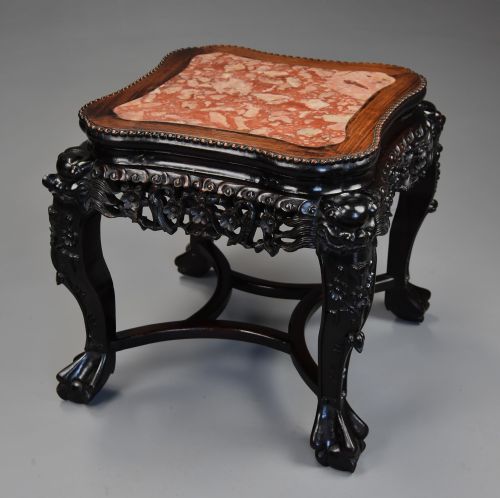
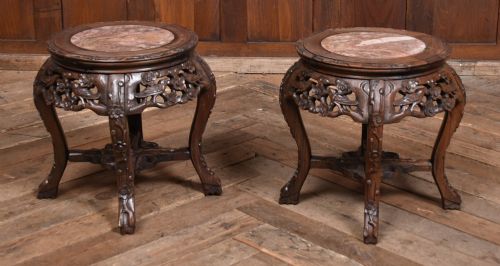
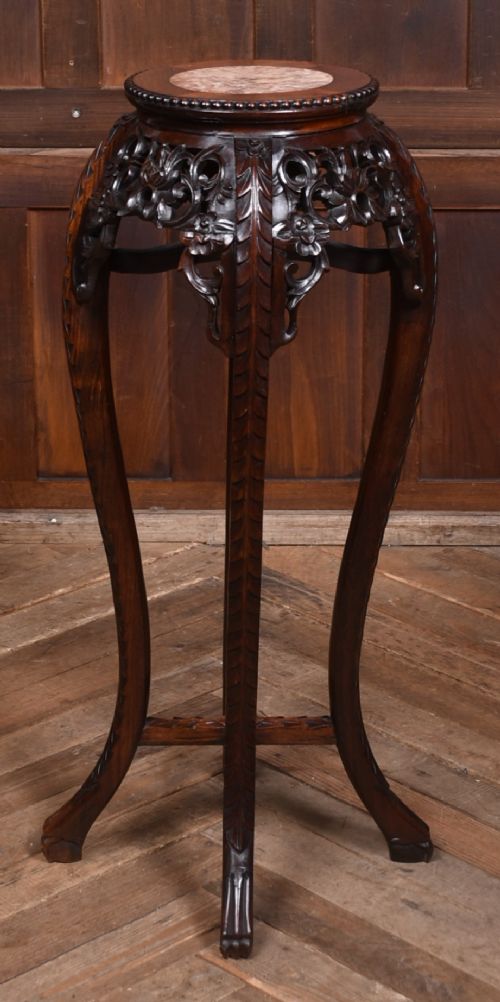
A qing dynasty jardiniere stand is a low or tall table built to hold a plant pot, vase, or planter in a traditional interior. The examples gathered here appear as plant stands, vase stands, and occasional side tables originating from the nineteenth century.
Most pieces on this page combine dense Asian hardwoods with inset marble tops, though some incorporate lacquer, enamel, or copper. They serve equally well today as lamp tables or small display surfaces for decorative objects.
How they were made
Cabinetmakers constructed these frames using hardwoods such as padouk, rosewood, and hongmu, often shaping the timber with deep relief carvings and pierced aprons. Heavy tropical woods provided the structural strength required to support weighty stone panels and large ceramic planters without warping.
Varying forms of marble, including variegated rouge stone, were cut to fit precisely into recessed tops to resist moisture from potted plants. Artisans also utilised mother-of-pearl inlay, ebonising, and lacquer techniques to decorate the wooden frames.
Several stands double as fish-bowl holders, ensuring ancient goldfish enjoyed an elevated view.
What varies in quality
Quality rests in the depth and crispness of the wood carving, the selection of the timber grain, and the thickness of the inset marble panel. Superior examples display intricate, undercut foliage and robust joinery that remains tight after generations of use.
The integration of the stone top into the wooden frame indicates the standard of workshop execution. Pieces with well-matched marble figuring and substantial proportions stand apart from simpler utility tables.
The Qing Dynasty Jardiniere Stand Glossary
- Hongmu
- A dense, dark red-brown Asian hardwood prized for high-end furniture and stands. It takes a fine polish and supports intricate carving.
- Jardiniere
- A large ornamental pot or container for plants or flowers. These vessels sat atop specialised stands to protect interior flooring and display foliage.
- Padouk
- A heavy, durable timber with a reddish hue used extensively in traditional Chinese furniture making. It provides exceptional stability for load-bearing stands.
- Rouge marble
- A decorative stone featuring red and pink tones with white veining. It was commonly cut into circular or multi-sided panels for table inserts.
- Cloisonne
- An enamelling technique where metal wire forms compartments on a base to hold coloured paste. Vessels decorated this way often paired with matching plant stands.
Qing Dynasty Jardiniere Stand: Frequently Asked Questions
What is a jardiniere stand used for?
These pieces originally elevated heavy ceramic planters and bronze fishbowls to display indoor plants and decorative arrangements at a convenient height.
Today they function as compact side tables, lamp stands, or pedestals for sculptures in domestic spaces.
How do I identify a nineteenth-century piece?
Nineteenth-century stands display dense hardwoods like rosewood or padouk combined with hand-carved details and traditional mortise and tenon joinery.
Examine the underside and the fit of the marble insert to understand the construction methods of the period.
Can these stands support heavy items?
The dense tropical hardwoods used in these stands provide substantial weight-bearing capacity for large ceramic pots and heavy decorative objects.
The sturdy frames and inset stone panels were specifically engineered to handle the downward pressure of water-filled planters.
Are pairs common for these stands?
Matching pairs appear frequently among nineteenth-century examples, often intended to flank doorways, windows, or furniture groupings.
Individual stands also occur regularly for single display corners or placement beside chairs.