

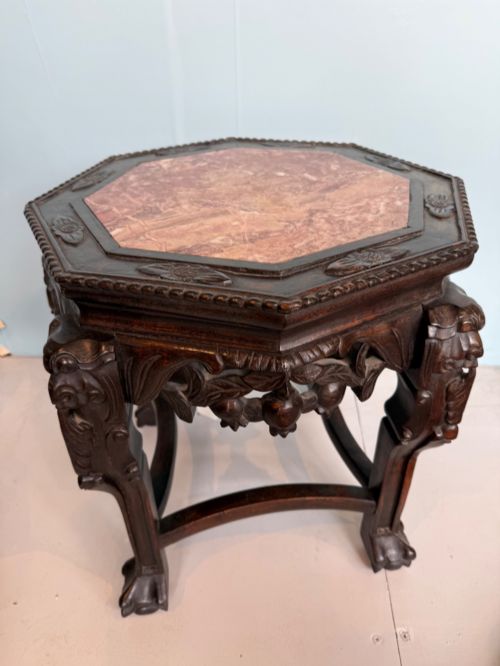


Chinese Cabriole Leg Stand
These Chinese cabriole leg stand pieces bring carved hardwood and marble surfaces into a room.
Chinese Cabriole Leg Stand
A Chinese cabriole leg stand functions primarily as a plant stand, jardiniere stand, vase stand, or occasional side table within the home. When you search for a Chinese cabriole leg stand, you encounter plant stands, cabinets, and side tables designed with curved supports.
The pieces appearing on this page span the eighteenth century, nineteenth century, Victorian era, and nineteen hundred. Hardwood, rosewood, and ebonised wood form the primary structures, frequently paired with inset marble tops or lacquered finishes.
Makers and artisans produced these items under Chinese Export, Qing Dynasty, and Chinoiserie styles. The nineteenth-century examples dominate the selection, offering carved details suited for displaying ceramics and plants.
How they were made
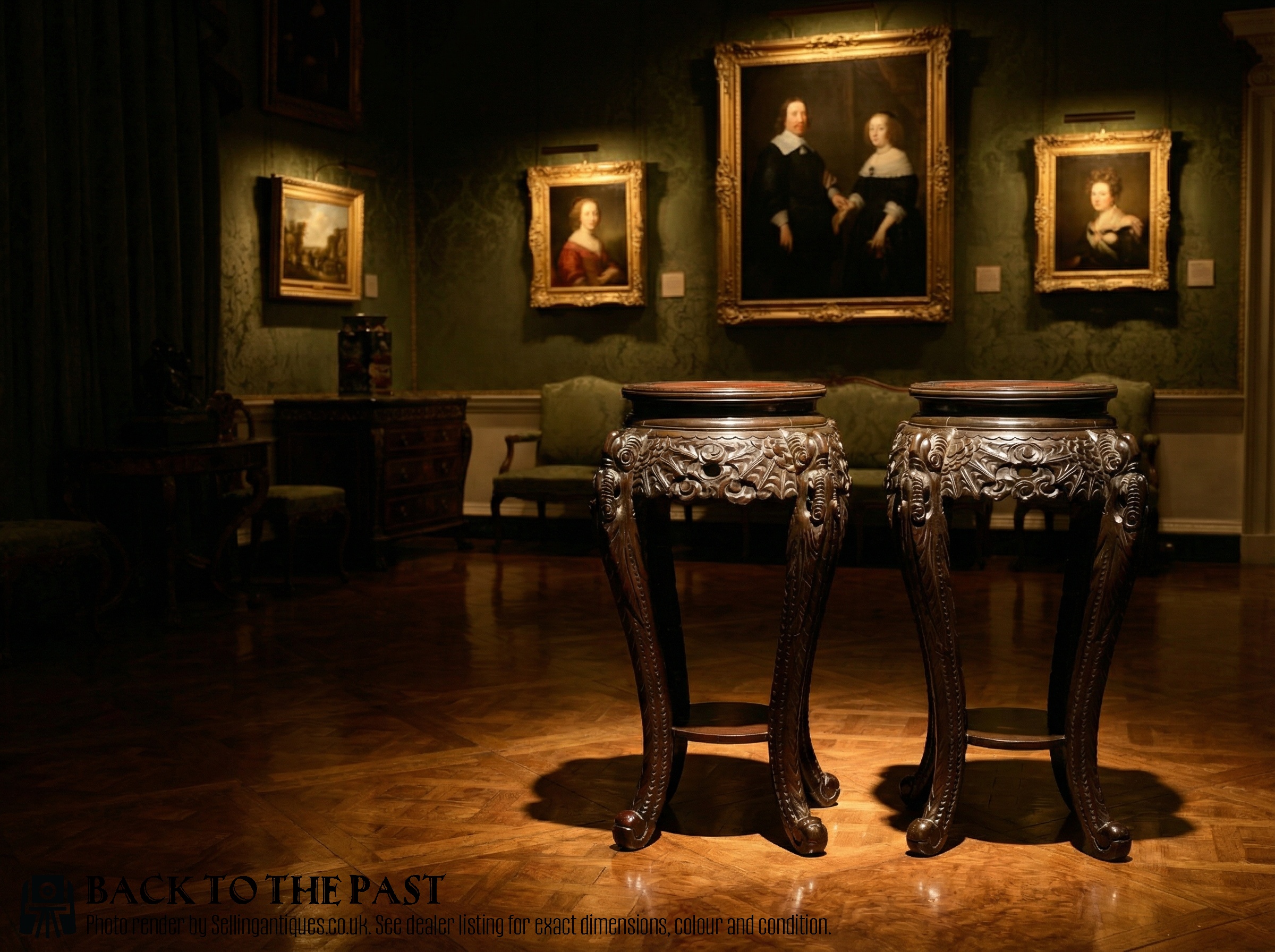
Craftsmen utilised dense timbers such as hardwood and rosewood to construct the frames and curved legs. Wood is frequently ebonised or finished with lacquer to achieve a dark, lustrous surface.
Marble inserts provide a cool, flat surface on top of the stands for heavy vases and planters. Artisans also incorporated brass elements and gold leaf details to accent the carved wooden structures.
Chinese Cabriole Leg Stand Retail Price Guide 2026
Typical asking prices for chinese cabriole leg stand among the pieces listed under this phrase on Sellingantiques today, from the lower quarter to the upper quarter. They describe what is for sale here now, not the wider market.
Listings feature items from the eighteenth century, nineteenth century, and nineteen hundred, constructed in hardwood, rosewood, marble, and lacquer.
What varies in quality
The depth and crispness of the carving distinguish finer pieces from simpler items. Relief work on the hardwood frames shows varying degrees of hand skill and botanical detail.
The quality of the inset marble top and the richness of the lacquer or ebonised finish alter the visual weight of the stand. Heavier rosewood construction generally denotes a higher grade of manufacture.
The Chinese Cabriole Leg Stand Glossary
- Cabriole leg
- A furniture leg that curves out and then in, resembling an animal's leg. This form appears frequently on eighteenth and nineteenth century stands.
- Jardiniere stand
- A tall table specifically designed to hold a plant container or flower pot. These often feature circular marble tops to resist moisture.
- Ebonised wood
- Timber treated to resemble ebony through staining or painting. This dark finish creates a formal appearance on Victorian side tables.
- Chinoiserie
- European artistic styles reflecting Chinese motifs and techniques. Artisans applied these designs to furniture produced for export.
- Qing Dynasty
- The final imperial dynasty of China, spanning from sixteen forty-four to nineteen twelve. Many carved hardwood items date from this era.
Chinese Cabriole Leg Stand: Frequently Asked Questions
What were these stands used for?
These pieces served primarily to elevate heavy porcelain vases, jardiniere bowls, and decorative plants within a room. Their sturdy frames supported display items securely at a convenient viewing height.
They functioned as occasional side tables or plant stands in reception rooms. The marble tops protected the wooden structure from water spilled during plant watering.
How do I date a Chinese stand?
Dating relies on identifying the wood species, carving style, and construction methods used by the maker. Eighteenth-century examples often display distinct lacquer work and simpler joinery.
Nineteenth-century and Victorian pieces frequently incorporate dense hardwoods with elaborate floral carvings. Reference to specific periods like the Qing Dynasty helps narrow the timeline.
Where should I place a stand?
Position these stands in corners or beside seating areas to display ceramics or trailing plants. Their compact footprints suit smaller spaces where surface area is needed.
Keep them away from direct heat sources to protect the wood and lacquer finishes. Placing a heavy vase on the marble top balances the visual weight of the carved legs.
What materials are most common?
Hardwood and rosewood form the structural core of the majority of these items. Artisans frequently added rouge marble inserts to the top surfaces.
Secondary materials include brass, gold leaf, and ebonised wood coatings. Lacquer finishes appear on both cabinets and plant stands.