
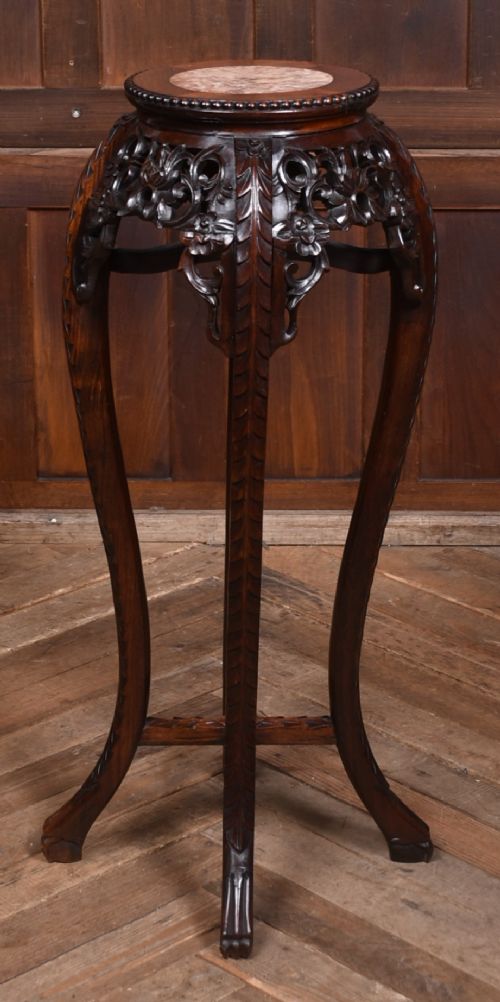


Oriental Carved Pedestal
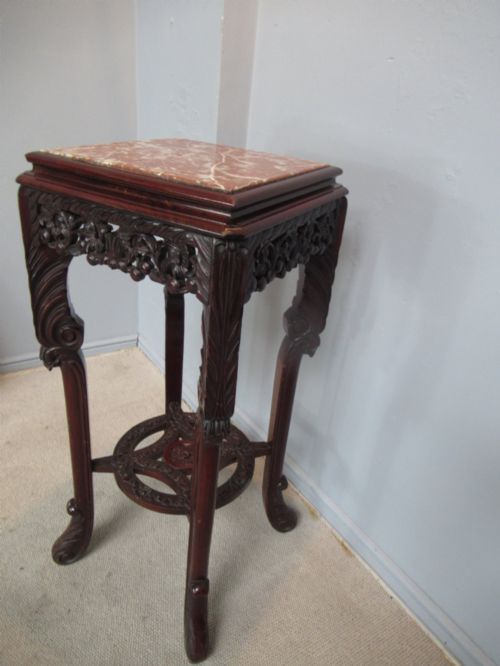
An oriental carved pedestal brings rich timber and intricate hand carving into a room, serving as a sturdy base for plants and vases.
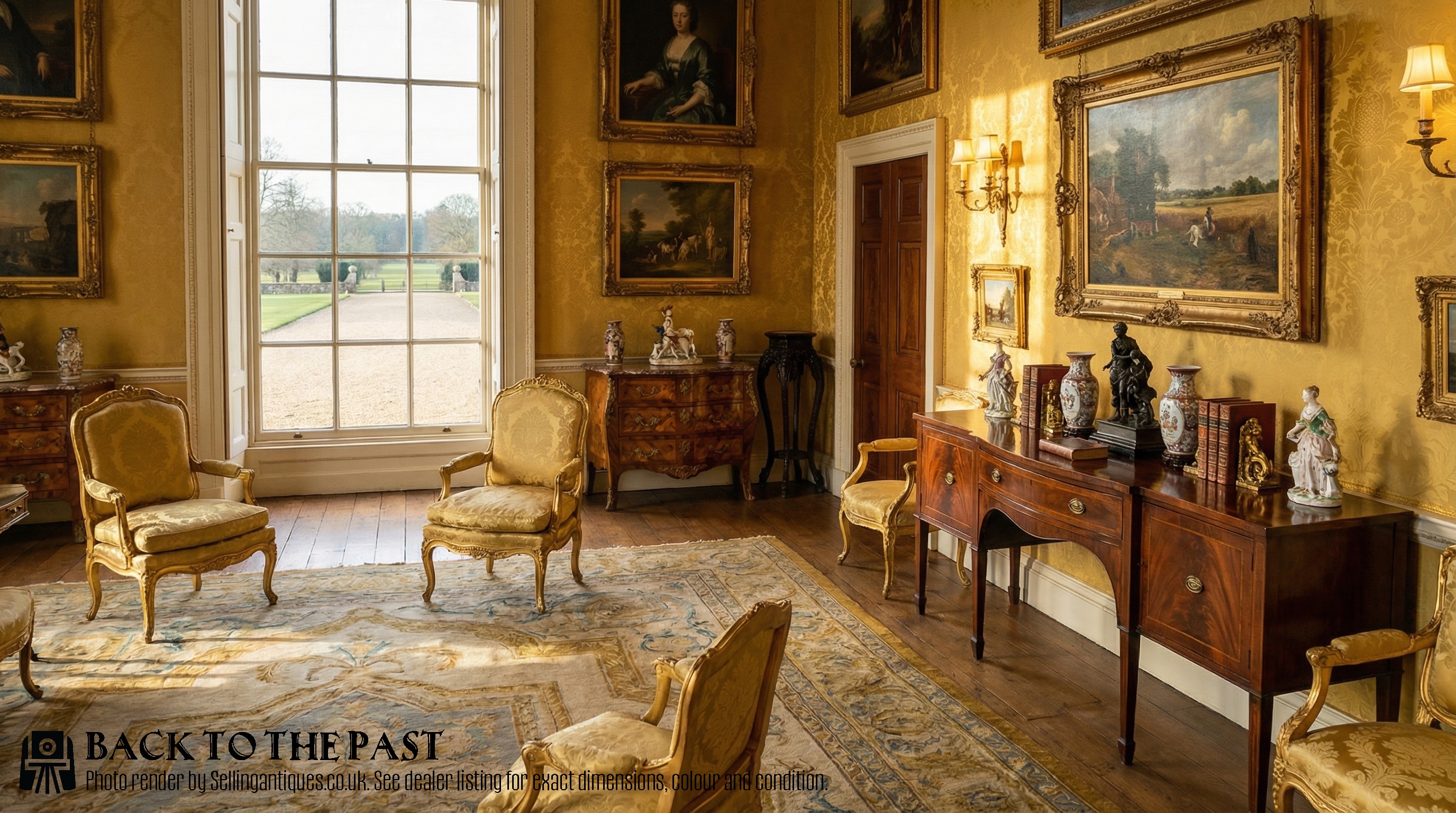
Oriental Carved Pedestal
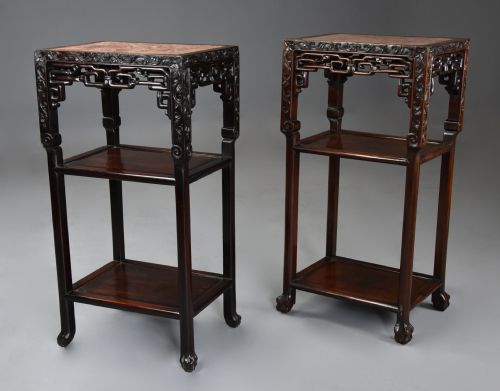
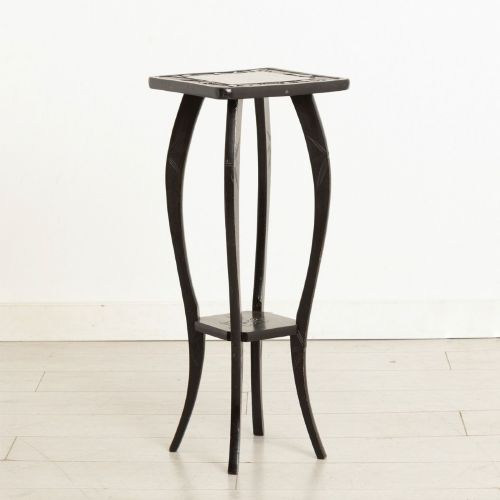
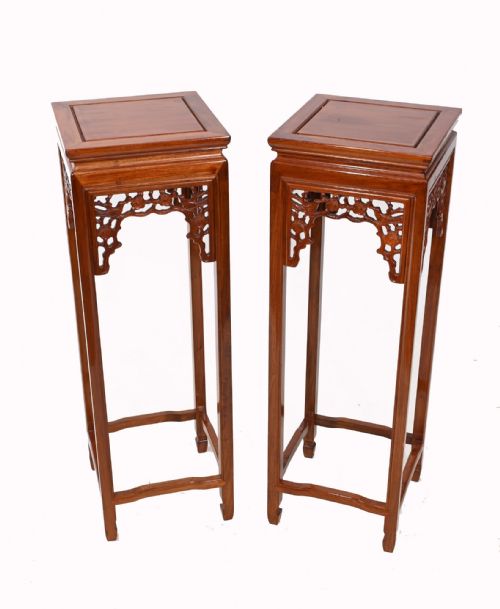
An oriental carved pedestal typically appears as a plant stand, jardiniere stand, or vase table designed to elevate heavy ceramic vessels and decorative objects. These pieces emerge predominantly from the nineteenth century, including Victorian and late Qing Dynasty periods, reflecting global trade and interior taste of the era.
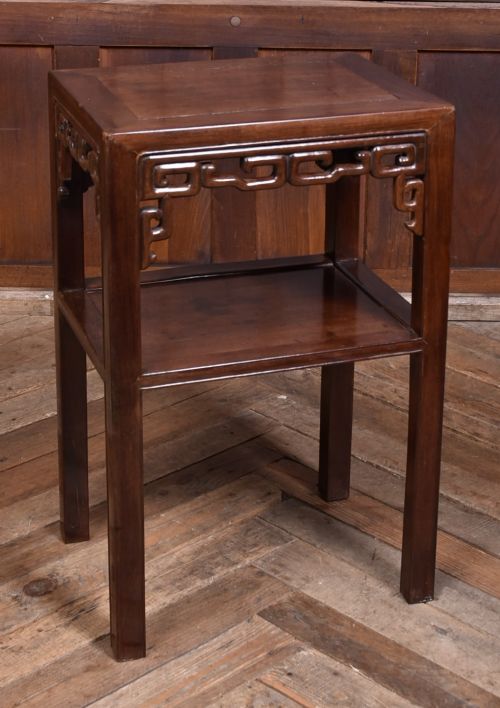
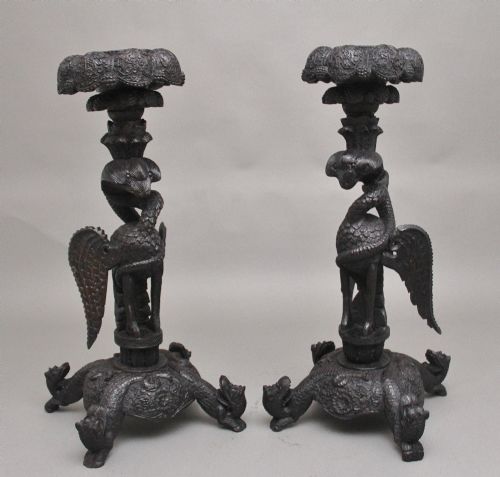
Forms range from tall torcheres and square pot stands to round occasional tables and bonsai displays. Most examples originate from Chinese workshops, alongside Anglo-Indian, Japanese, and Burmese pieces produced in similar traditional styles.
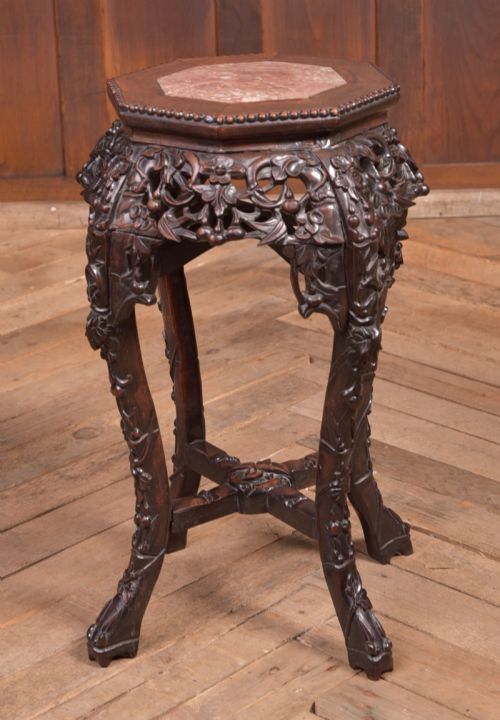
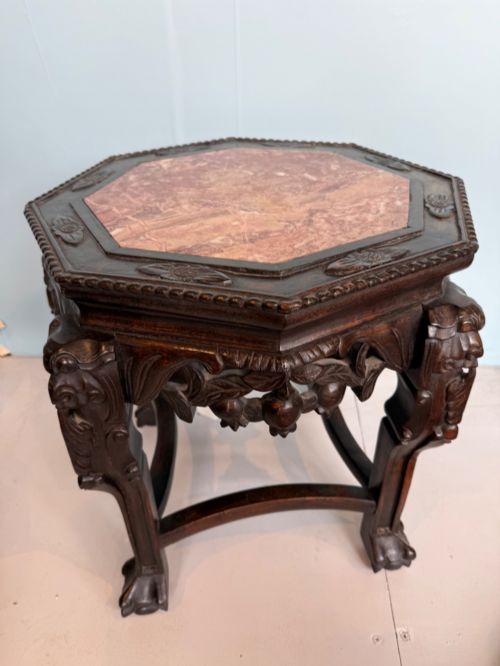
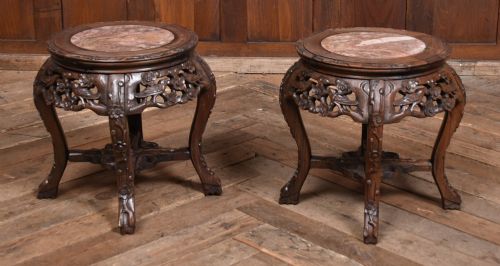
Buyers meet sturdy hardwood structures, often paired with inset marble tops or deep quartz surfaces. The designs utilise dense timbers capable of supporting substantial weight while displaying deep relief carving.
Materials and construction
Maker workshops rely on dense tropical hardwoods such as rosewood, padouk, teak, and ebonised wood to build these stands. These heavy timbers provide the structural strength needed for tall pedestals and multi-tiered side tables without warping.
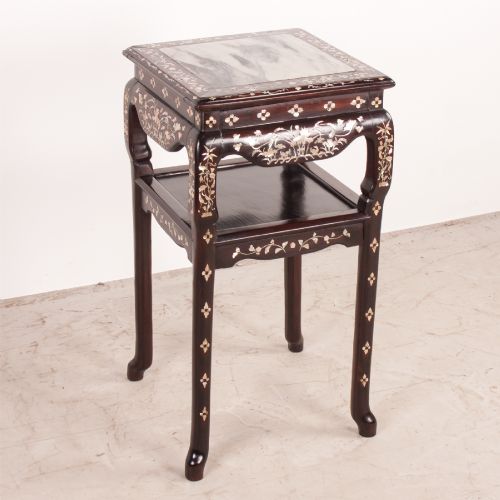
Surfaces receive intricate hand carving depicting floral motifs, dragons, and traditional scenes, sometimes combined with mother of pearl inlay or lacquer work. Inset tabletops frequently employ smooth rouge marble or quartz fitted tightly into wooden frames.
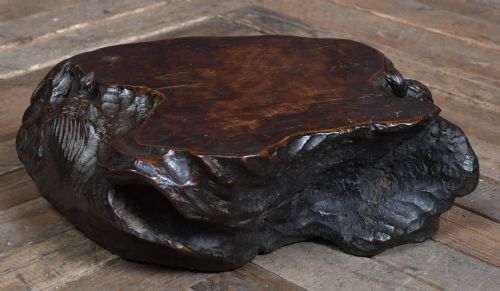
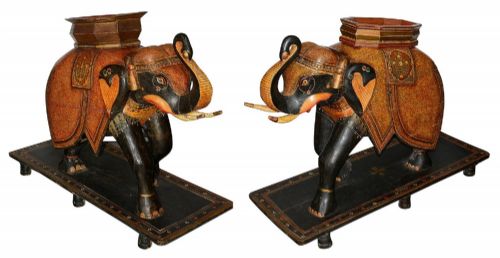
Several stands double as resting spots for carved wooden elephants and turtles rather than standard potted plants.
Judging quality and execution
The distinction between ordinary and superior pieces lies in the crispness and depth of the hand carving. Finer examples show sharp undercut details and well-defined motifs rather than soft, shallow incisions.
Material selection and assembly determine overall longevity. High quality stands use heavy, solid tropical hardwoods and accurately fitted marble inserts that sit flush with the surrounding timber frame.
Liberty of London
The Oriental Carved Pedestal Glossary
- Jardiniere stand
- A low or tall table specifically designed to hold a ceramic flower pot or plant bowl. These pieces usually feature a reinforced top to bear the considerable weight of wet soil and glazed pottery.
- Torchere
- A tall standing pedestal meant to support a light source or decorative vase. Originating as candle stands, these pieces provide vertical interest in a room.
- Padouk
- A heavy, durable tropical hardwood prized for its reddish-brown colour and dense grain. Makers utilise this timber for substantial carved stands and furniture.
- Quartz
- A hard mineral stone occasionally utilised for tabletops and decorative inserts in oriental stands. It provides a cool, smooth surface contrasting with dark carved wood.
- Ebonised wood
- Timber treated with a dark finish to imitate expensive ebony wood. This technique appears on nineteenth-century stands and decorative objects.
Oriental Carved Pedestal: Frequently Asked Questions
What is an oriental carved pedestal used for?
These pieces serve primarily to elevate ceramic planters, vases, and lamps above floor level. They place decorative objects at eye height while adding architectural interest to empty corners.
Historically, households used them to display prized porcelain and potted plants within formal reception rooms. Today, they function similarly in domestic interiors as accent furniture.
How do I care for a hardwood stand?
Maintain the timber by dusting regularly with a dry cloth and avoiding excessive moisture. Keep wooden pieces away from direct heat sources to prevent timber movement.
Clean marble or quartz inserts gently with a damp cloth and mild soap. Prevent harsh chemical cleaners from contacting the surrounding carved wood.
How can I tell nineteenth century pieces apart?
Examine the timber density, tool marks, and construction joints for signs of traditional hand production. Nineteenth-century items often display heavier tropical hardwoods and natural wax patination.
Compare stylistic details such as Qing Dynasty motifs or Anglo-Indian carving patterns. Regional workshops utilised distinct jointing methods and timber species unique to their production era.
Are marble top stands fragile?
The marble or quartz inserts add considerable weight and stability to the overall stand. However, the stone slabs themselves can crack under sudden impact or uneven pressure.
Handle the inset tops carefully if removing them for cleaning or transport. Ensure the supporting wooden framework remains structurally sound to hold the heavy stone securely.