


Chinese Marble Inset Stand
A Chinese marble inset stand brings solid timber and cool stone together to elevate plants, lamps and vessels in any room.
Chinese Marble Inset Stand
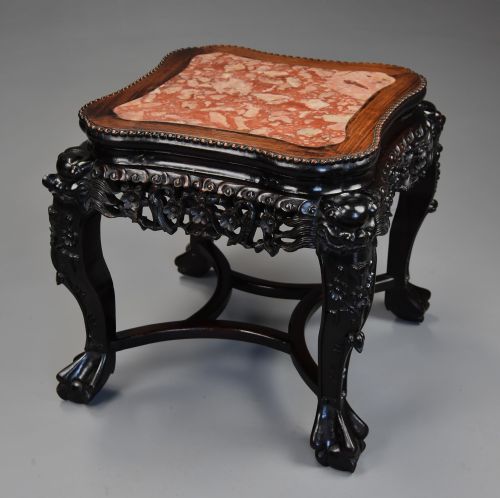
A Chinese marble inset stand primarily takes the form of a plant stand, jardiniere stand, vase stand or low occasional table. These pieces emerge from the nineteenth century, including the Victorian era and the Qing Dynasty, continuing through to the Republic period around nineteen thirty.
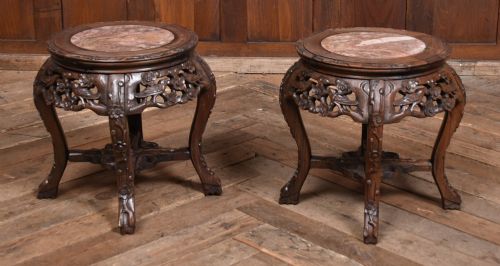
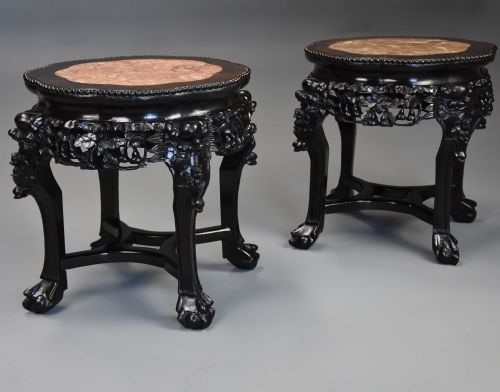
Buyers encounter single examples alongside matched pairs in various heights, from low barrel forms to tall pedestal tables. The top surface holds a smooth panel of marble, surrounded by carved wooden frames designed to support heavy ceramics.
Materials and construction
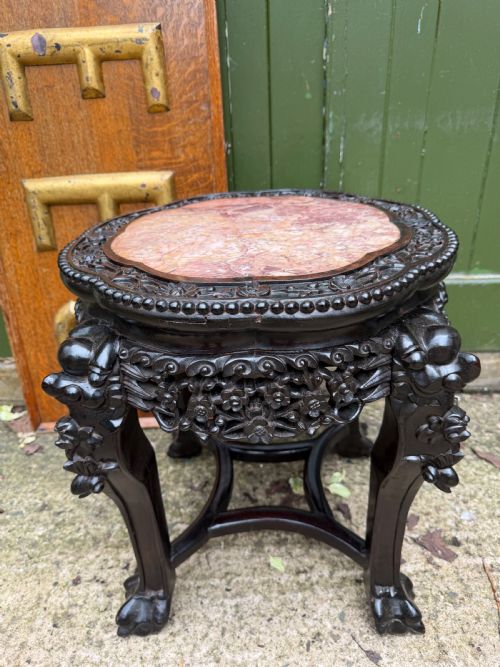
Craftsmen construct these stands using dense timbers such as rosewood, padouk, hongmu and ebonised hardwood. These heavy woods allow for deep, intricate carving along the apron and legs without compromising structural stability.
A contrasting disc or slab of marble, frequently displaying rouge or variegated colouration, sits precisely flush within the wooden frame. This stone insert provides a cool, moisture-resistant surface suited to holding plants and water-filled vessels.
Some nineteenth-century makers experimented with unusual barrel shapes for their low occasional tables.
Assessing craftsmanship
Quality rests in the depth and crispness of the carved detail on the hardwood frame, where sharper relief and undercut work distinguish superior examples. The tightness of the joinery around the marble inset also indicates the maker's precision.
The choice of timber creates further distinction, with dense woods like hongmu and padouk holding finer details than softer or ebonised alternatives. The figuring and smoothness of the marble slab complete the balance between stone and timber.
The Chinese Marble Inset Stand Glossary
- Hongmu
- A dense, dark traditional Chinese hardwood used for high-end furniture and stands. It polishes to a deep reddish-brown sheen.
- Padouk
- A heavy, durable exotic timber valued for its rich colour and stability. It provides a sturdy framework for carved decorative furniture.
- Jardiniere
- A large ornamental pot or container for plants and flowers. Stands built for these often feature reinforced circular frames.
- Rouge marble
- A decorative stone featuring reddish tones and prominent veining. It creates a striking contrast against dark carved hardwoods.
Chinese Marble Inset Stand: Frequently Asked Questions
What were Chinese marble inset stands originally used for?
These stands served to elevate heavy ceramic fishbowls, large planters, vases and bronze vessels off the floor. This placement protected valuable porcelain and displayed prized botanical specimens at a convenient height.
Over time, they adapted to hold table lamps and decorative objects in domestic interiors, functioning as small side tables or lamp stands.
How do I care for the marble top?
Clean the stone surface using a soft, damp cloth and dry it immediately to prevent water marks. Avoid acidic or abrasive cleaners that can etch the polish.
Use protective pads beneath heavy pots or metal objects to prevent scratches on both the marble and the surrounding wood.
Are these stands sturdy enough for heavy plants?
The dense hardwoods used in these pieces, such as hongmu and padouk, provide substantial structural weight and strength. They support heavy ceramic planters and large urns securely.
Check that the joints remain tight and the central platform is level before placing heavy items on the surface.
How can I distinguish between a plant stand and a side table?
Plant stands and jardiniere stands tend to have taller, more compact footprints with circular or shaped tops designed for specific vessels. Side tables and low occasional tables offer wider surfaces suited for general placement alongside seating.
Many nineteenth-century examples bridge this gap, functioning equally well as low tables or urn stands.