


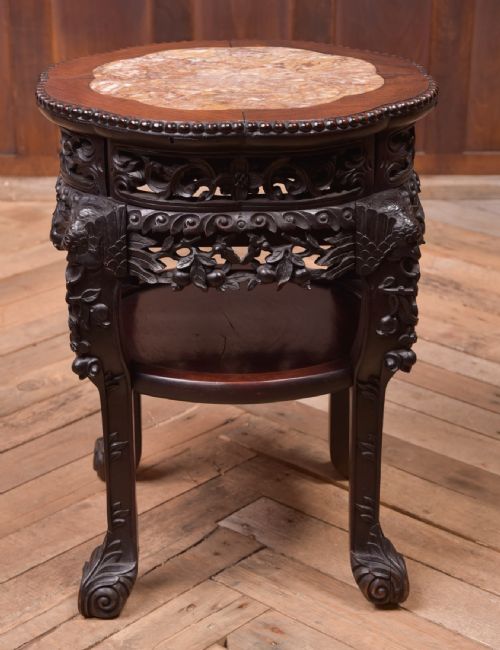
Dark Hardwood Pot Stand
These dark hardwood pot stand pieces elevate indoor plants and display ceramics, bringing solid construction and rich grain to your room.
Dark Hardwood Pot Stand
When you search for a dark hardwood pot stand, you encounter raised platforms designed to display plants, urns, and decorative ceramics. These items originate from Victorian Britain and late 19th-century China, alongside Japanese export workshops.
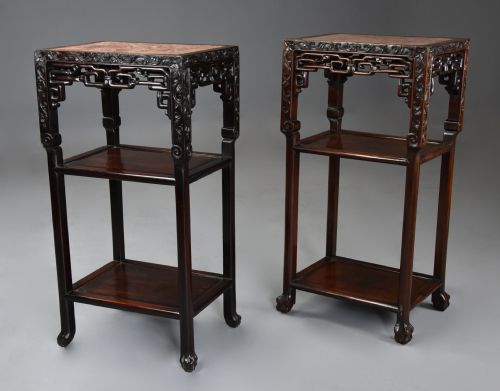
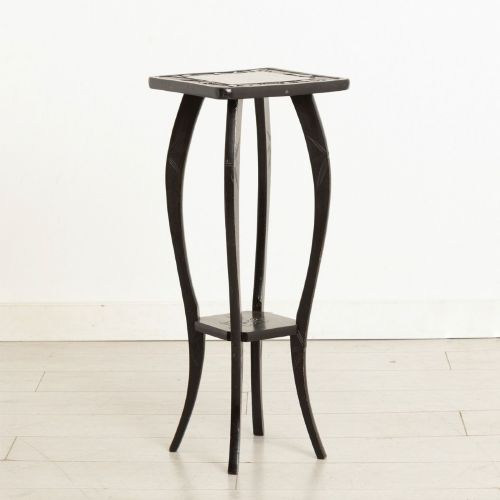
The selections on this page span Chinese Qing Dynasty carvings, Victorian Anglo-Japanese creations, and British domestic furniture. Forms range from low rectangular tables and tall plant supports to bedside cabinets adapted for display.
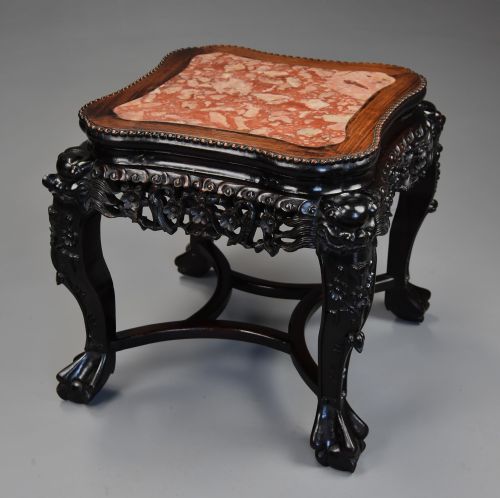
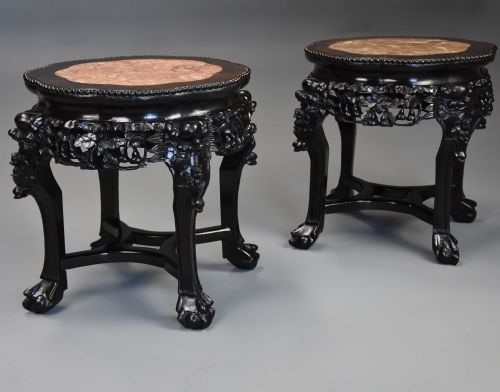
You are most likely to meet circular or shaped tables featuring inset marble tops, carved aprons, and sturdy cabriole or straight legs. They function equally well as lamp tables or wine tables within a traditional interior scheme.
How they were made
Cabinet makers utilised dense timbers including mahogany, ebonised wood, and exotic hardwoods. These materials were chosen for their capacity to bear heavy ceramic vessels without warping or sagging over decades of use.
Surfaces frequently display intricate hand carving reflecting Chinese export styles or Arts and Crafts ideals. Marble inserts provide a cool, flat, water-resistant surface designed to catch moisture and soil drips from potted plants.
Joinery relied on traditional mortise and tenon techniques, ensuring rigid frames capable of supporting substantial weight. Brass details occasionally appear as mounts, hinges, or subtle structural accents.
Current listings demonstrate periods spanning the Victorian era, 1890, 1920, and the wider 19th century.
What varies in quality
The depth and crispness of the hand carving dictate the aesthetic standing of each piece. Finer examples display undercut foliage and smooth, polished contours rather than shallow, mechanical incisions.
The selection of the timber and the integration of any marble insert mark the division between standard utility items and superior workshop output. A tightly fitted marble slab with matching grain in the surrounding wood signifies careful craftsmanship.
Liberty of London
The Dark Hardwood Pot Stand Glossary
- Ebonised wood
- Timber treated with a dark stain or chemical process to imitate the dense black appearance of ebony. This finish was particularly popular during the Victorian era for oriental-inspired furnishings.
- Marble inset
- A polished slab of stone fitted directly into the wooden top of a table or stand. It provides a durable, heat-resistant, and moisture-resistant surface for plants or lamps.
- Qing Dynasty
- The final imperial dynasty of China, lasting from 1644 to 1912. Pieces from this era often feature traditional motifs and exceptional hardwood joinery.
- Anglo-Japanese style
- A nineteenth-century design movement blending British construction methods with Japanese aesthetic principles. It frequently utilises ebonised surfaces and minimalist geometric forms.
Dark Hardwood Pot Stand: Frequently Asked Questions
What is a dark hardwood pot stand used for?
These stands primarily support heavy ceramic plant pots, jardinieres, and decorative urns off the floor. They protect flooring from moisture while elevating greenery to catch natural light.
Beyond horticulture, owners frequently utilise them as compact side tables for lamps, small sculptures, or drinks. Their sturdy construction accommodates daily domestic use.
How do I care for marble and hardwood surfaces?
The hardwood frame benefits from occasional waxing to nourish the grain and protect against dryness. Avoid placing soaking wet pots directly on unsealed wood to prevent water marking.
Marble inserts simply require wiping with a damp cloth and mild soap. The stone naturally resists water damage from overzealous watering of plants.
How do I date a Victorian or 19th-century stand?
Dating relies on examining the timber species, tool marks, and stylistic influences. Pieces from the late 19th century often combine Chinese export carving with British domestic proportions.
Construction details such as hand-cut joinery and natural glues indicate period manufacture. Match the piece against documented Victorian and Qing Dynasty design patterns.
Are these stands strong enough for heavy plants?
Solid hardwood construction ensures high weight capacity for large ferns, palms, and heavy ceramic vessels. The dense nature of mahogany and exotic hardwoods prevents the legs from buckling.
Check that the joints remain tight and stable before loading a heavy pot. Most examples were engineered specifically to bear substantial downward pressure.