


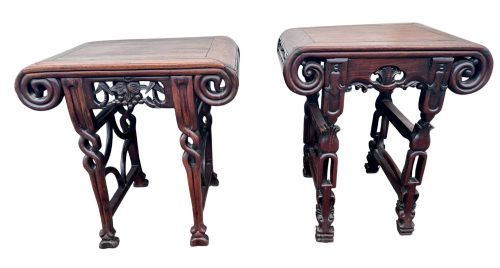


Oriental Plant Stand Pair
An oriental plant stand pair brings raised height and balanced symmetry to interiors, holding urns or jardinières.
Oriental Plant Stand Pair
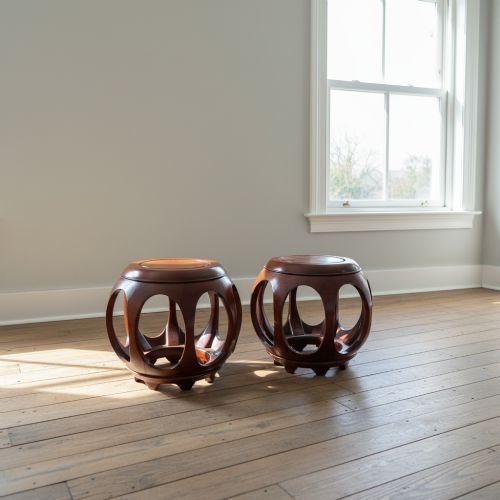
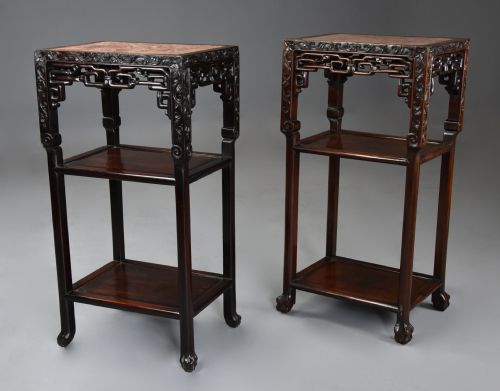
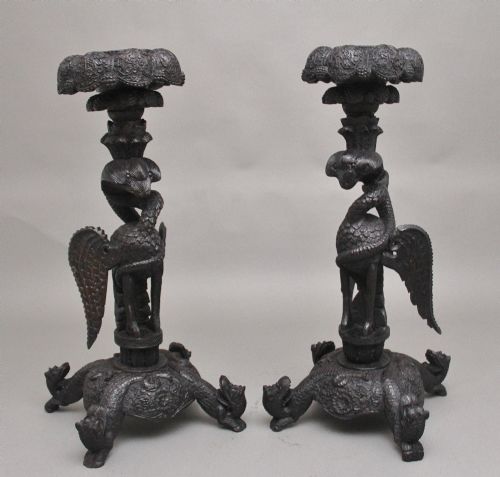
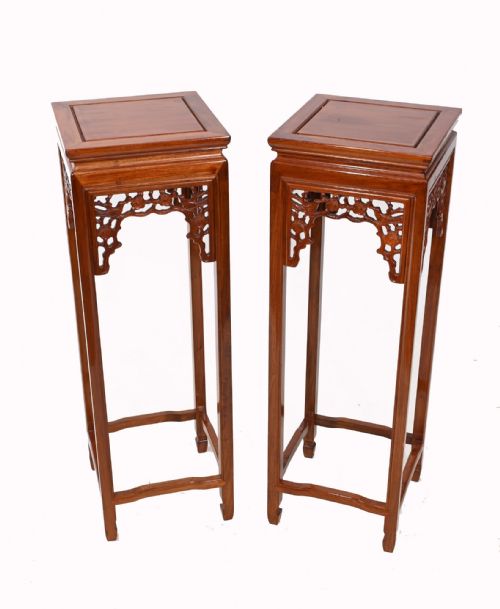
An oriental plant stand pair comprises matched tables, stools or torcheres designed to elevate decorative pots and urns. These pieces span the nineteenth century into the early twentieth century, drawing on Chinese Qing dynasty styles, Anglo-Indian traditions and Japanese craftsmanship.
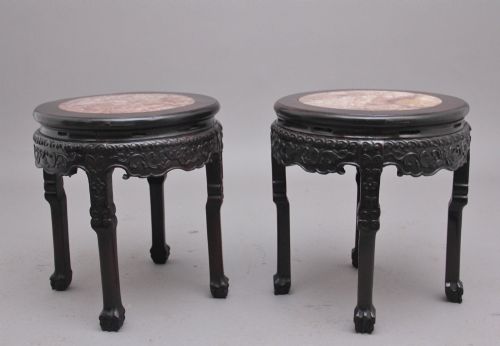
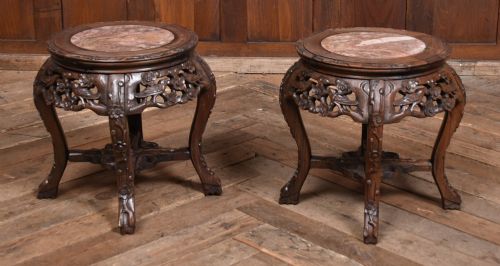
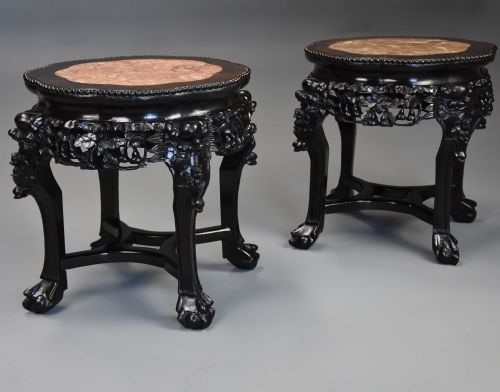
Most examples encountered here are carved from dense timbers such as hardwood, rosewood, hongmu and huali, often incorporating inset marble tops or porcelain panels. Forms range from low barrel stools and shaped pot stands to tall pedestal tables and garden seats.
Makers utilised lacquer, paint, mother-of-pearl inlay and cloisonné to enrich the surfaces of these dual furnishings. They function as side tables, occasional tables and plant displays within domestic settings.
Materials and construction
Joinery relies upon traditional framing methods to stabilise heavy tropical hardwoods like padouk, teak and rosewood against humidity shifts. Carving is executed deeply into the grain to delineate floral motifs, scrollwork and pierced aprons.
Surface ornamentation integrates natural stone and ceramic elements, slotting rouge marble slabs or painted porcelain panels directly into wooden rebated tops. Lacquer finishes, enamel details and mother-of-pearl inlay complete the decorative scheme across panels and legs.
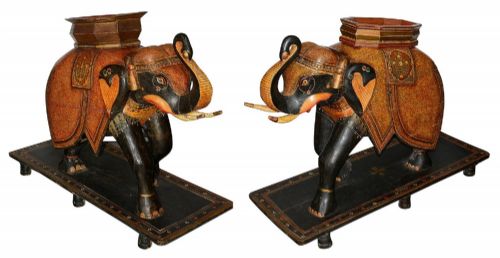
Kashmiri artisans carved solid wood into life-sized lacquer elephants, complete with sculpted bodies and ivory tusks, to serve as exotic seats.
Judging quality
Superior examples demonstrate crispness in the wood carving, where undercut details remain sharp and balanced across both matching items. The choice of timber dictates the baseline, with dense hongmu and figured huali holding greater weight and finer grain than painted utility woods.
The integration of inset marble or porcelain panels reveals the maker's precision, sitting flush within tight wooden channels without excessive gap-filling. Matched pairs maintain consistent colouration, proportions and decorative motifs between the two pieces.
The Oriental Plant Stand Pair Glossary
- Hongmu
- A dense, dark tropical hardwood valued in traditional Chinese furniture making for its strength and rich grain. It takes a high polish without needing heavy stains.
- Huali
- A fragrant rosewood species utilised for high-status Qing dynasty scholar's objects and display stands. Its varied figuration rewards close inspection.
- Torchere
- A tall stand or pedestal originally designed to support a candelabrum or lamp. In Asian contexts, these support tall floral arrangements or bronze urns.
- Cloisonne
- Enamel work created by soldering thin metal strips to a base to form compartments, which are then filled with paste and fired. This technique appears on decorative panels and side tables.
- Jardiniere
- An ornamental pot or stand designed to hold a live plant or floral display. They frequently sit upon dedicated wooden pedestals or garden seats.
Oriental Plant Stand Pair: Frequently Asked Questions
What were oriental plant stands used for?
These pieces elevated heavy ceramic jardinières, bronze urns and decorative vases to eye level within domestic interiors.
They also served as occasional side tables or stools when extra surface space was required in reception rooms.
How do I identify Qing dynasty stands?
Look for dense hardwoods such as hongmu and huali combined with traditional carved scrollwork and pierced aprons.
Many examples feature inset marble tops or recessed porcelain panels characteristic of late nineteenth-century workshop production.
How do I care for marble top tables?
Wipe the stone surface gently with a damp cloth and avoid harsh chemical cleaners that can etch the polish.
Protect the hardwood frame from direct sunlight and dramatic humidity changes to prevent timber shrinkage.
What is the difference between a stool and a jardiniere stand?
Stools feature flat or dish tops intended for seating or general placement, often built with sturdy barrel or four-leg frames.
Jardiniere stands frequently incorporate inset marble, tile or recessed panels designed specifically to resist moisture from plant pots.