

Burr Wood Tea Table
A burr wood tea table offers the rich, swirling grain of figured timber to elevate any room.
Burr Wood Tea Table
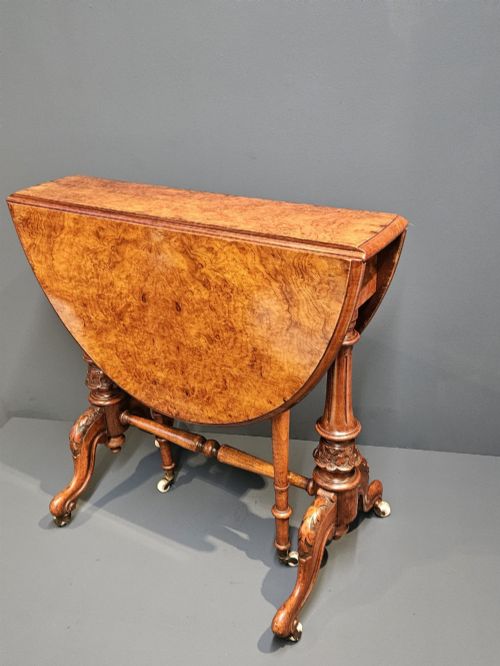
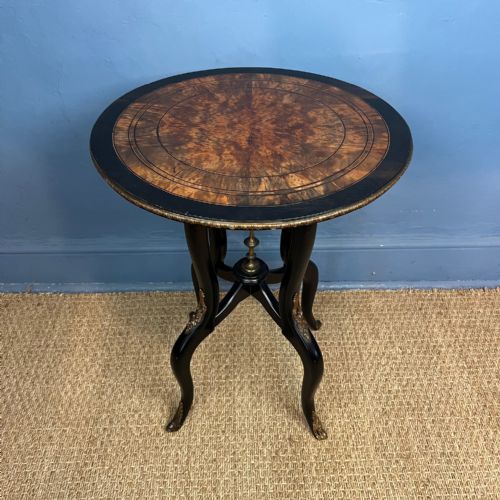
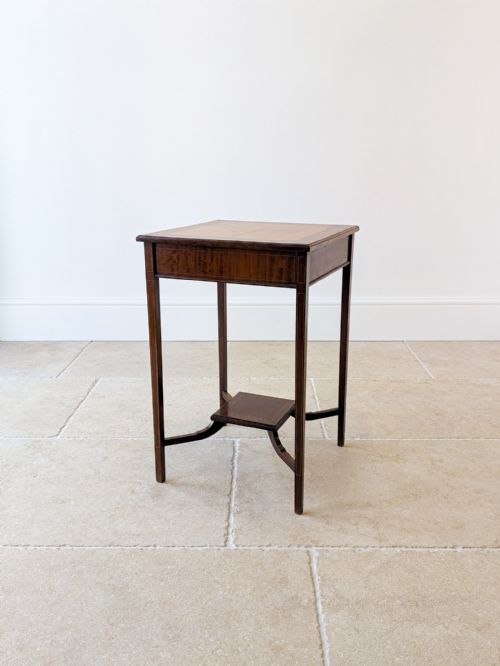
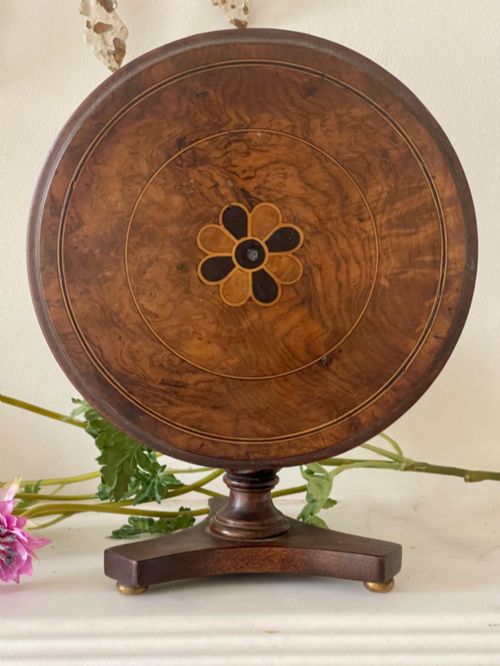
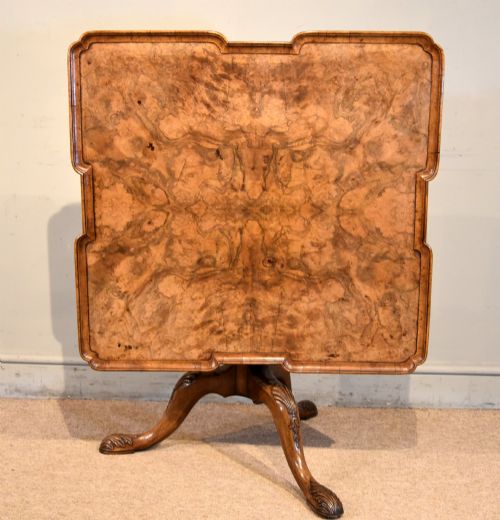
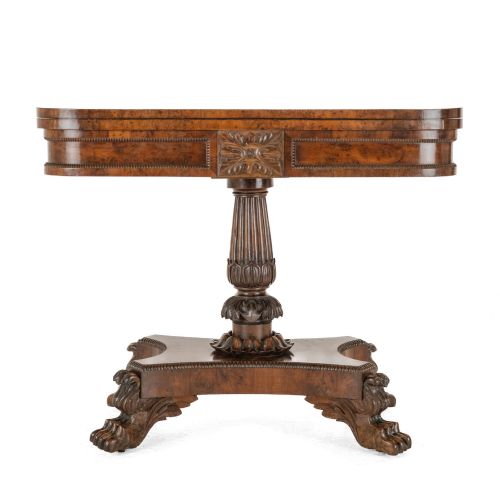
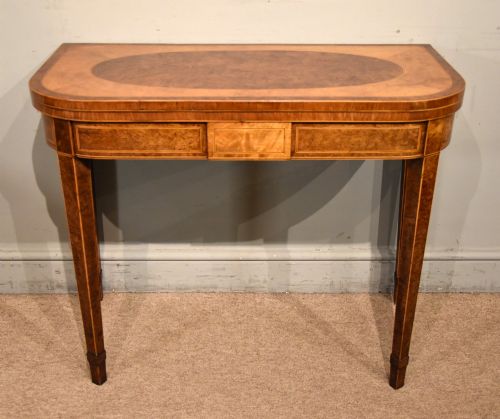
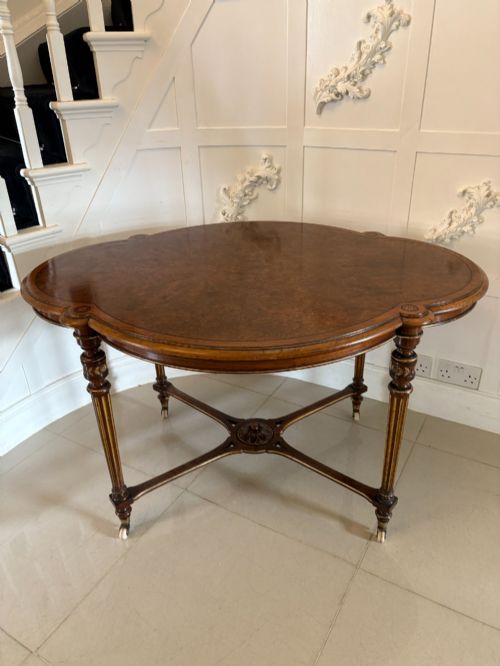
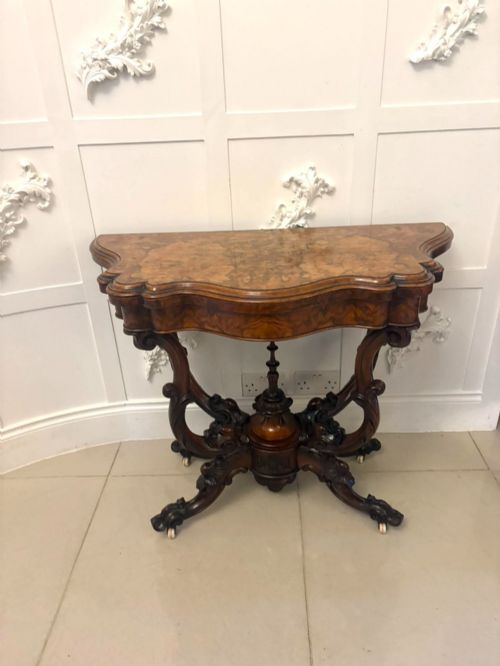
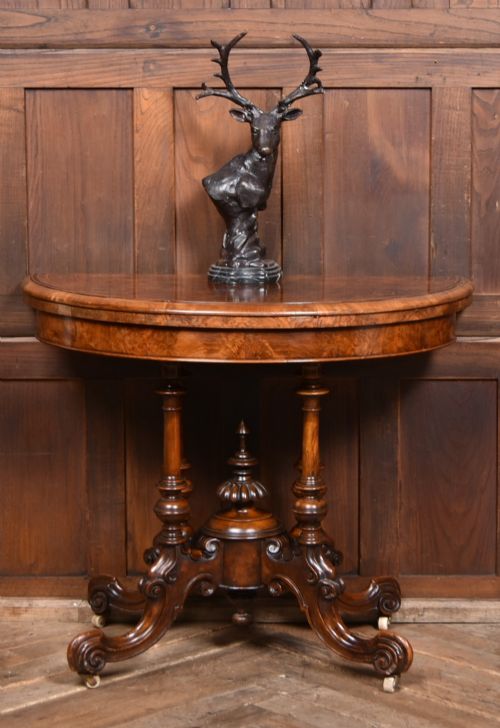
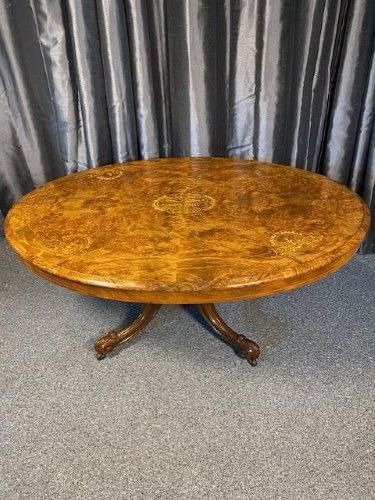
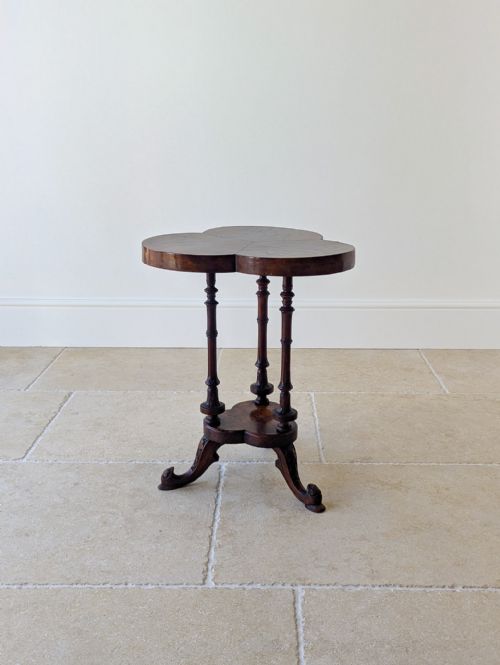
A burr wood tea table brings richly figured timber to domestic spaces, taking forms such as card tables, games tables, occasional tables, and coffee tables. These pieces span the nineteenth century, the Victorian era, and into the twentieth century with Art Deco and revival styles.
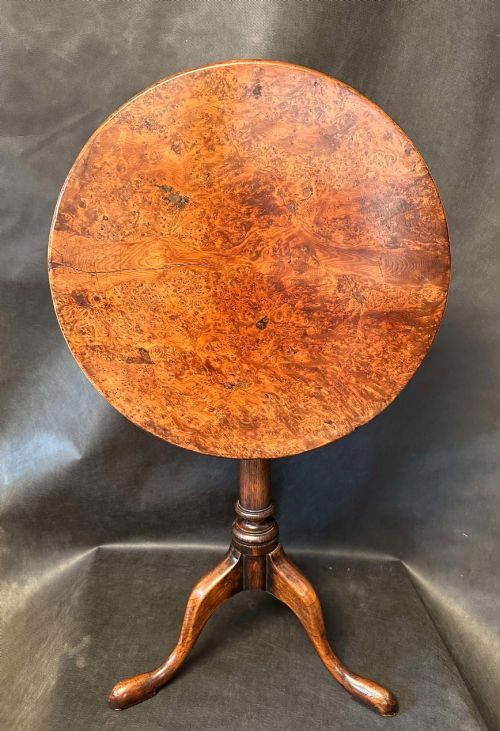
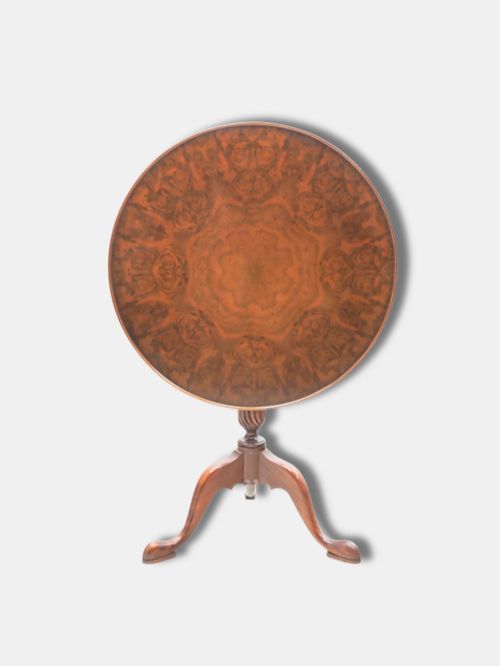
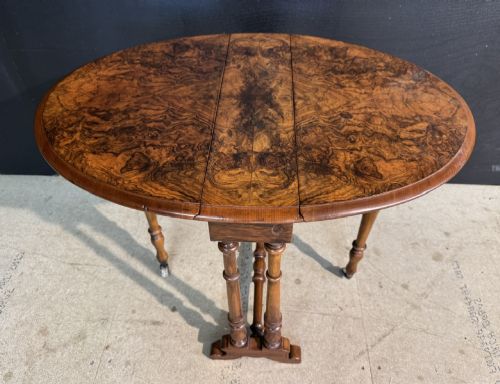
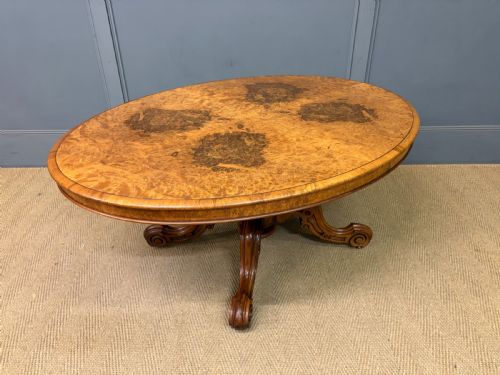
The most common examples on this page are Victorian pieces veneered in burr walnut, alongside occasional and coffee tables constructed from burr yew and burr maple. Makers shaped these timbers into circular, oval, octagonal, and fold-over formats supported by tripod bases or carved columns.
How they were made
Cabinet makers applied thin veneers of burr walnut, burr yew, and burr maple over secondary woods like mahogany and solid walnut to create striking patterned surfaces. They often added marquetry and inlay work using contrasting woods and brass elements.
Structural integrity relied on sturdy timber frameworks, featuring tilt-top mechanisms, swivel tops, drop leaves, and solid pedestals with tripod feet.
Burr Wood Tea Table Retail Price Guide 2026
Typical asking prices for burr wood tea table among the pieces listed under this phrase on Sellingantiques today, from the lower quarter to the upper quarter. They describe what is for sale here now, not the wider market.
Periods represented span from George III and William IV through the Victorian era into Art Deco and revival styles.
What varies in quality
The density and movement of the burr grain dictate much of the visual appeal, with deeply figured and well-matched veneers standing apart from plain surfaces. Finer examples display meticulous marquetry inlay and careful handling of complex shapes like octagonal or scalloped tops.
Construction methods also separate standard production from superior cabinet work, seen in the smoothness of fold-over mechanisms, the stability of tripod bases, and the integration of carved details such as basket bases.
Edwards & Roberts
The Burr Wood Tea Table Glossary
- Burr wood
- Timber harvested from tree growths where the grain has grown in a deformed, swirling pattern. This produces intricate, highly decorative surface designs when sliced into veneer.
- Card table
- A folding table designed for playing cards, featuring a hinged top that opens to reveal a baize-lined surface. Many examples from the nineteenth century utilise burr walnut veneers.
- Teapoy
- A small stand or table originally used for holding tea caddies and serving tea. Nineteenth-century versions often incorporate compartments for glasses and spirits.
- Marquetry
- The art of applying pieces of veneer to a structure to form decorative patterns and pictures. Makers used contrasting woods to embellish table tops.
- Tripod base
- A table support featuring three legs radiating from a central pillar. This form appears frequently on nineteenth-century occasional and coffee tables.
Burr Wood Tea Table: Frequently Asked Questions
What is a burr wood tea table?
A burr wood tea table is a decorative piece of antique furniture surfaced with highly figured wood grain. These tables often feature fold-over tops or occasional table formats.
Originating largely from the nineteenth century and Victorian period, they were designed for both practical hospitality and aesthetic display in the home.
How do I style a burr wood table?
You can live with a burr wood table by placing it in a living room as a central coffee table or an occasional lamp table. Its rich grain contrasts well with simpler modern interiors.
Allow the patterned wood to remain the focal point by keeping decorative objects on top minimal and deliberate.
How do I identify Victorian burr walnut?
Victorian burr walnut is identified by its warm brown tones and dense, swirling cluster patterns created by tree growths. It was frequently used as a veneer on nineteenth-century card and coffee tables.
Look for symmetrical matching of the grain across table tops and hinged fold-over leaves.