
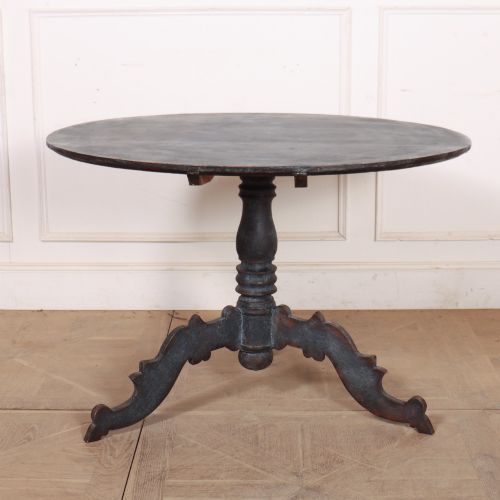
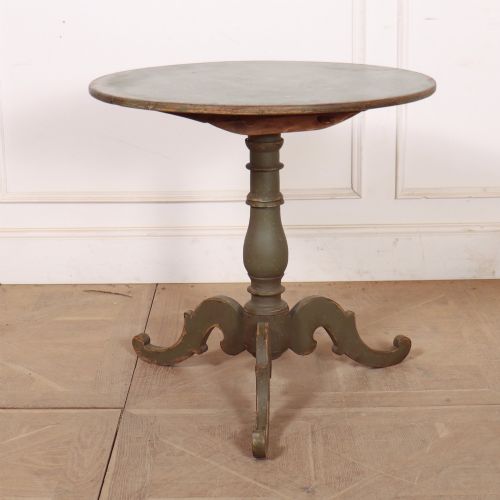


Scandinavian Tripod Table
A Scandinavian tripod table brings northern warmth and sculptural grain to a room, offering a sturdy three-legged pedestal base paired with a compact wooden top.
Scandinavian Tripod Table
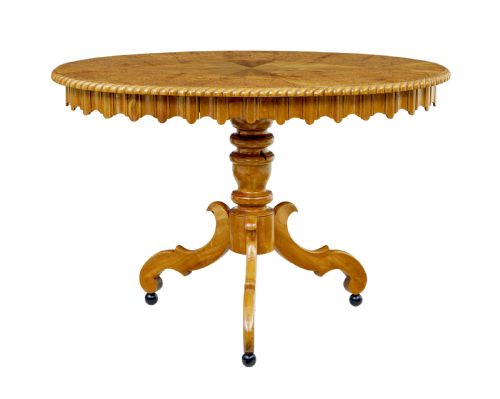
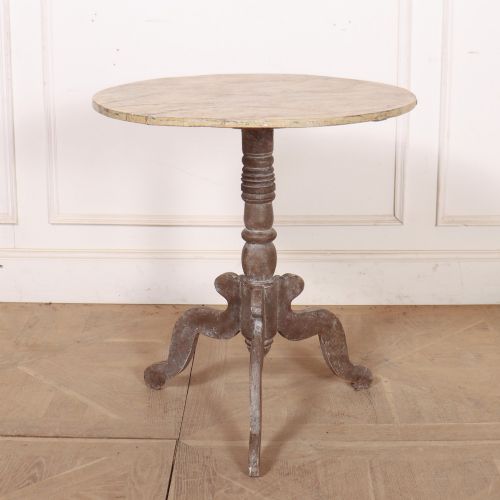
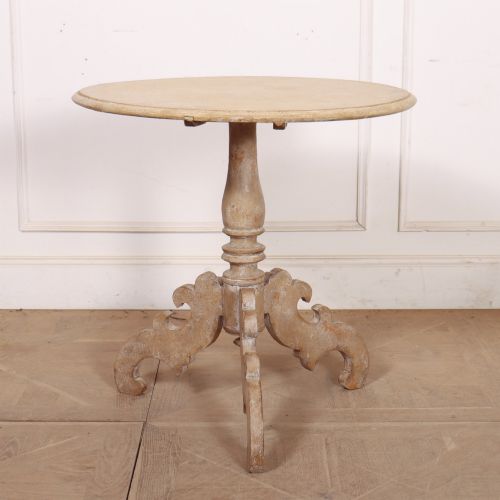
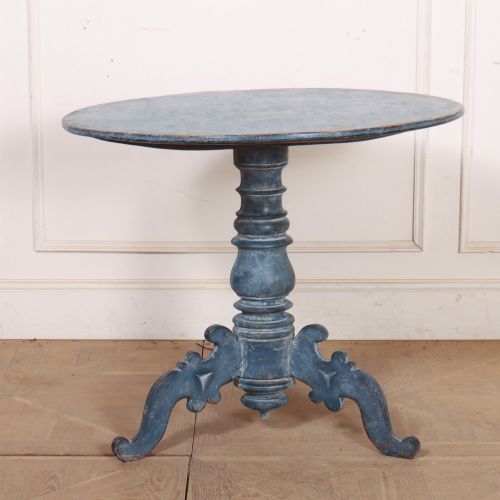
A scandinavian tripod table is a compact pedestal support piece designed for domestic use as a lamp, supper, or occasional table. These items emerge primarily from nineteenth century Sweden, reflecting regional cabinetmaking traditions rooted in practical elegance.
The versions most commonly met on this page are nineteenth century Swedish painted lamp tables and burr birch occasional tables. They combine functional small-scale surfaces with characteristic three-legged pedestal structures.
Forms span across round, oval, octagonal, and square table tops, including tilt top variants and games tables. Their origins tie directly to Swedish country and Biedermeier styles, alongside empire revival influences.
How they were made
Makers utilised native timbers such as pine, birch, burr birch, alder root, and burr elm to construct these supports and tops. Turning and joining formed the three-legged pedestals, while distinctive veneers or paint finishes defined the visible surfaces.
Surfaces received either historic paint schemes or careful polishing to highlight rich wood figures like burr birch and alder root. Inlaid details appeared on select pieces, adding geometric contrast to the natural grain.
Alder root tables bring tangled underground resilience straight into the parlour.
What varies in quality
Quality rests in the choice and matching of timber veneers, particularly the dramatic figuring found in burr birch and alder root surfaces. Execution of turned pedestals and the stability of the three-legged base structure also separate standard examples from finer works.
The integrity of original painted finishes or delicate inlay work determines the character of decorative pieces. Coarseness in joinery or later alterations diminish the cohesive aesthetic of nineteenth century Scandinavian furniture.
The Scandinavian Tripod Table Glossary
- Tilt top
- A tabletop hinged to the central pedestal so it can pivot vertically when not in use. This mechanism allowed tables to be stored flat against walls in smaller rooms.
- Burr birch
- A woody growth on a birch tree that produces intricate, swirled grain patterns when sliced into veneer. Cabinetmakers prized this timber for its decorative visual depth on table tops.
- Alder root
- Wood harvested from the root system of the alder tree, exhibiting dense and highly figured grain patterns. It was frequently utilised for distinctive occasional and tilt top tables.
- Pedestal base
- A single central support column anchored by three spreading legs rather than four standard corner posts. This design maximised legroom and stability on uneven floors.
Scandinavian Tripod Table: Frequently Asked Questions
What is a scandinavian tripod table used for?
These tables served various domestic purposes as lamp stands, supper tables, or general occasional surfaces in nineteenth century homes.
Today, their compact footprint makes them ideal for placing beside seating or in hallways to hold small decorative objects.
How do I identify a swedish biedermeier table?
Swedish Biedermeier pieces focus on clean architectural lines combined with warm, highly figured wood veneers like birch without excessive ornamentation.
They balance domestic utility with a refined aesthetic that prioritises natural timber grain over carved embellishment.
Are painted finishes original on these tables?
Many nineteenth century Scandinavian tables feature traditional painted surfaces applied to pine or secondary woods during their period of origin.
Examining the wear patterns and underlying preparation layers helps determine whether a paint finish dates to the nineteenth century.
How do tilt top tables function?
Tilt top mechanisms use a wooden catch and pivot block beneath the surface to let the top lock flat or rest vertically.
This functional design enabled nineteenth century households to clear floor space quickly when tables were idle.