

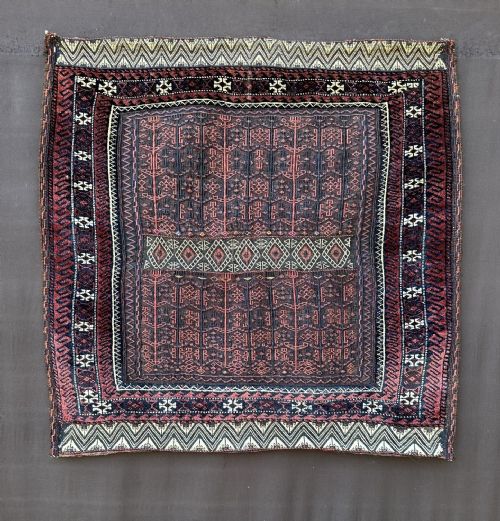


Burgundy Wool Rug
A burgundy wool rug brings rich tone and traditional tribal geometry to an interior.
Burgundy Wool Rug
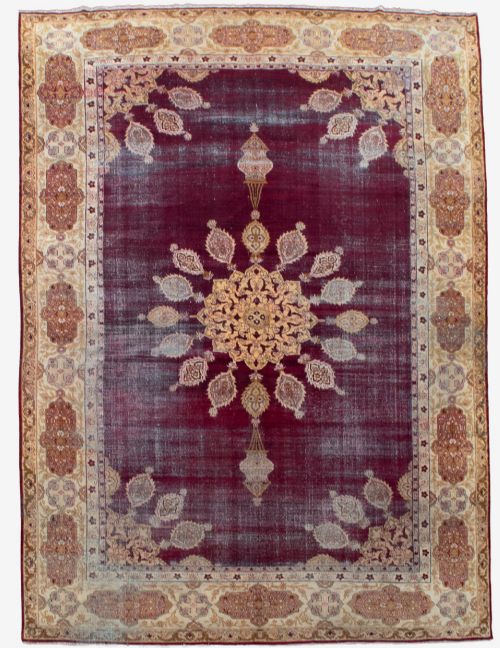
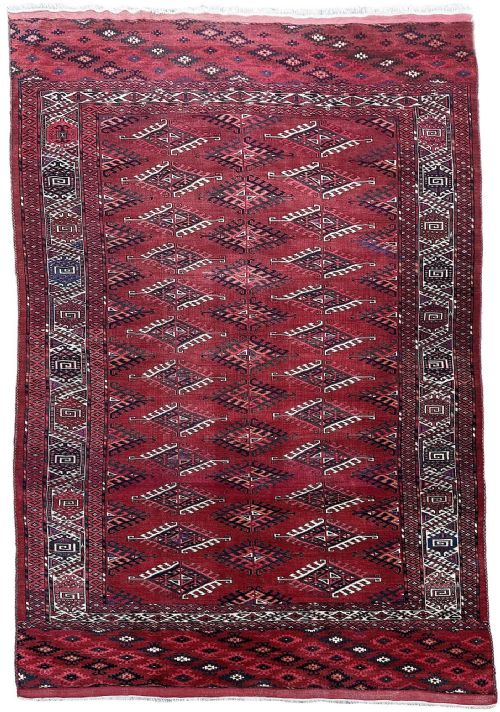
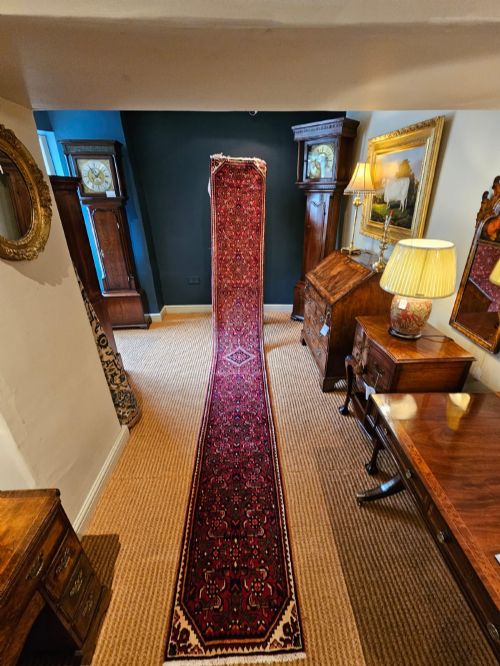
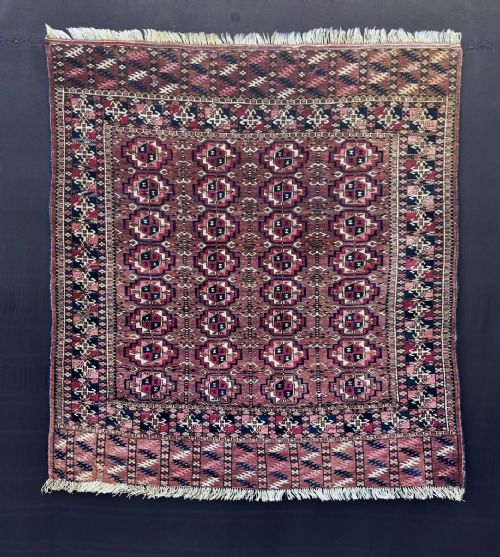
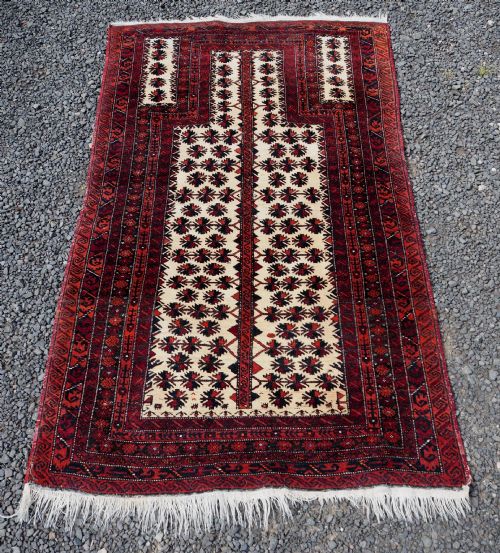
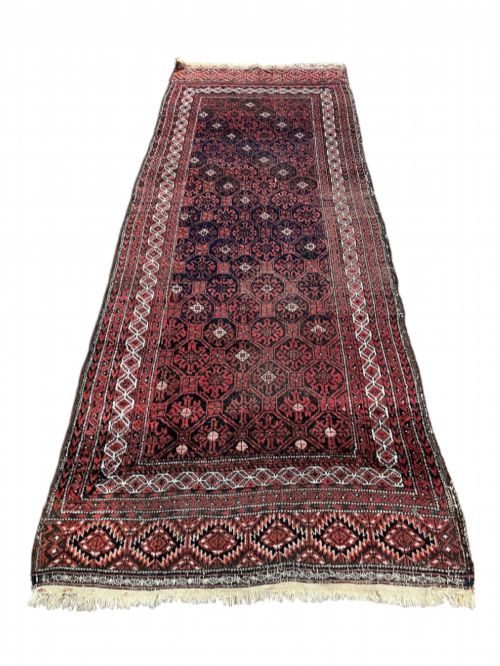
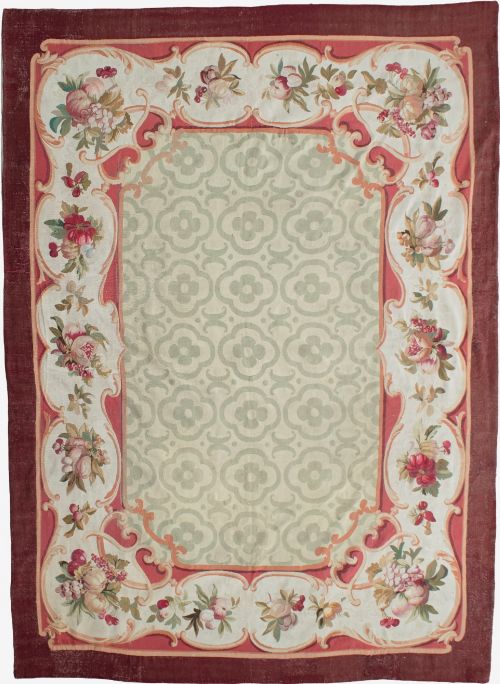
A burgundy wool rug encompasses heavy floor coverings and smaller tribal textiles originating from Central Asia, Persia, Turkey, India, and France. When searching for a burgundy wool rug, buyers encounter nineteenth-century tribal weaving alongside room-sized carpets and decorative runners.
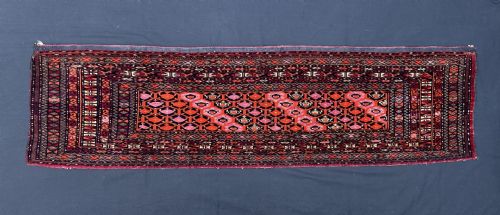
The selection ranges from nomadic Turkmen bag faces and wedding rugs to large French Aubusson carpets and Indian country house carpets. These textiles display deep red and brownish-red colourways produced through traditional dyeing practices.
Evaluating quality and execution
Quality rests upon the fineness of the weave, the clarity of the tribal motifs or classical design, and the integrity of the materials. Tightly knotted pile and carefully balanced natural dye palettes distinguish finer examples from standard production.
The condition of the wool, the presence of original plain weave backs or kilim ends, and the sophistication of regional design patterns separate exceptional textile pieces from simpler utilitarian items.
Listings span periods from the early nineteenth century through the early twentieth century, featuring wool, cotton, silk, and natural dyes.
The Burgundy Wool Rug Glossary
- Gul
- A primary octagonal medallion motif repeated across Turkmen and Central Asian carpets. This tribal emblem often identifies the specific weaving group.
- Torba
- A small storage bag face produced by nomadic tribes for domestic use. These pieces were suspended inside tents to hold belongings.
- Soumak
- A flatweave technique utilising a wrapping stitch over warp threads to create a textured surface. This method produces durable rugs without a cut pile.
- Ensi
- A tribal door hanging traditionally placed at the entrance of a nomadic yurt. These feature distinct cross-shaped panel layouts.
Burgundy Wool Rug: Frequently Asked Questions
Where were these rugs made?
The pieces originate primarily from Central Asia, including regions associated with Turkmen, Yomut, and Tekke tribes. Other examples come from workshops in Persia, Turkey, India, and France.
Nomadic groups wove utilitarian tent furnishings and wedding rugs, while European and Indian centres produced large country house carpets.
How do I place a tribal rug in a modern room?
Tribal rugs function well on wooden floors or neutral carpets where their rich burgundy tones and geometric patterns can anchor the space. Smaller bags and hangings serve as wall art or decorative accents.
Their robust wool construction suits high-traffic areas, while delicate tapestries and wall hangings require protected wall placement.
What is the difference between a main carpet and a bag face?
Main carpets are large floor coverings designed to span significant areas of a room. Bag faces are much smaller rectangular panels originally woven as storage sacks by nomadic weavers.
Bag faces often display denser, more concentrated tribal motifs because of their smaller format and specific domestic function.
How do I identify natural dyes?
Natural dyes present subtle tonal variations and depth across the wool fibres, avoiding the flat uniformity associated with synthetic aniline dyes. They age gracefully over decades.
Examining the base of the pile reveals how dye penetrated the hand-spun wool differently across various batches.