

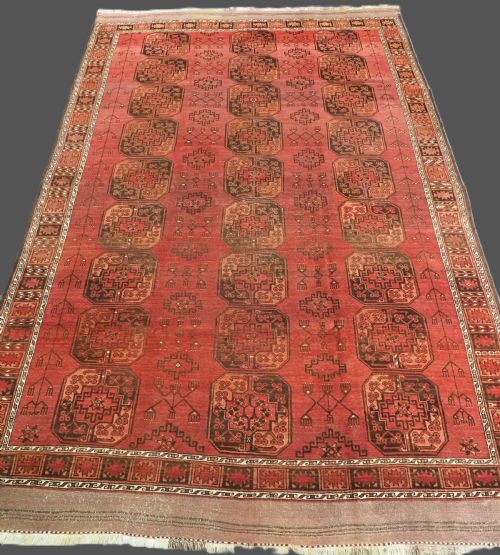
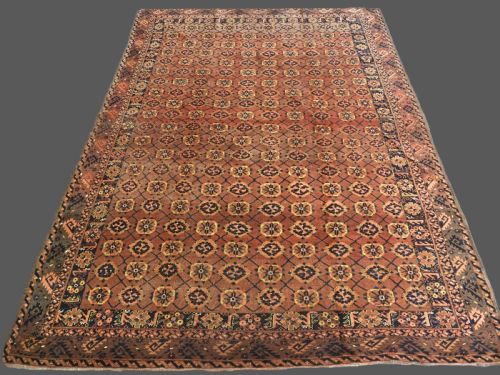
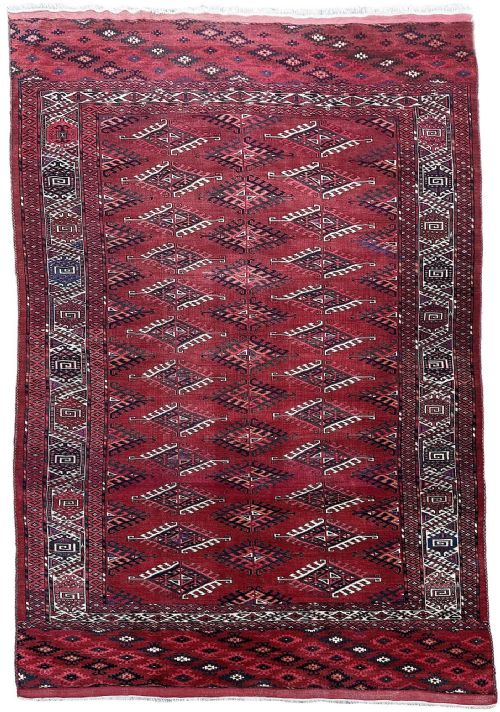
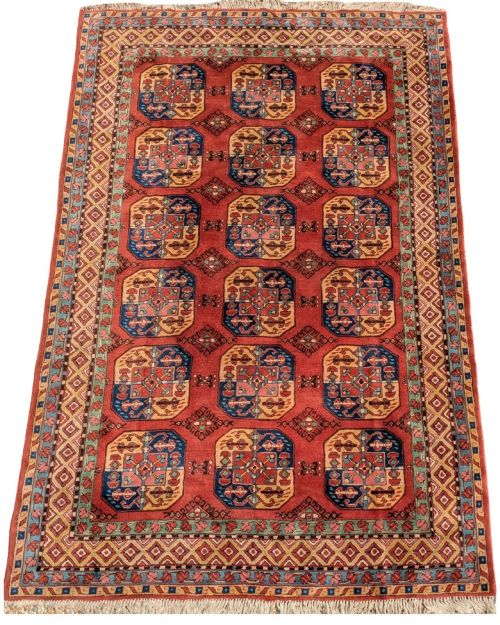

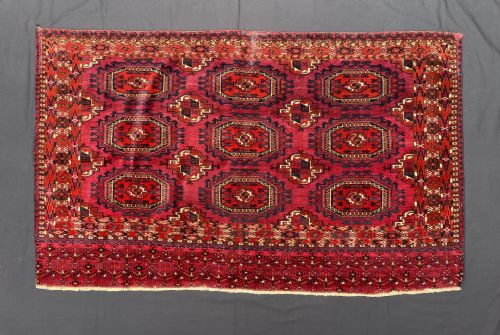

Hand Knotted Turkmen Carpet
These hand knotted turkmen carpet examples carry the deep hues and tribal geometry of Central Asian nomadic weaving into modern rooms.
Hand Knotted Turkmen Carpet
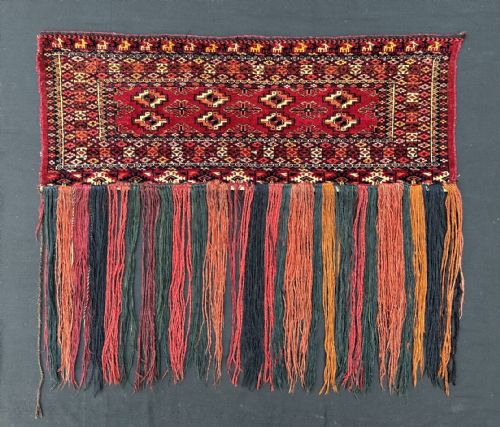
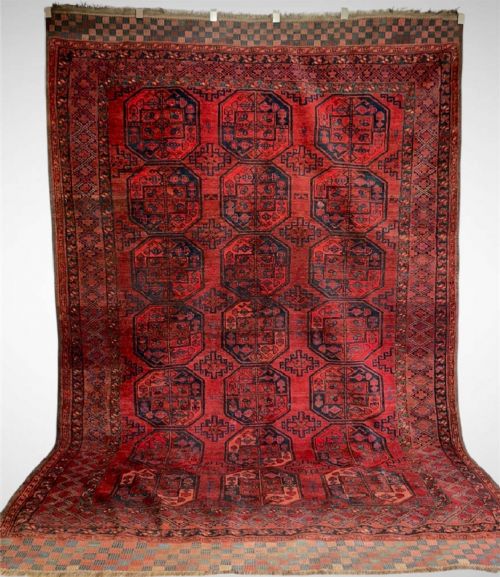
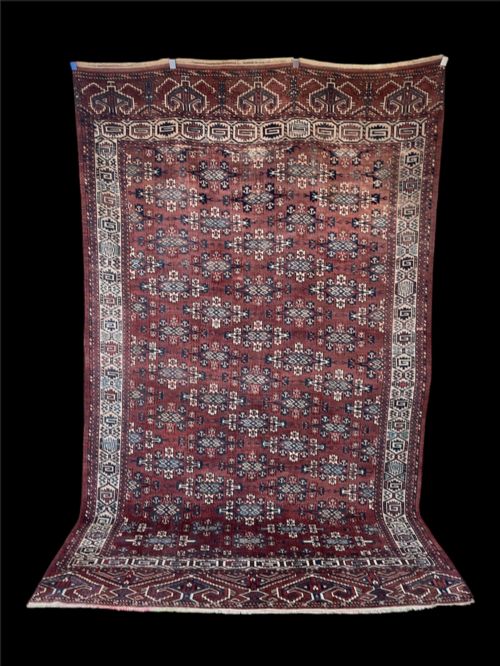
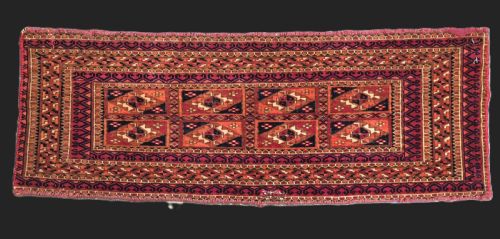
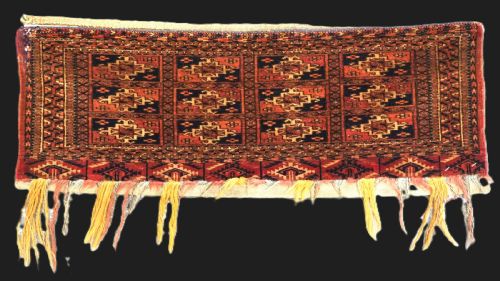
A hand knotted turkmen carpet connects a buyer to the rich nomadic heritage of Central Asian tribes such as the Tekke, Yomut, and Ersari. These textiles range from large room-sized main carpets down to smaller utility pieces like torbas, chuvals, and tent door rugs.
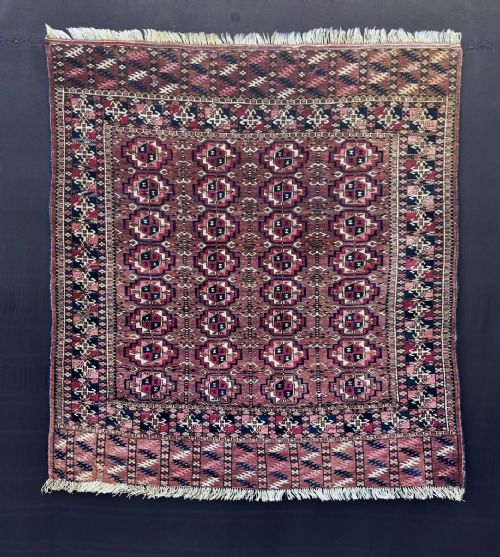
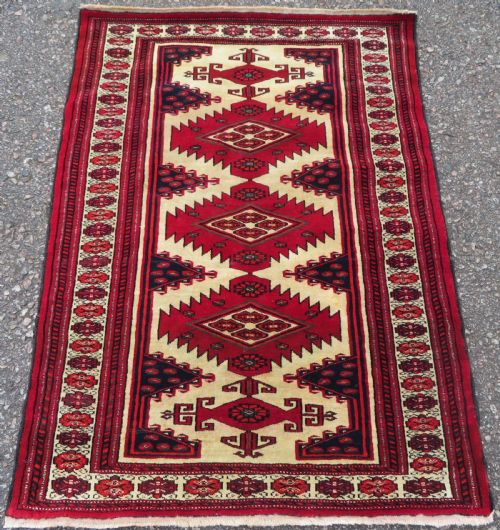
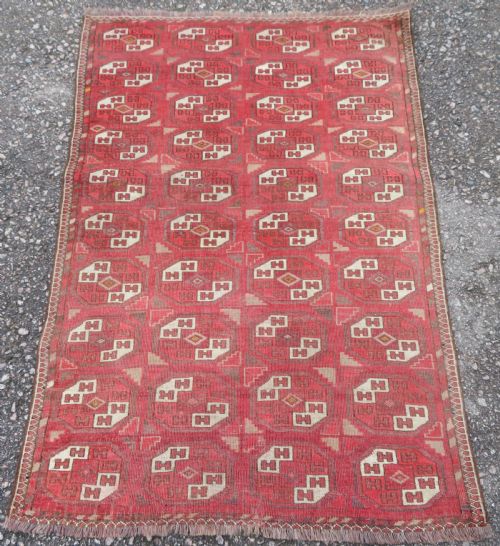
The most common formats met on this page include tribal rugs, wedding pieces, and prayer formats featuring distinctive medallion motifs. Originating across the Trans-Caspian steppes and oases, these nineteenth and early twentieth-century works display deep red grounds and intricate repeated patterns.
Collectors encounter diverse tribal attributions, including Kizil Ayak, Beshir, and Karakalpak items. Each group utilises specific geometric vocabulary and structural traits that distinguish their weaving traditions.
Materials and construction
Weavers constructed each hand knotted turkmen carpet using hand-spun wool foundations and piles, often employing natural dyes to achieve saturated madder reds and rich brown tones. Selected examples incorporate cotton foundations or silk highlights that draw the eye to specific geometric details.
The technique relies on dense knotting tied by nomadic and village makers across Central Asia. This meticulous handling of staple materials yields a resilient pile designed to endure generations of daily domestic use.
Hand Knotted Turkmen Carpet Retail Price Guide 2026
Typical asking prices for hand knotted turkmen carpet among the pieces listed under this phrase on Sellingantiques today, from the lower quarter to the upper quarter. They describe what is for sale here now, not the wider market.
Listings span production dates from the mid-nineteenth century through the 1930s, featuring wool, cotton, silk, and natural dyes.
Markers of distinction
The finer examples of a hand knotted turkmen carpet demonstrate exceptional density of knotting and precise execution of secondary guls. Artisanal skill appears in the crisp saturation of natural dye palettes and the balance of primary borders against central fields.
Proportion and structural integrity separate standard utility pieces from masterworks of tribal weaving. Uniformity in pile height and the preservation of original side cordings contribute significantly to the standing of an individual textile.
Ersari Tribe·Teke Tribe·Yomut Tribe·Kizil Ayak Tribe·Karakalpak Tribe
The Hand Knotted Turkmen Carpet Glossary
- Gul
- The primary octagonal medallion motif repeated across Central Asian carpets. Different tribes adapted these geometric emblems to identify their specific lineages.
- Torba
- A small wall-hanging bag used for storage inside a nomadic tent. These domestic pieces frequently display meticulous tribal iconography.
- Engsi
- A tribal door rug hung at the entrance of a yurt. They typically feature a cross-panel design dividing the field into four distinct quadrants.
- Chuval
- A large storage bag woven by nomadic groups for domestic possessions. Examples often feature rows of large guls flanked by minor borders.
- Mihrab
- The arched niche design found on prayer rugs, directing the worshipper's focus. In these carpets, the motif incorporates traditional tribal rams horn or lantern elements.
Hand Knotted Turkmen Carpet: Frequently Asked Questions
How do I identify a Tekke rug?
Tekke pieces typically display neat rows of primary octagonal guls accompanied by precise minor motifs. The palette relies heavily on deep madder red grounds with ivory and dark brown contrasts.
Structural traits include fine knotting and symmetrical border arrangements. These rugs often originate from the Akhal Oasis and surrounding regions.
Were these carpets used on floors?
Nomadic and village weavers produced these textiles for multiple domestic purposes including floor coverings, tent hangings, and storage bags. Main carpets served heavy traffic areas within dwellings.
Smaller formats such as torbas and chuvals functioned primarily as storage furniture inside felt tents. Their dual role as utility items and dowry pieces governed their dense construction.
What is a main carpet?
A main carpet designates the largest floor-covering format produced by a specific tribe for domestic or ceremonial use. These substantial textiles require months of collective labour to complete.
They display extended field repeats and complex border systems. Surviving examples reflect the primary artistic output of Central Asian weaving groups.
How do I care for an antique rug?
Maintenance requires gentle vacuuming without rotating brush heads to protect the wool pile. Professional cleaning suited for antique textiles preserves the natural dye integrity.
Keeping the carpet away from direct sunlight prevents fading of saturated madder reds. Using an appropriate underlay reduces friction and supports the foundation fibres.