
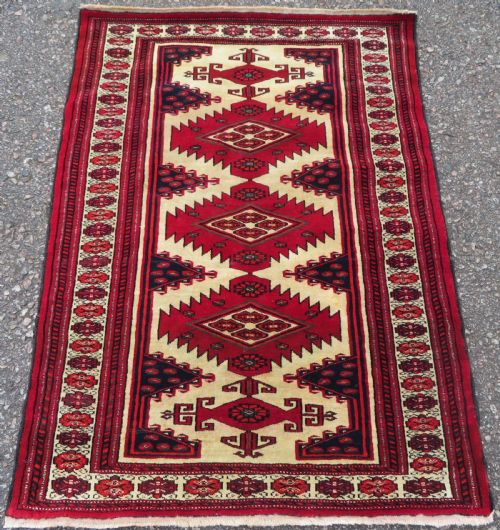


Kizil Ayak Carpet
A kizil ayak carpet is a tribal weave of distinctive central Asian origin, sought after by collectors for its rich palette and archaic design motifs.
Kizil Ayak Carpet
A kizil ayak carpet represents a specific lineage of Central Asian tribal weaving, often linked closely with Turkmen and Afghan traditions. Buyers searching this phrase encounter room-sized main carpets, smaller village rugs, and specialised formats such as prayer rugs and chuval faces.
The pieces available span from the mid-nineteenth century through to the early twentieth century, showing periods like eighteen fifty, eighteen ninety, nineteen hundred, and nineteen twenty. You will frequently meet prayer rugs featuring double lanterns, rams horn mihrabs, and mosque designs.
Main carpets often display traditional guls, including tauk nuska motifs, across generous room-sized formats. The aesthetic sits firmly within Turkmen tribal and Afghan tribal stylistic boundaries, reflecting centuries of nomadic culture.
Evaluating Quality and Merit
Quality in a kizil ayak carpet rests upon the fineness of the weave and the depth of the wool. Early examples from the mid-nineteenth century often display a particularly tight structure and superior handling of materials.
Visual distinction also separates standard examples from exceptional pieces. Items featuring unusual mosque designs, double niches, or inscribed dates command greater attention from serious collectors.
Several rugs sneak in a rams horn mihrabs or double lanterns to keep prayer time properly horned and illuminated.
The Kizil Ayak Carpet Glossary
- Gul
- A primary octagonal medallion motif repeated across Turkmen and Afghan carpets. These tribal crests often identify the specific weaving group or tribe.
- Mihrab
- The arched niche found on prayer rugs, pointing toward Mecca. In these pieces, they frequently take the form of rams horn or double lantern designs.
- Chuval
- A large storage bag face produced by nomadic tribes. These square or rectangular panels often feature multiple guls and detailed elem designs.
- ELEM
- The decorated lower panel at the end of a rug or carpet. It sits beneath the main field and typically displays subsidiary geometric motifs.
Kizil Ayak Carpet: Frequently Asked Questions
What is a kizil ayak carpet?
A kizil ayak carpet is a traditional nomadic weave originating from Central Asia, associated with Turkmen and Afghan tribal groups.
These textiles are distinguished by specific geometric motifs, deep wool piles, and historical production dates spanning the nineteenth and twentieth centuries.
How were prayer rugs used?
Prayer rugs served as portable spaces for daily worship among nomadic and village communities. The mihrab design helped direct the user during prayer.
Beyond ritual use, these textiles were integral elements of domestic life and hospitality within tribal tents and dwellings.
How do I date these rugs?
Dating relies on stylistic analysis, material wear, structural fineness, and occasionally inscribed dates left by the weaver. Earlier pieces from the mid-nineteenth century exhibit more archaic forms.
Later examples from around nineteen twenty show shifts in border designs and construction methods while maintaining traditional tribal aesthetics.
Where should I place one?
These rugs suit low-traffic areas or spaces where their rich wool and traditional patterns can be appreciated without excessive physical strain. Smaller formats like prayer rugs work well as wall hangings or accent pieces.
Main carpets anchor larger rooms, bringing historic Central Asian character and warm palette tones to an interior.