
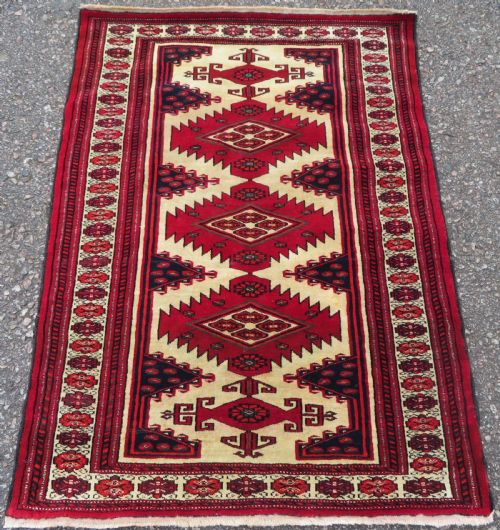


Afghan Kizil Ayak Rug
An afghan kizil ayak rug brings nomadic Central Asian heritage into a room, offering rich tribal patterns and deep historical character.
Afghan Kizil Ayak Rug
When someone searches for an afghan kizil ayak rug, they encounter woven textiles rooted in Turkmen tribal traditions and Central Asian craftsmanship. These pieces span from the late nineteenth century through to the early twentieth century, capturing a distinct period of nomadic weaving. The selection frequently includes prayer formats alongside room-sized carpets.
Prayer rugs dominate the available examples, often featuring specific architectural niches such as single, double, or triple mihrabs. Village rugs and childs prayer formats also appear, displaying unusual border designs and varied tribal motifs. Such works connect directly to the design vocabulary of Turkmen weavers operating across the Afghan region.
Assessing Quality and Variation
Quality separates ordinary utility pieces from exceptional collector items through the fineness of the wool and the precision of the knotting. Superior examples display handling of soft wool that yields a supple handle, combined with balanced proportions.
Design complexity also dictates distinction, where unusual border configurations or intricate architectural prayer niches elevate a piece above standard village production. The clarity and preservation of the tribal motifs further indicate the level of craftsmanship involved.
Listings feature pieces dated between eighteen hundred and nineteen hundred and twenty, constructed from wool and cotton in Turkmen tribal styles.
The Afghan Kizil Ayak Rug Glossary
- Mihrab
- The prayer niche design element pointing toward Mecca, often found in mosque prayer rugs. This arch shape forms the focal point of the upper field.
- Seh-mihrab
- A triple prayer niche design incorporating three distinct arches within the field. This format adds complexity to the standard prayer rug layout.
- Double lantern
- A decorative hanging motif suspended within the prayer niche of certain mosque rugs. It mimics the lamps found in traditional religious architecture.
- Rams horn
- A traditional tribal motif symbolising strength and prosperity, frequently integrated into the border or field patterns. Artisans render this shape in stylised geometric lines.
- Turkmen tribal
- The broader cultural and stylistic attribution encompassing weaving traditions from Central Asian groups. These styles share distinct geometric layouts and palette preferences.
Afghan Kizil Ayak Rug: Frequently Asked Questions
What is an afghan kizil ayak rug?
An afghan kizil ayak rug is a traditional tribal textile woven by Turkmen artisans in Central Asia during the nineteenth and early twentieth centuries. These pieces reflect distinct nomadic design traditions.
They encompass various formats including room-sized carpets, village rugs, and specialised prayer rugs featuring architectural motifs like the mihrab.
How were these rugs used originally?
Nomadic and village communities utilised these textiles primarily for domestic floor covering and personal prayer rituals. Prayer formats served as portable spaces for daily devotion.
Larger carpets functioned as foundational elements within traditional dwellings, providing warmth and aesthetic order to living areas.
How do I care for an antique rug?
Preserving these textiles requires gentle maintenance, primarily through regular light vacuuming without rotating brush heads to protect the wool pile. Professional cleaning suited for antique textiles ensures safety.
Keeping the piece away from direct, harsh sunlight prevents the fading of natural dyes within the cotton and wool structures.
How can I tell the age of a piece?
Dating relies on examining structural characteristics, material wear patterns, and stylistic markers consistent with nineteenth and early twentieth-century production. Inscribed dates occasionally appear on specific examples.
Comparing knot density, wool quality, and traditional design variations helps contextualise the period of origin within the broader Turkmen tradition.