
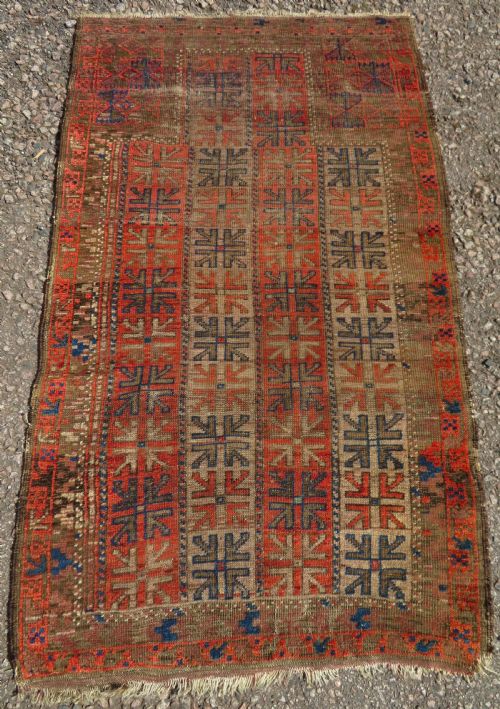
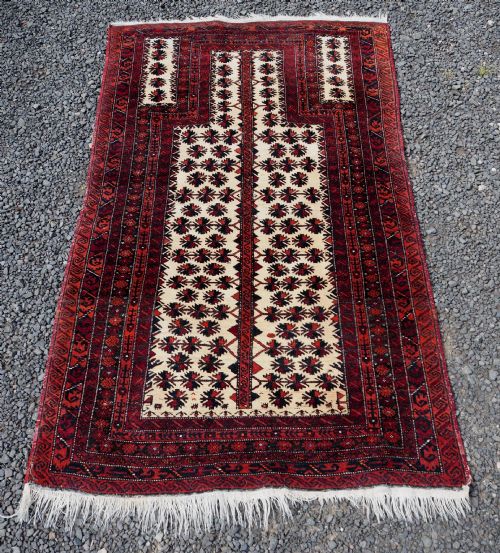
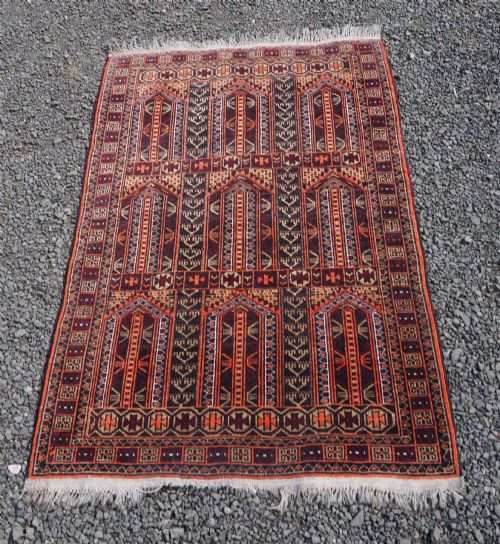
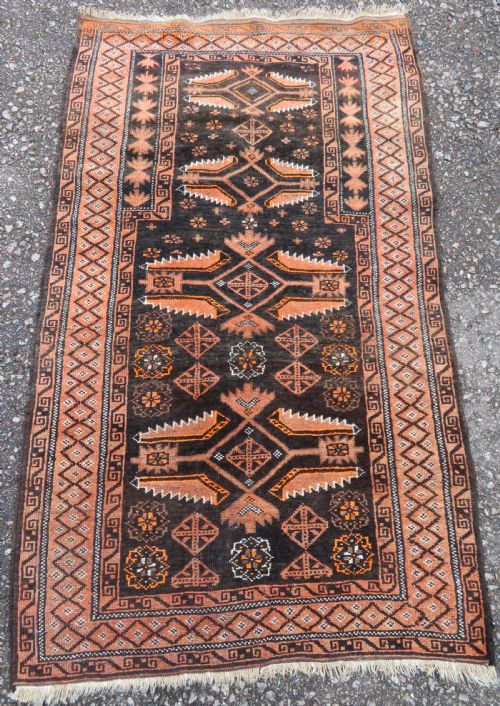
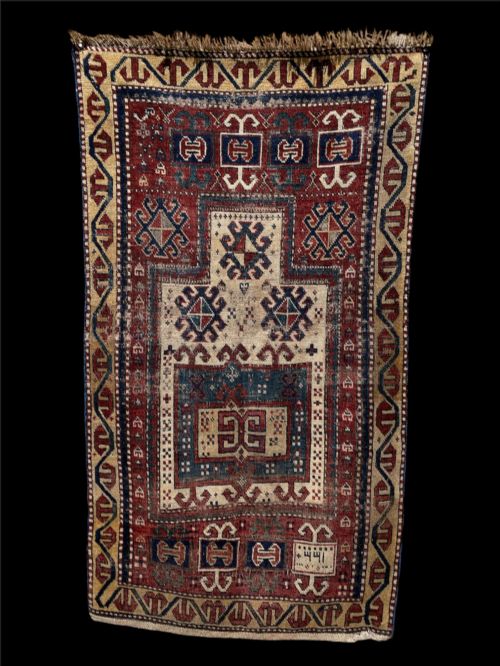
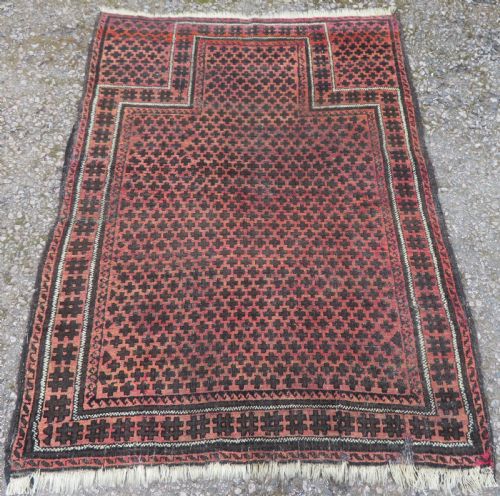


Vintage Mihrab Carpet
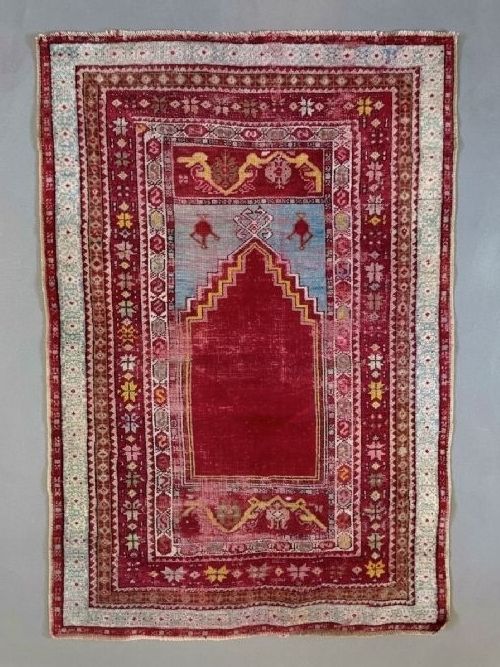
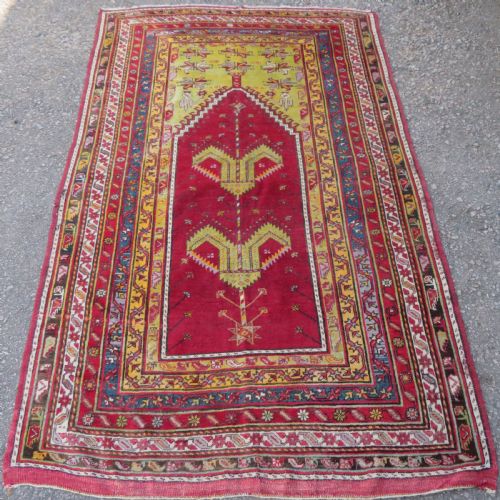
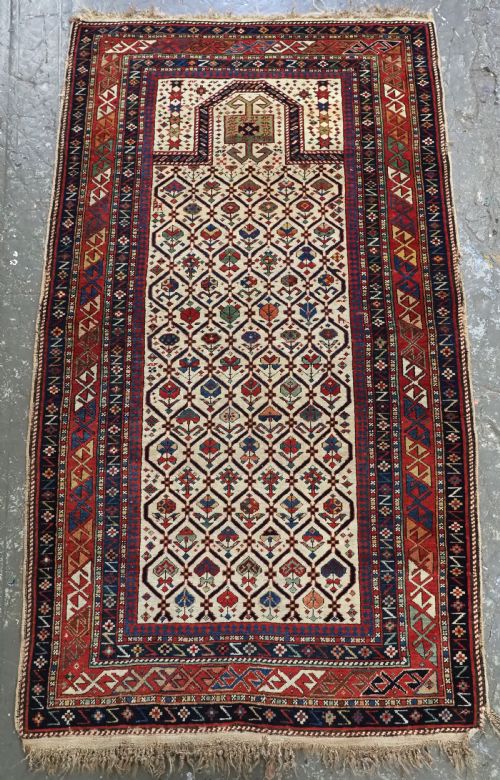
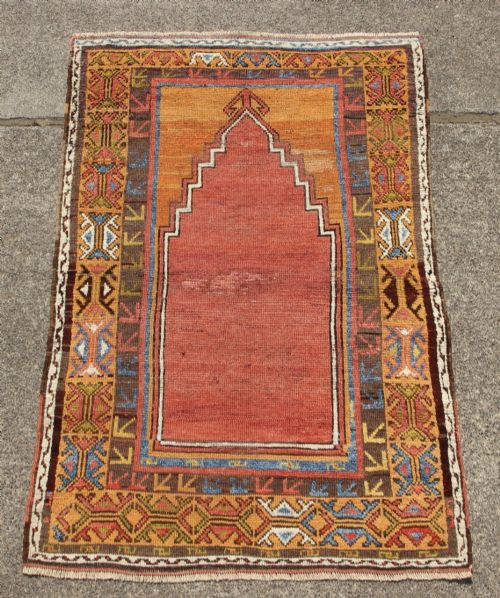
A vintage mihrab carpet brings the architectural form of the prayer arch directly to the floor through traditional woven artistry.
Vintage Mihrab Carpet
A vintage mihrab carpet displays the distinctive pointed arch motif that historically oriented worshippers toward Mecca. These textiles function simultaneously as portable architecture and decorative floor coverings.
The selections on this page span diverse regional traditions from Anatolia, the Caucasus, Persia and Afghanistan. Woven formats range from compact prayer rugs to larger area formats carrying mosque or multi-mihrab designs.
Makers historically integrated local motifs such as floral lattices, rams horns and lotus leaves within the central prayer niche. Pieces emerge from village workshops and tribal groups across the nineteenth and early twentieth centuries.
How they were made
Weavers constructed these carpets using natural materials including hand-spun wool, cotton foundations, camel hair and occasional silk elements. Dyers utilised natural colorants to achieve lasting hues across the fields and borders.
Nomadic and village producers employed traditional hand-knotting techniques alongside mixed techniques like long kilim ends. This combination ensured both structural durability and decorative flexibility for daily use.
Listings feature pieces from the nineteenth and early twentieth centuries, spanning wool, cotton, silk and camel hair materials.
What varies in quality
Quality in these textiles rests upon the precision of the knotting and the clarity of the mihrab design. Finer specimens display tightly packed foundations that allow intricate floral or geometric details to remain sharp.
The richness and depth of the natural dyes greatly influence the visual success of the piece. Superior examples maintain harmonious colour saturation across the wool and cotton fibres over decades of use.
The Vintage Mihrab Carpet Glossary
- Mihrab
- The arched niche design set into the field of the carpet, representing the directional prayer point in a mosque. This architectural motif forms the primary focal point of the composition.
- Seh mihrab
- A triple arch design incorporating three distinct prayer niches across the field. This layout appears frequently in regional village weaving traditions.
- Natural dyes
- Colourants derived from plant, insect or mineral sources rather than synthetic chemistry. These dyes age with a characteristic patina and softness.
- Kilim end
- A flat-woven section of warp and weft threads extending beyond the knotted pile at the ends of the rug. These decorative terminals often feature geometric stripes.
- Hand-spun wool
- Yarn spun by hand rather than by industrial machinery, resulting in varying thickness and texture. This traditional yarn absorbs natural dyes with subtle tonal variations.
Vintage Mihrab Carpet: Frequently Asked Questions
What is a mihrab carpet used for?
These carpets served traditionally as portable prayer mats for individual worship, providing a clean surface oriented toward Mecca. The distinctive arch design directed the user during daily devotions.
Today, collectors appreciate them primarily as decorative wall hangings or statement floor pieces in living spaces and studies.
How do I identify a village rug?
Village rugs typically display less rigid symmetry than city workshop pieces, incorporating charming local variations in motifs and borders. They rely on readily available materials like hand-spun wool and local natural dyes.
Makers often integrated regional symbols such as rams horns or stars directly into the mihrab field without preliminary paper cartoons.
How should I care for an old wool rug?
Protect the textile by placing it in areas of low foot traffic and away from direct, harsh sunlight. Regular gentle vacuuming without a rotating brush helps remove embedded dust from the wool pile.
Consult a specialist in antique textiles for professional cleaning rather than attempting wet washing at home.