




Brown Wooden Jewellery Box
A brown wooden jewellery box brings warmth and small-scale craftsmanship into a room while holding personal treasures.
Brown Wooden Jewellery Box
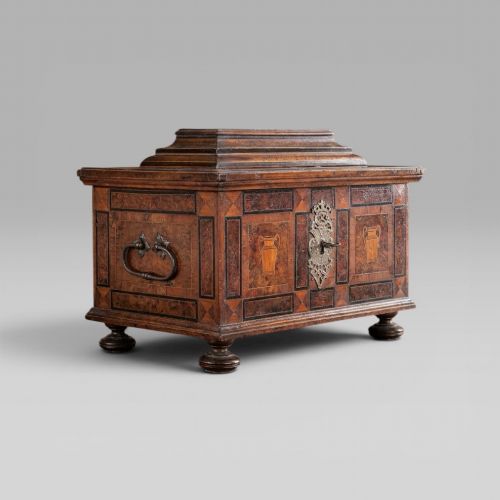
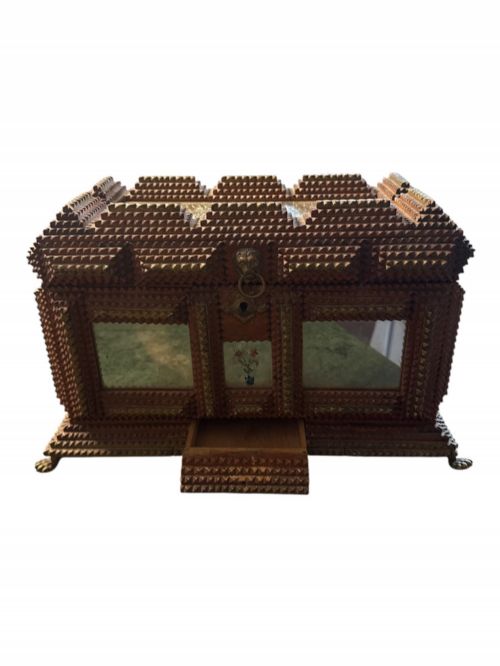
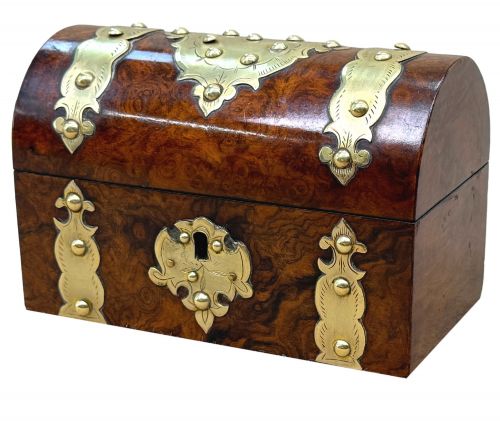
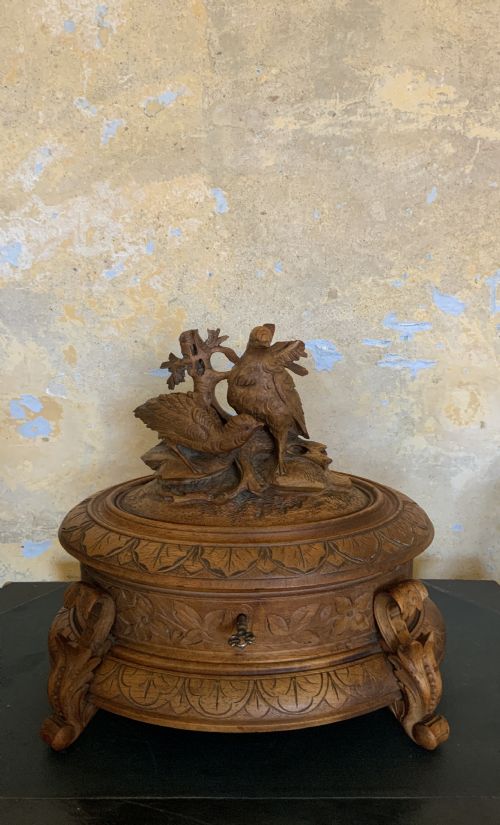
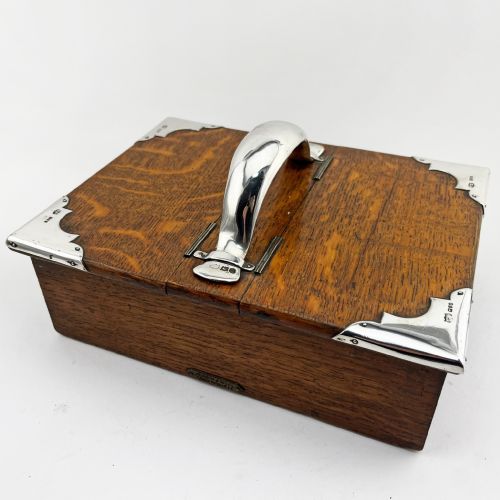
A brown wooden jewellery box spans several centuries of storage forms, ranging from modest Victorian sewing cases to elaborate nineteenth-century rosewood and walnut caskets. Buyers searching for a brown wooden jewellery box encounter various timber structures, including miniature chests of drawers, sarcophagus shapes, and tabletop cabinets.
The selections on this page draw heavily from the Victorian era and the nineteenth century, alongside earlier Georgian and seventeenth-century continental pieces. Makers utilised dense hardwoods to construct sturdy receptacles intended to safeguard precious items on dressing tables and desks.
How they were made
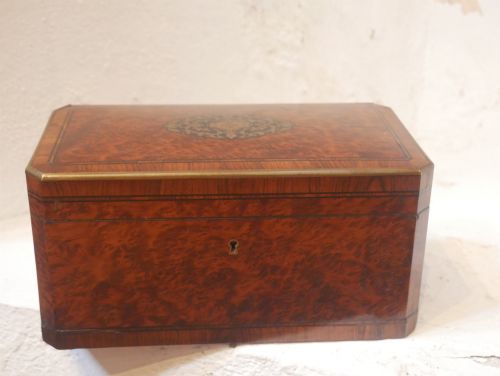
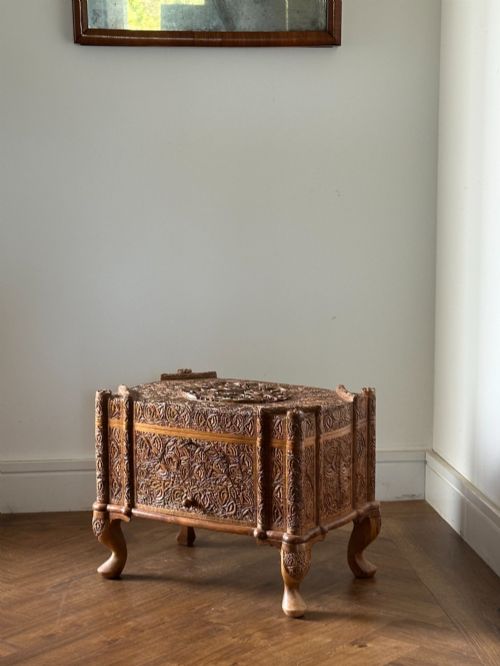
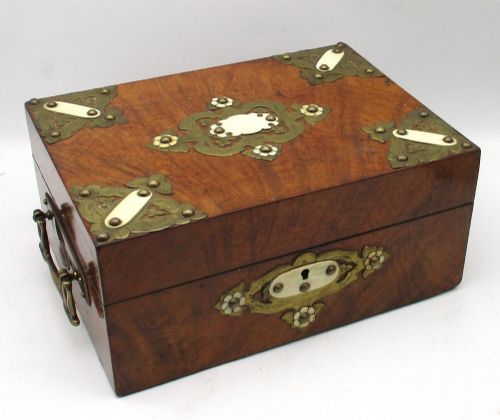
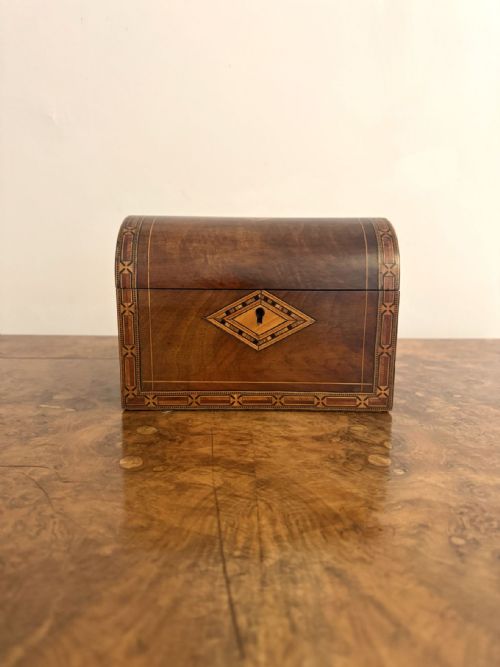
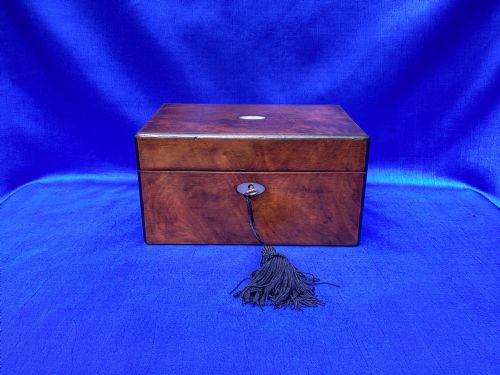
Craftsmen built these boxes using solid timbers and decorative veneers such as burr walnut, mahogany, rosewood, and amboyna over secondary woods. Surfaces frequently display intricate detailing, including Tunbridge inlay, parquetry, mother of pearl accents, and carved motifs.
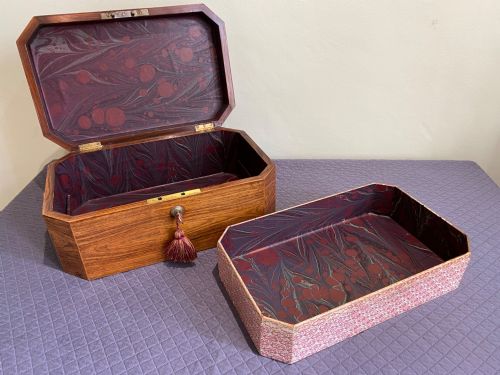
Hardware played an essential structural and decorative role, with brass hinges, escutcheons, and locks fitted to secure the lids and drawers. Interiors commonly featured fitted compartments lined in silk, velvet, or leather to organise trinkets and keepsakes.
What varies in quality
The standard of a box rests upon the selection of timber veneers and the precision of the joinery used in its construction. Superior examples exhibit tightly fitted internal trays, crisp carving, and harmonious grain patterns across the exterior surfaces.
Original hardware and intact interior linings elevate a piece's integrity. Boxes retaining their functional locks and keys demonstrate a higher degree of preservation from their period of origin.
Tahan Paris·Mappin & Webb
The Brown Wooden Jewellery Box Glossary
- Tunbridge inlay
- A method of decorative mosaic woodwork using tiny tinted wooden blocks to create geometric or pictorial scenes. This technique appears frequently on nineteenth-century boxes.
- Burr walnut
- A wood figured with swirling patterns caused by growth deformations on the tree. Cabinet makers prized this material for high-status Victorian veneering.
- Parquetry
- A geometric mosaic of wood pieces used for decorative surfaces on boxes and cabinets. The technique relies on precise cutting of contrasting timber shades.
- Sarcophagus
- A coffin-shaped casket design featuring a sloping lid and flared base. Makers adapted this classical architectural form for nineteenth-century jewellery boxes.
- Apprentice piece
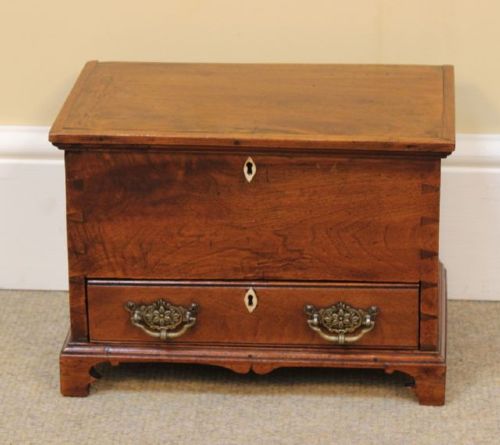
- A small-scale model demonstrating a craftsman's skill before gaining full guild membership. These items often take the form of miniature chests of drawers.
Brown Wooden Jewellery Box: Frequently Asked Questions
What periods do these boxes come from?
The selection spans from the seventeenth century through the Georgian and Victorian eras up to the early twentieth century. Most surviving examples date from the nineteenth century.
Craftsmanship evolved across these periods, shifting from plain solid oak and elm to highly figured veneered surfaces with complex inlays.
How were miniature chests used?
Apprentice pieces and miniature chests served as salesman samples or practice projects for woodworkers. Owners also utilised them on dressing tables to store rings and small valuables.
Their small scale allowed them to sit comfortably on top of larger furniture while offering multiple functional drawers.
What woods are most common?
Walnut, mahogany, and rosewood dominate the material record for these boxes. Artisans also employed exotic timbers like amboyna and sandalwood for luxury pieces.
Lighter woods such as sycamore provided contrast for inlaid decoration.
How do I care for antique wood?
Keep wooden boxes away from direct sunlight and sudden temperature changes to prevent the timber and veneers from drying out. Dust them gently with a dry cloth.
Avoid using modern silicone polishes which can damage historic finishes over time.