



Inlaid Rosewood Decorative Box
An inlaid rosewood decorative box brings rich grain and precise contrasting details together, offering a handsome receptacle for letters, tea or keepsakes.
Inlaid Rosewood Decorative Box
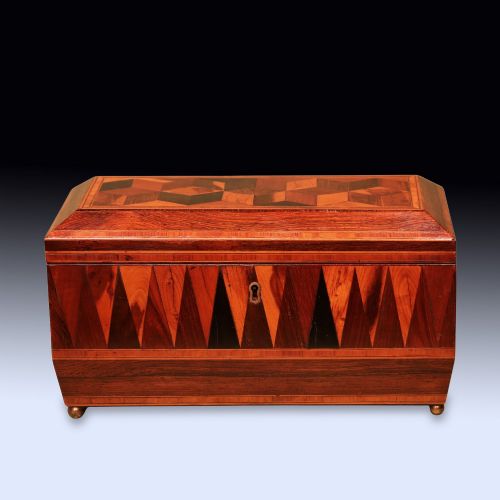
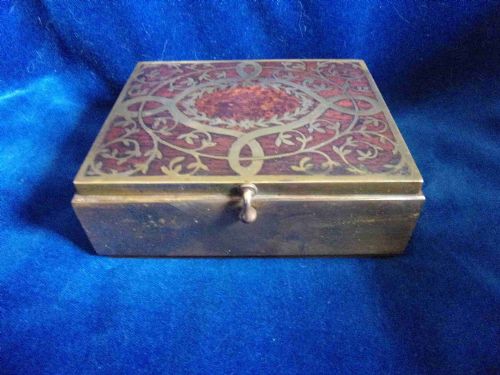
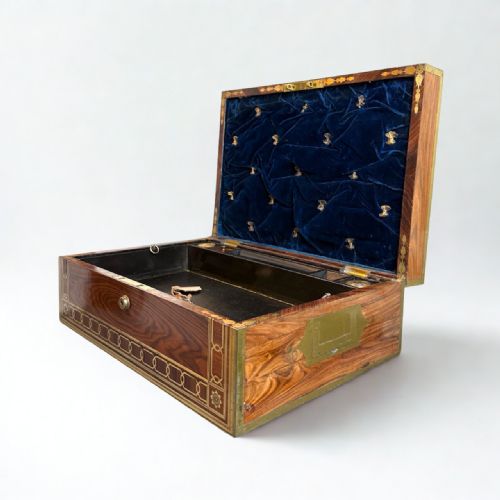
An inlaid rosewood decorative box encompasses a variety of functional containers designed to hold tea, writing materials, needlework supplies, or music mechanisms. The examples appearing here span the Regency, William IV, and Victorian periods, alongside later twentieth-century productions.
Tea caddies and sewing boxes emerge frequently among the selection, often taking sarcophagus, rectangular, or domed forms. Alongside these, specific items such as writing slopes, music boxes, and Tunbridge Ware trinket containers populate the inventory.
Origins stretch from English workshops to French, Swiss, and Chinese makers, demonstrating diverse regional interpretations of rosewood cabinetry. Buyers encounter everything from brass-lined tea containers to complex musical movements housed within inlaid rosewood cases.
What varies in quality
The precision and complexity of the inlay work dictate much of the distinction between standard examples and finer pieces. Sharply fitted brass stringing, intricate mother-of-pearl engraving, and detailed mosaic woodwork represent superior craftsmanship.
The selection and figuring of the rosewood timber itself influence the desirability of an object. High-grade items display rich, unblemished grain across all visible panels, including the less prominent interior surfaces.
Completeness of internal fittings, original working locks, and functional musical movements or intact paper linings elevate the standing of a box. Surviving components untouched by heavy restoration maintain the integrity expected by discerning collectors.
Some musical boxes hide tiny brass bells struck by miniature hammer birds that bob in time to the tunes.
Erhard and Sohne
The Inlaid Rosewood Decorative Box Glossary
- Tunbridge Ware
- A form of decorative woodwork originating from Kent, characterised by tiny mosaic tiles assembled from different coloured woods to form pictorial or geometric designs. This technique frequently decorates the lids of small trinket and glove boxes.
- Sarcophagus
- A box shape featuring a domed or sloping lid resting on a rectangular base, often supported by bun feet or bracket feet. This classical revival form appears often among Regency and Victorian tea caddies.
- Tea Caddy
- A specialised container designed to store loose tea leaves securely, usually featuring internal foil-lined compartments or mixing bowls. Many examples from the nineteenth century include lockable lids to protect expensive imported tea.
- Marquetry
- The art of applying decorative pieces of veneer to a structural structure to form pictorial designs or abstract patterns. Makers use various natural woods to achieve tonal graduation without the use of paint.
- Writing Slope
- A portable desk fitted with a hinged writing surface that folds down at an angle, accompanied by compartments for inkwells and pens. These boxes often incorporate secret drawers concealed beneath internal stationery partitions.
Inlaid Rosewood Decorative Box: Frequently Asked Questions
What were tea caddies used for?
Tea was an expensive commodity in the nineteenth century, requiring secure storage to prevent theft and preserve aroma. These boxes kept black and green teas separated inside locked compartments.
The containers often included a central glass or crystal mixing bowl where the householder blended different leaf varieties before brewing.
How do I identify a Regency box?
Regency pieces typically display classical architectural influences, featuring clean lines, sarcophagus proportions, and geometric brass inlay. The timber choice frequently centres on dark figured rosewood accented with fine brass stringing.
These boxes often rest upon small wooden feet and rely on understated escutcheons rather than heavy Victorian ornamentation.
What is Tunbridge Ware inlay?
Tunbridge Ware involves assembling thousands of minute hexagonal or square wood blocks into detailed mosaic patterns. Artisans used naturally coloured woods to create realistic depictions of flowers, butterflies, or architectural ruins.
This painstaking technique appears on the lids and panels of nineteenth-century trinket and glove containers.
Can I still play antique music boxes?
Many surviving musical boxes remain fully operational, featuring pinned brass cylinders that pluck tuned steel teeth upon a comb. Some sophisticated mechanisms include supplementary bells or interchangeable air cylinders.
Careful handling and gentle winding protect the delicate brass pins and ensure the mechanical components continue to function properly.
How do I care for rosewood furniture?
Rosewood benefits from stable environmental conditions away from direct sunlight and sudden humidity changes. Excessive heat can cause timber shrinkage and loosen delicate brass or mother-of-pearl inlays.
Regular dusting with a soft cloth maintains the natural lustre of the polished wood surface without requiring heavy chemical polishes.