
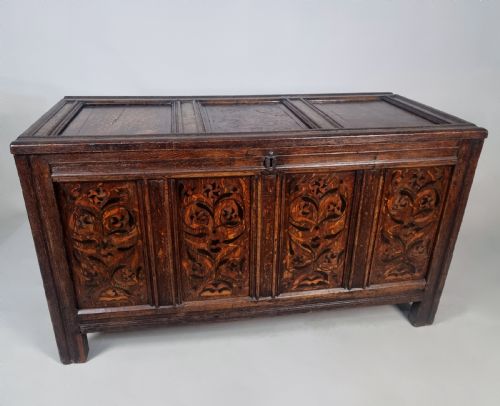
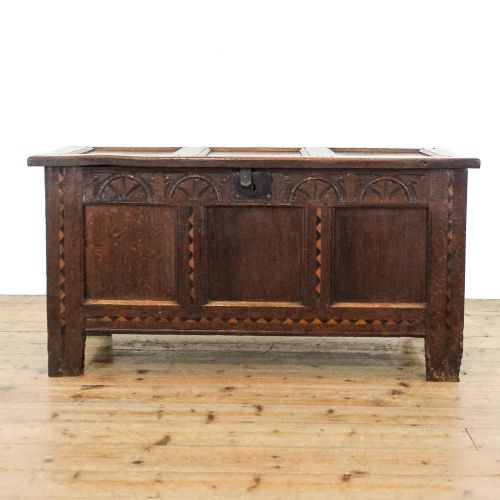
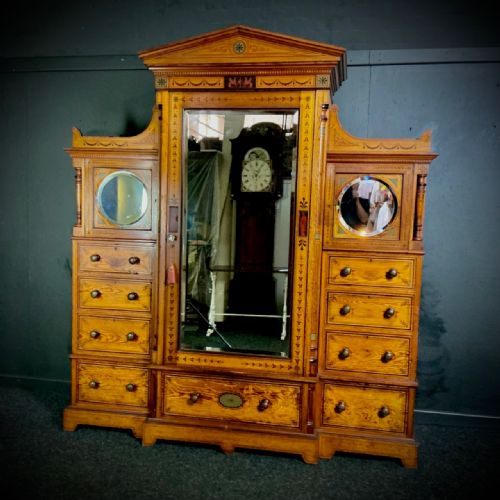
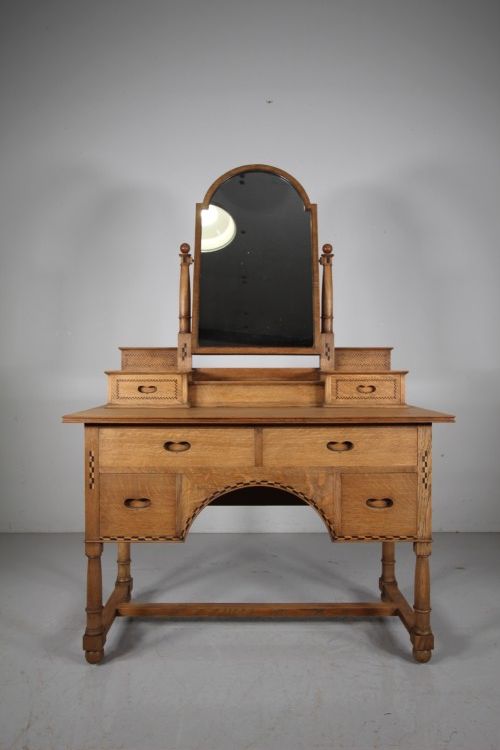
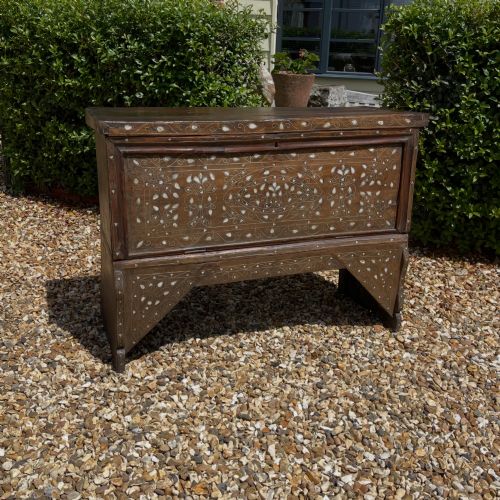
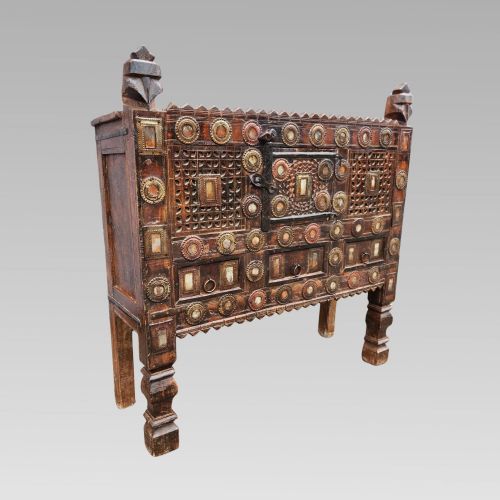
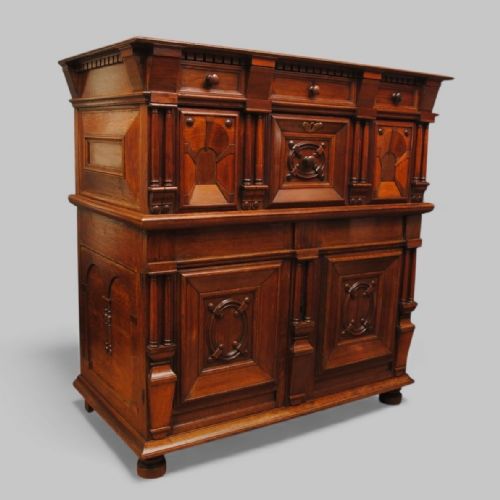

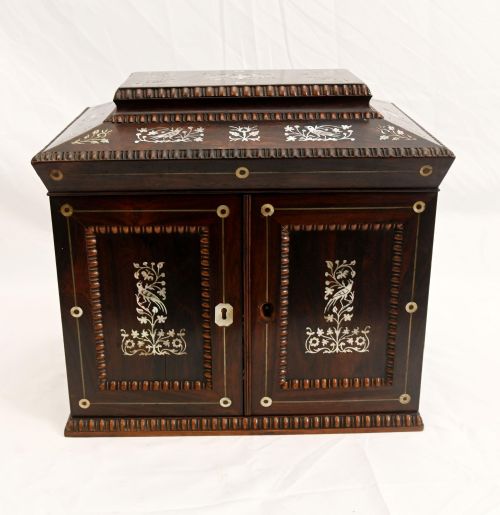
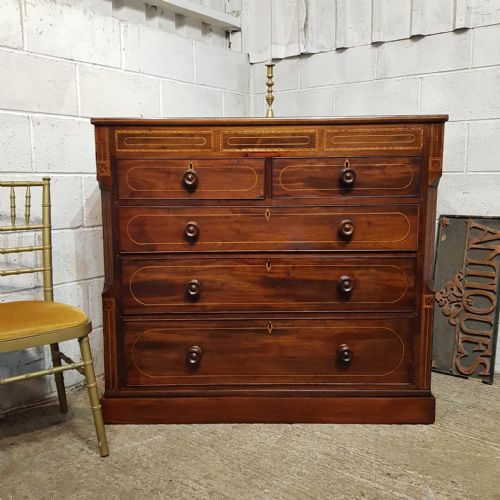


Carved Inlaid Wooden Chest
These carved inlaid wooden chests bring together centuries of cabinet-making skill, offering practical storage disguised in rich timber and intricate marquetry.
Carved Inlaid Wooden Chest
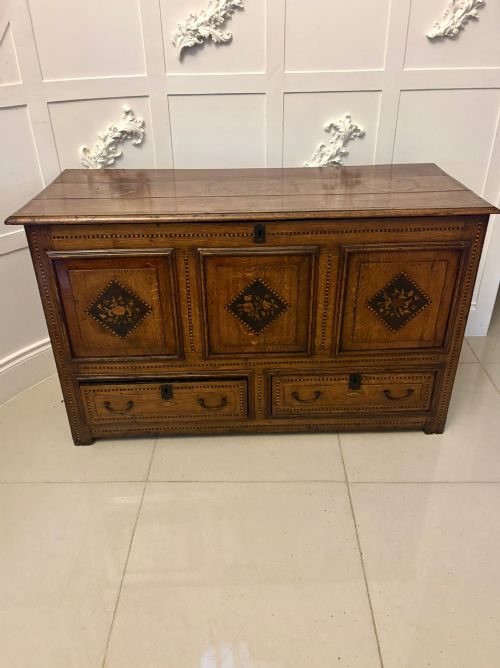
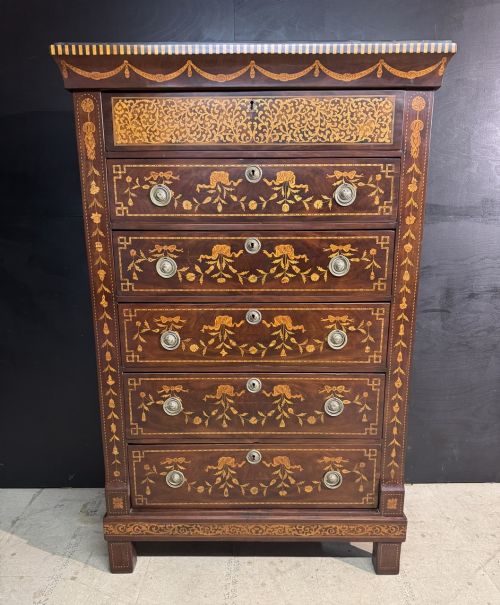
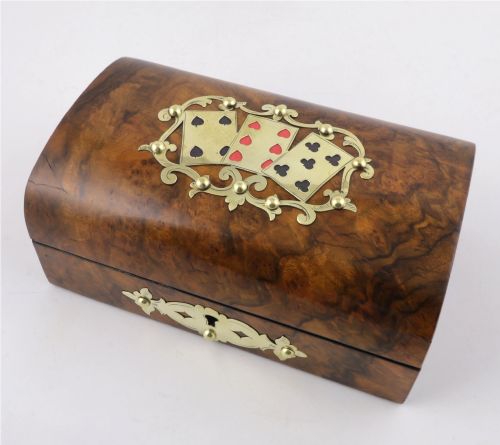
A carved inlaid wooden chest serves as a robust storage vessel, spanning domestic coffers, blanket boxes, and specialised caddies from diverse global workshops. Buyers seeking a carved inlaid wooden chest encounter forms ranging from heavy seventeenth-century oak coffers to nineteenth-century continental commodes and tea caddies.
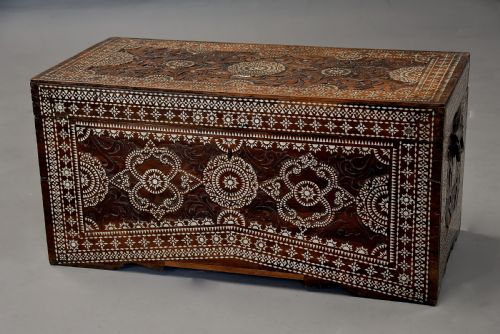
The selection encompasses regional British pieces alongside Middle Eastern, Asian, and European examples utilising distinct timber traditions. Most pieces appearing in this category balance utility with decorative surface work, uniting deep relief carving with contrasting wood veneers or shell inserts.
Materials and construction methods
Cabinet-makers constructed these pieces primarily using structural hardwoods such as oak, walnut, and mahogany, often applying fruitwood, ebony, or satinwood for contrasting detail. Panels receive hand-carved relief work, chip carving, or geometric moulding to create texture across the primary surface.
Inlay techniques incorporate marquetry, parquetry, and mother of pearl, set flush into recesses prepared in the timber ground. Joinery relies on traditional pegged mortise and tenon frames for earlier coffers, progressing to dovetailed drawer construction in later cabinet forms.
Poker dice games and precious tea leaves once shared domestic space alongside seventeenth-century marriage coffers.
Factors of distinction
Quality rests upon the precision of the joinery, the integrity of the timber substrate, and the crispness of the hand-carved ornamentation. Finer examples retain their original surface patination, uninterrupted inlay work, and functional period hardware without extensive timber replacement.
The complexity of the marquetry design and the choice of dense, figured veneers distinguish standard utility pieces from master-carved regional works. Structural stability in the primary panels and minimal distortion across the lid or top surface indicate superior initial seasoning of the wood.
Freemans of Norwich·Heals
The Carved Inlaid Wooden Chest Glossary
- Marquetry
- Decorative veneer applied to a structure in patterns resembling a picture or geometric arrangement. Makers cut contrasting woods together to achieve tight joints.
- Coffer
- A heavy wooden chest traditionally used for storing valuables or documents before fitted domestic furniture became common. Early versions feature boarded or framed construction with heavy lids.
- Mule chest
- A traditional storage chest featuring one or more drawers at the base beneath the main compartment. This form bridges the gap between the simple coffer and the chest of drawers.
- Parquetry
- Geometric mosaic woodwork used for floors or cabinet surfaces. The technique relies on repeating angular wood tiles to form symmetrical patterns.
- Teapoy
- A small stand or table containing containers for holding tea, often featuring internal compartments and intricate exterior inlay. These pieces date predominantly to the Victorian period.
Carved Inlaid Wooden Chest: Frequently Asked Questions
What is a mule chest?
A mule chest combines the deep top compartment of a traditional coffer with one or more functional drawers built into the base.
This hybrid form emerged as domestic storage needs evolved during the seventeenth and eighteenth centuries, allowing access to belongings without lifting the heavy lid.
How do I date an oak coffer?
Dating relies on examining the construction methods, tool marks left on the timber, and the style of the carved panels.
Early seventeenth-century pieces typically employ pegged frame-and-panel joinery with hand-split boards, whereas later provincial copies incorporate machine-cut elements or altered hardware.
Where were mother of pearl inlays made?
Mother of pearl inlays appear on pieces originating from Middle Eastern workshops, Victorian British manufacturers, and Chinese export trade centres.
Craftsmen embedded iridescent shell fragments into dark hardwoods like teak, ebony, or camphor wood to create contrasting floral and geometric designs.
How should I clean inlaid wood?
Inlaid surfaces require gentle dusting with a dry, soft cloth to prevent moisture from penetrating microscopic gaps around the veneer.
Avoid modern liquid polishes, utilising traditional microcrystalline wax sparingly to nourish the timber and protect the delicate shell or contrasting wood inserts.