
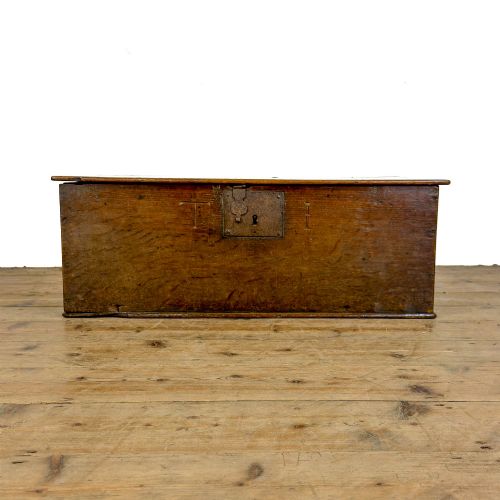


English Wooden Keepsake Box
An English wooden keepsake box holds personal treasures safely while displaying centuries of cabinet-making skill.
English Wooden Keepsake Box
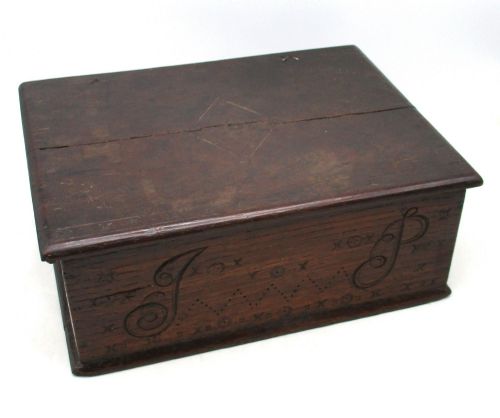
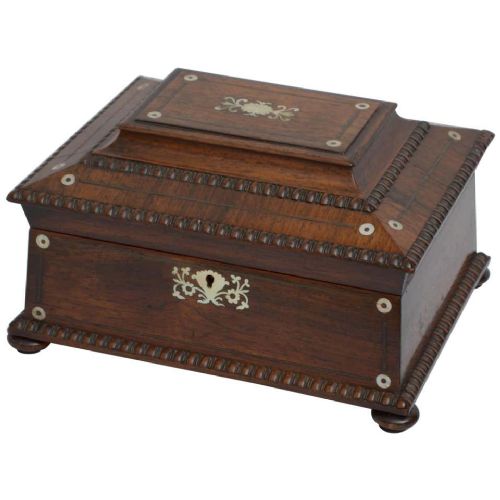
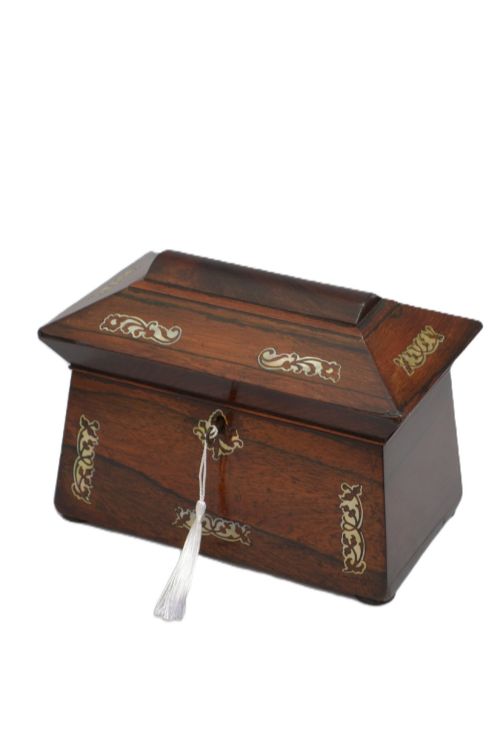
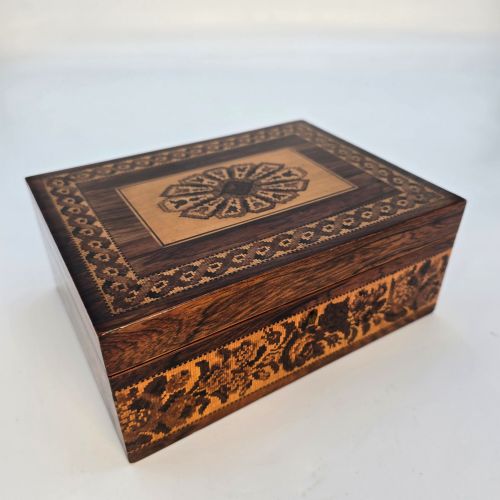
An English wooden keepsake box spans several centuries of domestic storage forms, ranging from early 18th century carved oak document boxes to Victorian rosewood and sycamore trinket caskets. The selection on this page relies heavily on 19th century examples, featuring Tunbridge ware marquetry, coromandel stationery cases, and walnut domed caskets alongside earlier Georgian and Regency pieces.
Makers utilised dense timbers and intricate inlays to produce items intended for desks, dressing tables, and drawing rooms. Buyers encounter functional forms including jewellery boxes, tea caddies, glove boxes, and Bible boxes, each reflecting the stylistic preferences of periods such as the William IV, Aesthetic, and Arts and Crafts eras.
The domestic purpose of these objects dictated their construction, with compact desk accessories and larger caskets designed to secure letters, valuables, and small personal possessions. Surviving pieces demonstrate the evolution of English joinery and decorative surface treatments across the Georgian, Victorian, and Edwardian periods.
Materials and construction
Cabinet-makers built these boxes from durable native and exotic timbers including oak, rosewood, walnut, sycamore, and coromandel, often selecting figured grains for visual impact. Structural integrity relied on precise jointing, while decorative surfaces integrated contrasting woods, boxwood stringing, and mother-of-pearl.
Specialised techniques defined specific regional workshops, notably the mosaic wood-mosaics and micro-mosaic marquetry associated with Tunbridge Wells. Other decorated surfaces employed pokerwork on desktop tidies, lacquer work on Chinoiserie pieces, and carved detailing on early oak Bible and document boxes.
Assessing quality
The standard of a box depends upon the precision of its joinery and the complexity of its surface ornament. Superior examples exhibit tightly fitted veneers, intact marquetry without losses, and original hardware such as working brass locks and hinges.
Workmanship distinguishes mass-produced items from master pieces, particularly in the meticulous execution of Tunbridge ware mosaic patterns or deeply carved oak panels. The choice of dense, highly figured timbers and the survival of original interior linings further separate standard utility boxes from exceptional decorative commissions.
Edmund Nye·Trussell Brighton
The English Wooden Keepsake Box Glossary
- Tunbridge ware
- A form of wooden mosaic decoration produced in Kent, featuring intricate geometric or pictorial designs assembled from thousands of tiny tinted wood blocks. This technique reached its height during the Victorian period on small boxes and desk accessories.
- Marquetry
- The art of applying veneer pieces to a structure to form decorative patterns or pictures. Craftsmen used various coloured woods to create pictorial scenes and borders on keepsake boxes.
- Casket
- A small ornamental box or chest used for holding jewellery, letters, or other valuable items. These pieces often featured domed lids and secure locks.
- Pokerwork
- A method of decorating wood by burning designs into the surface with heated metal tools. This technique gained popularity during the Arts and Crafts movement for stationery and desktop boxes.
- Caddy
- A small container originally designed for storing tea leaves in dry conditions. Many surviving examples feature internal compartments and lockable lids.
English Wooden Keepsake Box: Frequently Asked Questions
How do I date an old wooden box?
Dating relies on combining stylistic evidence, timber choices, and construction methods. Joinery techniques and hardware often provide clearer chronological indicators than the exterior decoration alone.
Examination of the interior and base construction helps identify whether a piece belongs to the Georgian, Regency, or Victorian eras.
What is Tunbridge ware?
Tunbridge ware refers to wooden items decorated with characteristic mosaic pictorial or geometric veneer panels. Craftsmen glued thousands of tiny wood prisms together to form detailed images of butterflies, flowers, or castles.
This intricate craft flourished in Kent during the 19th century, producing highly collectible boxes and desk accessories.
How were these boxes originally used?
These boxes served multiple domestic functions, including storing correspondence, securing family Bibles, and safeguarding jewellery. Desktop accessories kept writing materials organised before the widespread adoption of fountain pens.
Larger caskets held tea reserves in locked containers, while smaller trinket boxes rested on dressing tables for daily accessories.
What woods are commonly found?
Makers utilised native English hardwoods like oak and sycamore for robust early containers. Exotic imports such as rosewood, coromandel, and walnut appeared with greater frequency during the Regency and Victorian periods.
Inlays frequently incorporated lighter boxwood and fruitwoods to create high-contrast geometric borders and pictorial scenes.