


Antique Mosaic Inlaid Casket
An antique mosaic inlaid casket brings intricate micro-mosaic or wood-mosaic work into a room, offering a tactile piece of historic craftsmanship.
Antique Mosaic Inlaid Casket
When you search for an antique mosaic inlaid casket, you encounter a variety of decorative receptacles designed for trinkets, stationery, jewellery, and sewing accessories. These pieces span the Victorian era and the nineteenth century, reflecting global craft traditions from British Tunbridge Wells to Italy and Anglo-Indian workshops.
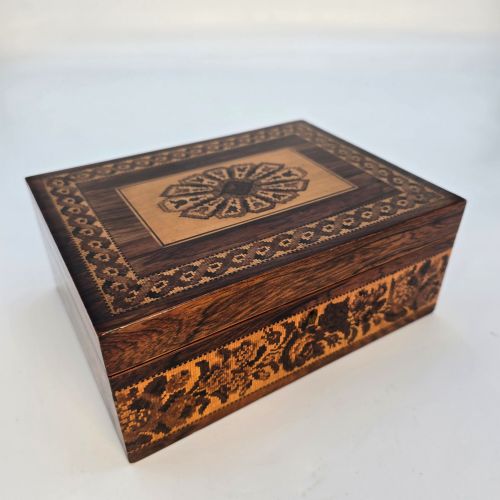
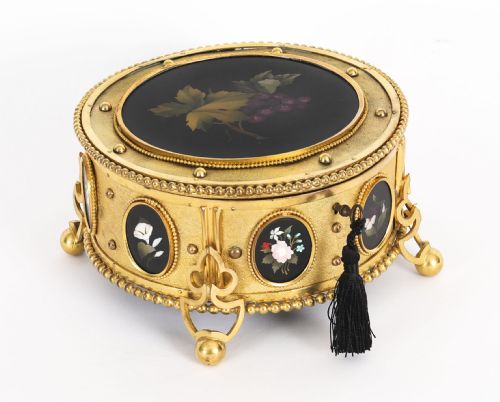
The most common examples on this page are Victorian Tunbridge ware boxes showcasing elaborate wood mosaic marquetry and geometric patterns. Alongside these, you find Italian pietra dura and ormolu caskets alongside Anglo-Indian carved wood and bone or Sadeli mosaic boxes.
Materials and Construction
These caskets utilise timber foundations such as rosewood, walnut, boxwood, and ebonised wood, which are then faced with complex surface decoration. Artisans applied meticulous veneers including specimen bone, marble, brass mounts, and hardstone pietra dura panels.
The distinctive mosaic effects rely on precise assembly, whether through multi-wood Tunbridge ware blocks cut to form pictorial and geometric designs or through intricate Sadeli micro-mosaic bone and foil arrangements embedded in wood.
Judging Quality
Quality in these pieces rests upon the precision and complexity of the mosaic work and the stability of the foundation box. Finer examples display immaculate alignment in tiny wood or bone tesserae with minimal loss or shrinkage across the surface.
The choice of secondary materials and interior fittings also separates standard production from superior pieces. Caskets featuring fitted velvet or silk compartments, robust ormolu mounts, and well-preserved hinges command greater attention from collectors.
Edmund Nye
The Antique Mosaic Inlaid Casket Glossary
- Tunbridge Ware
- A form of nineteenth-century wood mosaic originating from Tunbridge Wells. It utilises thousands of tiny tinted wood blocks to create pictorial or geometric designs.
- Pietra Dura
- An Italian technique of inlaying cut and polished coloured stones to create formal or pictorial designs. It appears frequently on nineteenth-century marble and wood boxes.
- Sadeli
- An intricate form of micro-mosaic work associated with Anglo-Indian boxes. It typically incorporates geometric patterns formed from thin rods of bone, horn, and metal.
- Marquetry
- The art of applying pieces of veneer to a structure to form decorative patterns. In these caskets, it forms elaborate geometric or floral surface designs.
- Ormolu
- Gilded bronze mounts applied to the corners, hinges, and feet of boxes. It provides structural accent and decorative contrast to the wood or stone body.
Antique Mosaic Inlaid Casket: Frequently Asked Questions
How do I care for a mosaic box?
Keep wooden and mosaic caskets away from direct sunlight and steady heat sources to prevent the shrinkage and warping of tiny veneer elements. Maintain a stable indoor humidity to protect fragile bone, wood, and stone inlays.
Dust the intricate surfaces gently with a soft, dry brush and avoid applying liquid polishes that can seep into tiny mosaic joints and loosen individual tesserae.
How do I distinguish Tunbridge ware?
Tunbridge ware is identified by its signature mosaic surface composed of countless microscopic wood squares and triangles. These tiny blocks combine to form perspective cubes, geometric borders, or pictorial views of castles and flowers.
Many examples feature a characteristic white wood border made from holly or beech, often bearing a maker's label or stamp on the interior base or fitted tray.
What are Sadeli mosaic boxes?
Sadeli boxes are a distinct subset of Anglo-Indian decorative boxes characterised by geometric micro-mosaic decoration. The patterns are constructed from thin rods of bone, horn, pewter, and stained wood.
These rods are bound together, sliced into thin sheets, and applied as a continuous veneer over the wooden carcass of the box to create a shimmering, metallic-looking surface.