



Rosewood Tunbridge Ware Box
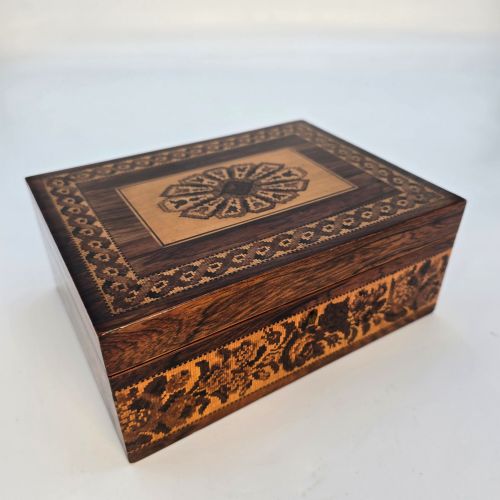
These rosewood tunbridge ware box pieces are intricate wooden containers decorated with tiny mosaic wood tesserae, prized by collectors for their extraordinary microscopic imagery.
Rosewood Tunbridge Ware Box
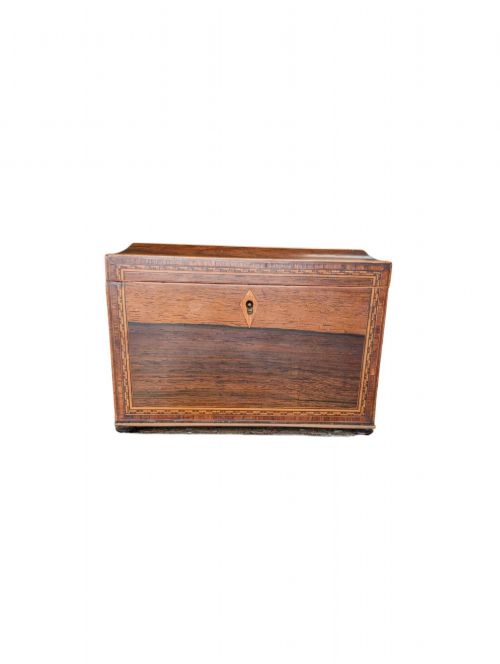
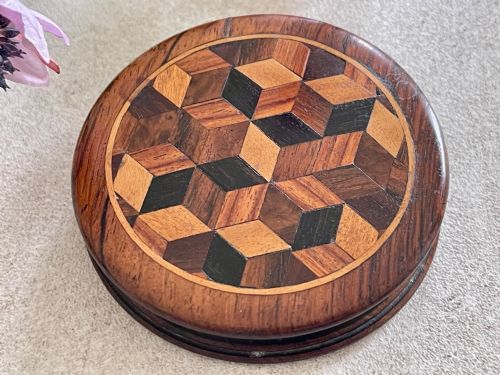
When you search for a rosewood tunbridge ware box, you encounter a specialised form of nineteenth-century English decorative container. These pieces combine a dense dark tropical hardwood body with elaborate micro-mosaic panels depicting castles, butterflies, flowers, and geometric patterns.
The selections visible here span the Regency and Victorian eras, alongside specific decades such as the eighteen-fifties, eighteen-seventies, eighteen-eighties, and eighteen-nineties. You will most frequently meet tea caddies, jewellery boxes, and glove boxes alongside smaller trinket, snuff, and cribbage containers.
The functional interior fittings often survive intact, including compartments for tea, velvet linings for needlework, or fitted trays for personal items. The regional craft originated in Kent, transforming native and exotic timbers into miniature architectural landscapes and floral bands.
How they were made
The primary construction relies upon solid rosewood or walnut carcases, complemented by contrasting secondary timbers like boxwood, holly, sycamore, and brass hardware. Artisans cut thousands of microscopic wood sections from dyed and natural strips, gluing them together into long rods with a picture running through the entire length.
Craftspersons then sliced these rods transversely to produce hundreds of identical mosaic tesserae, which they applied by hand to the exterior surfaces in complex bands and pictorial panels. Mixed wood inlay and specialist stickware techniques created the illusion of perspective and shading without the use of paint.
Materials recorded across the inventory include contrasting light woods such as boxwood, holly, and sycamore set into dark rosewood.
What varies in quality
The standard of craftsmanship depends largely on the density and precision of the mosaic work, where finer pieces utilise thousands of microscopic tiles to form crisp, detailed pictorial views rather than repeating geometric borders. The complexity of the subject matter, such as specific castles or elaborate floral cascades, distinguishes ambitious workshop productions from simpler output.
The condition and completeness of the timber foundation, the survival of internal silk or paper linings, and the presence of original maker signatures heavily influence the standing of an individual piece. The integration of the mosaic bands with the underlying rosewood body demonstrates the skill of the original maker.
Edmund Nye·Henry Hollamby
The Rosewood Tunbridge Ware Box Glossary
- Tunbridge Ware
- A form of decorative woodwork originating from Tunbridge Wells in Kent, characterised by minute mosaic pictorial panels. The technique reached its height during the nineteenth century.
- Mosaic Inlay
- A decorative surface created by assembling tiny geometric or pictorial wood tiles into patterns. These tiles are sliced from bundled rods of differently coloured woods.
- Stickware
- A specific type of Tunbridge Ware decoration formed from geometric arrangements of wooden sticks or rods. It creates linear and abstract patterns rather than pictorial scenes.
- Tea Caddy
- A lidded container originally designed to store dry tea leaves securely. Examples from this tradition feature compartmented interiors and elaborate mosaic lids.
- Tesserae
- The individual microscopic wooden tiles used to build up the mosaic imagery on the box surface. Each piece derives from a sliced composite rod.
Rosewood Tunbridge Ware Box: Frequently Asked Questions
What were rosewood tunbridge ware boxes used for?
These boxes served domestic purposes in the nineteenth century, functioning as secure receptacles for luxury commodities, correspondence, and personal ornaments. Tea caddies stored expensive loose leaf tea, while smaller caskets held jewellery, gloves, writing implements, or sewing equipment.
The compartmentalised interiors kept delicate items organised and protected. Many served as decorative desktop accessories in the drawing rooms of Victorian homes.
How do I date a tunbridge ware box?
Dating relies upon stylistic markers, structural forms, and recorded maker signatures spanning the Regency and Victorian eras. Pieces associated with makers like Edmund Nye or Henry Hollamby often align with mid-nineteenth-century production periods.
Broader box proportions, brass foot designs, and the complexity of the mosaic motifs also help place an item within specific decades such as the eighteen-fifties or eighteen-eighties.
Are the mosaic pictures painted?
The mosaic images are constructed entirely from natural and chemically dyed timbers without the use of paint or ink. Artisans utilised the natural colours of woods like holly, boxwood, and barberry to achieve tonal gradation.
Thousands of microscopic wood sections are bundled, glued, and sliced to form the picture elements. This technique creates a permanent image that relies on the grain and colour of the timber itself.
How should I care for a rosewood box?
Protect the rosewood body and delicate mosaic panels by keeping the box away from direct sunlight and rapid temperature fluctuations. Excessive heat can dry out the historic adhesives holding the tiny wooden tesserae in place.
Dust the exterior gently with a dry, soft cloth and avoid applying liquid polishes or modern cleaning agents to the mosaic surfaces. Maintaining stable indoor humidity preserves both the wood and the internal silk linings.