



Brown Wooden Folding Table
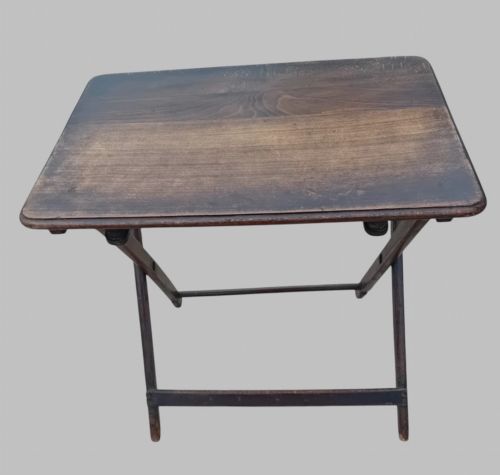
A brown wooden folding table offers practical folding utility in mahogany, oak, or walnut across Georgian, Victorian, and Edwardian periods.
Brown Wooden Folding Table
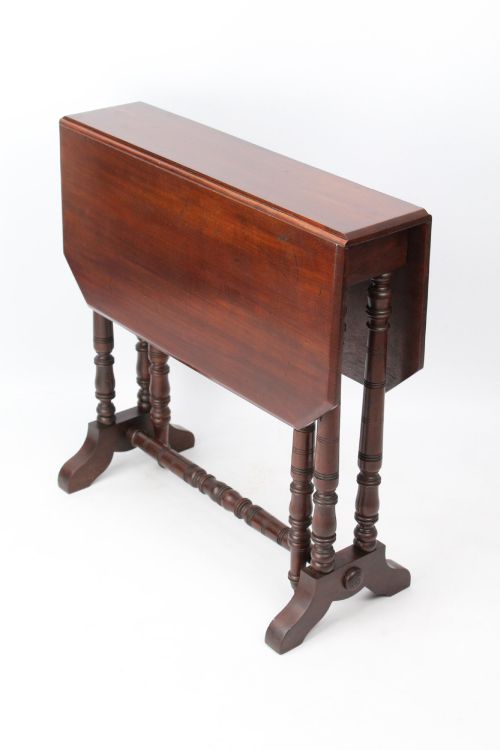
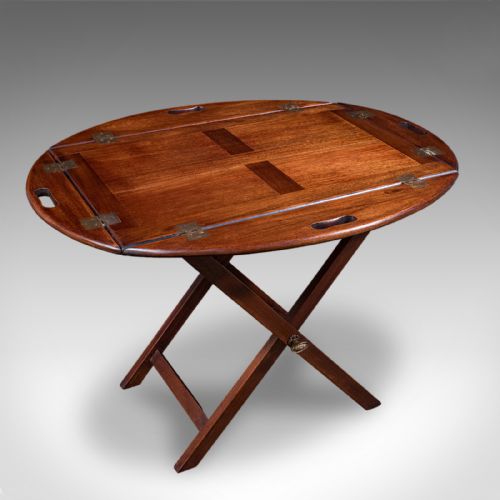
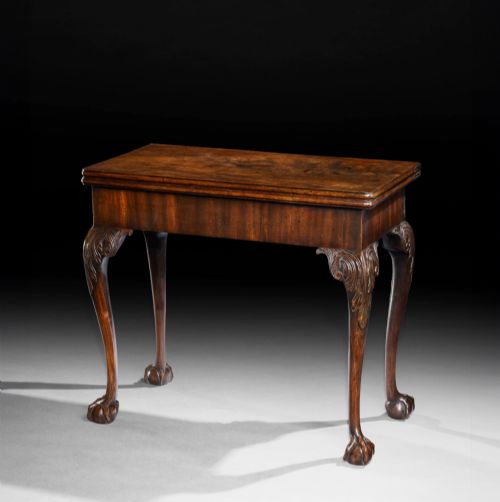
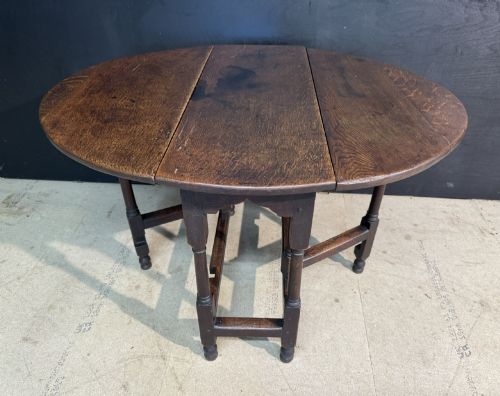
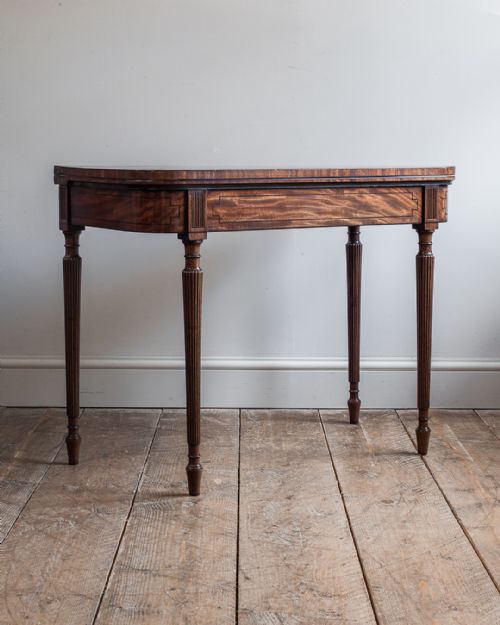
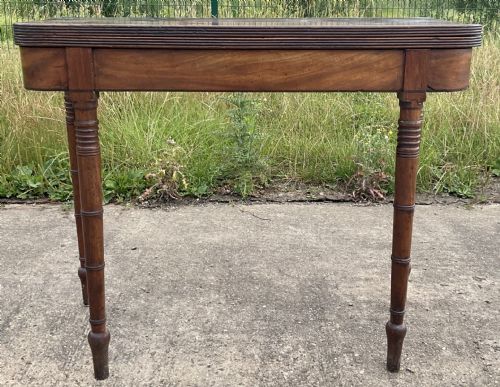
A brown wooden folding table comprises versatile furniture forms designed for easy storage and flexible placement. When exploring a brown wooden folding table selection, buyers encounter butler's trays on stands, card tables, gateleg tables, and Sutherland tables from periods ranging from the eighteenth century to the early twentieth century.
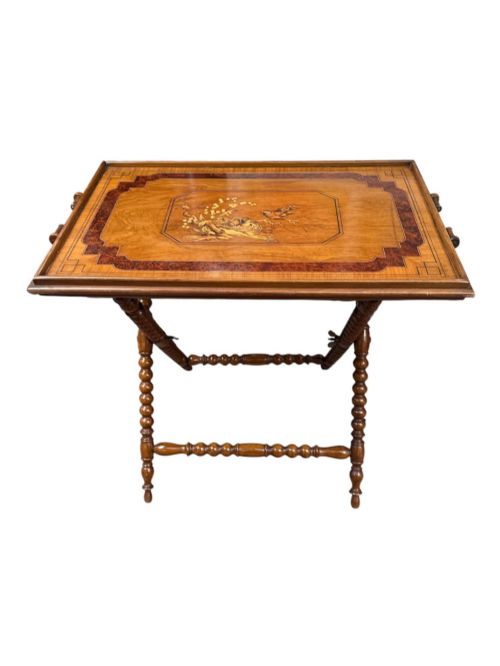
The pieces on this page span diverse styles including Regency, Victorian, Edwardian, and campaign designs. Examples extend from simple oak gateleg tables to elaborate marquetry butler's trays and inlaid games tables originating from England, France, and India.
How they were made
Cabinetmakers constructed these tables using solid timbers and veneers such as mahogany, oak, walnut, teak, and satinwood. Brass hinges, brackets, and inlay frequently support the folding mechanisms and drop-leaf actions.
Joinery methods include concertina actions, gateleg pivots, and detachable folding stands designed for portability and space-saving utility.
Some nineteenth-century tables cleverly double as chess, backgammon, and card boards with hidden compartments for dice.
What varies in quality
The distinction between tiers rests upon timber selection, figuration, and the precision of the folding mechanism. Superior examples display carefully matched grain patterns, such as figured Honduras mahogany or burr walnut, alongside robust brass hardware that operates smoothly.
Secondary elements like hand-carved details, marquetry, and mother-of-pearl inlay elevate certain pieces beyond standard utilitarian tables.
The Brown Wooden Folding Table Glossary
- Butler's tray
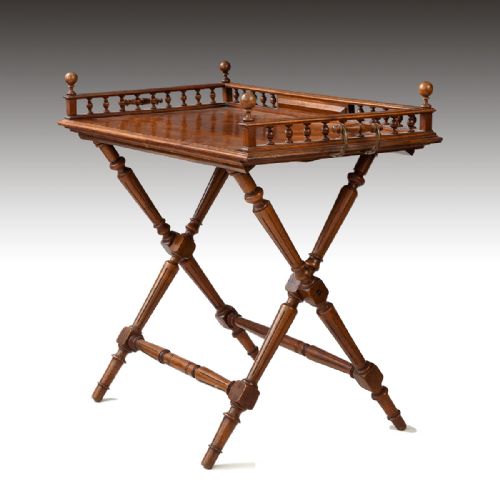
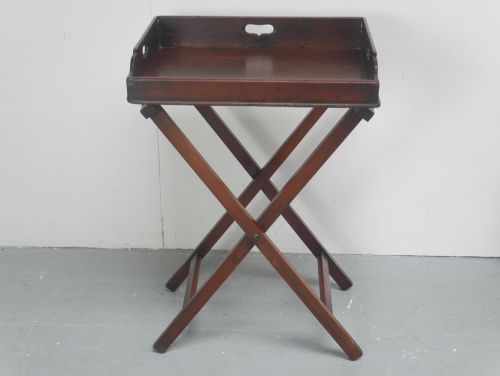
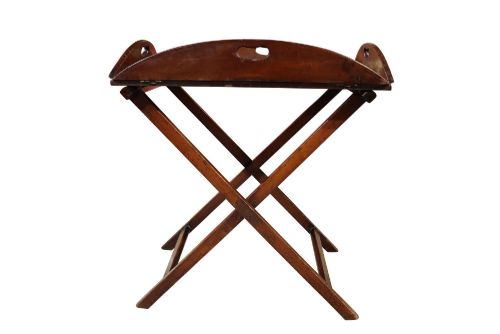
- A removable wooden tray with hinged or shaped sides, traditionally placed upon a separate folding X-frame stand for serving. These trays often feature cutout handles for lifting.
- Gateleg table
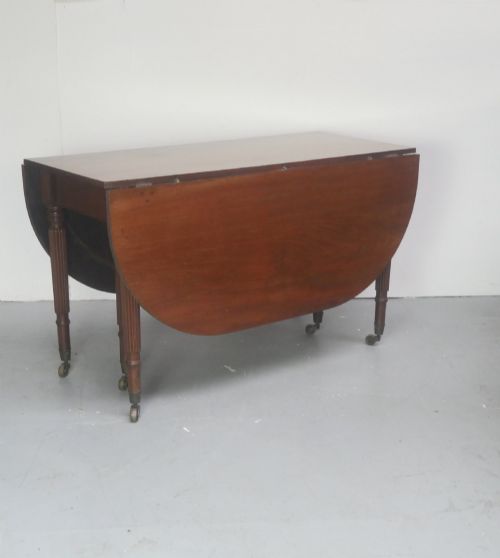
- A drop-leaf table where the leaves are supported by hinged legs that swing outward like a gate. This design allows the table to fold flat when not in use.
- Sutherland table
- A narrow drop-leaf table featuring exceptionally small flaps and a folding base. This form maximises floor space efficiency.
- Concertina action
- An expandable frame mechanism used in card and dining tables that stretches outward like an accordion. It provides stable support for folding tabletops.
- Campaign style
- Portable furniture designed for travel and military use, typically featuring brass corners, recessed handles, and folding stands. These pieces combine rugged durability with compact storage.
Brown Wooden Folding Table: Frequently Asked Questions
How do I use a butler's tray table?
A butler's tray sits upon its folding stand to serve drinks or display objects in living spaces. The removable tray top allows for easy carrying when clearing items.
Folding the stand flat permits compact storage behind furniture or inside cupboards when floor space is needed.
What is a gateleg table used for?
Gateleg tables provide expandable surface area for dining, writing, or occasional use in domestic rooms. Dropping the leaves creates a narrow profile against a wall.
Swinging out the wooden gate supports locks the leaves securely into place for daily tasks.
How can I tell a card table from a tea table?
Card tables typically feature folding tops that open to reveal baize or leather playing surfaces for games. They often include internal wells for counters or candles.
Tea tables usually present a solid folding wooden top designed to hold tea service equipment during the Georgian and Regency periods.
Are these folding tables sturdy?
Solid timber construction and traditional joinery ensure these tables remain stable during regular use. Brass hinges and folding braces reinforce the moving joints.
Checking the alignment of the folding mechanism ensures the surface remains level when opened.