

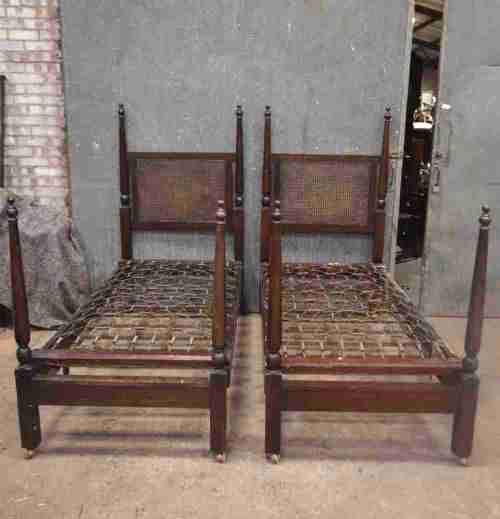
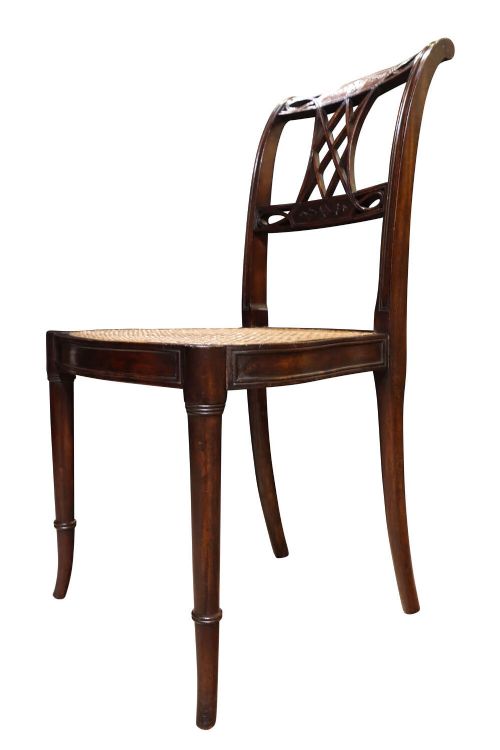
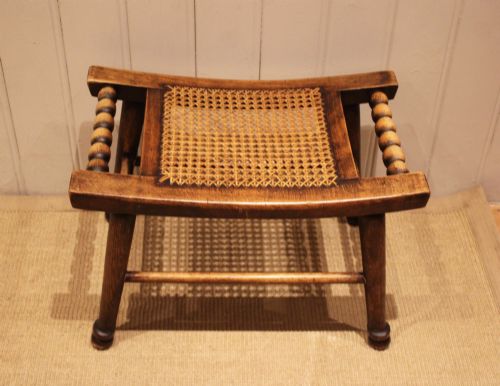
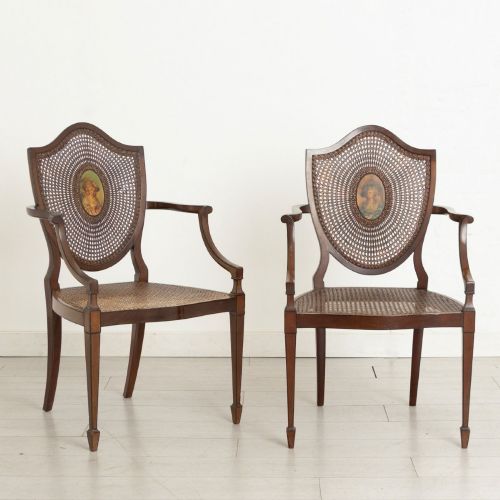

Brown Wood Cane
Brown wood cane describes walking sticks, chairs, and stands crafted from timber and plant materials.
How they were made
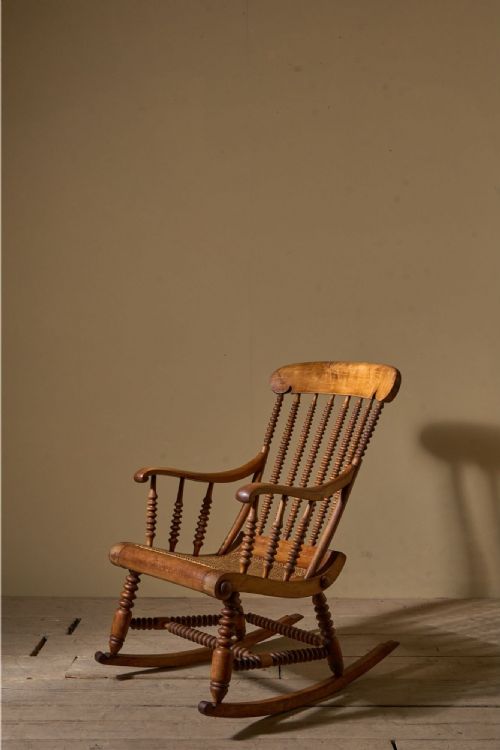
Woodworking techniques depend on the object type, utilising turned beech, carved walnut, carved oak, and solid mahogany. Craftsmen shaped solid timbers into chairs, stick stands, and walking stick shafts using hand tools.
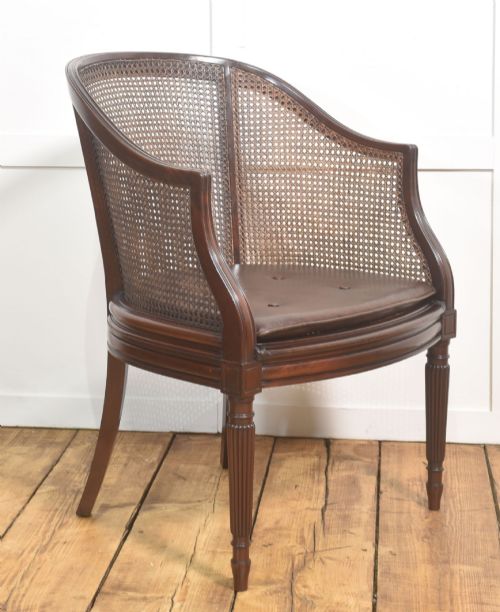
Natural cane and plant fibres are woven into tight geometric patterns for chair seats and backrests. Metal elements such as steel blades, brass collars, and silver mounts attach to wooden walking sticks.
What varies in quality
Quality depends upon the precision of the woodwork and the integrity of the woven cane panels. Finely carved details on Black Forest stands or Anglo-Indian armchairs demonstrate superior artisan skill.
The selection of timber species and the preservation of original mounts or blades distinguish standard utility items from finer gentleman's walking sticks and decorative hall furniture.
Thonet·James Shoolbred
The Brown Wood Cane Glossary
- Bergere
- A closed upholstered armchair with a wooden frame where the sides and back often incorporate woven cane panels. This French seating form gained popularity in various British revival styles.
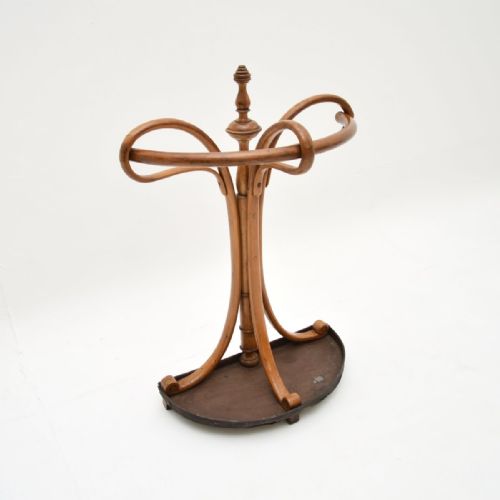
- Bentwood
- Wood steamed and bent into curved structural forms, famously utilised by Thonet for chairs and umbrella stands. This technique creates strong, lightweight frames without traditional joinery.
- Partridge wood
- A dense, durable tropical timber characterised by distinctive partridge-feather patterning. Makers selected this material for walking sticks and swagger sticks.
- Malacca
- A sturdy rattan cane imported from Southeast Asia, known for its smooth joints and resilience. It serves as a traditional shaft material for walking sticks and handles.
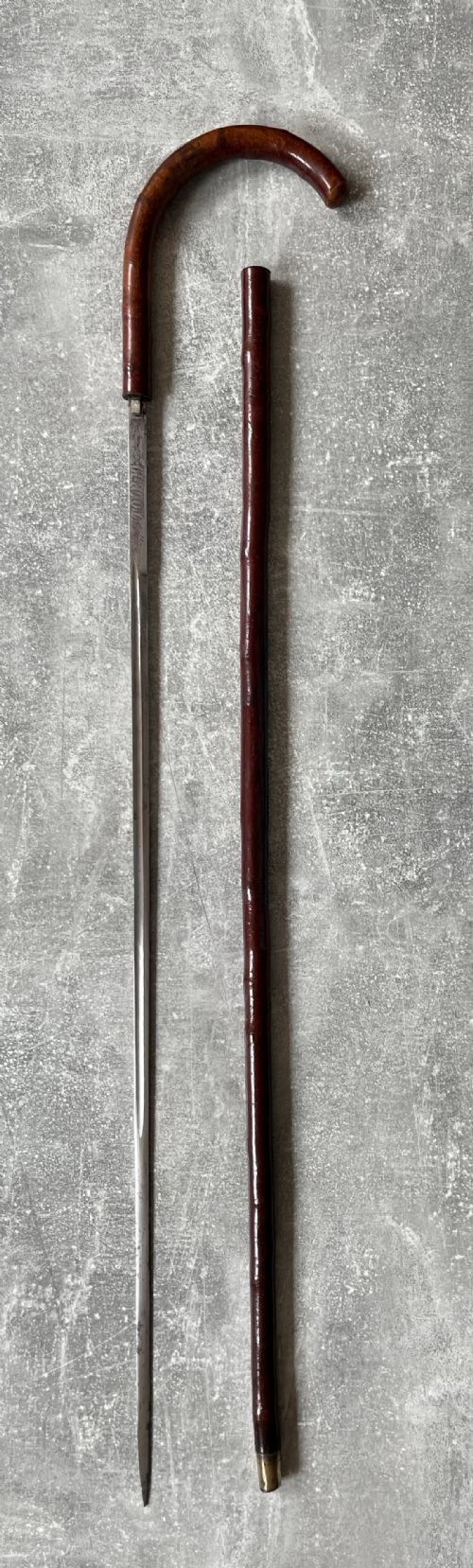
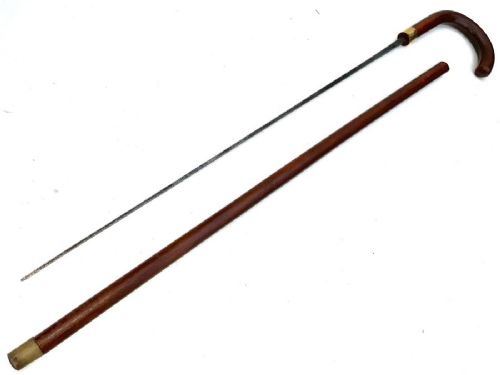
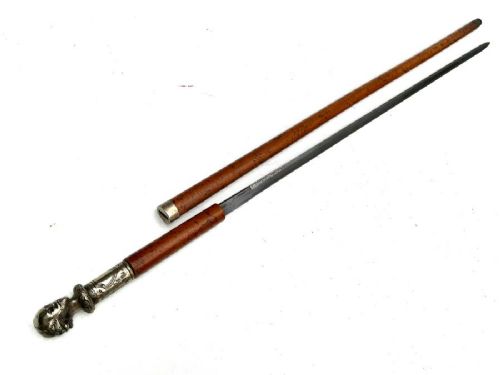
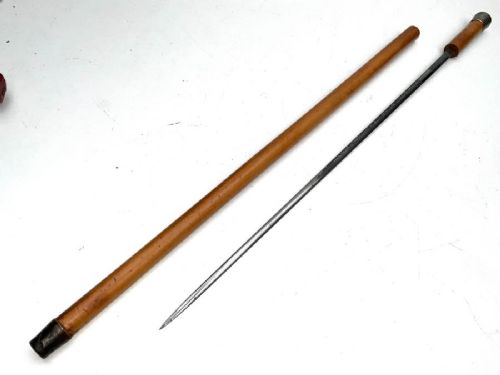
- Sword stick
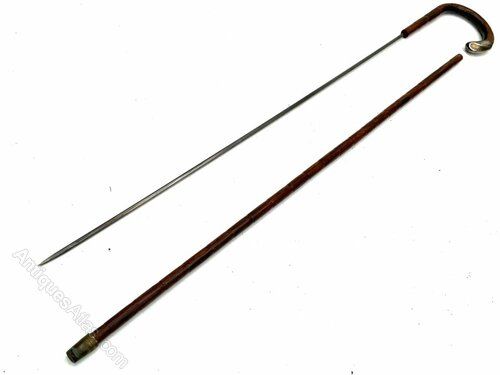
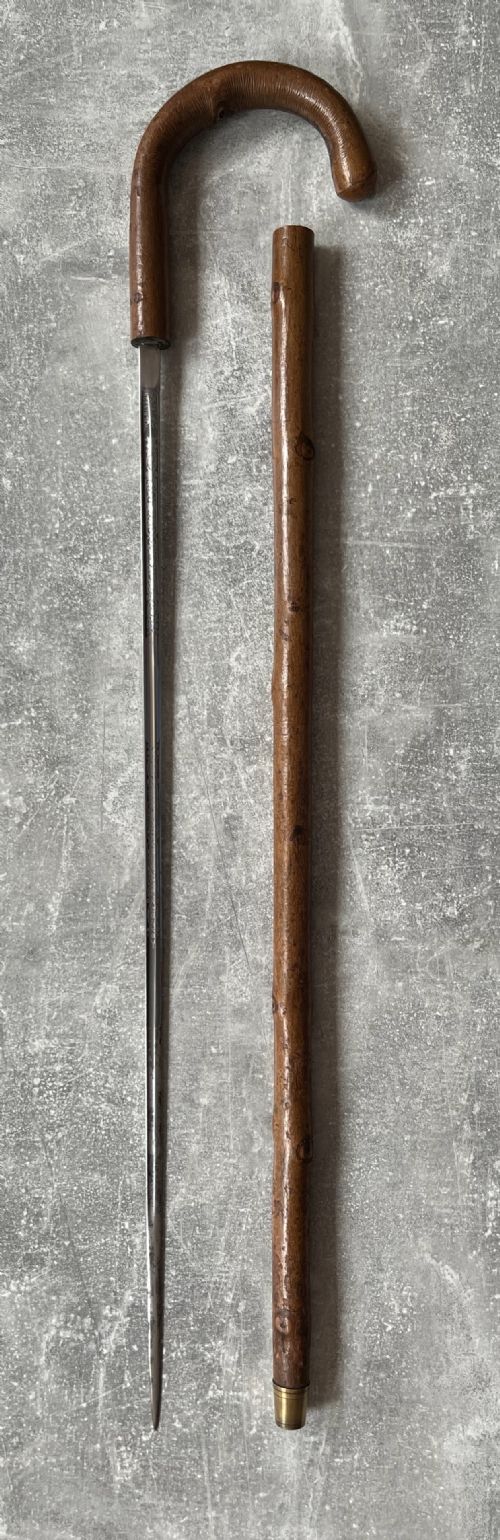
- A walking stick concealing a steel blade within its wooden shaft. These pieces often feature locking mechanisms and metal collars.
Brown Wood Cane: Frequently Asked Questions
What is a brown wood cane?
Brown wood cane refers to antique walking sticks, furniture, and umbrella stands made from timber and woven plant materials.
The category spans Victorian and Edwardian seating alongside functional gentleman's walking sticks.
How do I identify a sword stick?
A sword stick conceals a steel blade inside a hollow wooden shaft, often secured by a screw or catch mechanism.
Many examples feature handles made from root wood, chestnut, or partridge wood paired with metal mounts.
What periods do these pieces date from?
The listings include items from the nineteenth century, the Victorian era, the Edwardian period, and the Regency era.
Revival styles such as Jacobean and Carolean also appear alongside Black Forest and Anglo-Indian designs.
Where were stick stands used?
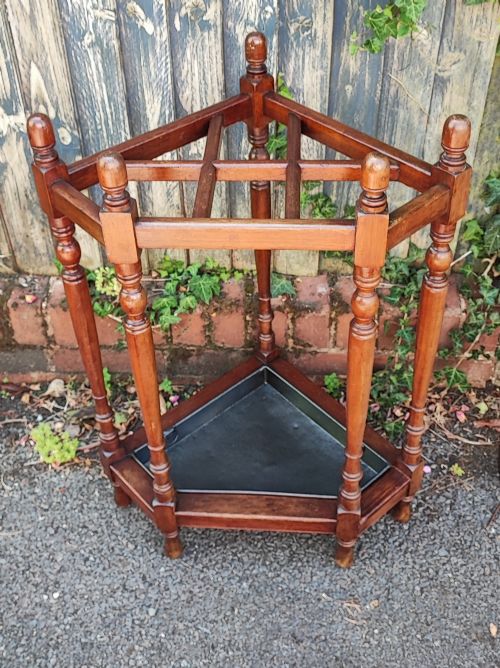
Stick and umbrella stands furnished hallways and boot rooms in country houses and town residences.
These pieces kept walking aids and umbrellas organised near the entrance of a home.
How do I care for cane seating?
Cane seating requires occasional light dusting and maintenance to prevent the natural plant fibres from drying out and splitting.
Keeping woven panels away from direct heat sources helps preserve the flexibility of the cane.