
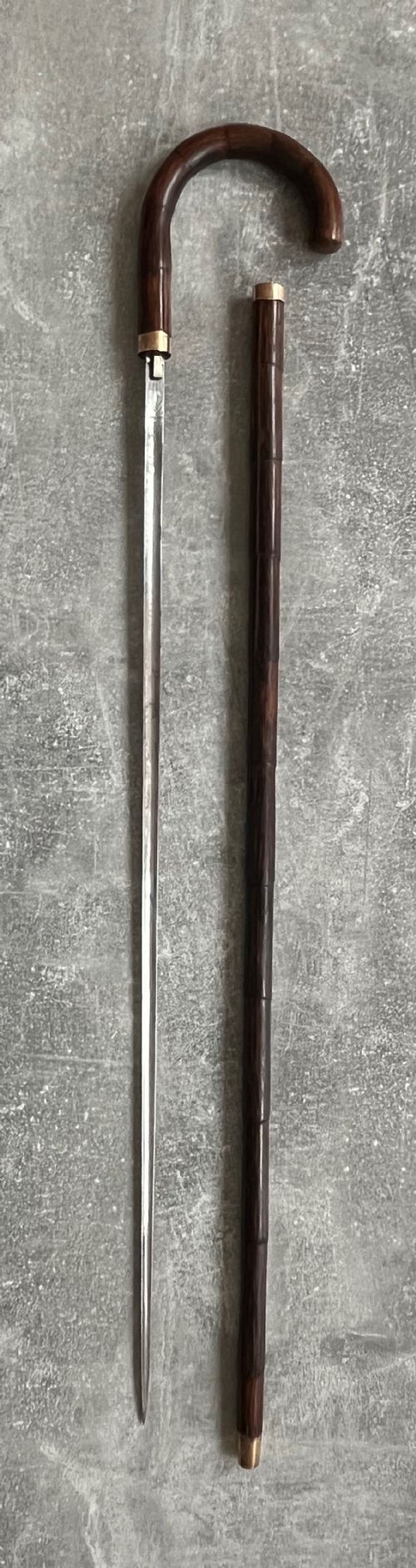
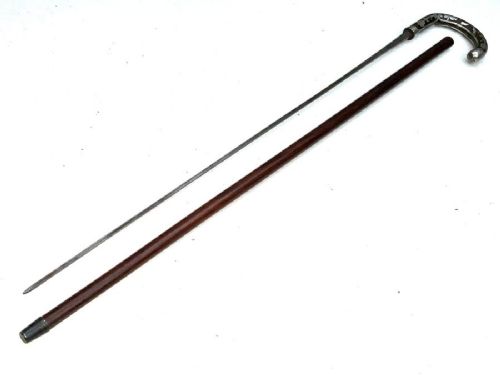
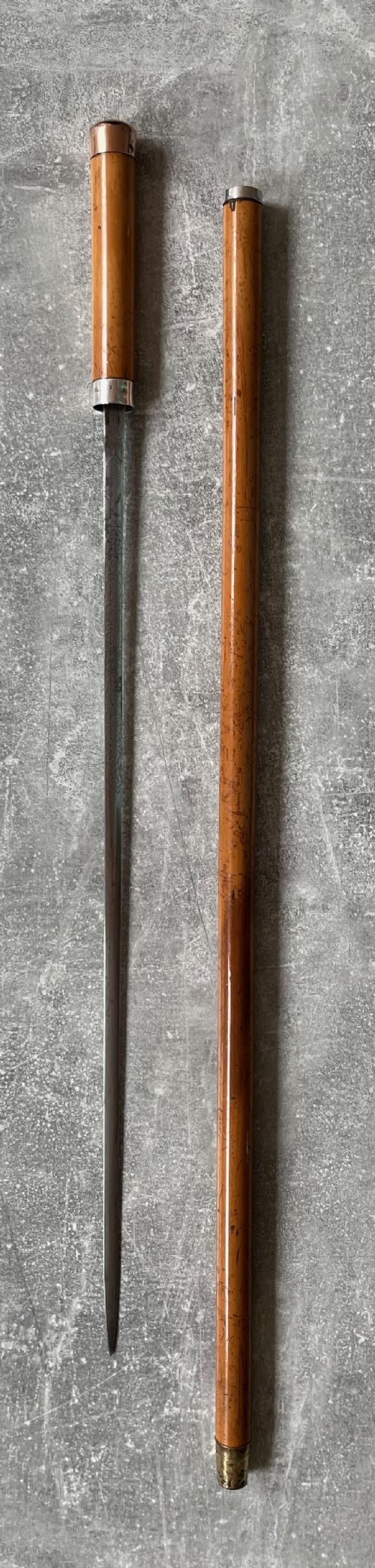
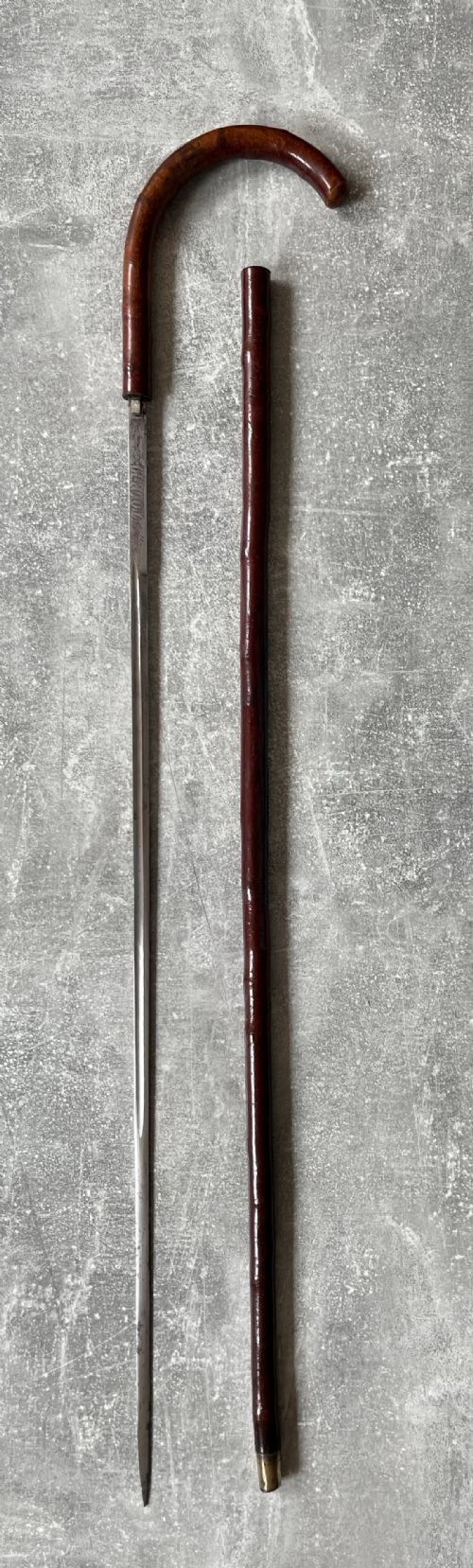





Steel Blade Walking Stick
A steel blade walking stick is a discrete personal defence piece that combines daily support with a hidden blade, favoured by gentlemen across the Victorian and Edwardian eras.
Steel Blade Walking Stick
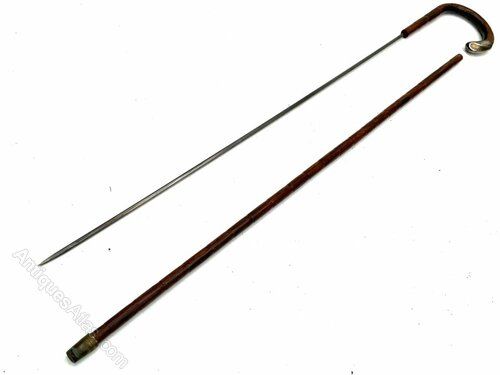
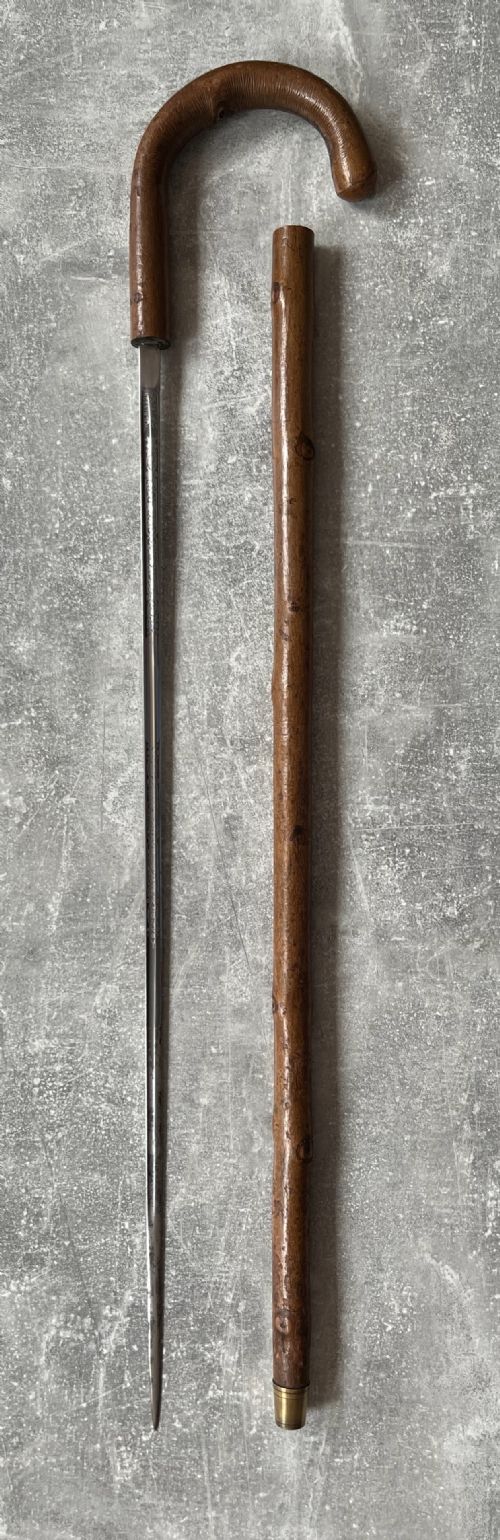
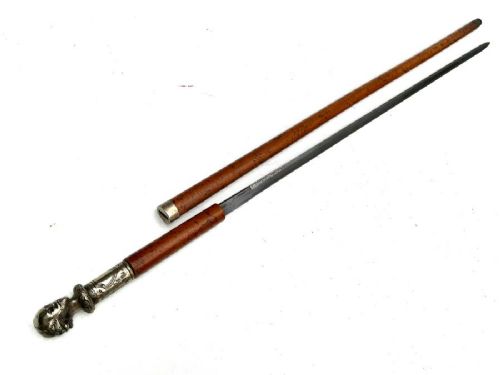
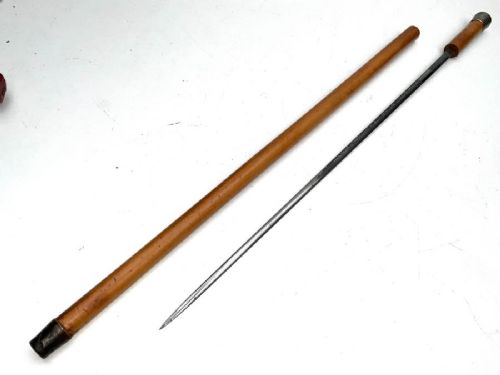
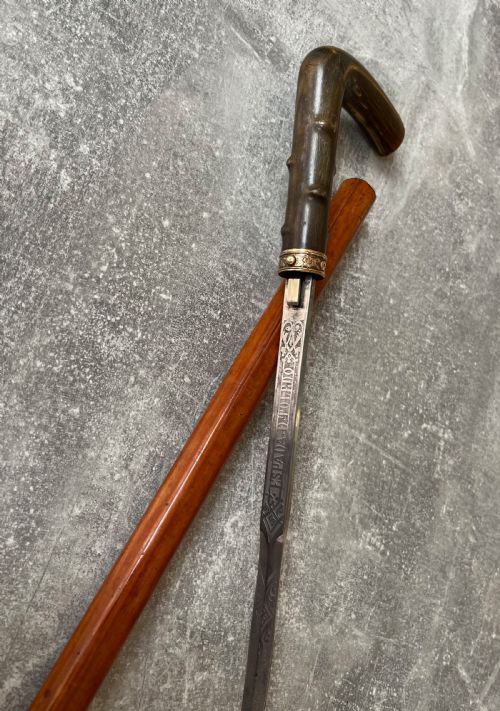
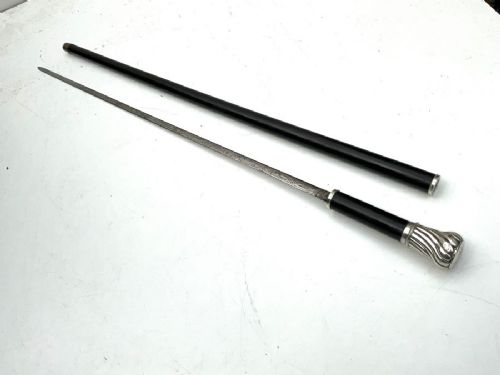
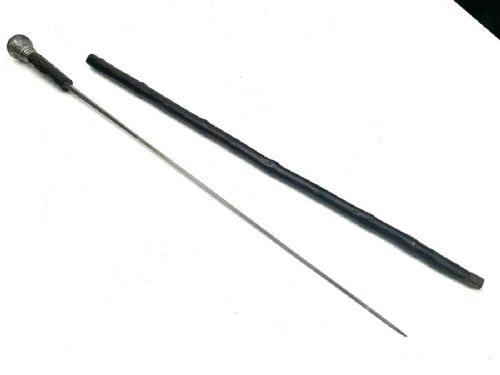
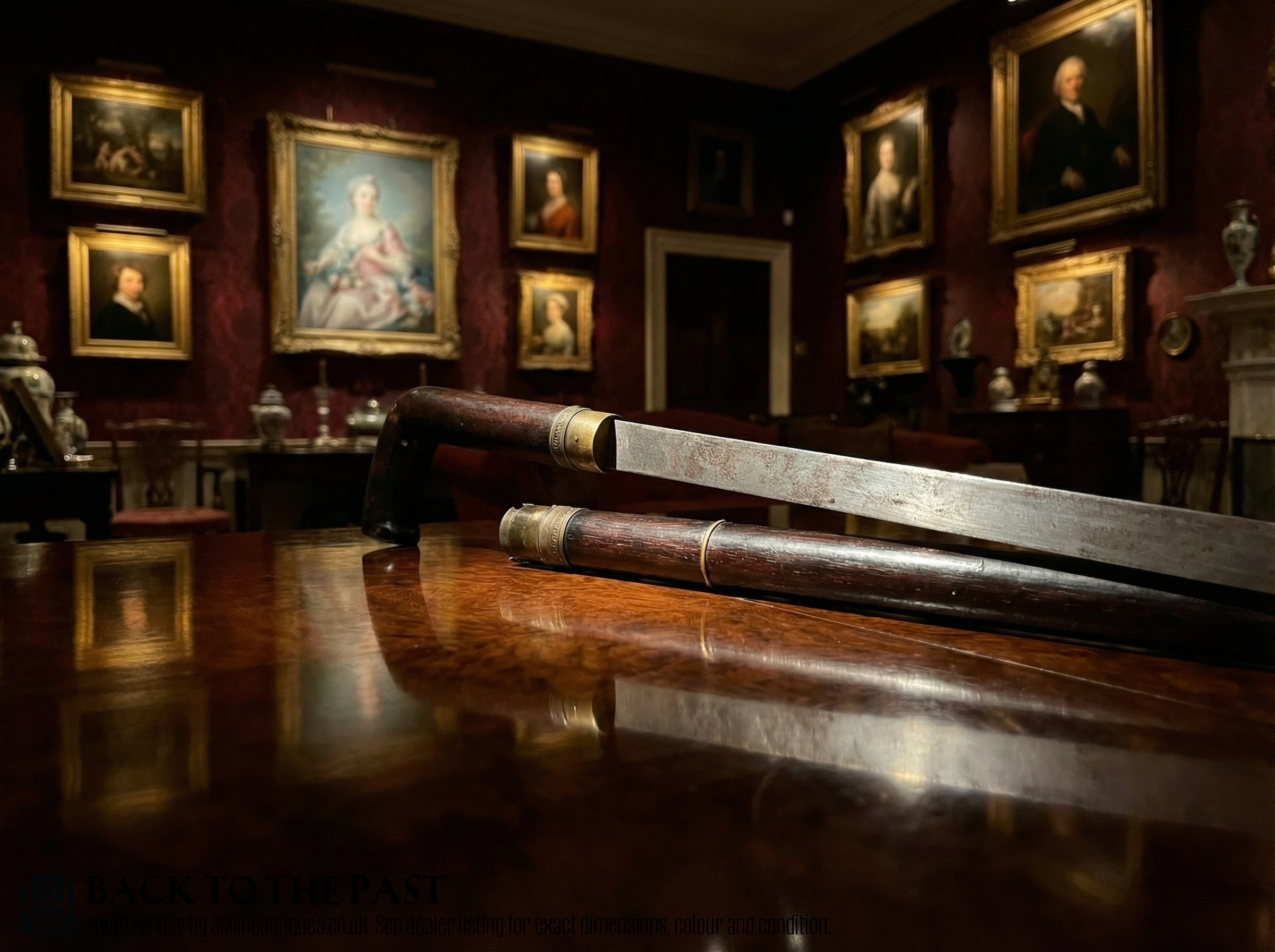
A steel blade walking stick, frequently termed a sword stick, serves the dual purpose of a traditional support cane and a concealed blade housed within the shaft. Buyers examining this page will encounter pieces dating from the nineteenth century through to the early twentieth century, spanning Victorian and Edwardian periods.
The most common examples on this page pair natural timber shafts, such as malacca or partridge wood, with functional metal blades and secure button releases. Makers often incorporated horn, bone, or crook handles to maintain the outward appearance of a standard gentleman's walking cane.
Military officers and civilian gentlemen alike utilised these pieces, with specific styles ranging from Imperial German and Victorian military variants to plain bamboo and faux bamboo designs. Each piece relies on clever joinery to disguise the internal steel blade until it is manually drawn from the wooden housing.

Materials and construction
Makers constructed the shafts of these sticks from dense hardwoods like malacca, partridge wood, hazel, cherrywood, and bamboo, alongside leather-covered woods and blackthorn. These timbers provided the necessary rigidity to house a long steel blade while withstanding the daily weight and pressure of a walking support.
The concealed steel blades themselves frequently originated from renowned centres such as Toledo or bore the stamps of makers like Wilkinson. Metal components including collars, knops, and mounts in brass, silver, and gold-coloured metals reinforced the joints and secured the handle to the wooden scabbard.
Steel Blade Walking Stick Retail Price Guide 2026
Typical asking prices for steel blade walking stick among the pieces listed under this phrase on Sellingantiques today, from the lower quarter to the upper quarter. They describe what is for sale here now, not the wider market.
Listings on this site span the Victorian and Edwardian periods, featuring shafts of malacca, partridge wood, and bamboo paired with Toledo steel blades.
Judging quality in construction and finish
The integration between the handle and the shaft dictates the overall integrity of the piece, where superior examples maintain a seamless join that completely conceals the internal blade seam during everyday use. Lesser pieces exhibit loose collars or uneven alignment where the wooden grain fails to match the handle mount.
Blade execution separates standard utilitarian items from finer workshop examples, particularly where Toledo or Wilkinson steel is paired with finely etched decoration and a reliable button release mechanism. The quality of the mounted metals, such as hallmarked silver or detailed horn and bone handles, further elevates the piece.
BRIGG·Wilkinson
The Steel Blade Walking Stick Glossary
- Toledo blade
- A steel blade produced in the Spanish city of Toledo, long celebrated for its high-grade flexible steel and durability.
- Malacca
- A slender, mottled rattan cane imported from Southeast Asia, prized for its strength and resilience in high-end walking sticks.
- Collar
- A metal band, often in brass or silver, fitted around the neck of the stick to reinforce the wood and secure the handle joint.
- Knop
- A rounded handle or pommel at the top of the walking stick, frequently shaped from horn, bone, or metal.
- Button release
- A mechanical catch or push-button set into the collar that locks the blade securely inside the wooden shaft until pressed.
Steel Blade Walking Stick: Frequently Asked Questions
What is a steel blade walking stick?
A steel blade walking stick is a dual-purpose cane featuring a hidden metal blade secured inside a wooden shaft.
Gentlemen carried these pieces during the Victorian and Edwardian periods for personal protection and daily support.
How do you release the hidden blade?
Most examples utilise a concealed button release or a simple friction catch set into the collar just below the handle.
Pressing this mechanism allows the user to draw the steel blade smoothly out from the wooden housing.
What woods were used for the shafts?
Makers selected resilient natural timbers including malacca, partridge wood, hazel, cherrywood, bamboo, and blackthorn.
These woods provided enough thickness and structural stability to securely hollow out a channel for the steel blade.
How do you date these walking sticks?
Dating relies on stylistic clues, metal mounts, handle materials, and maker marks stamped on the steel blade.
Pieces seen on this page primarily span the late nineteenth century through the Edwardian era up to the nineteen-twenties.