
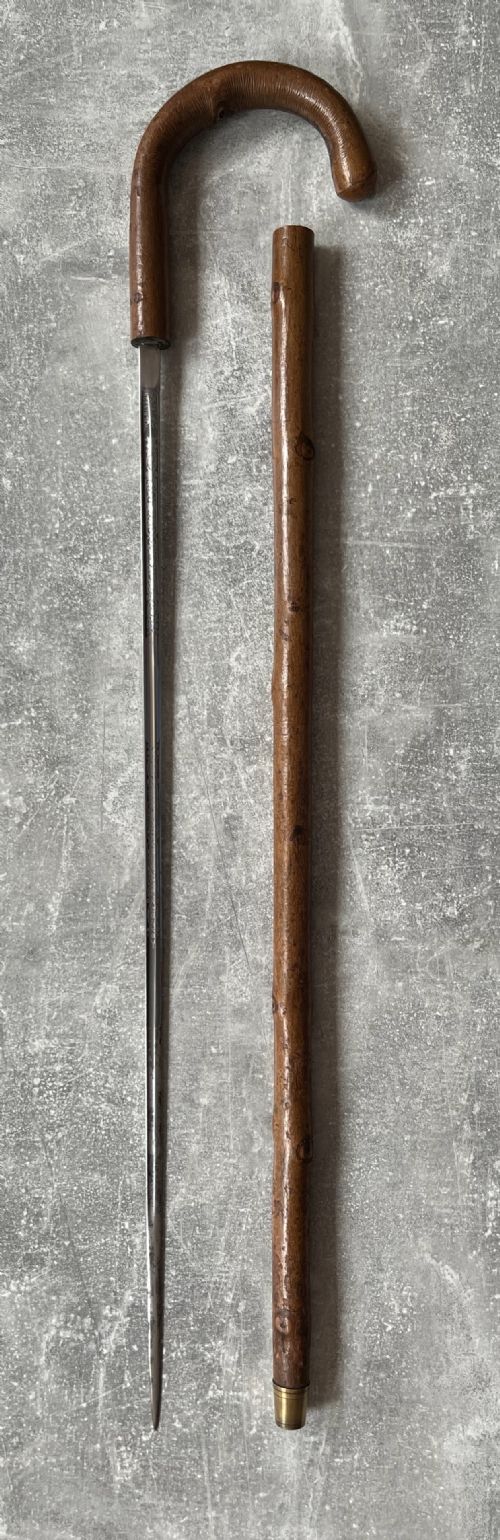


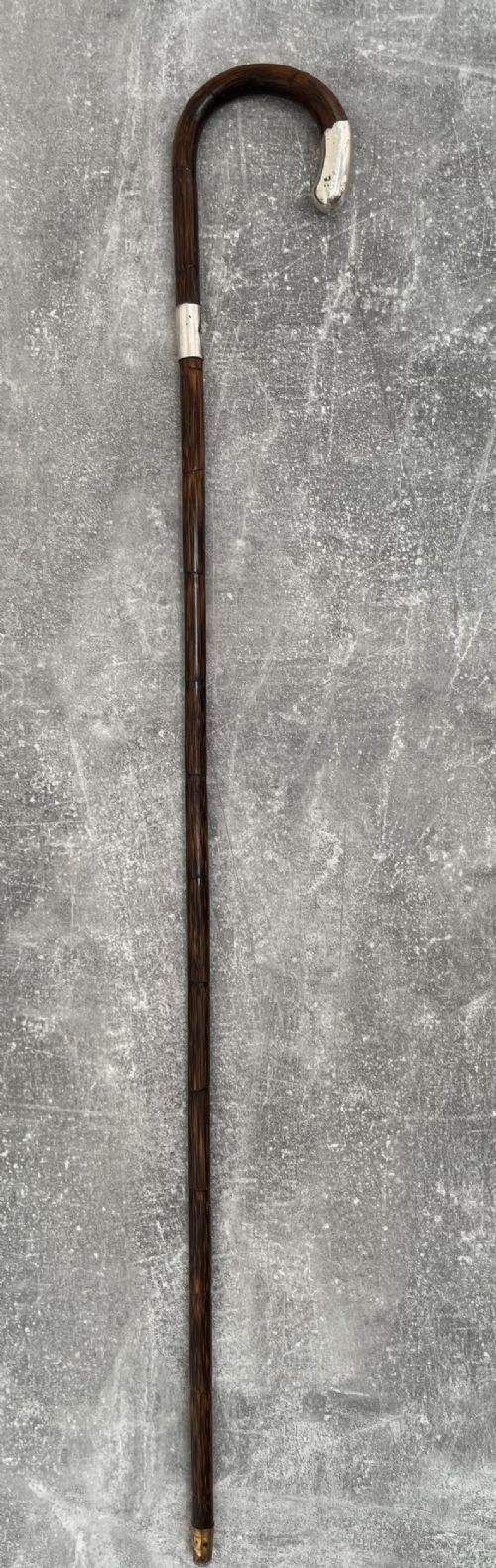
Crook Handle Sword Cane
A crook handle sword cane is a disguised personal defence tool disguised as a gentleman's walking stick, offering hidden steel blade utility beneath an everyday hooked grip.
Crook Handle Sword Cane
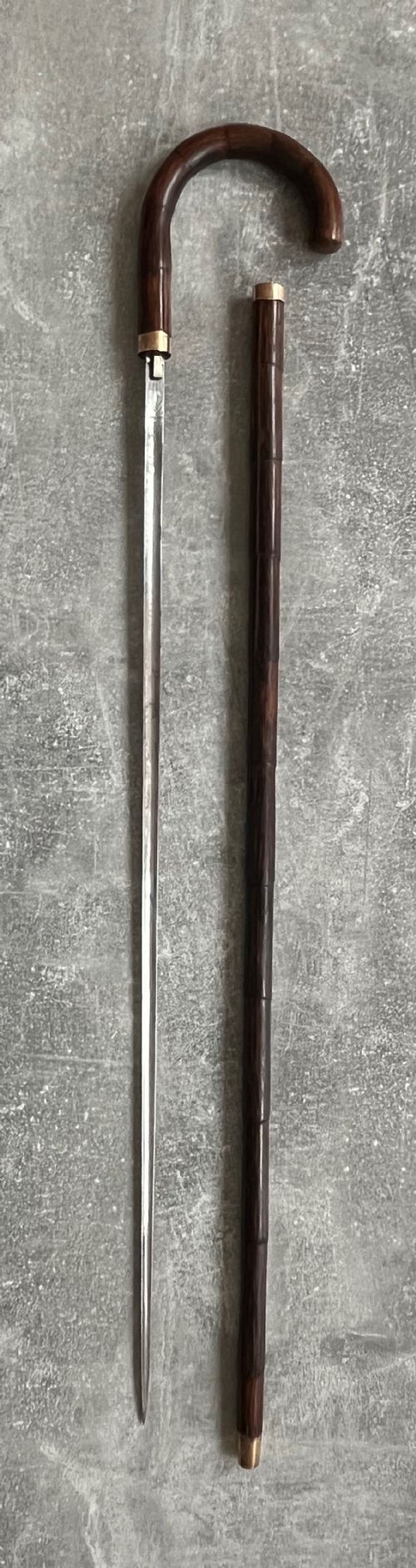
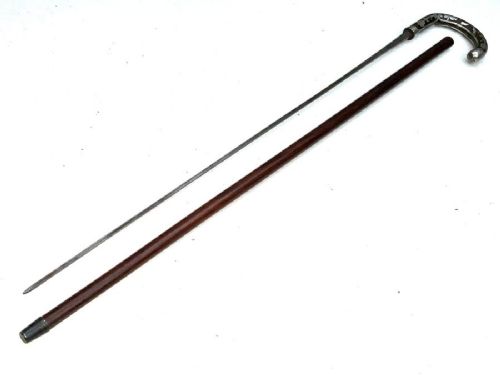
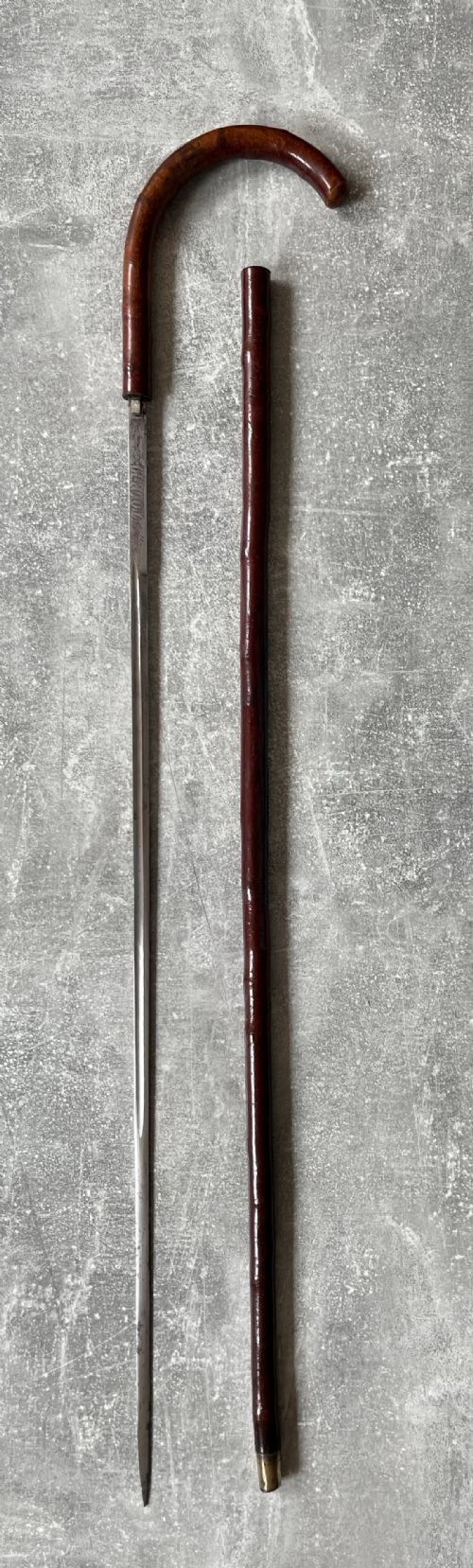
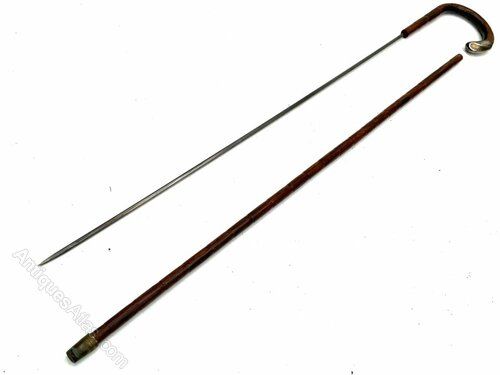
When you search for a crook handle sword cane, you are looking at nineteenth and early twentieth century gentleman's walking sticks fitted with concealed blades. These pieces combine standard walking aids with hidden weaponry, designed for personal protection during transit through unlit streets.
The versions most likely to meet you on this page date from the Victorian and Edwardian periods, stretching from the eighteen seventies into the nineteen thirties. They appear in forms such as military officers' swagger sticks and standard walking sticks.
Materials and construction vary across these examples, incorporating natural timbers like partridge wood, malacca, cherrywood, and hazel wood alongside faux bamboo. Many feature hooked handles made from horn or wood, often complemented by silver collars.
How they were made
These items were constructed by housing a steel blade tightly within a hollowed wooden shaft, using materials such as partridge wood, malacca, cherrywood, and hazel wood. The outer cane served as both a sheath and a functional walking stick during daily outings.
Blades were sourced from notable makers and metalworking centres, including Toledo and Wilkinson, ensuring a firm and sharp edge within the wooden housing. Metal collars in brass and silver frequently reinforced the joint where the handle met the shaft.
What varies in quality
Quality in these items rests upon the integrity of the timber shaft and the reputation of the blade manufacturer. Examples featuring named blades from Wilkinson or Toledo paired with dense woods like partridge wood represent superior production standards.
The refinement of the handle fitting and the inclusion of precious metal collars, such as silver, distinguish finer examples from standard utility pieces. The seamless alignment of the crook handle with the wooden shaft determines the overall balance and finish.
BRIGG·Wilkinson
The Crook Handle Sword Cane Glossary
- Crook handle
- A curved grip shaped at the top of a walking stick for ease of carrying. This shape allows the stick to hook over a forearm or rail.
- Sword stick
- A walking cane containing a concealed blade within its shaft. It operates as a dual-purpose accessory for support and defence.
- Partridge wood
- A dense, mottled timber frequently utilised for walking sticks. Its distinctive feather-like grain pattern provides both strength and decorative appeal.
- Collar
- A metal band encircling the shaft just below the handle. This element reinforces the joint and frequently bears hallmarks or silver mounts.
- Toledo blade
- A steel blade produced in the Spanish city renowned for swordsmithing. These blades are recognised for their metallurgical quality and flexibility.
Crook Handle Sword Cane: Frequently Asked Questions
What is a crook handle sword cane?
A crook handle sword cane is a gentleman's walking stick featuring a curved handle and a concealed steel blade housed inside the wooden shaft. It functions simultaneously as an everyday walking aid and a hidden personal defence tool.
Examples from the Victorian and Edwardian eras utilise timbers like malacca and partridge wood alongside steel blades from makers such as Wilkinson and Toledo. The curved grip allows the owner to hook the stick over an arm when not in use.
How do you release the blade?
The blade is typically secured inside the wooden scabbard by a friction fit, a threaded collar, or a small catch mechanism near the handle. Pulling the handle straight up separates the inner blade from the outer wooden housing.
Users must ensure the locking mechanism is understood before attempting to draw the steel blade from its timber sheath. The tight fit prevents the blade from rattling or falling out during normal walking use.
Were these used as weapons?
Yes, these items were carried by gentlemen, military officers, and civilians during the nineteenth and early twentieth centuries for personal protection in urban environments. Street safety concerns made concealed defensive weapons a practical accessory.
Officers also carried variations known as swagger sticks or walking stick swords while off duty. The outward appearance of an ordinary walking stick provided discretion while navigating public thoroughfares.
How do you date a sword cane?
Dating relies on examining the style of the wooden shaft, the materials used, and any maker marks stamped onto the steel blade or silver collar. Victorian and Edwardian examples often display specific timber choices and metalworking techniques characteristic of those decades.
Silver collars frequently feature hallmarks that indicate the exact year of assay and the silversmith's mark. Blade inscriptions pointing to manufacturers like Wilkinson or Toledo also help establish a production timeframe.