


Hidden Blade Walking Cane
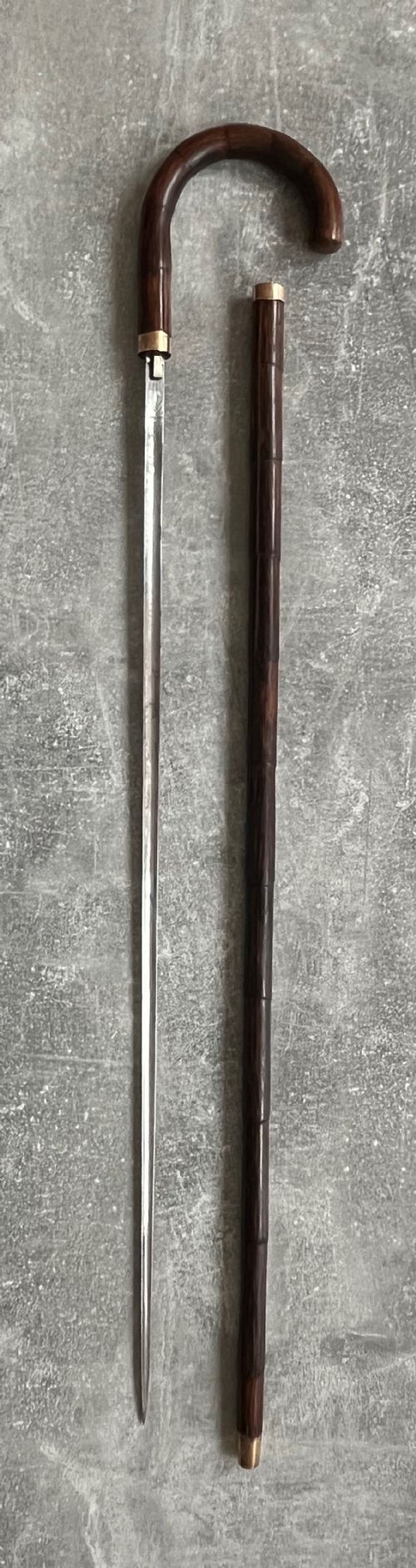
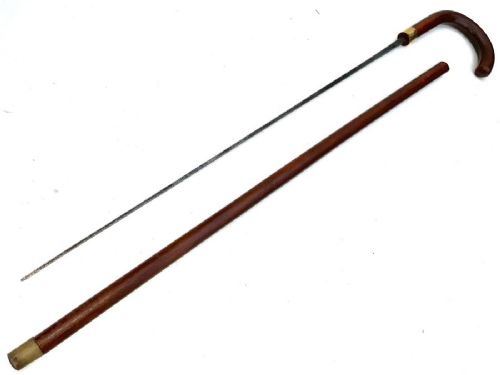
A hidden blade walking cane combines a practical support for walking with a concealed steel weapon.
Hidden Blade Walking Cane
A hidden blade walking cane functions primarily as a walking stick while housing a concealed steel sword or dagger inside the shaft. When individuals search for a hidden blade walking cane, they encounter walking sticks and canes originating from the late nineteenth century and the Edwardian era.
The selections available here include styles spanning Victorian militaria, nineteenth-century French pieces, and standard domestic walking canes. Examples range from military officers' swagger sticks to gentleman's walking sticks featuring decorated handles.
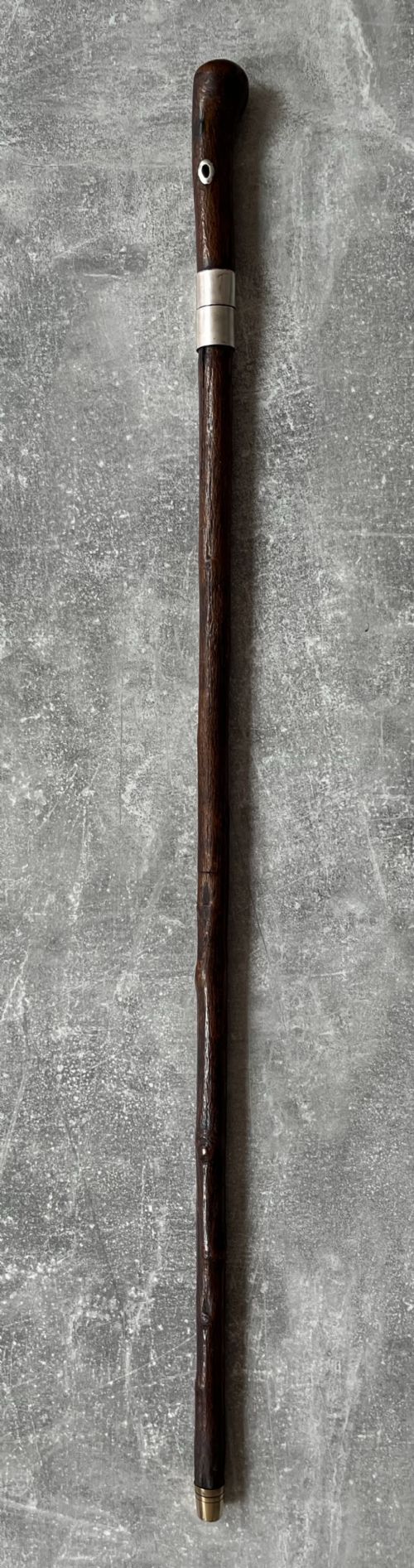
Common forms on this page include bamboo shafts, malacca canes, hazel wood, and faux bamboo sticks. Handles vary from silver horses' heads and bone pistol grips to antler or crook designs.
Materials and construction methods
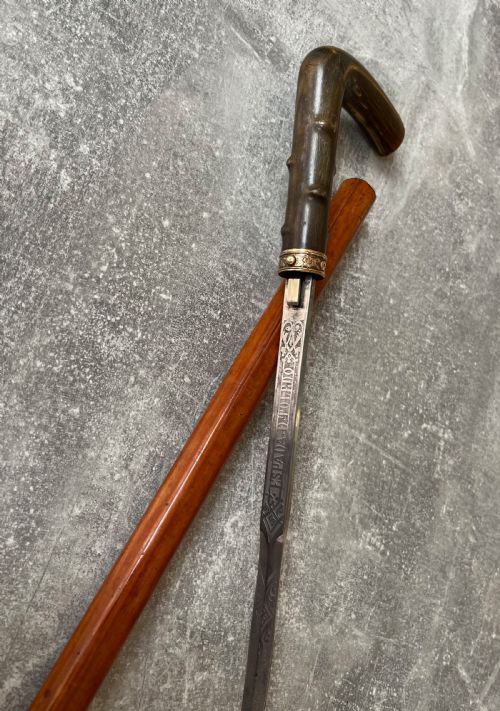
Shafts are constructed from natural materials including bamboo, malacca, hazel wood, and hardwood, frequently finished with materials like snakeskin covering. Internal blades are forged from steel, with specific pieces noting etched Toledo blades housed within the wooden or bamboo outer casing.
Mountings and fittings incorporate brass, silver, and bone, utilising button release mechanisms to secure the concealed blade within the shaft. Craftsmanship involves accurately boring the wooden or cane shafts to accommodate the steel blades whilst maintaining structural rigidity for walking support.
One French example wraps its entire haft in snakeskin and tops it with an antler handle.
Quality variations in hidden blade walking canes
Differentiation in quality across these canes depends upon the intricacy of the handle and the origin of the steel blade. Plain bamboo shafts contrast with pieces featuring carved bone pistol grips, silver horses' heads, or antler handles.
The refinement of the release mechanism and the quality of the blade, such as etched Toledo steel, separate standard utility pieces from more decorative gentleman's walking sticks. The integration between the shaft and the handle reveals the standard of manufacture.
The Hidden Blade Walking Cane Glossary
- Toledo blade
- A steel blade originating from Toledo, Spain, known for historical sword-making traditions. These blades are often etched.
- Swagger stick
- A short walking stick or cane traditionally carried by military officers as a symbol of authority.
- Malacca
- A type of rattan cane featuring distinctive brown markings and nodes, prized for walking stick production due to its resilience.
- Pistol grip
- A handle shaped similarly to the grip of a pistol, designed to fit comfortably into the palm of the hand.
- Button release
- A mechanical catch operated by pressing a button to release the concealed blade from the shaft.
Hidden Blade Walking Cane: Frequently Asked Questions
What is a hidden blade walking cane?
A hidden blade walking cane is a dual-purpose object that serves as a standard walking stick while concealing a steel sword or dagger inside the shaft.
These pieces typically date from the late nineteenth century and the Edwardian period, produced for military officers and gentlemen.
How do you release the blade?
The concealed blade is generally secured inside the wooden or bamboo shaft by a locking mechanism, such as a button release.
Pressing this mechanism allows the user to draw the inner steel blade away from the outer casing.
How can you tell the period of a cane?
Dating relies on stylistic markers associated with the nineteenth century and the Edwardian era, alongside materials like bamboo, malacca, and hazel wood.
Descriptions frequently reference specific decades such as eighteen-ninety or nineteen-ten to indicate the era of manufacture.