


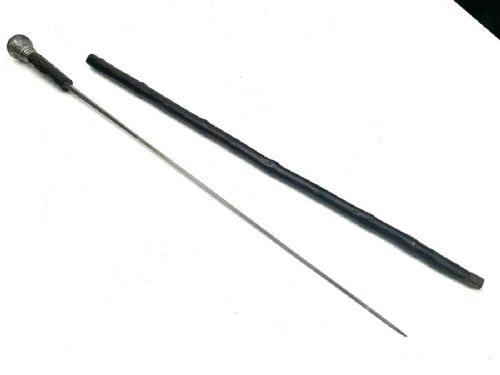


Edwardian Sword Cane
An edwardian sword cane is a concealed weapon disguised as an ordinary walking stick, combining gentlemanly discretion with practical defence.
Edwardian Sword Cane
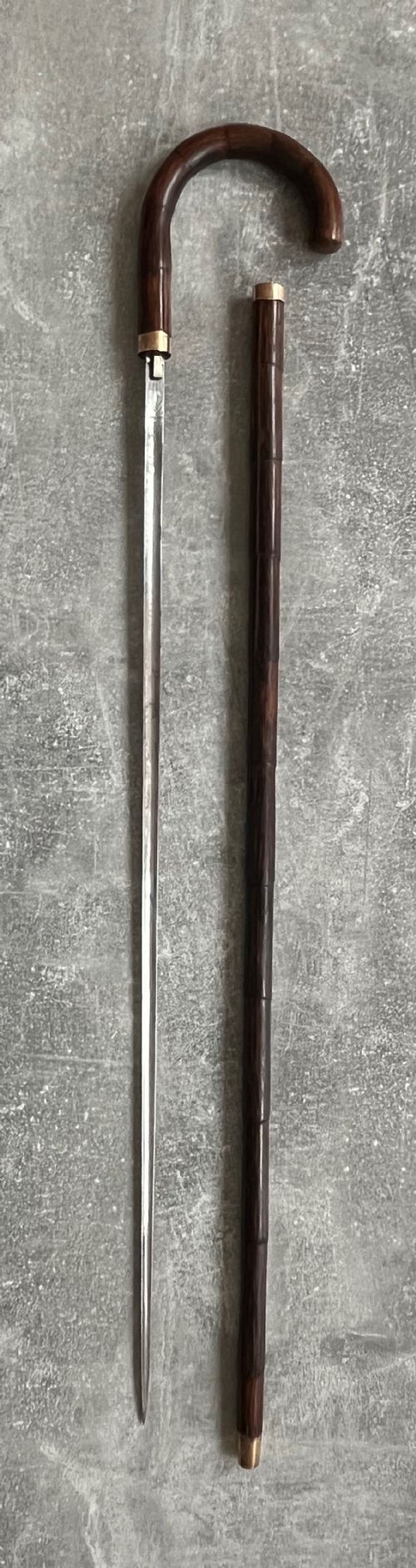
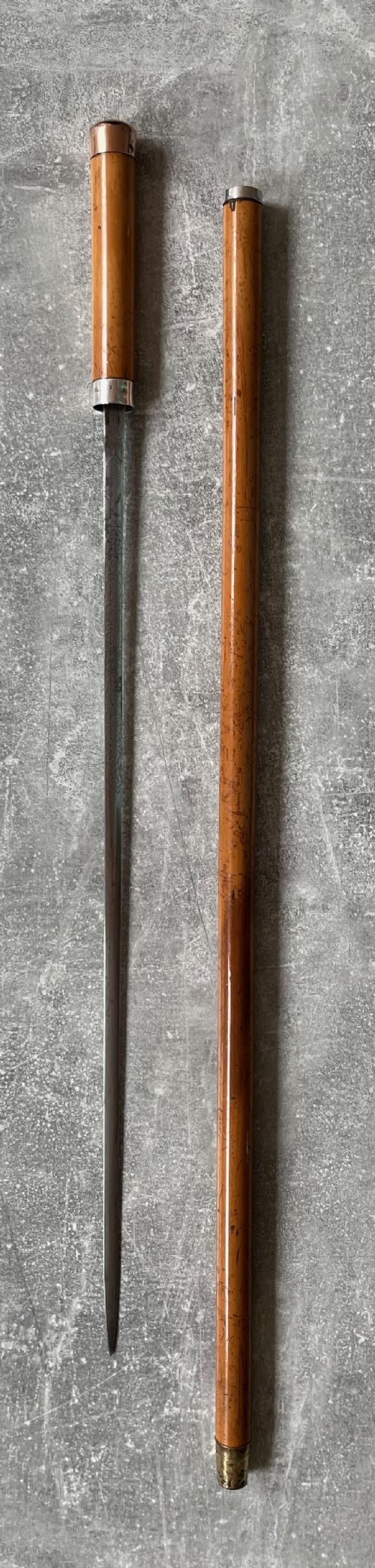
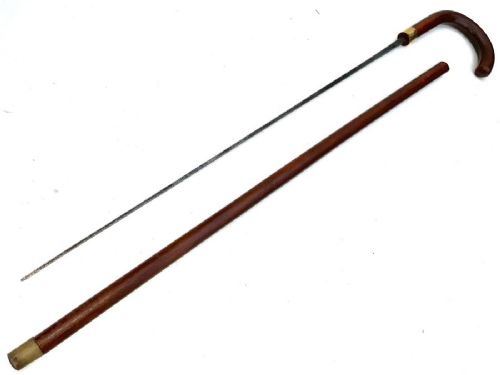
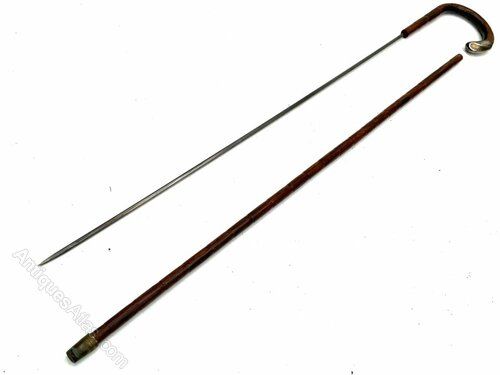
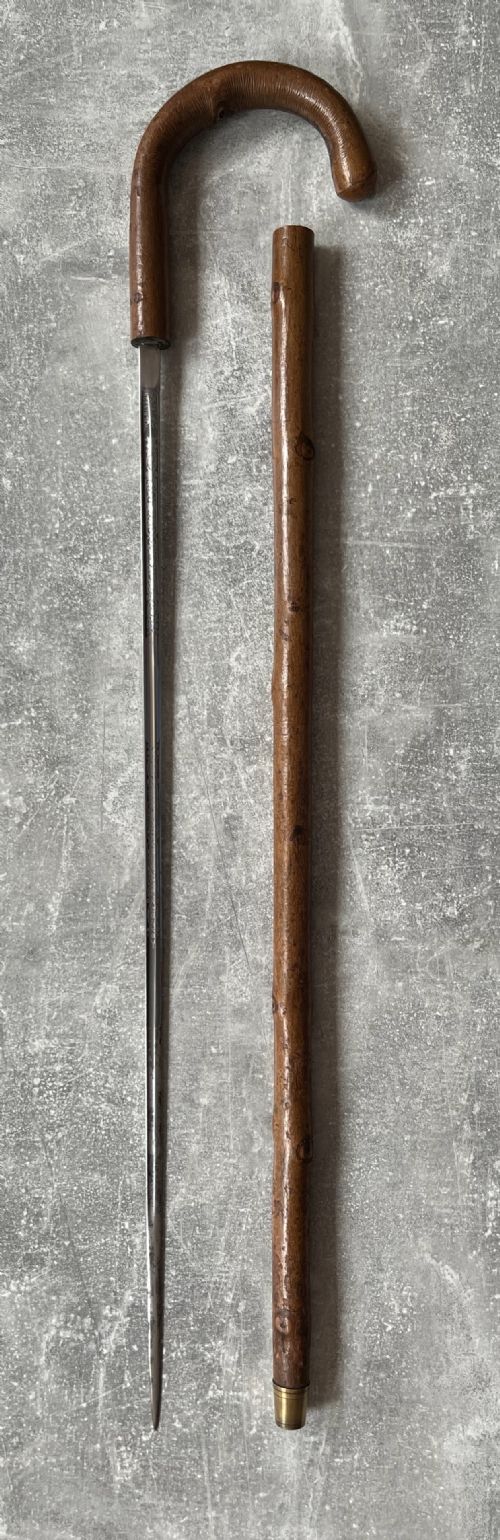
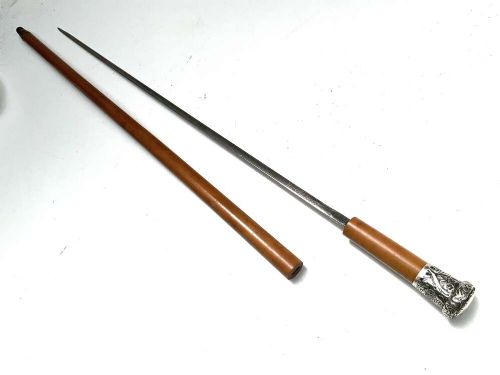
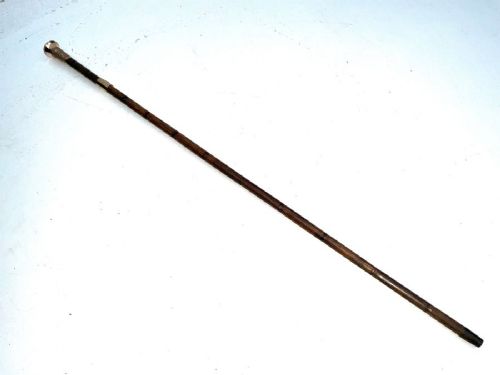
An edwardian sword cane combines the appearance of a gentleman's walking stick with a concealed steel blade, designed for personal protection during the late nineteenth and early twentieth centuries. These pieces function as everyday walking aids while housing a hidden weapon beneath the shaft.
The versions most commonly met on this page pair natural timber or malacca shafts with metal collars and functional blade mechanisms. Makers utilised various handles, including crook designs, root ends, and silver tops, to disguise the true purpose of the walking stick.
How they were made
Craftsmen built these pieces using natural materials such as malacca, partridge wood, bamboo, hazel, and rosewood for the outer shafts. Metal collars, silver mounts, and brass fixtures reinforce the join between the handle and the wooden body.
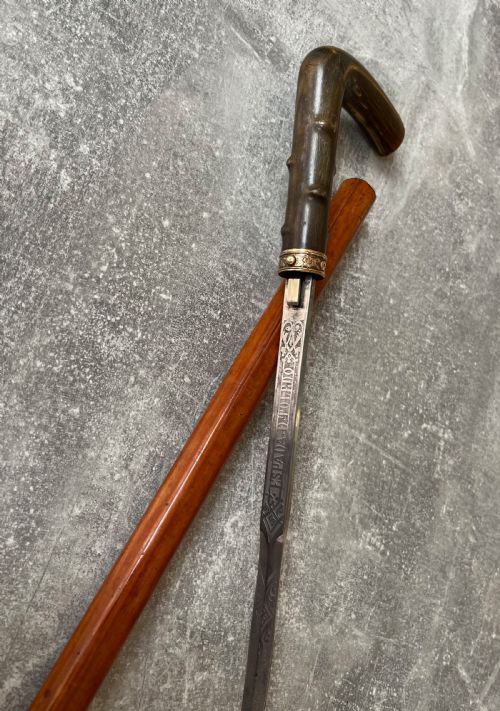
Blades forged from steel, including Toledo and Wilkinson examples, sit securely inside the hollow shafts and release via buttons or pull mechanisms. Handles fashioned from horn, bone, silver, and wood are fitted to the top to conceal the opening.
Edwardian Sword Cane Retail Price Guide 2026
Typical asking prices for edwardian sword cane among the pieces listed under this phrase on Sellingantiques today, from the lower quarter to the upper quarter. They describe what is for sale here now, not the wider market.
Listings feature woods including malacca, partridge, bamboo, hazel, holly, and rosewood paired with steel blades.
What varies in quality
The distinction between standard walking aids and superior pieces lies in the origin and finish of the blade. Named makers such as Wilkinson or Toledo mark a higher grade of steel smithing, often paired with engraved detailing along the metal.
The selection of materials for the shaft and mounts dictates the overall refinement of the piece. Solid silver collars, chased handles, and dense hardwoods such as malacca or rosewood elevate the construction above simple bamboo and base metal assemblies.
Wilkinson·Toledo
The Edwardian Sword Cane Glossary
- Malacca cane
- A strong, flexible rattan stem imported from Southeast Asia, prized for its mottled brown surface and durability as a walking stick shaft.
- Swagger stick
- A short, light stick carried by military officers, sometimes concealing a slender blade similar to a sword stick.
- Crook handle
- A curved top shaped like a shepherd's crook, allowing the walking stick to be hooked over an arm when not in use.
Edwardian Sword Cane: Frequently Asked Questions
How do you release the blade?
Most pieces utilise a simple button release mechanism set near the collar to unlatch the blade from the shaft.
Others rely on a secure friction fit or screw mechanism that requires a firm pull to separate the handle from the body.
What woods were used for the shafts?
Makers utilised a variety of sturdy timbers, with malacca cane being particularly common for its distinctive joints and flexibility.
Partridge wood, bamboo, hazel, holly, and rosewood also appear frequently across surviving examples from the period.
How should I display a sword cane?
These pieces display effectively in vertical umbrella stands or wall-mounted racks alongside traditional walking sticks.
Keeping the shaft joined to the handle protects the internal steel blade from dust and moisture in domestic environments.
Were these used by the military?
Military officers frequently carried swagger sticks and specialised walking aids as part of their off-duty attire.
Specific regiments, such as the Grenadier Guards, utilised marked sticks that denoted military service and rank.