


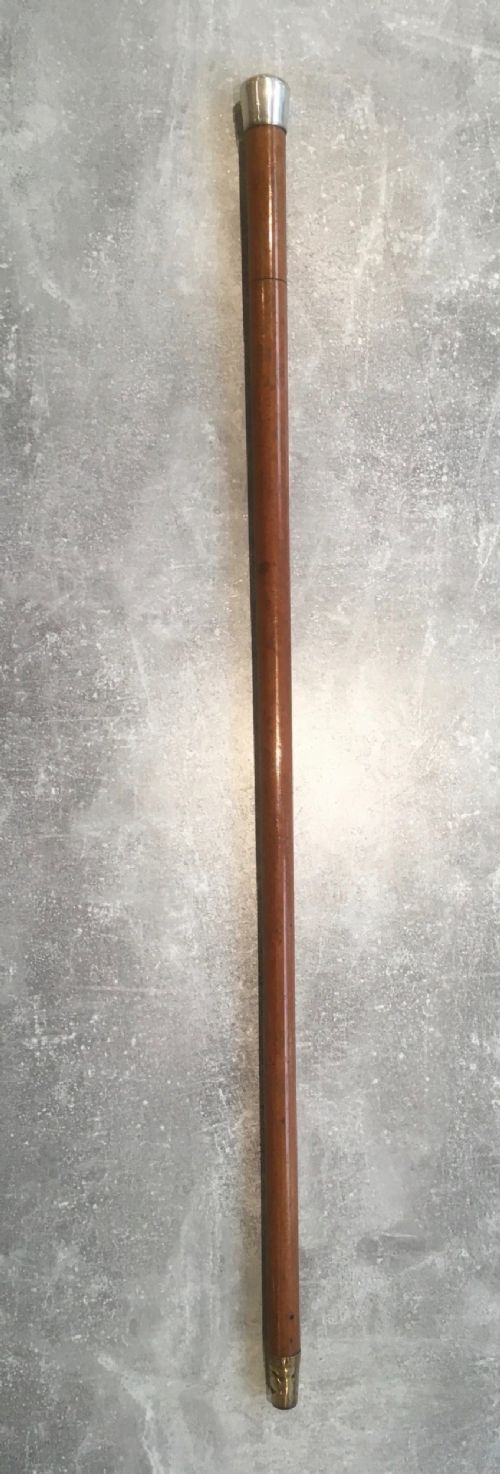

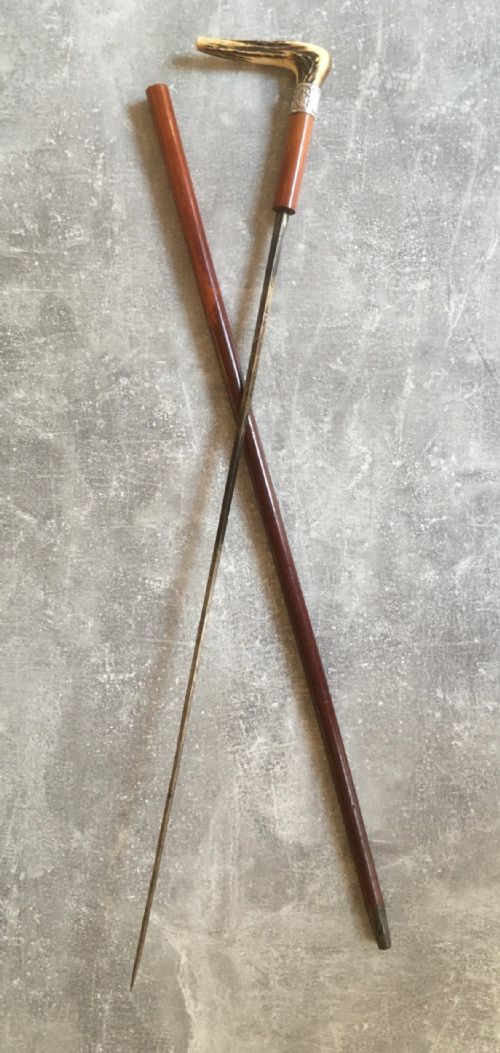
Malacca Walking Stick
A malacca walking stick is a sturdy cane fashioned from imported palm stem, prized for its distinctive mottled skin and resilience in daily use.
Malacca Walking Stick
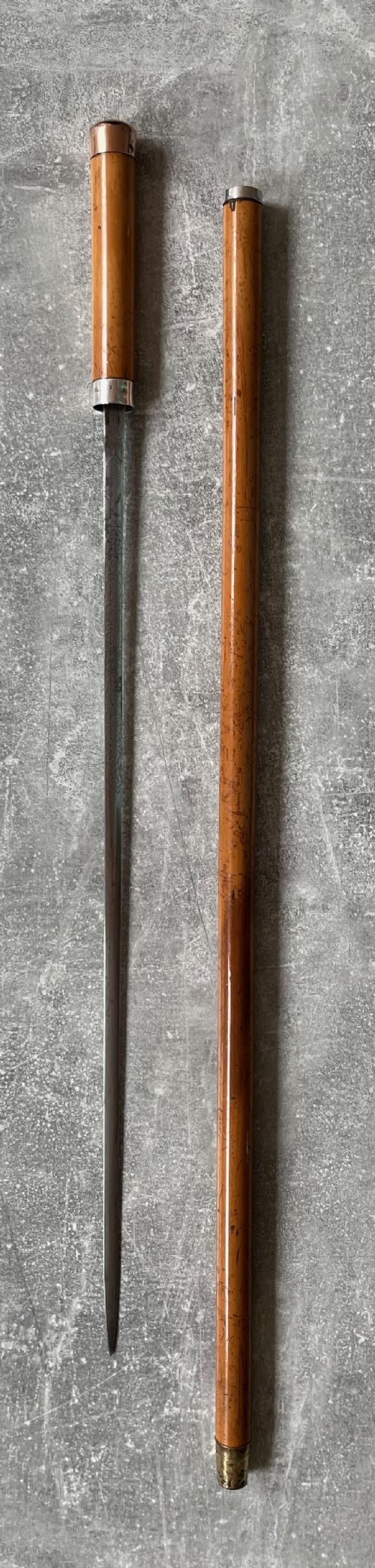
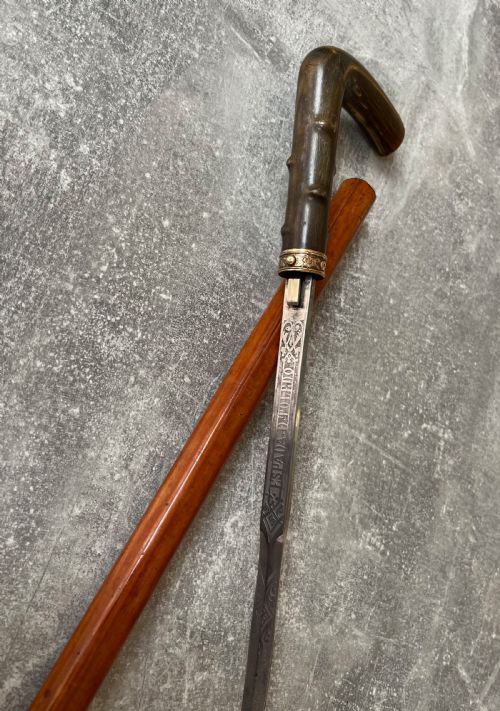
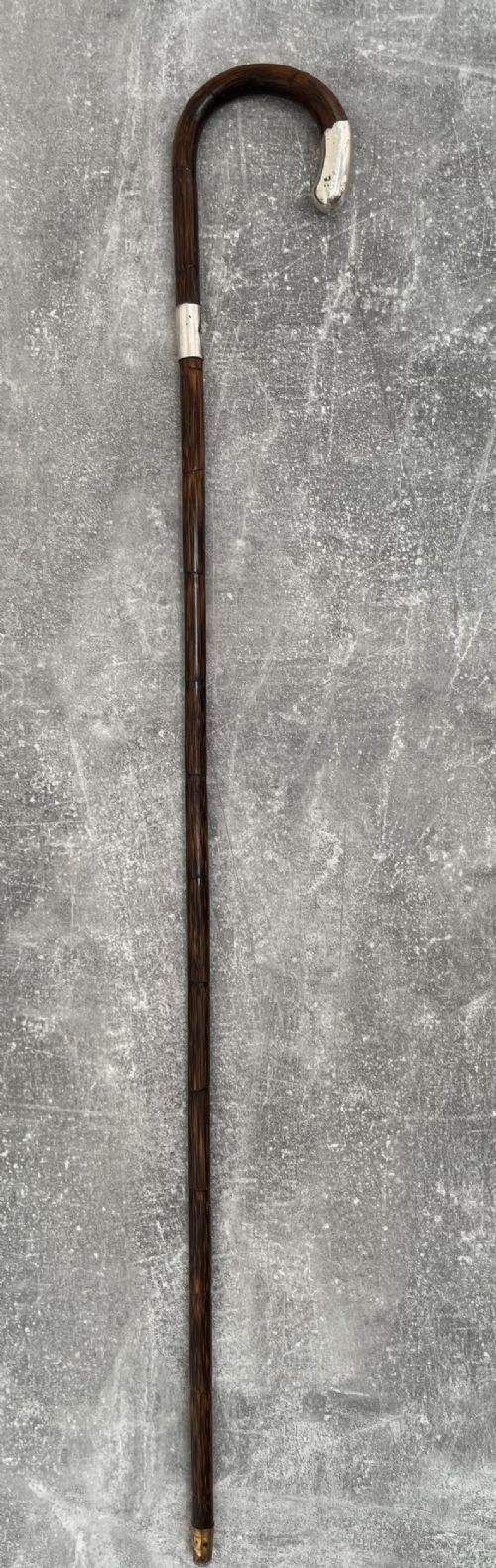
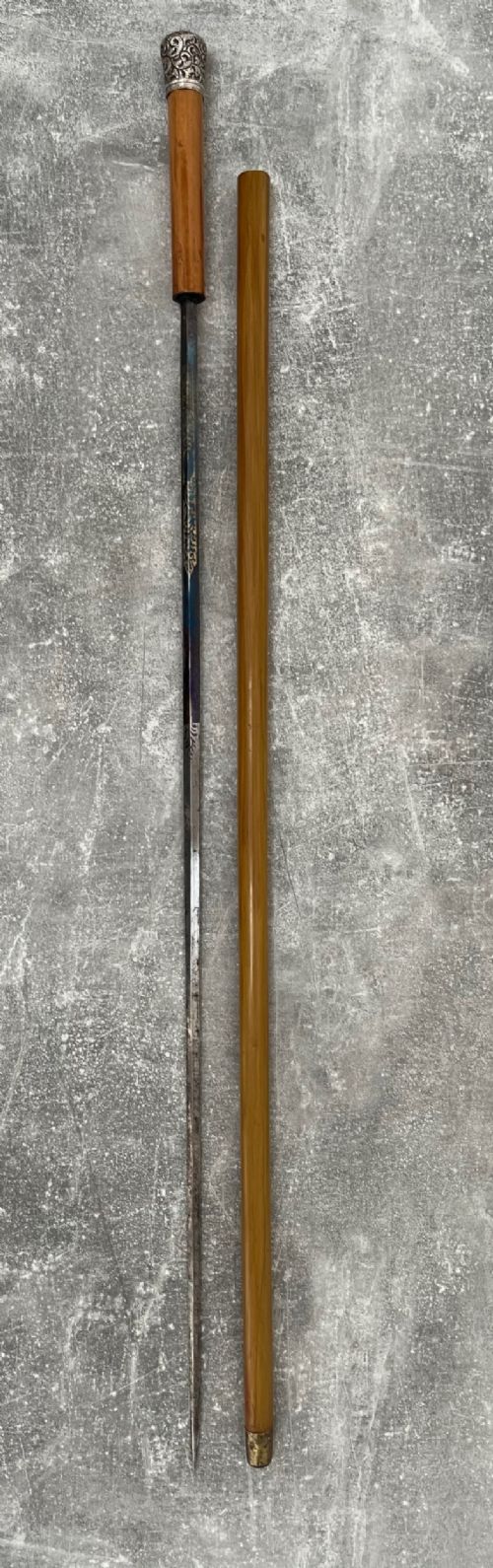
A malacca walking stick takes many forms across Victorian and Edwardian examples, appearing frequently as a concealed sword stick or a standard cane fitted with a crook handle. These items served gentlemen and ladies alike as practical aids and accessories of status throughout the nineteenth and early twentieth centuries.
The material originates from the stems of the Calamus scipionum palm, harvested in Southeast Asia and imported through trading hubs like Chinese Export networks. The cane shows characteristic brown scaling and joints along the shaft, giving each piece a distinct natural pattern.
Many specimens encountered on this page combine the malacca shaft with precious metal mounts, horn handles, or bone knops. The sword stick variant remains particularly common among surviving pieces from the eighteen-eighties onward.
Materials and Construction
Makers straightened the natural bamboo-like malacca stems using heat and applied oils to achieve a polished finish on the characteristic brown surface. The cane was then fitted with a handle carved from horn, antler, ivory, or hardwoods, secured by pins or collar mounts.
Silver collars, repousse caps, and pommels made from silver or gold were often added to the upper grip, frequently bearing London hallmarks and maker marks. In sword stick versions, steel blades from Toledo or makers such as Wilkinson were housed snugly inside the hollow cane section.
Some Victorian examples conceal a functional corkscrew within the shaft, ensuring the owner was prepared for unexpected bottled refreshment.
Indicators of Quality
The standard of a malacca walking stick rests upon the clarity of the cane's natural mottling and the robustness of the inner blade mechanism where applicable. Superior examples display heavy gauge silver or gold mounts with crisp hallmarks and maker marks.
The craftsmanship of the handle, whether a carved hound head, a turned ivory pique detail, or a substantial crook, dictates the overall character. A well-balanced weight and a seamless join between handle and shaft separate standard utility items from finer workshop output.
Wang Hing·J Wippell Co Ltd·Peter Pilote·Wilkinson
The Malacca Walking Stick Glossary
- Malacca cane
- A sturdy plant stem derived from the Calamus scipionum palm, identifiable by its rich brown skin and regular node rings. This material forms the primary shaft of every piece listed here.
- Sword stick
- A walking cane containing a concealed steel blade, often released by a push button or screw mechanism. These blades frequently originate from Toledo or specific military cutlers.
- Repousse
- Metalwork technique where the silver or gold mount is hammered from the reverse side to create a raised decorative pattern. This adorns many of the collars and knops on Victorian canes.
- Knop
- The rounded or decorative knob forming the upper handle of a walking stick. It may be fashioned from silver, bone, horn, or carved ivory.
- Pique
- Decorative technique involving tiny pins or studs inlaid into materials like ivory or tortoiseshell handles. It appears on select early pieces in the archive.
Malacca Walking Stick: Frequently Asked Questions
How do I care for a malacca walking stick?
Keep the cane away from excessive moisture and direct heat to prevent the natural palm stem from splitting or warping over time. A light application of furniture wax helps maintain the sheen on the brown surface.
Handle silver mounts with a soft cloth to avoid damaging the surrounding cane during cleaning. Storing the stick upright in a stand prevents pressure damage to the lower tip.
What is the difference between a cane and a sword stick?
A standard walking stick serves purely as a mobility aid or fashion accessory, whereas a sword stick conceals a functional steel blade within the hollow interior of the shaft. Both share identical exterior appearances through the use of malacca stems and matching silver collars.
The concealed blade is typically released via a button or a threaded screw collar near the handle. Collectors often check for matching makers on both the blade and the outer silver mount.
How can I tell the period of a walking stick?
Hallmarks stamped on the silver collars provide the most reliable dating evidence, linking the piece to specific assay offices and years like those from London or Chester. Stylistic clues such as Arts and Crafts motifs or Chinese export hallmarks also help narrow down the decade.
Materials used for the handle offer further context, as carved ivory and specific silver repousse designs align closely with late Victorian and Edwardian manufacturing trends.
Were these sticks used by women too?
Historical listings include items specifically described as ladies walking sticks, which feature slightly narrower shafts and more delicate proportions. These often incorporate silver plated mounts or smaller crook handles suitable for smaller hands.
Such pieces functioned as fashionable promenade accessories during the nineteenth century, matching the formal attire of the period.