


Horn Handle Sword Stick
A horn handle sword stick conceals a hidden blade beneath an ostensibly everyday walking cane for discreet personal defence.
Horn Handle Sword Stick
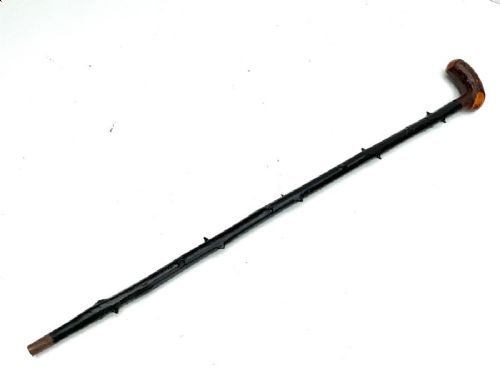
When you search for a horn handle sword stick, you are looking at nineteenth and early twentieth century gentleman's walking canes that house a concealed steel blade. The examples here span the Victorian, Edwardian, and later periods, originating from English, French, and traditional Irish workshops.
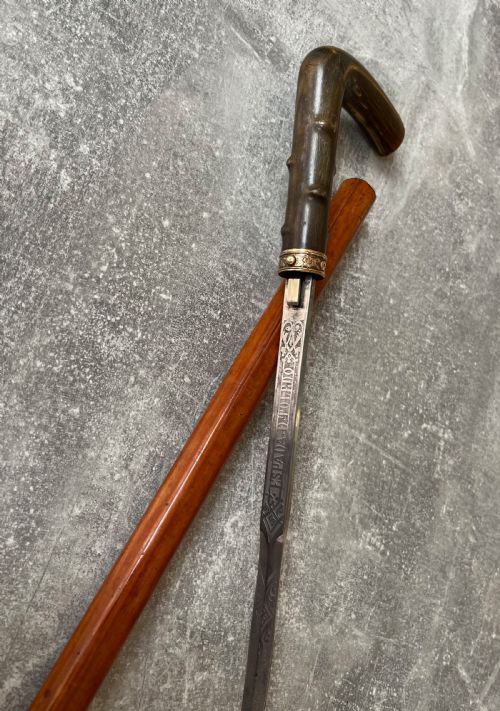
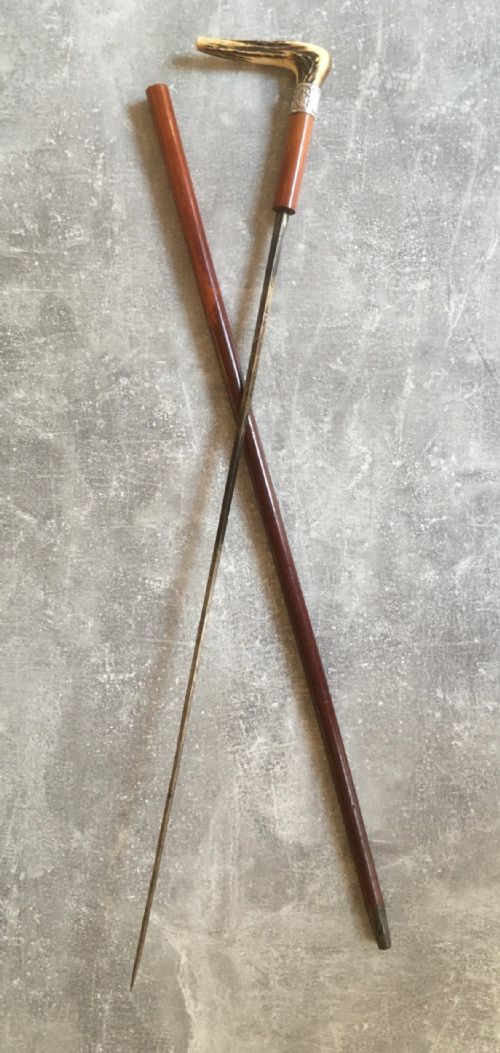
The version you are most likely to meet on this page pairs a curved or shaped horn handle with a malacca cane shaft, frequently finished with a silver collar or mount. Other variations utilise rosewood, hardwood, blackthorn, or snakeskin-covered hafts paired with ram, stag, or general horn and antler grips.
These dual-purpose objects served as practical accessories for gentlemen navigating urban or rural environments during the late 19th Century and into the 1920s and 1930s. The mechanism usually involves a button release or a secure friction fit that allows the blade to slide out smoothly from the wooden shaft.
How they were made
Makers shaped natural horn, antler, and ram's horn to form tactile, ergonomic handles, often securing them to shafts of malacca cane, rosewood, or hardwood with metal collars. These collars, occasionally fashioned from silver or gold-coloured metal, strengthened the junction where the handle met the cane body.
The concealed blades inside these sticks were forged from steel, with several examples originating from Toledo or featuring etched detailing. Craftsmen integrated button release mechanisms or precise fitting joints to ensure the blade remained locked safely within the wooden scaffolding until needed.
Listings on this site combine horn, antler, and steel across Victorian, Edwardian, and 19th Century periods.
What varies in quality
The distinction between standard pieces and finer examples rests largely on the pedigree of the blade and the sophistication of the handle materials. Blades bearing Toledo steel signatures or specific maker attributions elevate a piece above ordinary utilitarian items.
Material selection and mounting details also drive distinction, such as substantial silver collars, hallmarked mounts, or rarer handle configurations like ram's horn and carved stag. The tightness of the closed fit and the crispness of the release mechanism indicate the original standard of assembly.
Brigg·Wilkinson
The Horn Handle Sword Stick Glossary
- Toledo Blade
- A steel blade originating from the historic Spanish sword-making centre renowned for its flexible and durable temper. These blades are often etched with decorative motifs.
- Malacca Cane
- A resilient plant stem imported from Southeast Asia, prized for its mottled brown finish and strength when used as a walking stick shaft.
- Collar
- A metal band encircling the top of the cane shaft directly beneath the handle, frequently engraved with initials or fashioned from silver.
- Button Release
- A mechanical catch set into the collar or upper shaft that locks the blade inside the cane until pressed.
- Blackthorn
- A dense, dark wood derived from the sloe shrub, traditionally used in Irish walking sticks and root-handled sword sticks.
Horn Handle Sword Stick: Frequently Asked Questions
How do you release the blade?
Many examples utilise a small button release mechanism built into the collar, which disengages the internal catch and allows the blade to be pulled free from the cane shaft.
Other pieces rely on a precise friction fit where the handle pulls straight out against a snug internal seal without a visible button.
What materials are the handles made from?
Handles are predominantly formed from natural horn, including ram's horn and stag horn, shaped into crooks or curved grips for the hand.
Some variants incorporate antler or traditional wood roots such as blackthorn alongside the standard horn configurations.
How do you date a sword stick?
Dating relies on stylistic clues, materials, and any accompanying hallmarks found on silver mounts or collars, such as London assay marks from specific years.
The inventory here spans the late Victorian period, the Edwardian era, and into the 1920s and 1930s.
Were these used as weapons?
Gentlemen carried them during the 19th Century and early 20th Century primarily as walking aids that offered an extra layer of personal protection in urban environments.
The concealed steel blade served as a discreet defensive tool during an era when street safety was a genuine concern.
How should I display one at home?
They display well resting in traditional umbrella stands or mounted horizontally on wall brackets that secure the shaft safely.
Keeping the piece locked and out of casual reach ensures the blade stays secure while maintaining the appearance of a standard antique cane.