





Vintage Weapon Cane
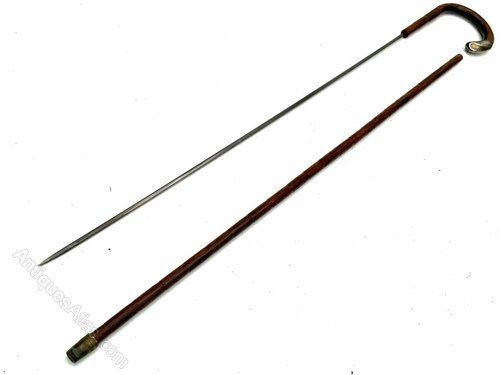
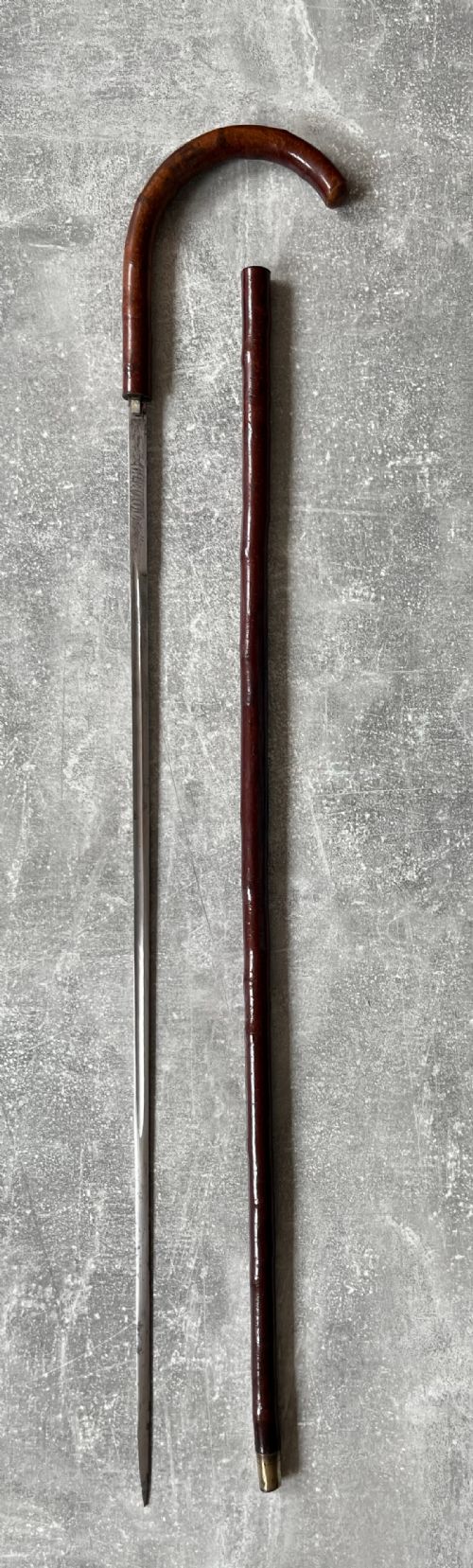
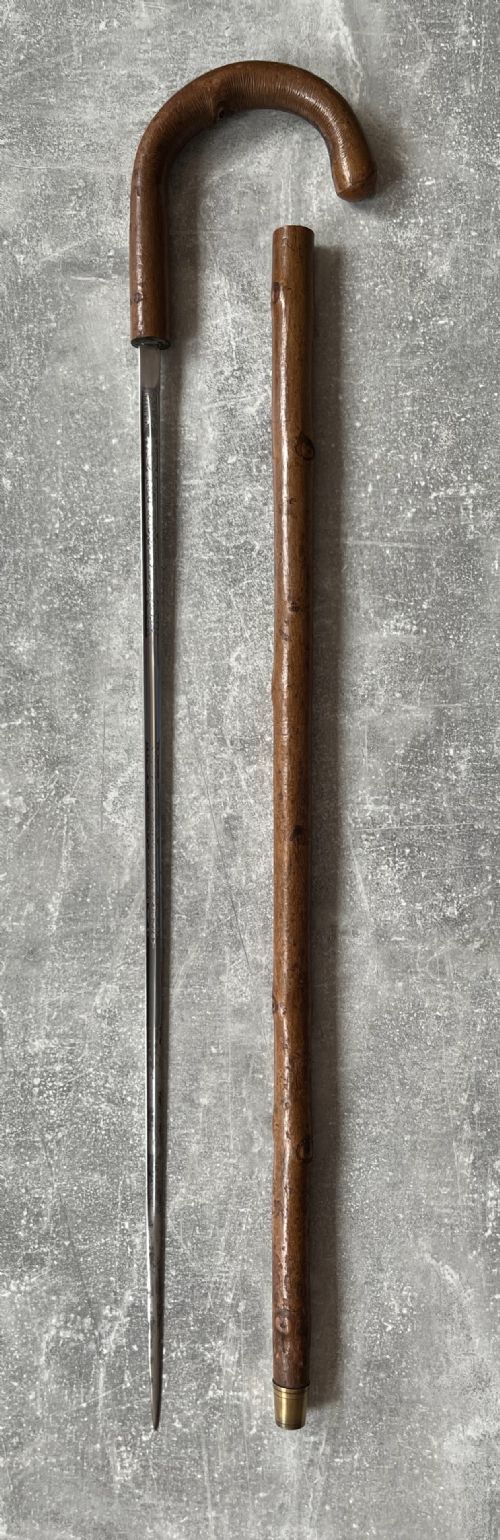
A vintage weapon cane is a discreetly armed walking stick or sword stick designed for gentlemanly self-defence during the nineteenth and early twentieth centuries.
Vintage Weapon Cane
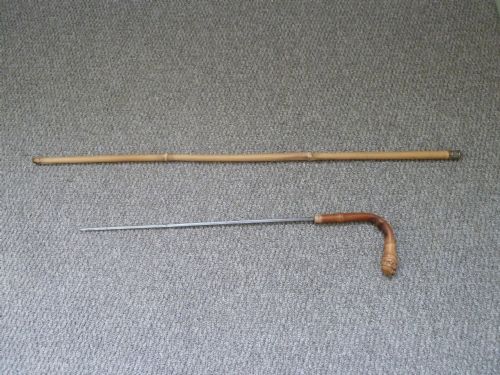
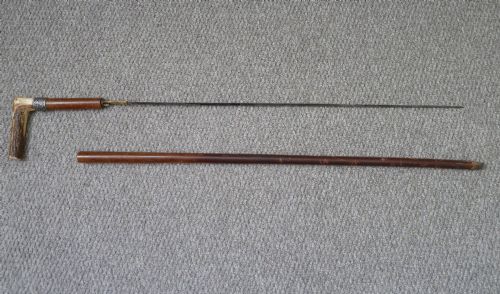
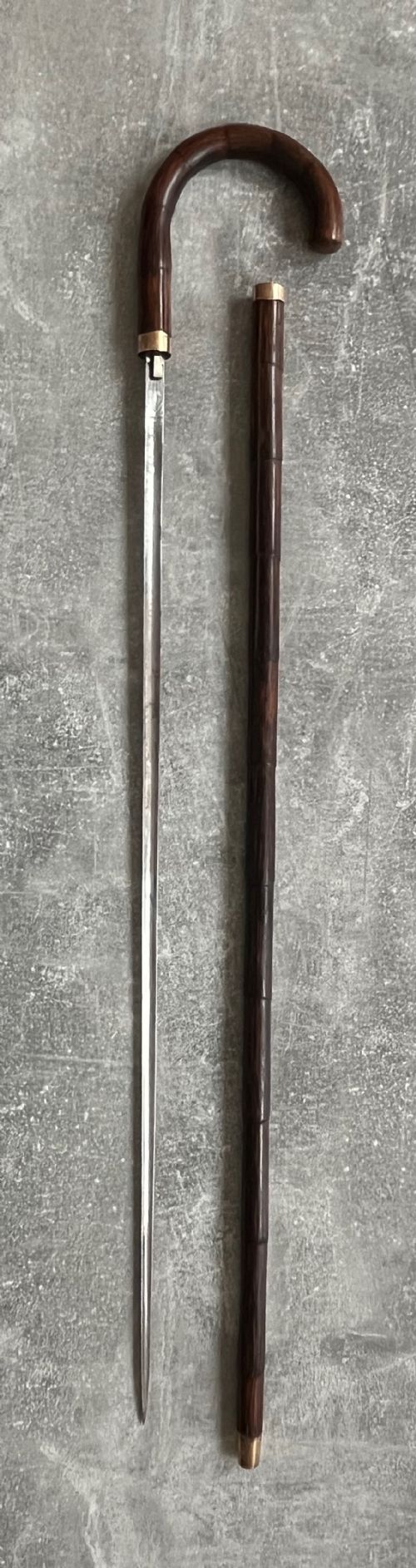
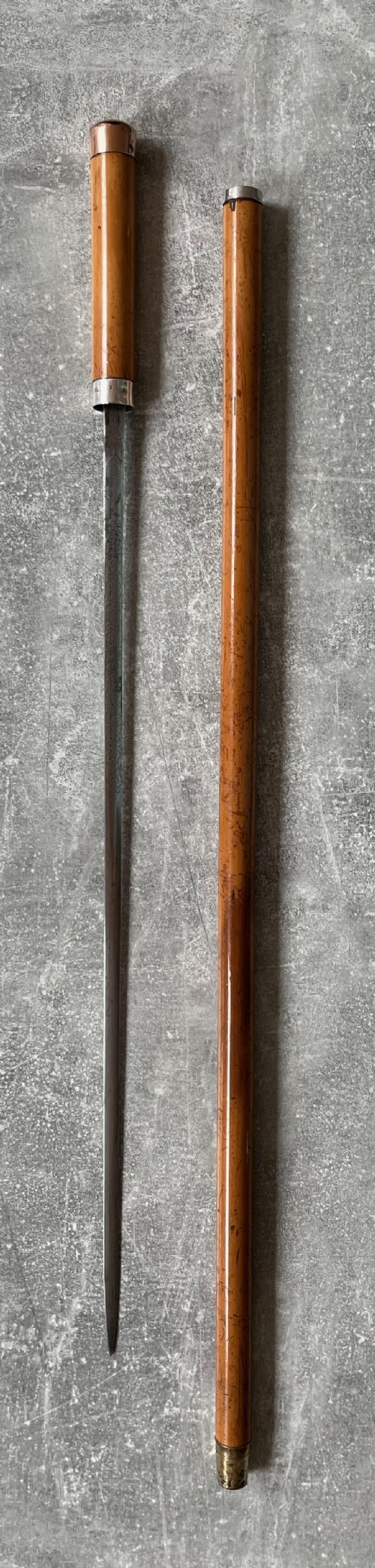
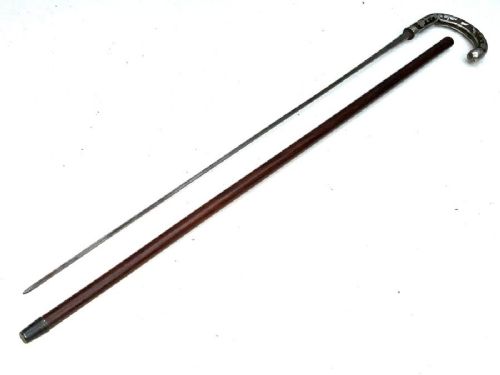
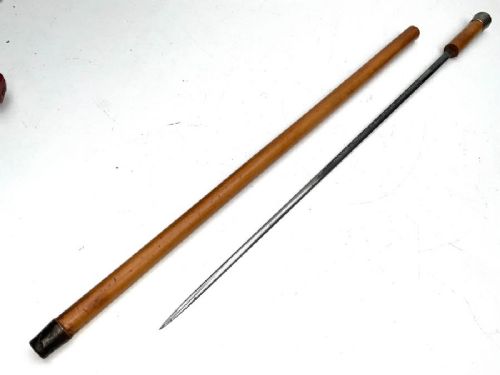
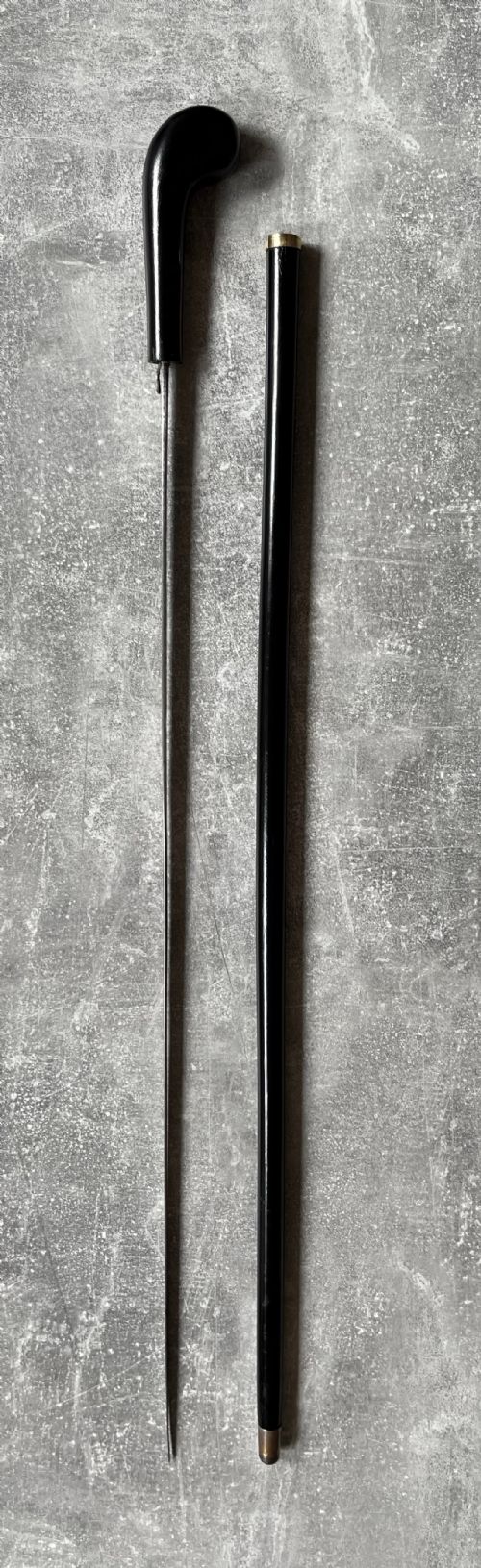
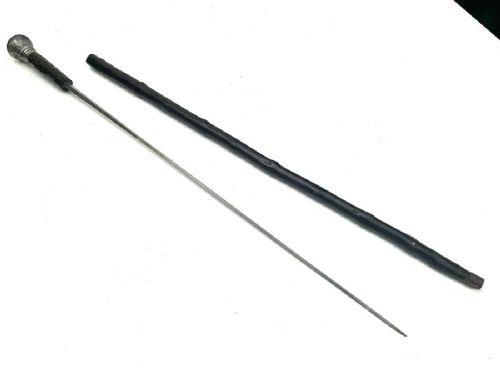
A vintage weapon cane most commonly appears as a sword stick, housing a concealed steel blade within a wooden shaft that releases via a button or pull mechanism.
The pieces on this page span the Victorian, Edwardian, and early twentieth-century periods, alongside French nineteenth-century examples and Oceanic tribal works.
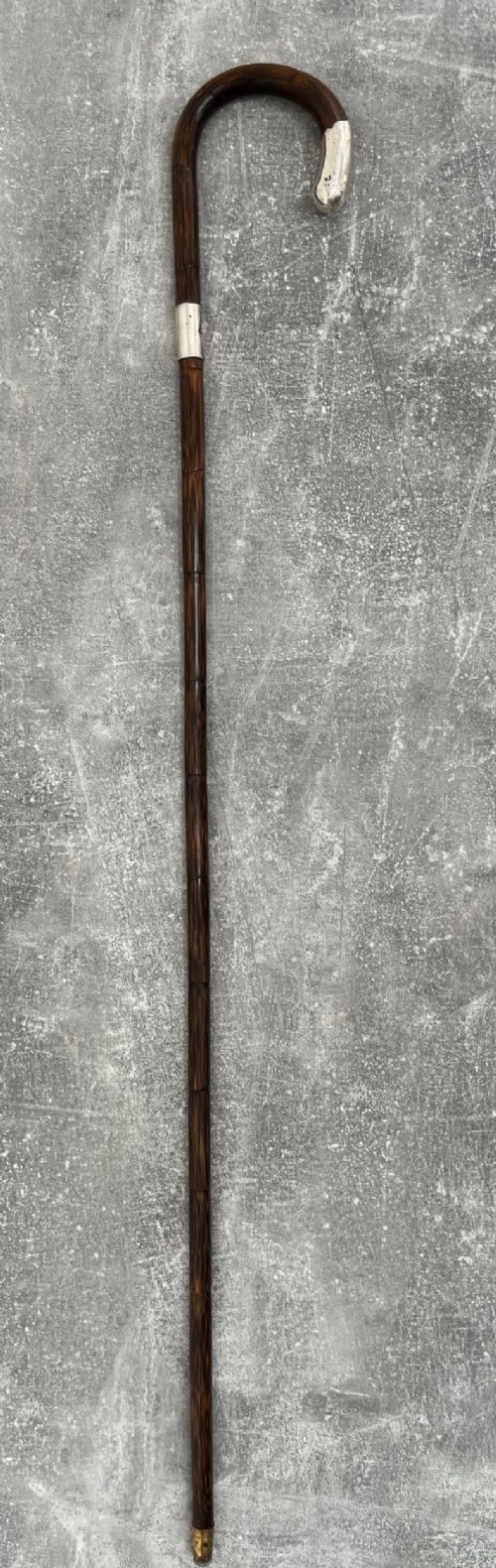
Handles take diverse forms, ranging from simple crook shapes and root balls to horn, antler, and porcelain grips, occasionally bearing silver mounts or gold-coloured collars.
Materials and Construction
Shafts rely on natural timbers such as malacca, bamboo, partridge wood, cherrywood, hazel, holly, chestnut, ebonised wood, and partridge, sometimes supplemented by leather or snakeskin coverings.
Blades are forged from steel, with specific examples signed by makers such as Wilkinson or identified as Toledo blades, housed securely inside the wooden shafts.
Mounts and hardware utilise brass, silver, and gold-coloured metals, while handles incorporate horn, antler, porcelain, and root wood.
Vintage Weapon Cane Retail Price Guide 2026
Typical asking prices for vintage weapon cane among the pieces listed under this phrase on Sellingantiques today, from the lower quarter to the upper quarter. They describe what is for sale here now, not the wider market.
Several Victorian gentlemen preferred a concealed blade tucked neatly inside what appeared to be a harmless porcelain walking stick from Sevres.
Assessing Quality and Manufacture
Quality rests upon the integrity of the timber shaft and the precision of the locking mechanism that keeps the blade secure until released.
Refinement shows in the materials chosen for the handle and mounts, such as solid silver collars or carved horn grips paired with etched steel blades.
The reputation of the blade maker, such as Wilkinson, elevates a piece above standard unmarked alternatives.
Brigg·Wilkinson
The Vintage Weapon Cane Glossary
- Sword stick
- A walking cane containing a concealed steel blade within its shaft. It serves both as a walking aid and a defensive implement.
- Malacca
- A sturdy rattan cane imported from Southeast Asia, prized for its flexibility and mottled brown finish. It forms the shaft of many superior walking sticks.
- Toledo blade
- A steel blade originating from the Spanish city renowned for swordsmithing. These blades are frequently etched and fitted into nineteenth-century canes.
- Knop
- A rounded knob or handle at the top of a walking stick. It provides a comfortable grip for the hand.
- Ebonised
- Wood treated to imitate ebony, giving it a deep black finish. This technique was widely applied to Victorian walking sticks.
Vintage Weapon Cane: Frequently Asked Questions
How do you release the blade?
Most vintage weapon canes utilise a simple button release mechanism set into the collar or upper shaft. Pressing this catch allows the blade section to slide free from the outer wooden housing.
Collectors should inspect the locking action to ensure the blade stays firmly seated during normal walking use.
What woods were used for shafts?
Makers selected dense or resilient timbers capable of concealing an internal blade without warping. Common choices include malacca, bamboo, cherrywood, hazel, and partridge wood.
Exotic additions like faux bamboo and leather-covered or snakeskin-wrapped hafts also appear across nineteenth-century examples.
Are these pieces strictly Victorian?
While a large proportion date from the Victorian era, the selection extends into Edwardian and early twentieth-century periods up to the 1920s and 1930s. French nineteenth-century examples are also represented alongside Oceanic tribal works.
Dates are typically determined by stylistic markers, hallmarked silver mounts, and construction methods.
How should I store a sword stick?
Keep the cane in a dry environment with stable temperatures to prevent the wooden shaft from warping and binding the internal steel blade. Regular light oiling of the metal blade prevents corrosion over time.
Displaying the piece upright in a traditional umbrella stand or horizontal rack protects both the handle and the mountings.