
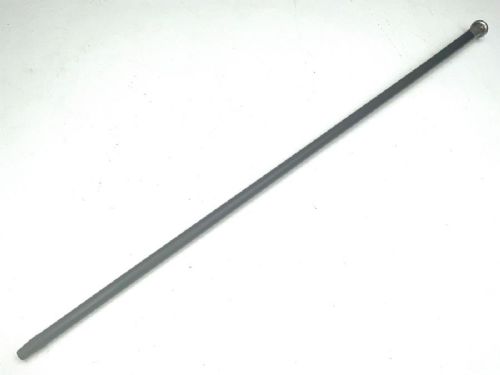
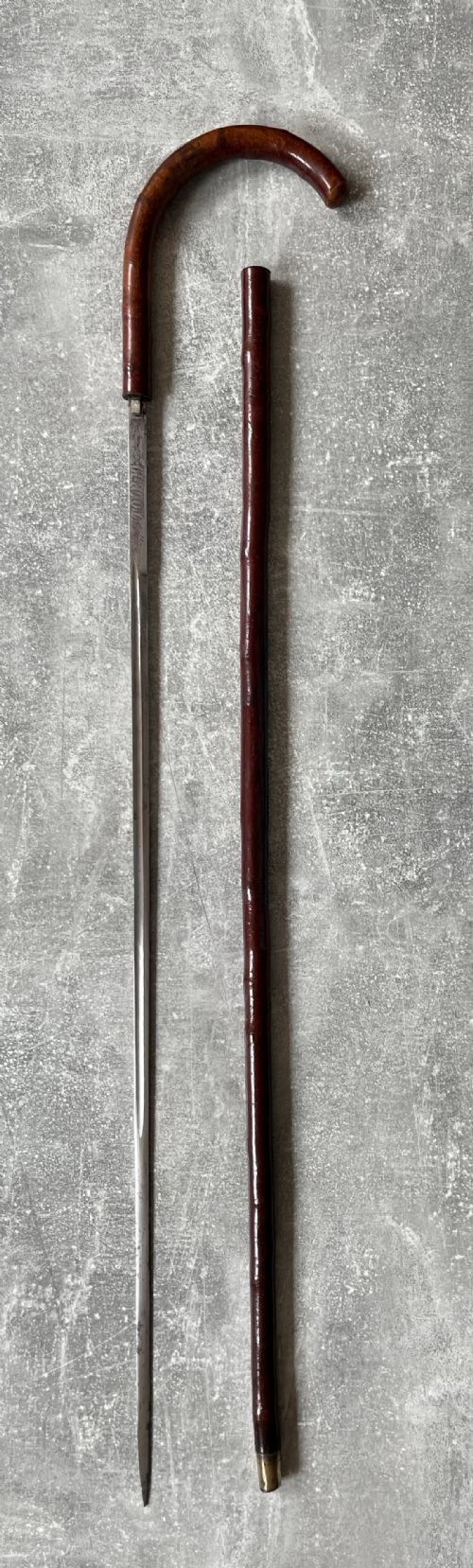
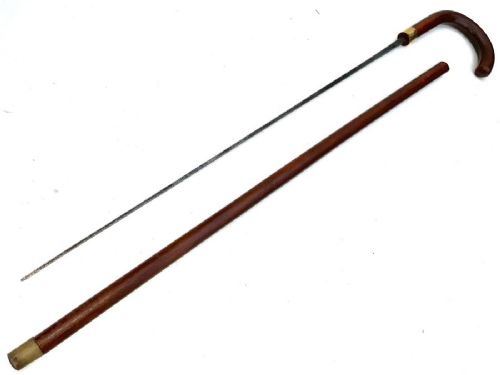
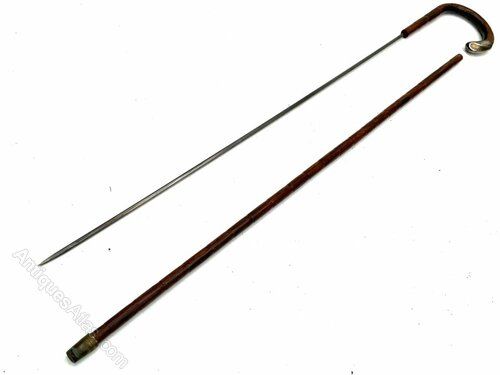


Wooden Sword Cane
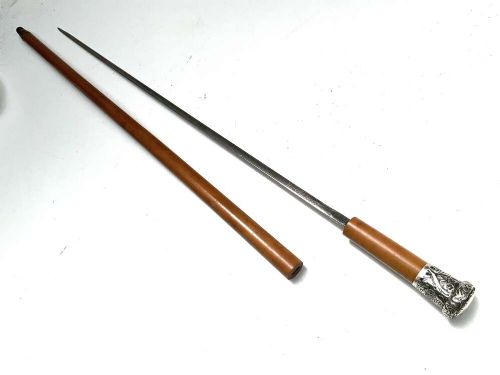
A wooden sword cane combines a disguised steel blade with a traditional walking stick for personal defence.
Wooden Sword Cane
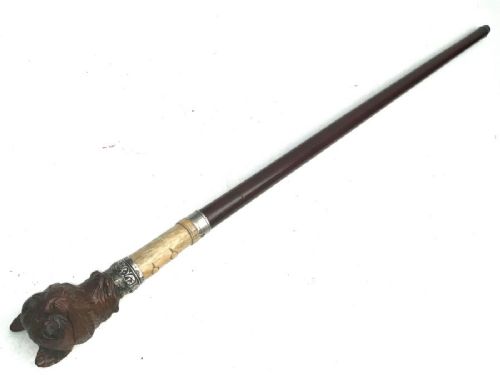
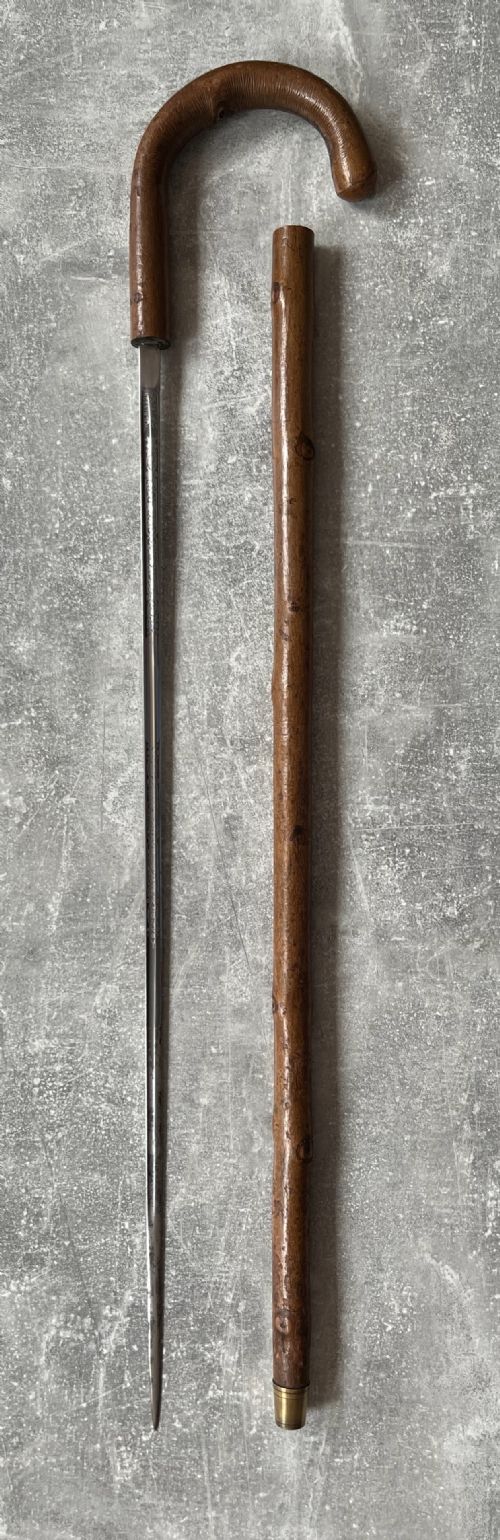
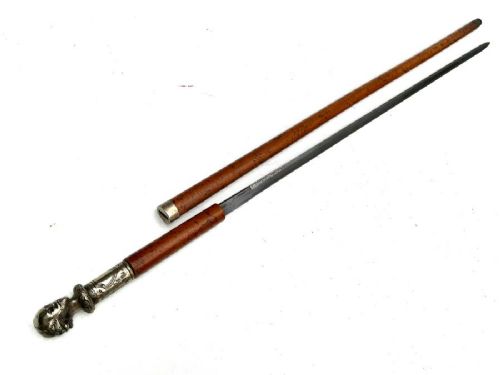
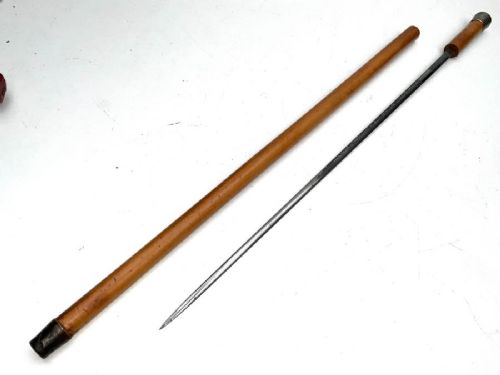
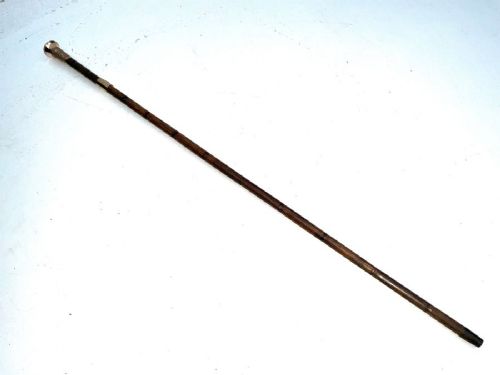
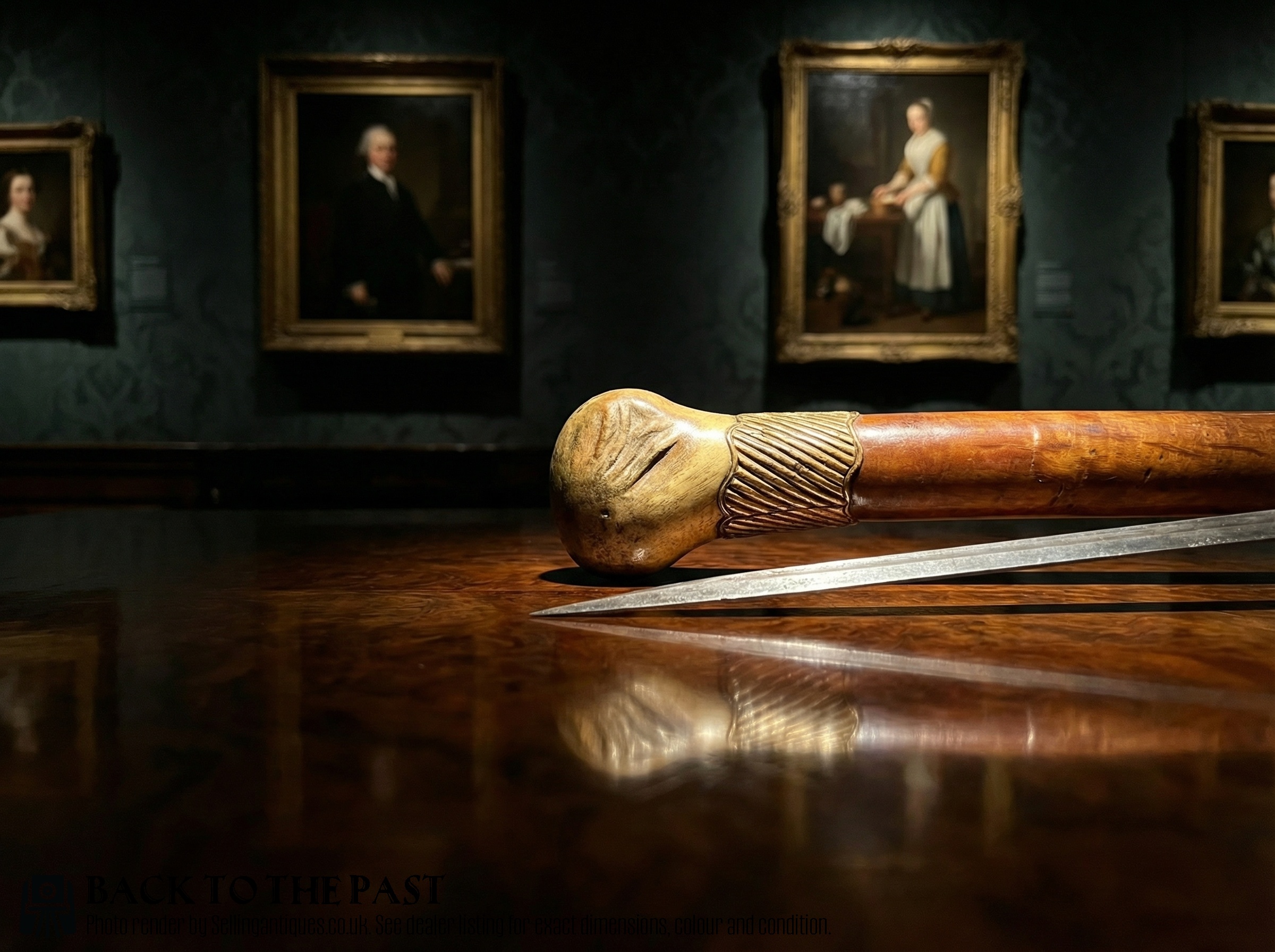
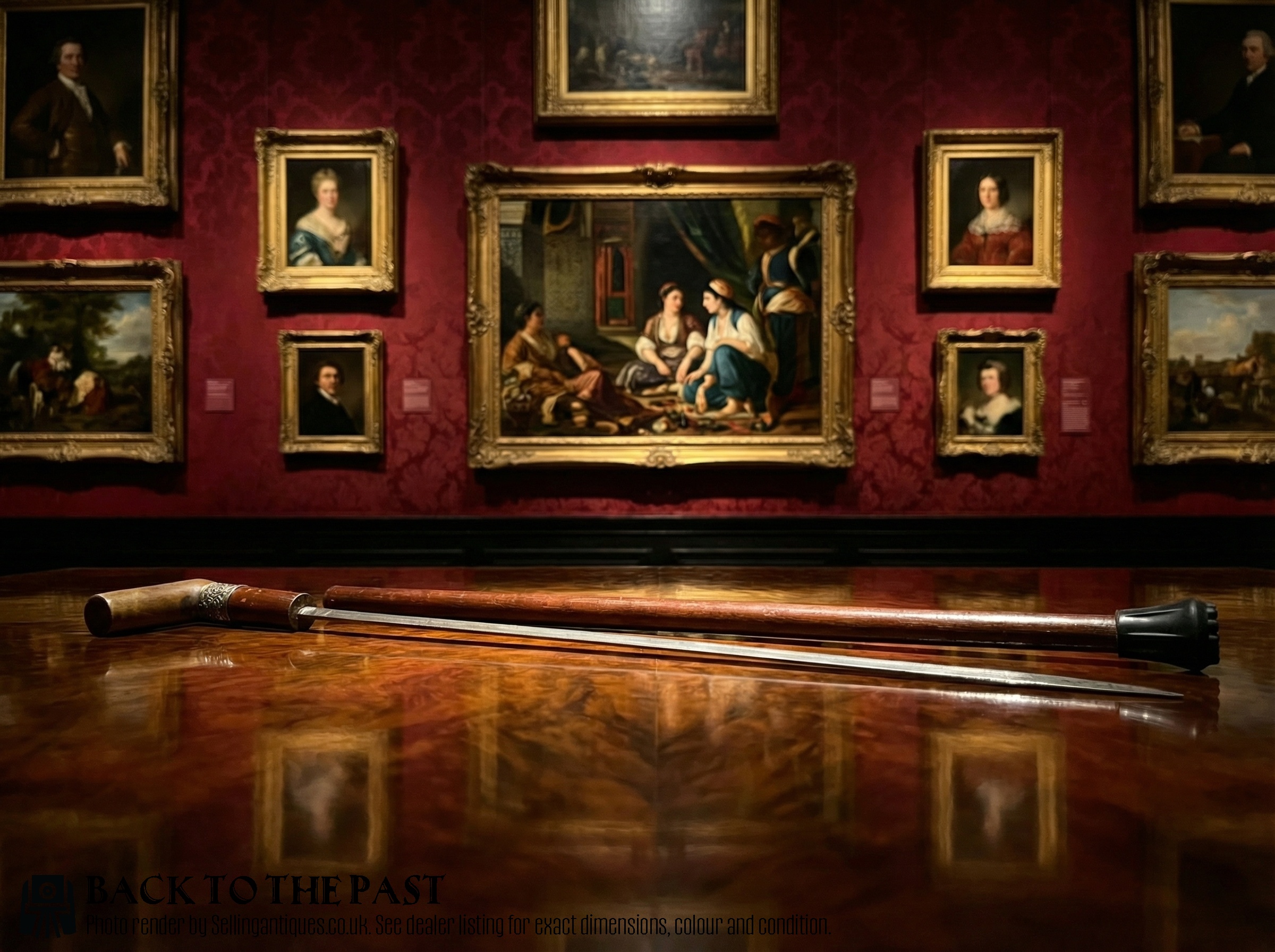
A wooden sword cane is a walking stick housing a concealed steel blade, designed for gentlemen needing discretion during the Victorian and Edwardian eras. These pieces bridge the gap between functional mobility aids and personal protection items, reflecting the social anxieties of the nineteenth and early twentieth centuries.
The versions most common here originate from the late nineteenth century through to the 1920s, spanning Victorian and Edwardian periods. They appear in various timber types and military or masonic contexts, often fitted with novelty, antler, or horn handles.
Makers produced these items for military officers, gentlemen, and fraternal orders, resulting in specific designations like swagger sticks and masonic walking sticks. Each piece maintains the outward appearance of a standard walking cane while concealing a functional metal blade inside the shaft.
What varies in quality
Quality rests primarily on the provenance of the blade and the precision of the shaft's fit. Pieces featuring named blades from Toledo or Wilkinson sit at the higher end, alongside those with hallmarked silver collars or specific military associations.
The intricacy of the handle design and the choice of materials determine the overall execution. Standard utility sticks differ markedly from bespoke masonic or military officer pieces decorated with specialised grips and superior hardwoods.
Wooden Sword Cane Retail Price Guide 2026
Typical asking prices for wooden sword cane among the pieces listed under this phrase on Sellingantiques today, from the lower quarter to the upper quarter. They describe what is for sale here now, not the wider market.
Several examples feature root-ended handles, giving the dignified gentleman a surprisingly gnarly grip.
Wilkinson·Toledo
The Wooden Sword Cane Glossary
- Swagger stick
- A short walking stick carried by military officers as a symbol of authority. These items are often slender and occasionally conceal short blades.
- Malacca
- A type of rattan cane known for its strength and distinctive brown mottled surface. It remains a preferred material for traditional walking sticks.
- Blackthorn
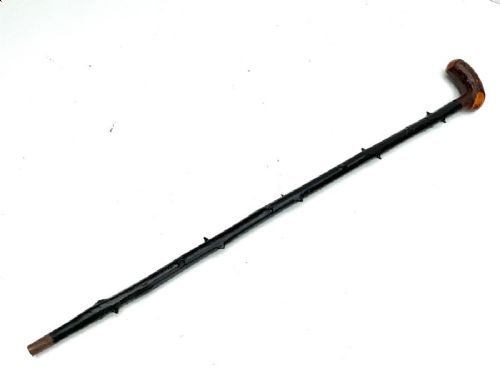
- A dense, hard wood sourced from the prunus spinosa shrub, traditionally used in Irish shillelaghs and walking sticks. It retains a gnarled, organic texture.
- Collar
- The metal band fitted around the neck of the walking stick just below the handle. It often bears silver hallmarks or owner initials.
Wooden Sword Cane: Frequently Asked Questions
How do you release the blade?
Most wooden sword canes utilise a simple friction fit, a threaded collar screw, or a small release catch hidden near the handle.
Pulling sharply on the handle separates the wooden shaft from the concealed metal blade inside.
Were these used as weapons?
Gentlemen carried these items during the Victorian and Edwardian periods primarily for personal defence in urban environments.
They provided a discreet means of protection at a time when street safety was a genuine concern.
How do I date a piece?
Dating relies on stylistic markers, hallmarks on silver collars, and historical contexts associated with military regiments or masonic lodges.
Victorian pieces show heavier ornamentation, while Edwardian and 1920s examples often exhibit leaner proportions.
What woods were used?
Common timbers include malacca, rosewood, cherrywood, hazel, partridge wood, and Irish blackthorn.
Each wood offers distinct weight, flexibility, and grain patterns suited for daily walking support.