


Hidden Blade Walking Stick
A hidden blade walking stick combines everyday support with a concealed steel blade, offering a discreet historical accessory for personal defence and collection.

Hidden Blade Walking Stick
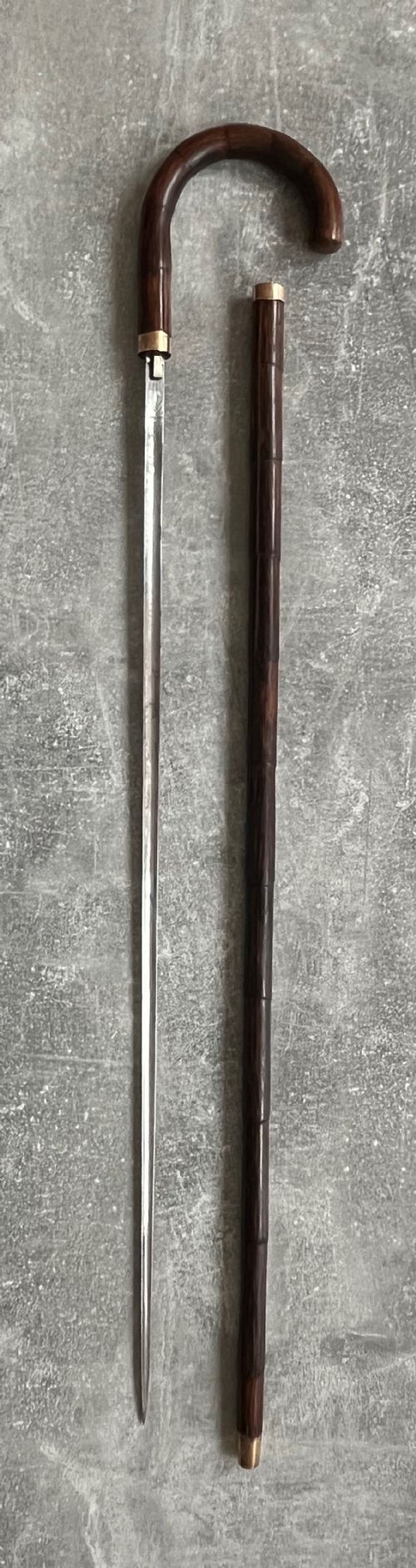
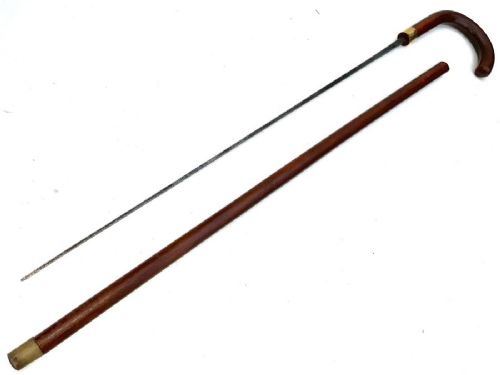
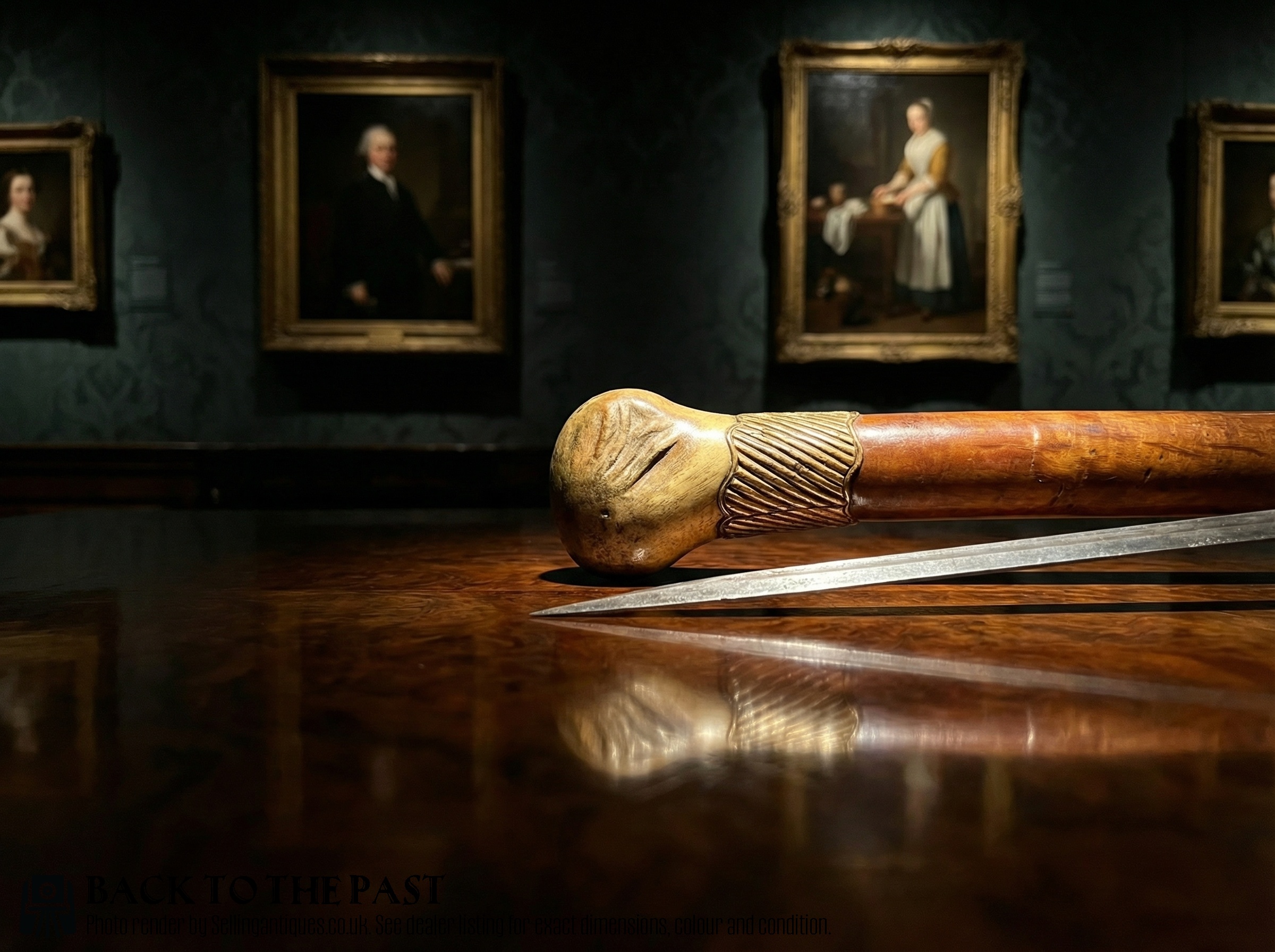
A hidden blade walking stick is a dual-purpose object that conceals a steel sword or dagger within a wooden or bamboo shaft. When buyers search for a hidden blade walking stick, they encounter nineteenth-century and Edwardian pieces designed for gentlemen, military officers, and travellers.
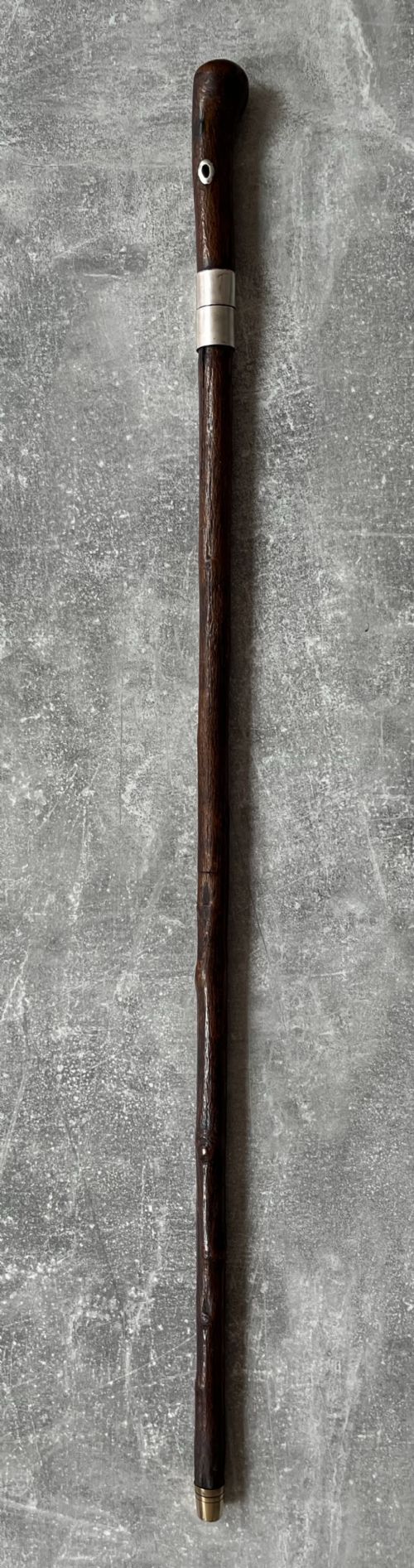
The versions most frequently met on this page include bamboo, malacca, and hazel wood shafts fitted with button releases, brass collars, and handles shaped from bone, silver, antler, or wood. Many originate from military contexts or French workshops, representing Victorian militaria and Edwardian craftsmanship.
How they were made
Maker's workshops built these shafts using natural materials such as bamboo, hazel wood, malacca, and hardwood, often covering hafts in snakeskin or shaping faux bamboo from timber. Handles were cast in brass, carved from bone or antler, or fashioned from silver and wood to suit the owner.
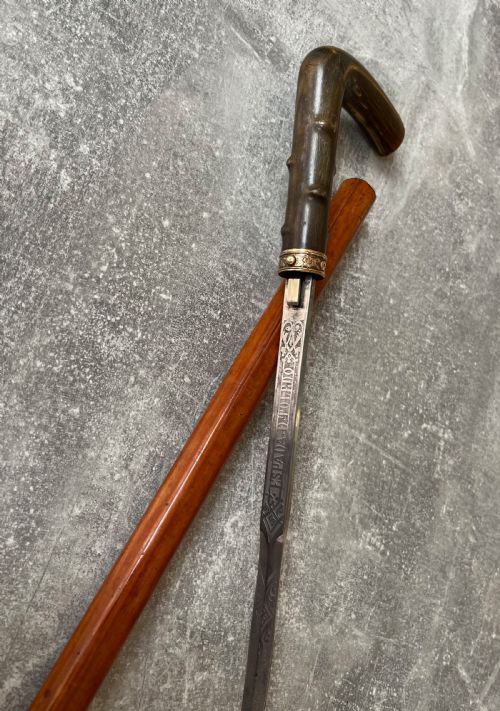
The concealed blades inside these walking sticks typically utilise steel, with several examples featuring etched Toledo blades secured by functional button release mechanisms.
Hidden Blade Walking Stick Retail Price Guide 2026
Typical asking prices for hidden blade walking stick among the pieces listed under this phrase on Sellingantiques today, from the lower quarter to the upper quarter. They describe what is for sale here now, not the wider market.
Several walking sticks hide their steel blades behind genteel facades of silver horses' heads and carved bone pistol grips.
What varies in quality
The distinction between standard examples and finer pieces lies in the integration of the handle and the release mechanism. Superior items pair precious materials like silver horse head handles or carved bone pistol grips with precise button releases that secure the blade firmly within the shaft.
The quality of the internal steel blade also determines the grade of the piece, with etched Toledo blades representing a higher standard of manufacture compared to plain utility steel.
The Hidden Blade Walking Stick Glossary
- Toledo blade
- A steel blade originating from Toledo, Spain, known for quality metalwork and frequently etched on nineteenth-century examples. These blades were prized for their resilience and decorative finish.
- Button release
- A mechanical catch set into the collar or shaft that secures the hidden blade until pressed. This mechanism prevents the sword from slipping out during normal walking use.
- Malacca
- A sturdy, polished rattan cane imported from Southeast Asia, recognisable by its subtle joints and rich brown colour. It was a preferred material for high-grade walking sticks due to its flexibility and strength.
- Swagger stick
- A short cane carried by military officers as a symbol of authority rather than for physical support. Some military variants incorporated concealed blades for personal defence.
- Pistol grip
- A handle shaped ergonomically to fit the hand like the butt of a firearm, offering a secure hold. These grips were often carved from bone or wood on walking canes.
Hidden Blade Walking Stick: Frequently Asked Questions
What is a hidden blade walking stick?
A hidden blade walking stick is a traditional cane that houses a concealed steel sword or dagger inside the main shaft. These pieces were historically carried by gentlemen and military officers for personal protection.
The blade is safely secured within the wood or bamboo body until released by a mechanical button or catch. They survive today as collectible examples of nineteenth-century and Edwardian craftsmanship.
How do you release the hidden blade?
Most hidden blade walking sticks use a discrete button release mechanism positioned near the collar just below the handle. Pressing this internal catch disengages the lock and allows the sword to be drawn smoothly from the shaft.
When pushed back fully into the cane, the blade clicks securely into place for normal walking use. The fit between the blade and the inner wooden channel is engineered to prevent rattling.
What materials were used for the handles?
Handles on these walking sticks varied widely depending on the intended owner and period. Common materials include carved bone, silver, antler, and shaped hardwoods.
Military officers and gentlemen often chose distinctive handles such as silver horse heads or ergonomic pistol grips. The choice of handle generally reflects the overall quality and purpose of the piece.
How do you date a hidden blade walking stick?
Dating these pieces relies on identifying the materials, styles, and mechanical construction typical of specific eras like the Victorian period or the Edwardian age. Details such as etched Toledo blades and snakeskin-covered hafts often point to nineteenth-century French or British workshops.
Matching the handle style, collar metal, and locking mechanism to known manufacturing trends helps narrow down the decade of production.