
Antique Walking Stick Blade
An antique walking stick blade hides a sharp secret beneath an ordinary handle, offering discretion and craftsmanship from past centuries.
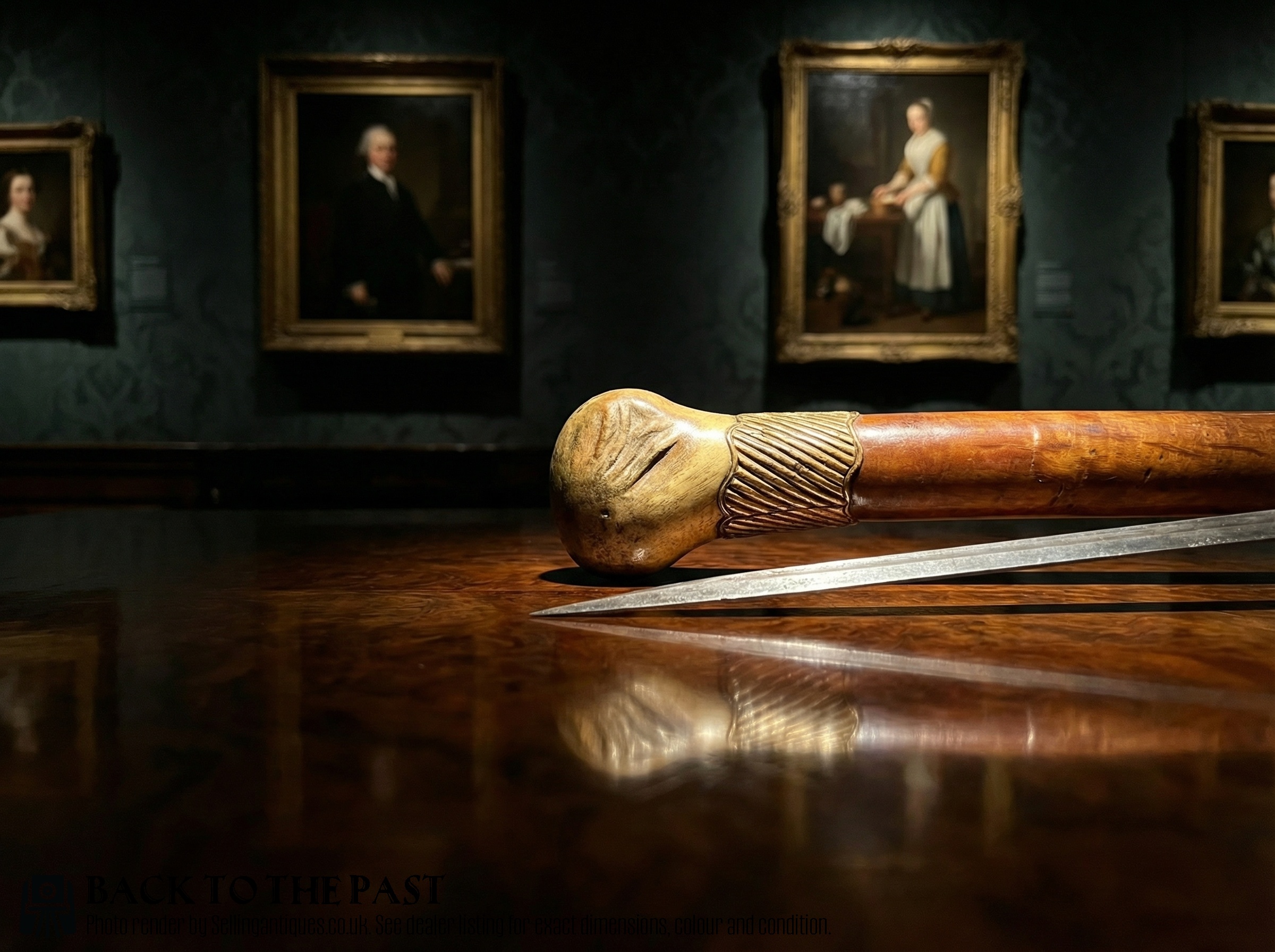
Antique Walking Stick Blade
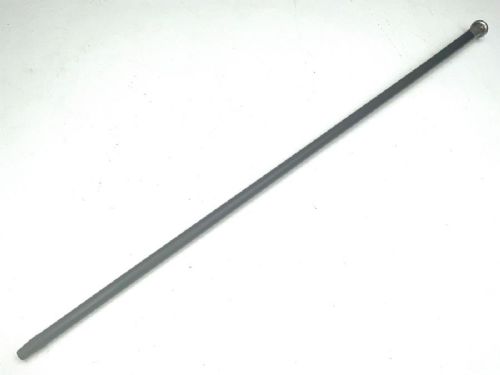
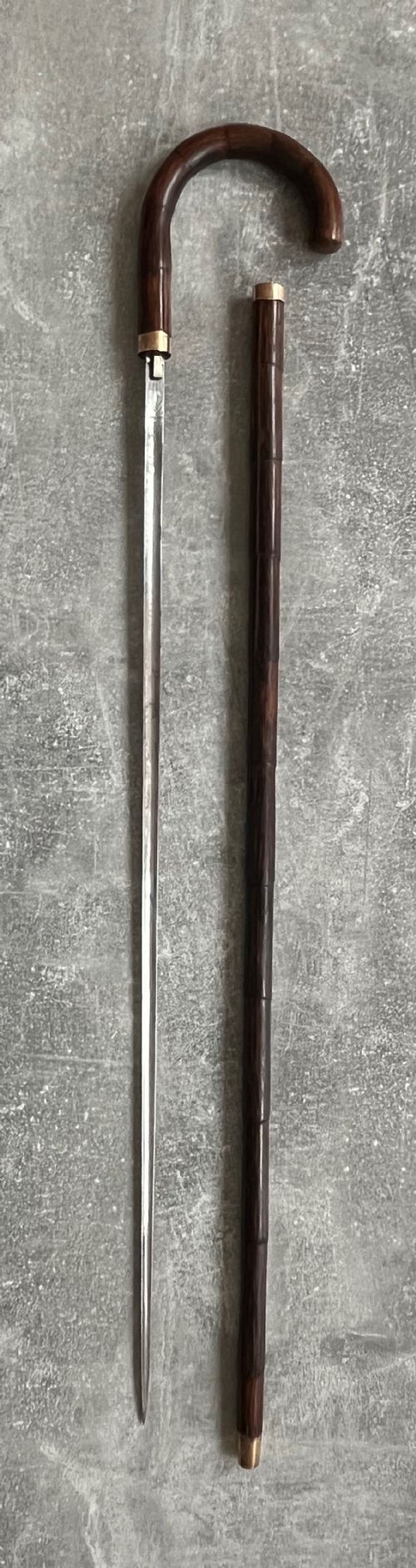
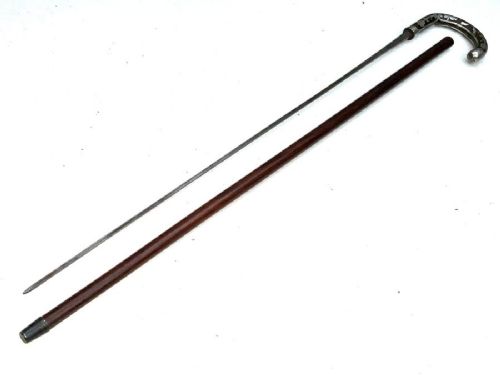
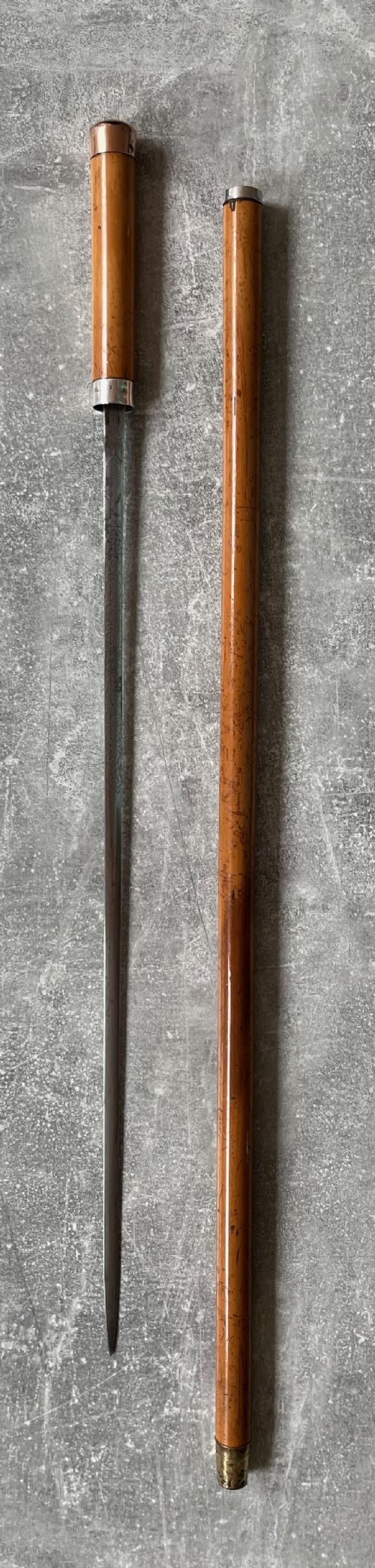
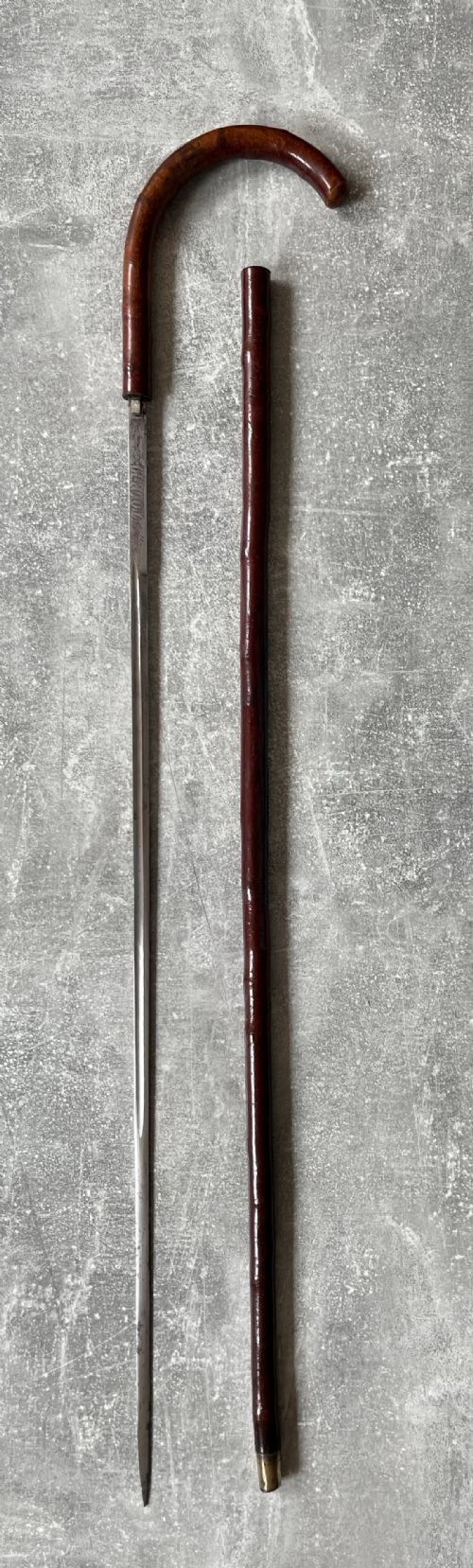
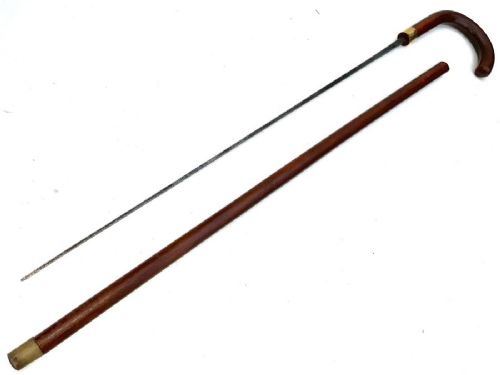
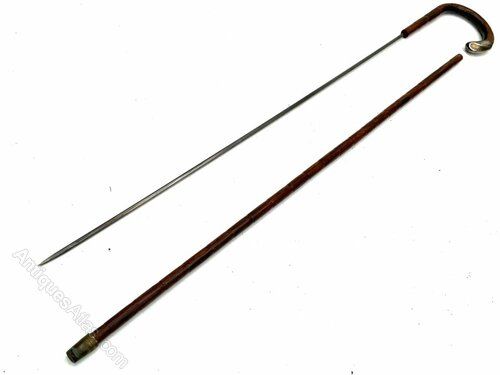
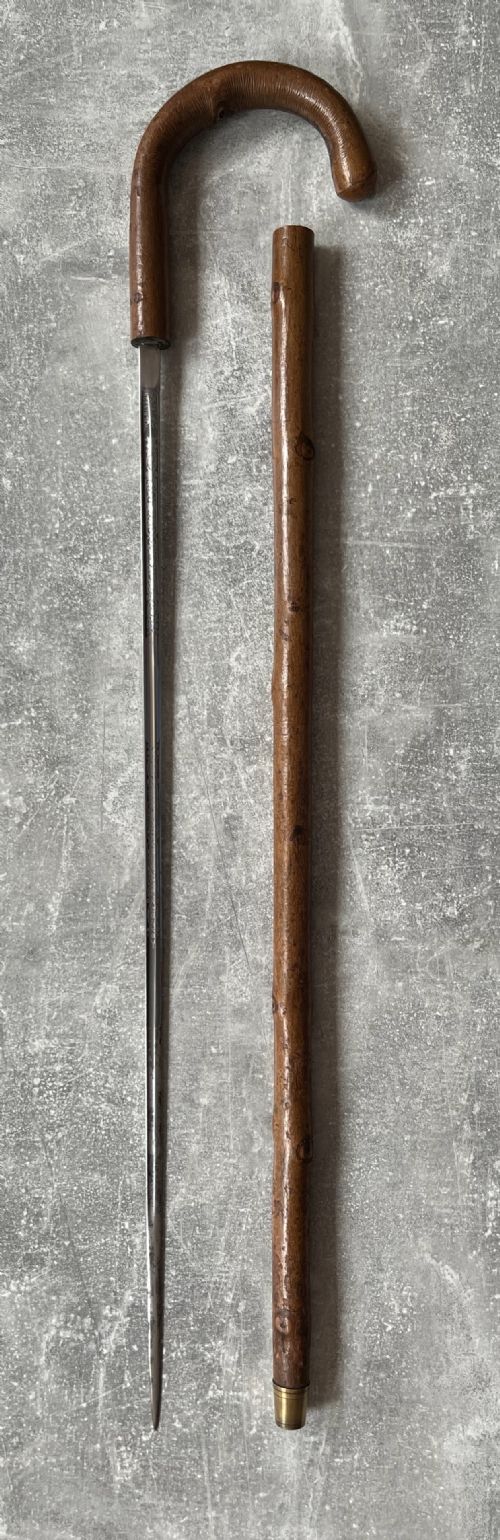
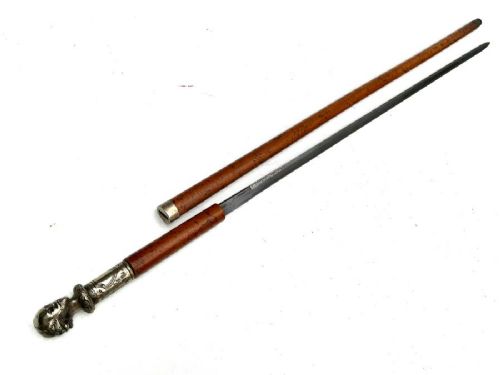
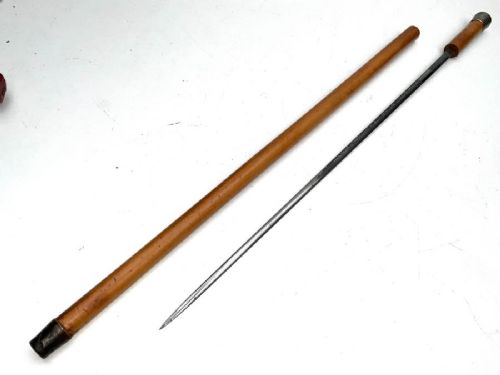
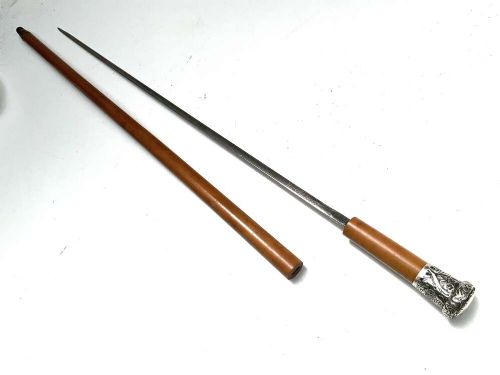
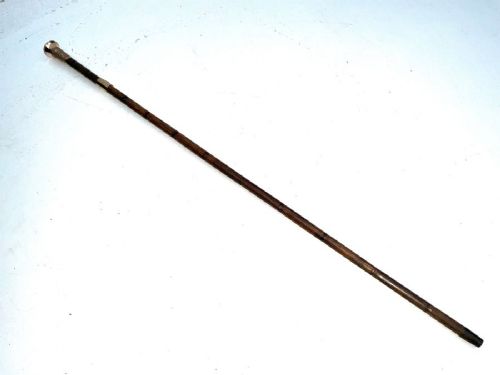
An antique walking stick blade designates a concealed weapon housed within a wooden shaft, commonly known as a sword stick or swagger stick. These pieces emerge predominantly from the Victorian and Edwardian eras, stretching from the late nineteenth century into the early twentieth century.
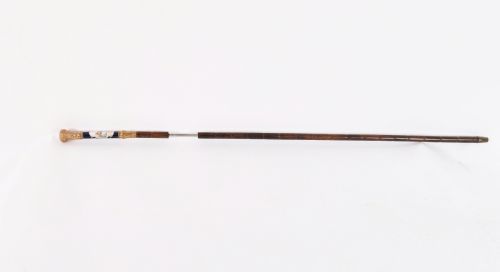
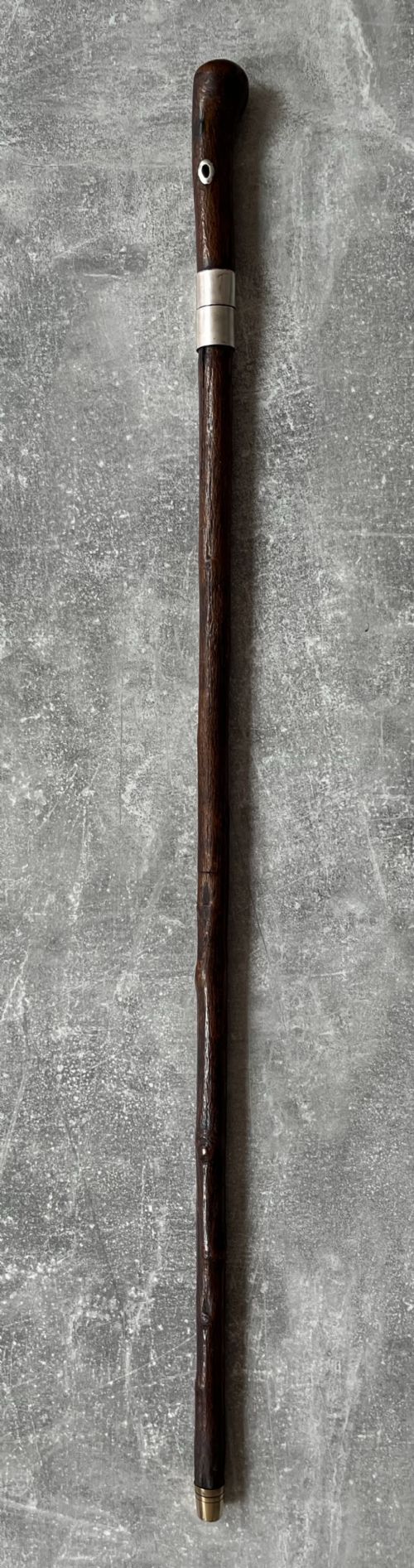
The assortment on this page includes gentleman's walking sticks fitted with button releases, military officers' swagger sticks, and Masonic examples. Materials span from malacca cane and ebonised wood to cherrywood, partridge wood, hazel, bamboo, and blackthorn.
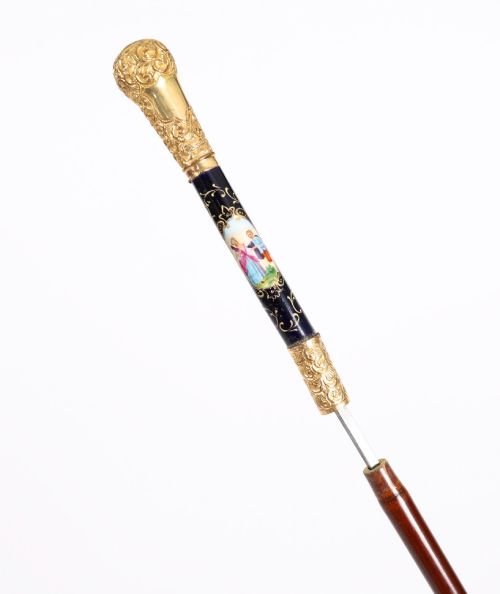
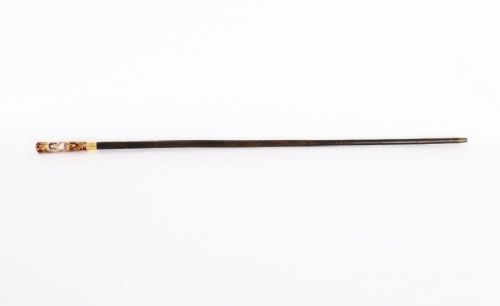
Handles vary widely in form, ranging from crook handles and root-ended grips to horned knobs and French Sevres porcelain mounts with gold plating. Metal components and collars frequently incorporate silver or brass details alongside the enclosed steel blades.
Materials and construction
Makers formed the structural shafts from sturdy natural woods and canes like malacca, partridge wood, hazel, and bamboo, frequently pairing them with metals such as brass, silver, and gold plate for collars and mounts. Ebonised wood and horn also appear in the shaft and handle construction.
The concealed cutting edges utilise steel, with notable examples featuring Toledo blades or etched surfaces. Craftspeople integrated button release mechanisms to secure the blade safely within the wooden outer casing until deployment.
Some gentlemen preferred concealing a sharp Toledo steel blade beneath delicate Sevres porcelain and gold-plated mounts.
Gradations in execution
Quality rests in the precision of the concealment and the origin of the blade, where signed Toledo or Wilkinson steel elevates an example significantly above anonymous workshop output. The alignment between the wooden shaft and the handle requires exact joinery to ensure the seam remains virtually invisible.
Mounts and handles demonstrate distinct tiers of craftsmanship, moving from plain wooden grips to chased silver collars, bone knops, and hand-painted Sevres porcelain with gold plating. The rigidity of the closing mechanism and the finish of the etched steel separate standard utility items from bespoke gentleman's pieces.
Brigg·Wilkinson
The Antique Walking Stick Blade Glossary
- Toledo blade
- A steel blade originating from Toledo, known for flexibility and strength. These blades were frequently imported and fitted into British and European walking sticks.
- Malacca cane
- A mottled brown rattan stem imported from Southeast Asia, prized for resilience and flexibility. It forms the body of many high-grade sword sticks.
- Swagger stick
- A short, slender cane carried by military officers. Certain versions incorporate a concealed blade for ceremonial or defensive purposes.
- Ebonised wood
- Timber treated to resemble ebony through staining and polishing. This dark finish provides a formal appearance on Victorian shafts.
- Button release
- A mechanical catch set into the collar or shaft. Pressing it disengages the internal lock holding the blade inside the cane.
Antique Walking Stick Blade: Frequently Asked Questions
What is an antique walking stick blade?
An antique walking stick blade is a concealed steel weapon housed entirely inside a wooden shaft or cane. These items combine the appearance of a gentleman's everyday walking support with a hidden sword or dagger.
They date primarily from the nineteenth and early twentieth centuries, reflecting the personal security requirements and fashion of the Victorian and Edwardian periods.
How do you release the concealed blade?
Most pieces utilise a mechanical button release integrated discreetly into the metal collar or upper mount of the cane. Pressing this button disengages the internal catch, allowing the user to pull the handle and withdraw the steel blade from the wooden scabbard.
Craftspeople engineered these fittings to remain secure during normal walking use while permitting rapid access when needed.
What materials were used for the shafts?
Shafts were constructed from a variety of durable timbers and natural canes, including malacca, bamboo, partridge wood, hazel, cherrywood, and blackthorn. Some examples feature ebonised wood or rosewood paired with horn handles.
Collars and mounts frequently incorporate brass, silver, or gold plate, alongside decorative elements like bone knops and porcelain.
How can you identify military examples?
Military examples often take the form of officers' swagger sticks or walking sticks linked to specific regiments, such as the Grenadier Guards. They frequently feature service dates, regimental markings, or Imperial German and British military provenance.
These pieces emphasise plain utility or specific unit insignia rather than decorative porcelain handles.