
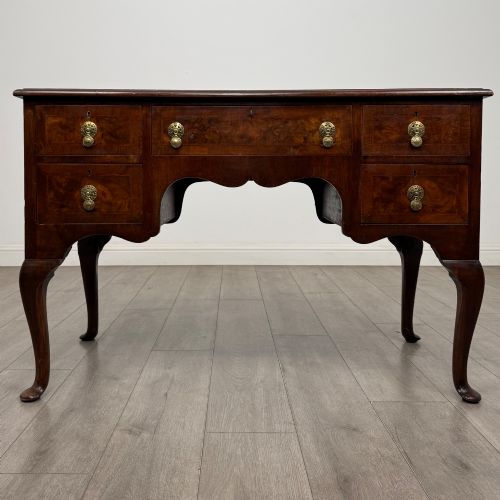
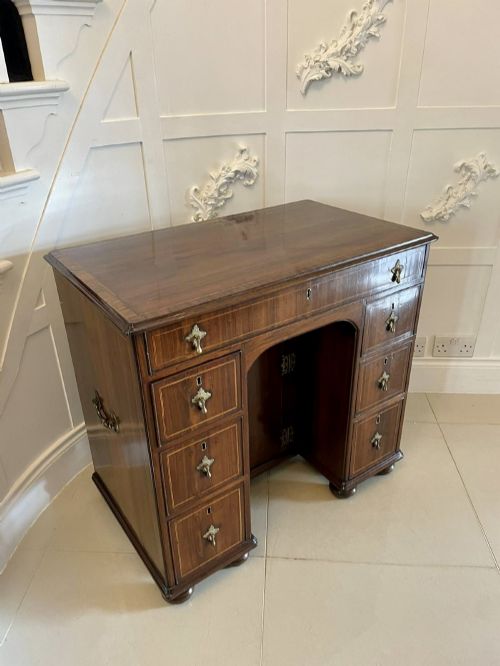
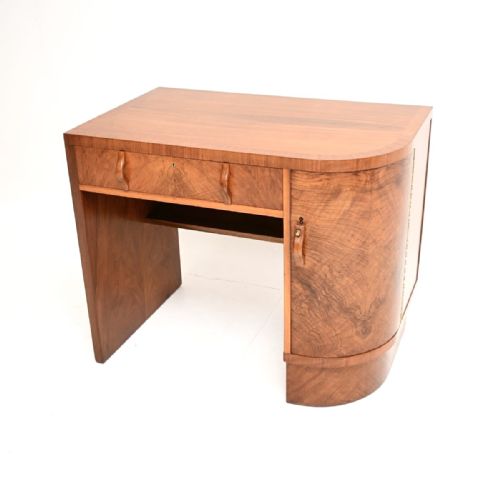
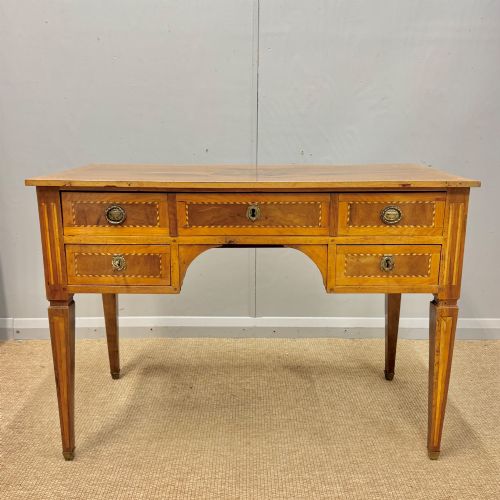
Brown Walnut Kneehole Desk
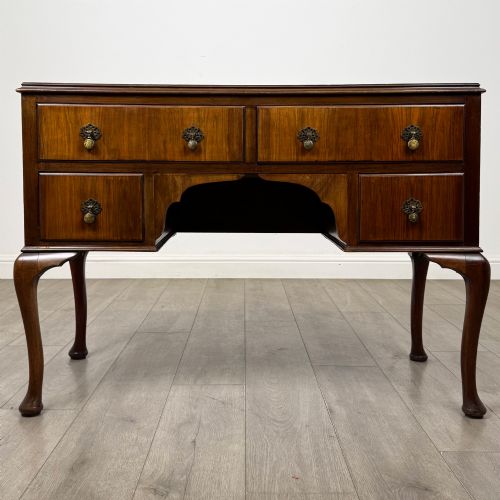
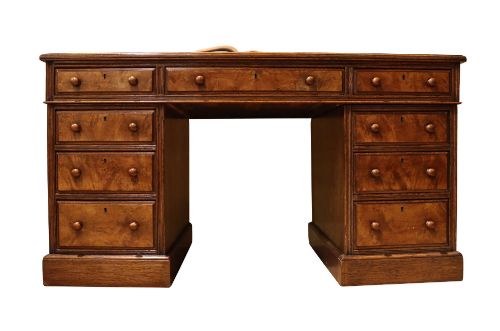
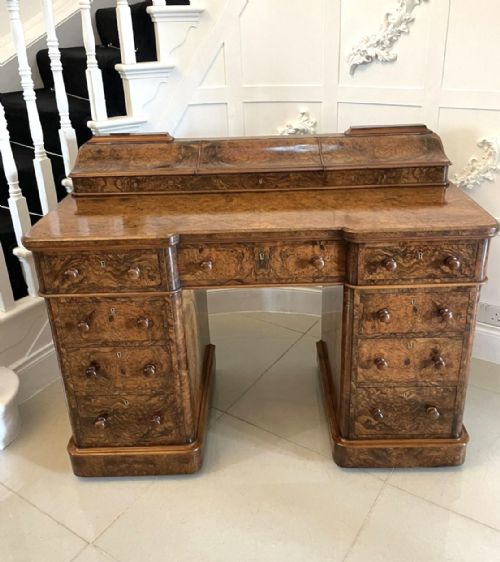
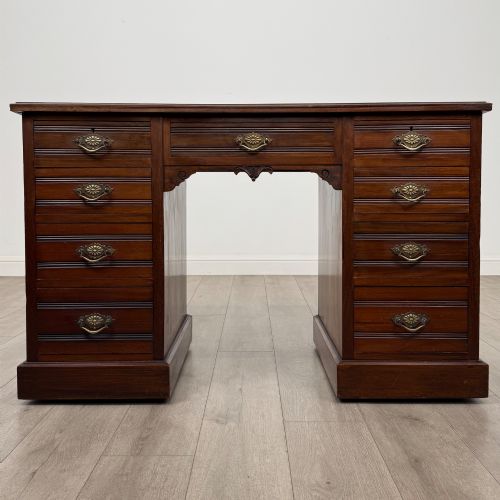
A brown walnut kneehole desk offers compact proportions and concealed drawers, appealing to collectors seeking period workspace with classic timber grain.
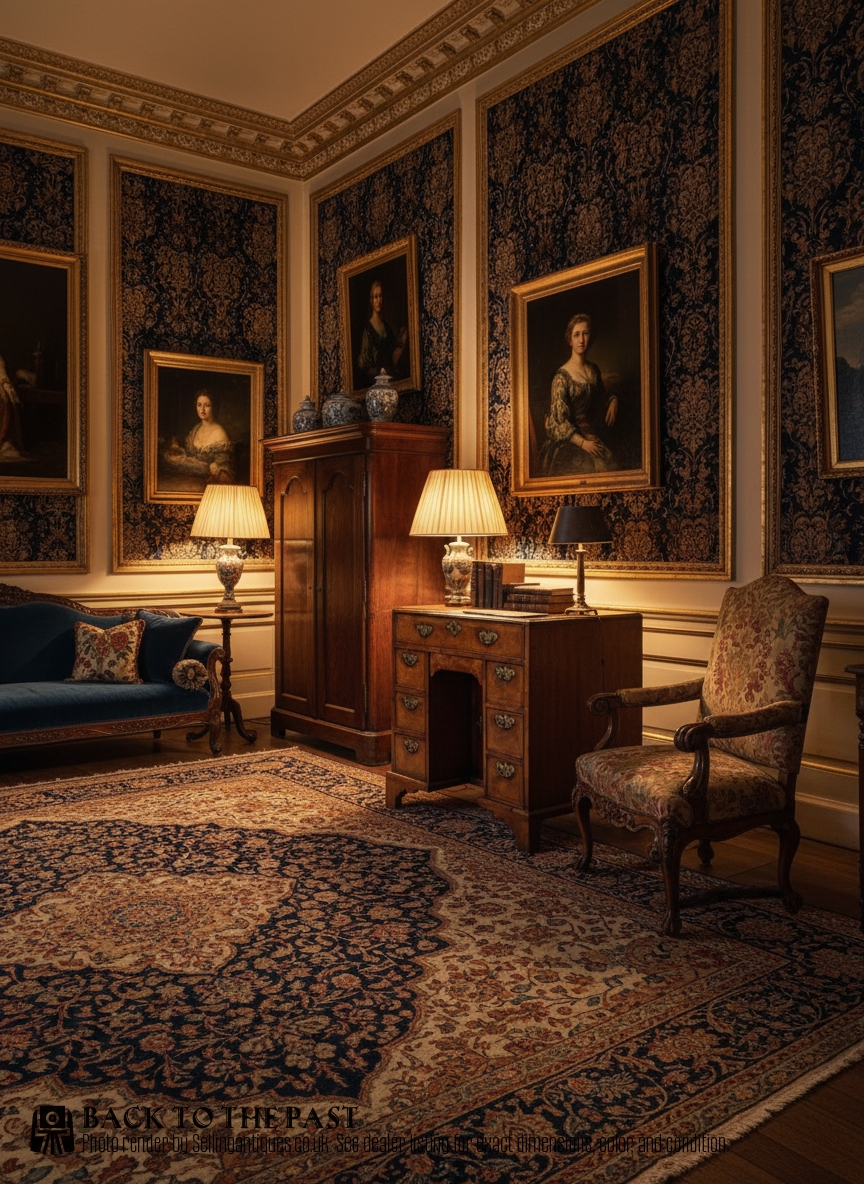
Brown Walnut Kneehole Desk
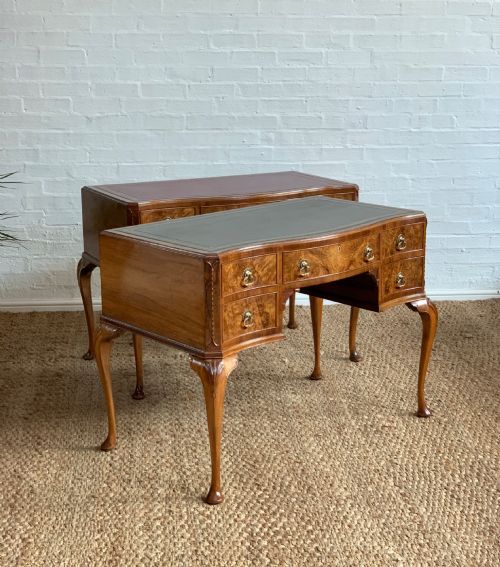
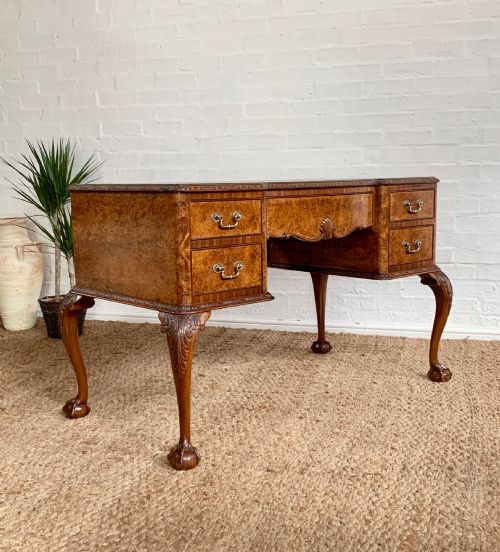
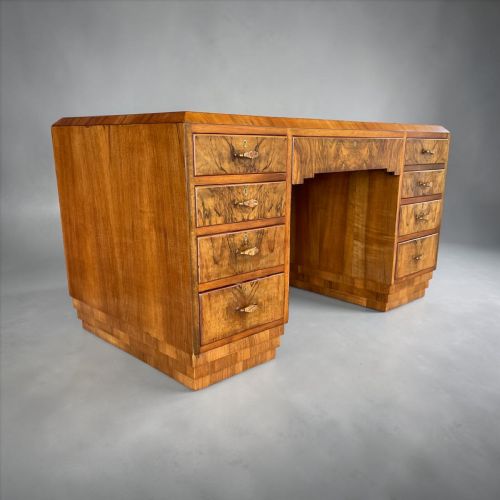
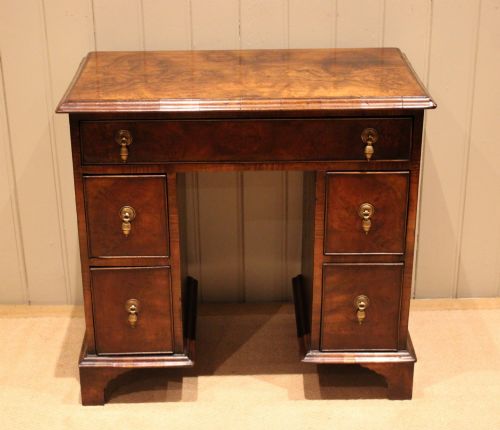
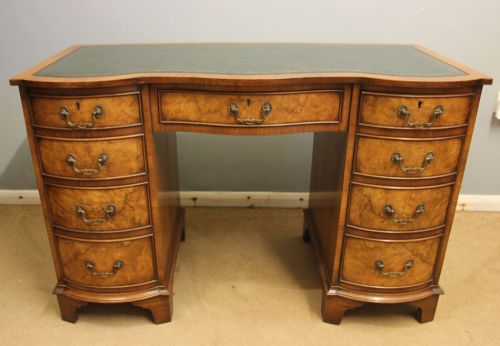
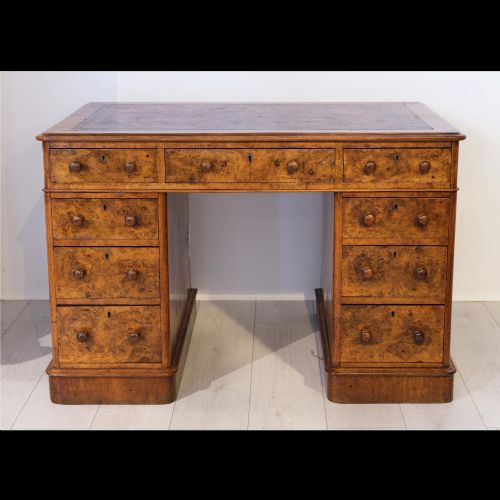
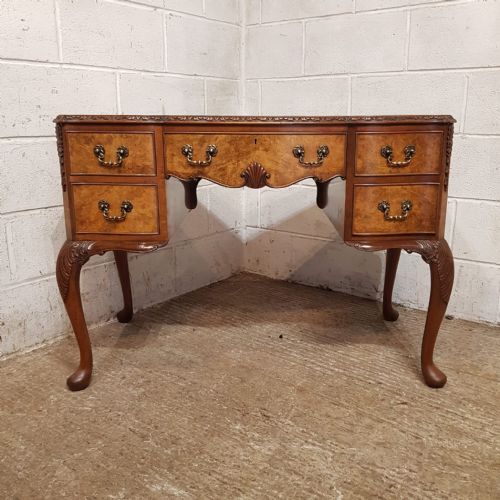
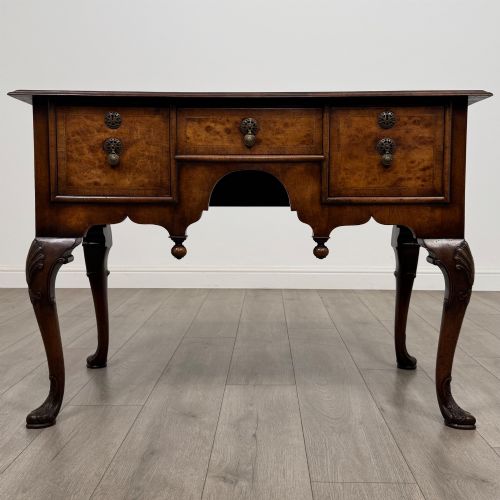
A brown walnut kneehole desk brings together a recessed central recess flanked by banks of drawers, forming a compact workspace that originated in the late seventeenth century and continued through later revivals. Buyers encounter examples ranging from eighteenth-century originals to Edwardian, Art Deco, and revival pieces.
The form appears in various configurations, including pedestal desks, writing tables, dressing chests, and bureaux. Timber selection defines the surface character, with burr walnut, figured veneers, and straight-grain walnut dominating the listings.

How they were made
Carpenters laid highly figured walnut and burr walnut veneers over stable secondary timbers like oak, arranging the grain patterns symmetrically across drawer fronts and tops. Brass handles, escutcheons, and leather writing surfaces provide functional contrast to the dark timber.
Construction methods evolved from seventeenth-century dovetailed drawer carcases to nineteenth and twentieth-century pedestal frames. Joiners utilised cross-banding and inlay work to frame the primary walnut panels.
Brown Walnut Kneehole Desk Retail Price Guide 2026
Typical asking prices for brown walnut kneehole desk among the pieces listed under this phrase on Sellingantiques today, from the lower quarter to the upper quarter. They describe what is for sale here now, not the wider market.
Listings feature walnut, burr walnut, oak, and fruitwood across Georgian, Victorian, Edwardian, and Art Deco periods.
What varies in quality
The distinction between tiers rests on the choice and matching of timber veneers, where continuous burr patterns and thoughtful grain alignment elevate an ordinary piece. Structural integrity in the central kneehole cupboard and the smoothness of drawer movement further separate standard production from superior cabinet work.
Original brass hardware and well-preserved leather inserts contribute to an authentic appearance. Finer desks display crisp edge moulding and meticulous marquetry that endure through generations of use.
Maple and Co·Wylie and Lochhead Glasgow·Gill and Reigate·Étienne Kohlmann
The Brown Walnut Kneehole Desk Glossary
- Kneehole
- A recessed space beneath the desk top designed to accommodate the user's legs, usually flanked by small drawers. This arrangement defines the compact footprint of the desk.
- Burr walnut
- A mottled timber veneer harvested from walnut tree growths or burls. It yields intricate, swirling grain patterns highly prized in cabinet making.
- Cross-banding
- A narrow strip of veneer laid around the border of a panel with the grain running perpendicular to the centre. This technique frames the primary timber.
- Pedestal desk
- A freestanding desk comprising two supporting columns of drawers beneath a shared top. It provides substantial storage while maintaining a finished rear side.
Brown Walnut Kneehole Desk: Frequently Asked Questions
How do I identify the period?
Period identification relies on construction techniques, hardware styles, and overall proportions. Eighteenth-century pieces show hand-cut dovetails and solid timber framing, whereas Edwardian and Art Deco iterations utilise machine-sawn elements and distinct veneer matching.
Stylistic revivals like Queen Anne style copy earlier silhouettes while retaining twentieth-century manufacturing signatures. Examining the interior secondary woods often clarifies the date of manufacture.
Where should I place it?
Many of these desks feature finished backs, allowing them to sit away from walls in the centre of a room. Freestanding models work well in home studies or libraries where visibility from all angles matters.
Keep walnut surfaces away from direct sunlight and heat sources to prevent the veneers from drying out. A breathable room atmosphere preserves the polished timber finish.
How do I care for walnut veneer?
Maintain walnut veneer by dusting with a soft, dry cloth and avoiding silicone-based polishes. Occasional application of quality beeswax feeds the timber without building up heavy residues.
Protect leather writing inserts from moisture and sharp objects by using blotters. Gentle handling ensures the delicate cross-banding remains intact over years of daily use.