



Antique Estate Desk
These heavy-duty writing pieces known as an antique estate desk served the administrative core of large properties.

Antique Estate Desk
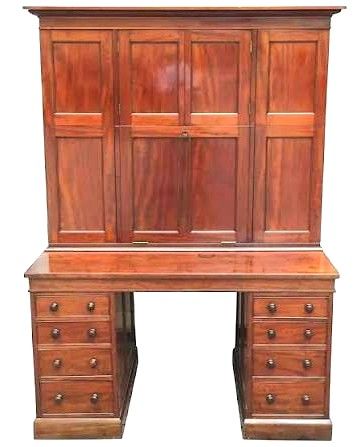
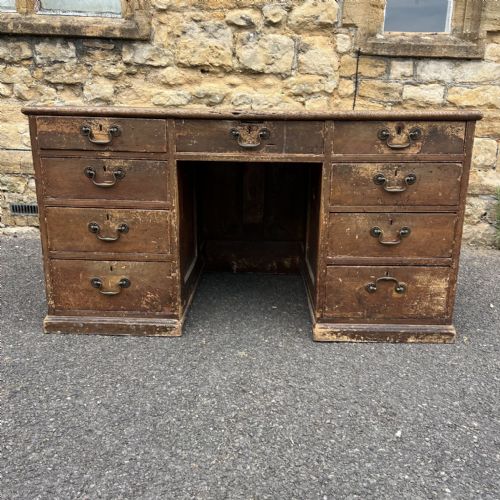
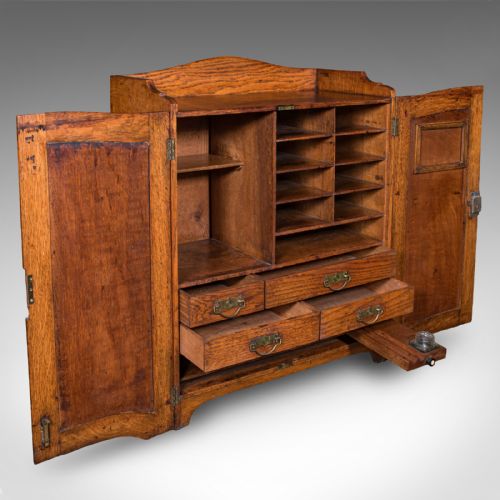
An antique estate desk encompasses heavy furniture designed for administrative tasks within large properties, country houses, and institutional offices. Pieces meeting this description range from robust pine and oak clerk cupboards to refined mahogany partners desks and rent tables.
Buyers encountering this category will frequently find Victorian and Georgian examples constructed in oak, mahogany, and walnut. Forms span from kneehole desks and revolving drum tables to secretaire bookcases and side tables originating from Scotland and England.
The provenance often links directly to country houses, gamekeepers, estate managers, or academic institutions. These pieces reflect the functional demands of estate management, combining large work surfaces with secure storage for documents and ledgers.
What varies in quality
Quality separates utilitarian utility furniture from high-status cabinet work through the selection of timber figures, such as flamed mahogany or burr walnut, and the sophistication of inlaid details like satinwood. Master workshops applied finer mouldings, better-balanced proportions, and superior internal compartment layouts.
The integrity of original brass fittings, working locks with keys, and undisturbed timber patination elevate certain examples above standard workshop output. Provenance and documentation linking a piece to a specific historic estate or notable maker add another layer of distinction.
Antique Estate Desk Retail Price Guide 2026
Typical asking prices for estate desk among the pieces listed under this phrase on Sellingantiques today, from the lower quarter to the upper quarter. They describe what is for sale here now, not the wider market.
Listings feature oak, mahogany, walnut, and pine across Victorian and Georgian periods.
Gillows
The Antique Estate Desk Glossary
- Partners desk
- A large double-sided writing table designed for two people to work opposite one another, featuring banks of drawers on both sides.
- Rent table
- A circular or drum-shaped table with rotating top sections and numbered drawers used historically for collecting tenant rents.
- Secretaire
- A cabinet or desk incorporating a drop-front writing drawer that conceals a fitted interior of small drawers and pigeonholes.
- Tambour
- A sliding surface made of narrow strips of wood glued to a canvas backing, allowing roll-top enclosures on writing desks.
- Kneehole desk
- A compact pedestal desk featuring a central recess for the user's legs, flanked by vertical stacks of drawers.
Antique Estate Desk: Frequently Asked Questions
What is an estate desk?
An estate desk is a sturdy piece of historic furniture originally used by managers, clerks, or landowners for handling estate accounts and correspondence.
These pieces range from oak kneehole desks and bureau bookcases to large mahogany partners tables built for heavy administrative work.
How do I date a Georgian desk?
Georgian desks typically display architectural proportions, robust mahogany timbers, and hand-cut dovetails within the drawer construction.
Stylistic cues from the period include Hepplewhite influences, bracket feet, and understated brass hardware without later Victorian ornamentation.
Where were these desks used?
They originated in the studies, libraries, and administrative offices of large British country houses, Scottish estates, and institutional properties.
Many served practical functions for estate managers, gamekeepers, and academics who required secure storage for ledgers and papers.
Can I use an antique desk daily?
These pieces were built from solid hardwoods like oak and mahogany to withstand rigorous daily administration.
Routine use requires treating leather inserts with care and maintaining stable room humidity to protect the antique wood and finishes.