




Traditional Kneehole Bureau
A traditional kneehole bureau offers compact storage and a writing surface, bringing Georgian and Victorian craftsmanship into the modern study.

Traditional Kneehole Bureau
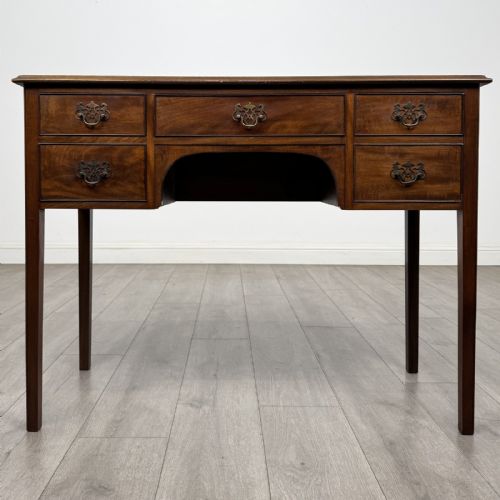
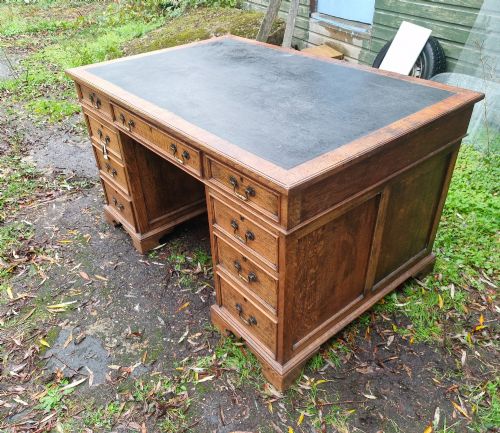
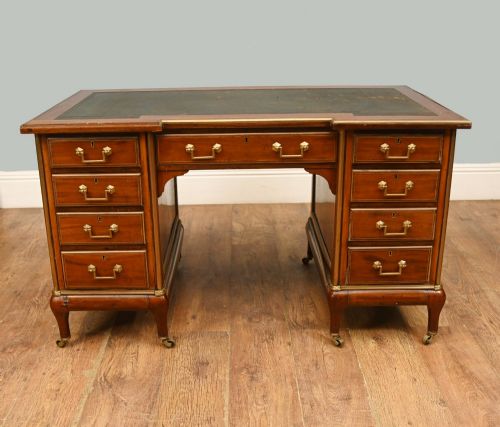
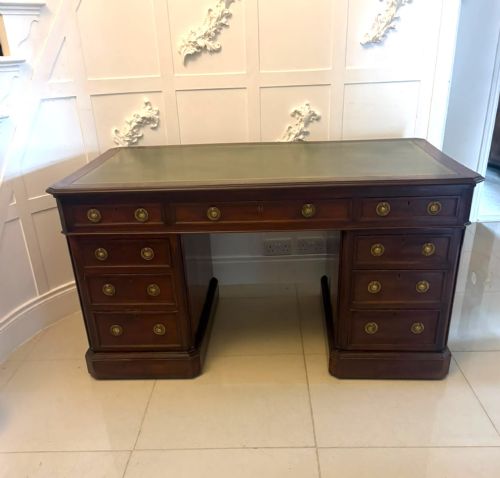
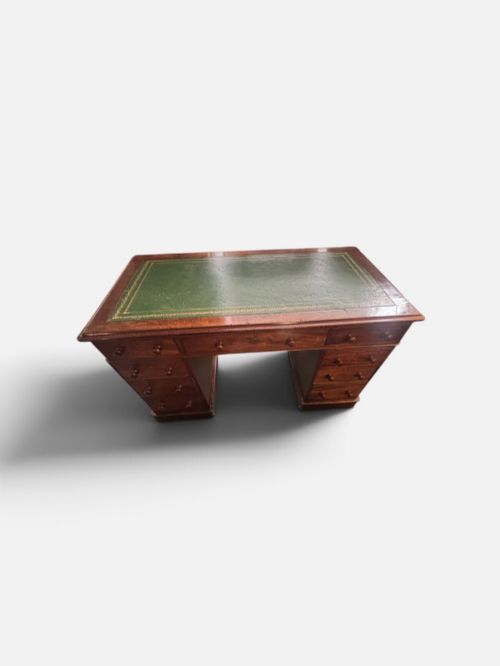
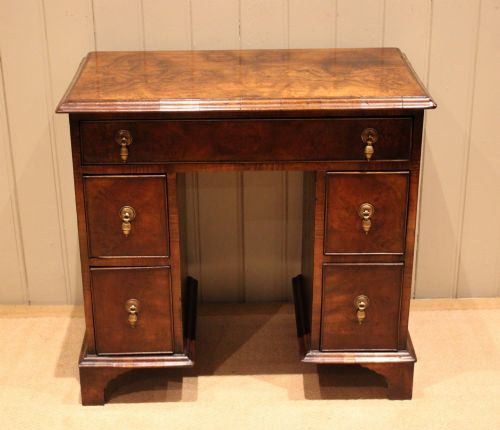
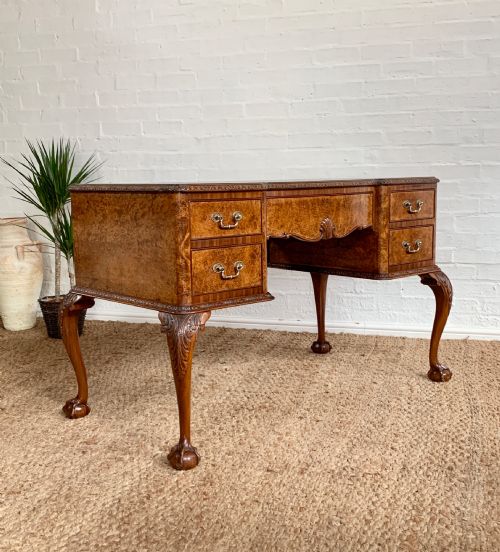
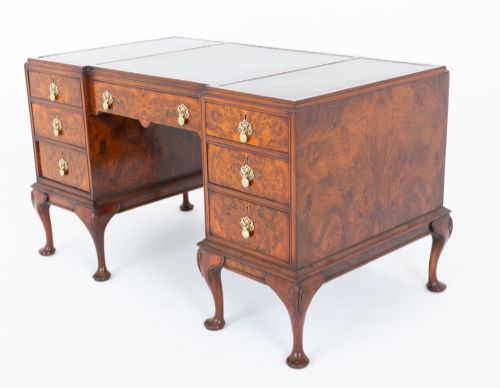
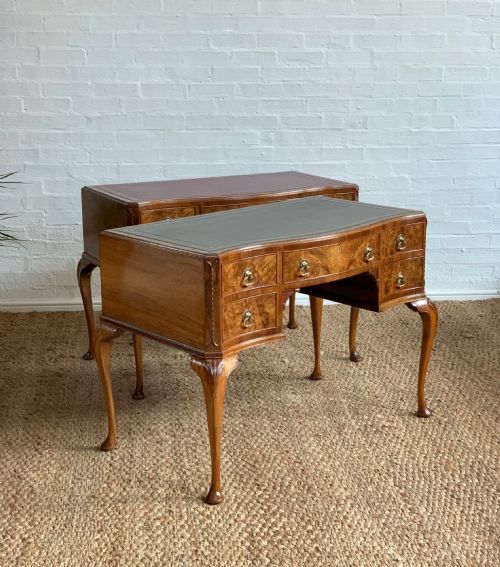
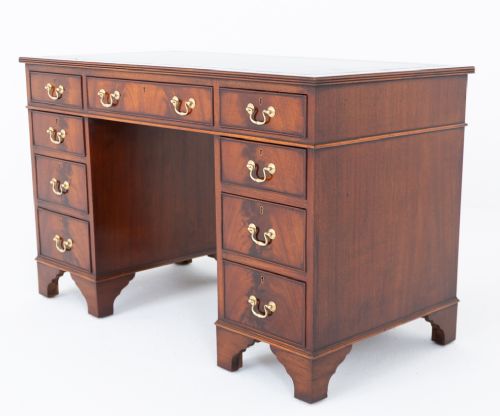
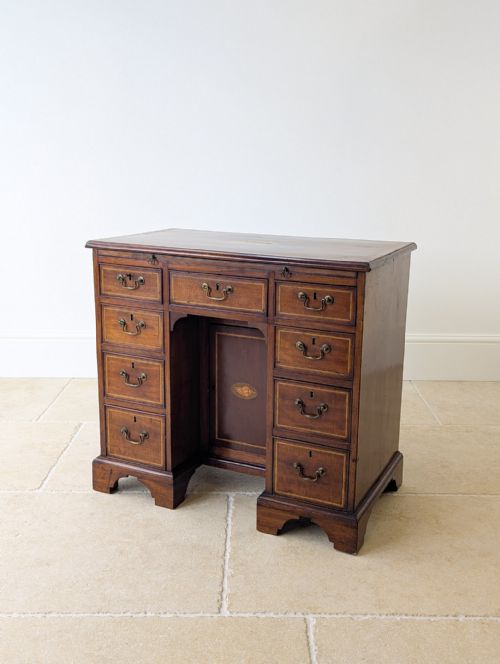
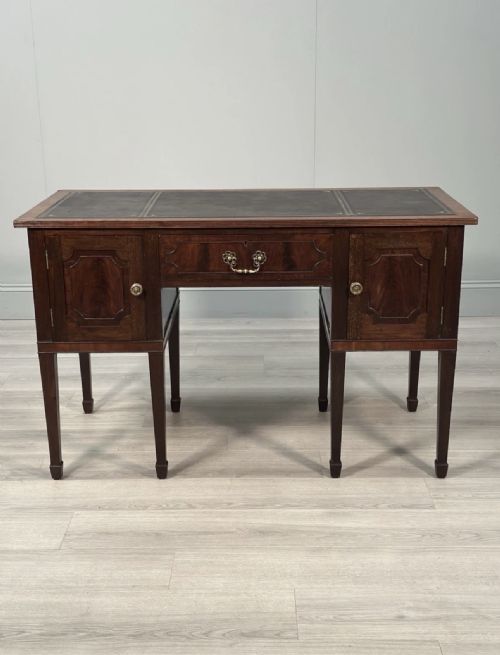
A traditional kneehole bureau provides a dedicated writing space supported by banks of drawers beneath. These desks appear frequently in mahogany and burr walnut, spanning the Georgian, Victorian and Edwardian periods.
The layout typically incorporates a central recessed cupboard flanked by pedestal drawers, creating a compact footprint. Examples range from eighteenth-century George III pieces to later revival styles from the early twentieth century.
Buyers choose these forms for their architectural symmetry and practical storage capacity. The selection on this page demonstrates how cabinetmakers adapted the pedestal desk format across two centuries.
How they were made
Cabinetmakers constructed these desks primarily from solid timber and veneers, favouring mahogany, oak and burr walnut. Surfaces often feature marquetry inlay, polished leather writing inserts and cast brass handles.
Joinery techniques included dovetailed drawer construction and framed panels to stabilise large timber sections. Timber selection dictated the character of the piece, with figured grain patterns chosen for primary display surfaces.
Traditional Kneehole Bureau Retail Price Guide 2026
Typical asking prices for traditional kneehole bureau among the pieces listed under this phrase on Sellingantiques today, from the lower quarter to the upper quarter. They describe what is for sale here now, not the wider market.
Materials recorded across these desks include mahogany, oak, burr walnut, satinwood, leather and brass.
What varies in quality
Quality depends upon the choice of timber and the precision of the cabinetwork. Fine examples display carefully matched veneer grains, well-executed dovetailing and intact original hardware.
Proportion and scale distinguish finer pieces from standard production. The best desks maintain balanced dimensions across the pedestal banks and the central kneehole recess.
Wylie & Lochhead Glasgow
The Traditional Kneehole Bureau Glossary
- Kneehole
- A central recess beneath a desk top designed to accommodate the user's legs while seated. This architectural feature creates the characteristic twin pedestal layout.
- Pedestal
- A vertical stack of drawers supporting one side of the desk surface. These columns flank the central kneehole space.
- Burr Walnut
- Timber harvested from walnut tree growths, producing highly figured swirling grain patterns. Cabinetmakers sliced this wood into thin veneers for decorative drawer fronts and tops.
- Marquetry
- Decorative inlay work using various coloured woods to form geometric or floral patterns. This technique embellished the primary surfaces of formal writing furniture.
- Dovetail
- An interlocking joint used in drawer construction to ensure durable corner connections. Hand-cut variations indicate earlier periods of manufacture.
Traditional Kneehole Bureau: Frequently Asked Questions
How do I date a kneehole desk?
Dating relies upon timber choices, construction methods and stylistic details. Georgian pieces often display distinct cabinetmaking techniques and proportion compared to later Victorian and Edwardian revivals.
Examining drawer linings and hardware fixings provides further clues to the period of manufacture.
Are these desks suitable for daily work?
Many traditional kneehole desks function well for modern writing tasks and laptop use. The compact pedestal layout provides adequate surface area while fitting into smaller rooms.
Leather writing inserts offer a durable surface for everyday paperwork.
What is the difference between walnut and mahogany?
Walnut was favoured for its rich figure and warmth, particularly during the Queen Anne and later revival periods. Burr walnut specifically offers intricate swirling patterns across the desk surface.
Mahogany provides a denser, darker reddish-brown ground that dominated Georgian and Victorian cabinetmaking.
How do I care for leather desk tops?
Tooled leather writing surfaces require gentle cleaning with a slightly damp cloth followed by dry buffing. Avoid harsh chemical cleaners that can strip the traditional finish.
Applying occasional specialist leather balms helps maintain flexibility and prevents cracking over time.