
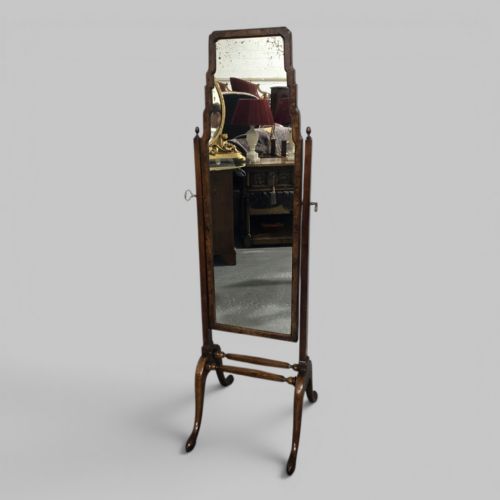


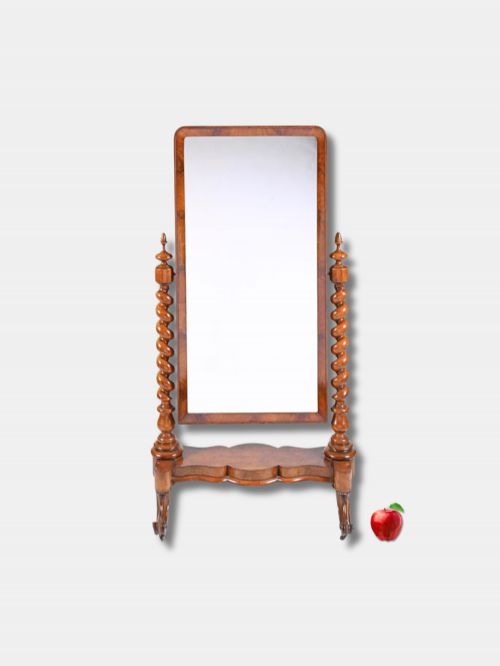


Brown Walnut Dressing Mirror
A brown walnut dressing mirror brings warmth and reflective utility to a room, offering periods from the eighteenth century to art deco.
Brown Walnut Dressing Mirror
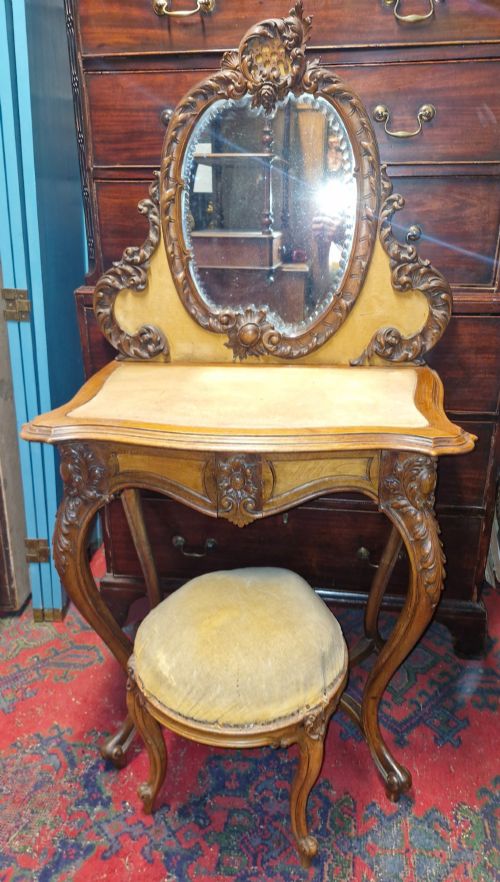
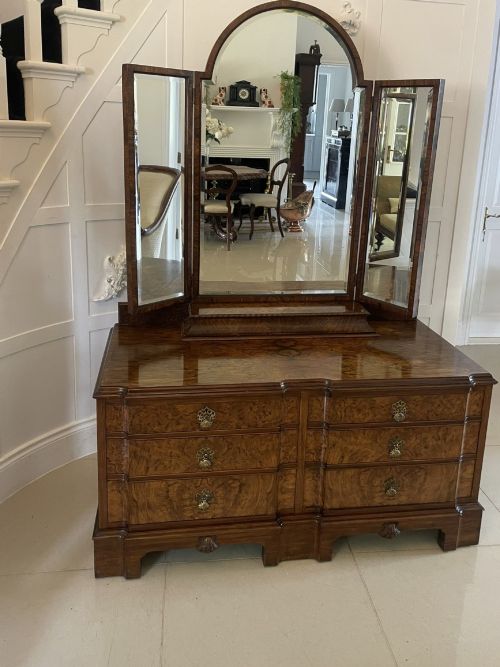
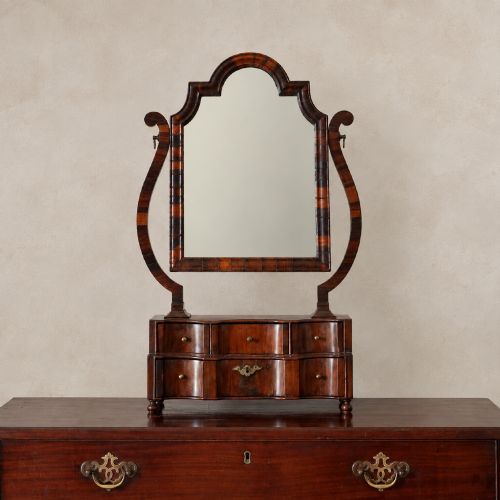
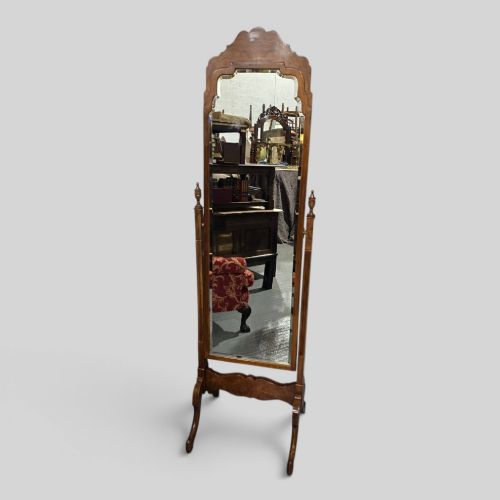
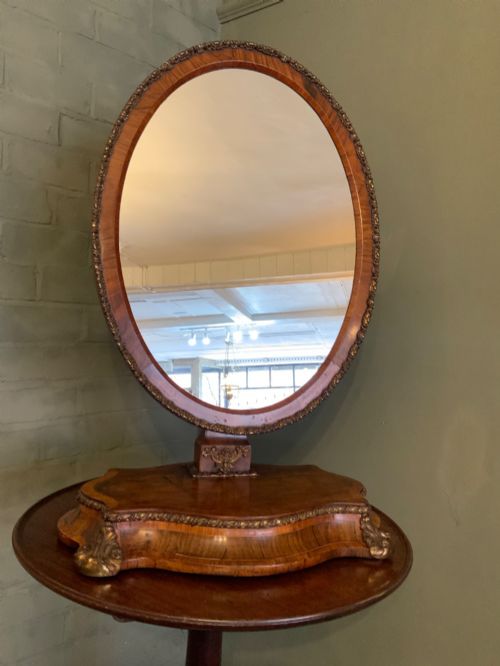
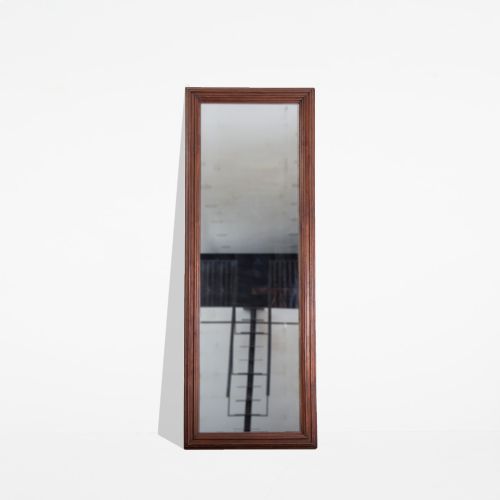
When you search for a brown walnut dressing mirror, you find a selection of toilet mirrors, cheval mirrors, and dressing tables spanning multiple eras from the eighteenth century through to the twentieth century. These pieces serve practical and decorative functions in bedrooms and dressing rooms, appearing in table-top formats or as full-length cheval designs.
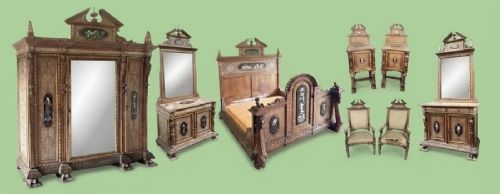
The versions most common on this page range from early Georgian and Queen Anne style toilet swings to Victorian burr walnut examples and later art deco dressing furniture. Forms include simple swing mirrors on stands, bureau fitments, and larger dressing chests fitted with glass.
How they were made
Cabinet makers utilised solid walnut, burr walnut veneers, and figured timbers over secondary woods, often incorporating brass hardware, ormolu, and mirror glass. Marquetry, inlay with satinwood, and carved details appear across various styles.
Construction techniques include traditional joinery for frames and stands, with specialised mounts such as barley twist supports and bureau compartments integrated into the timber structures.
Listings include walnut, glass, brass, burr walnut, and satinwood across periods from the eighteenth century to 1930.
What varies in quality
The distinction between tiers rests on the choice of timber figurations, such as burr walnut veneer selection, and the crispness of hand-carved details or marquetry work. Superior examples demonstrate refined proportions and harmonious grain matching across the surfaces.
Waring & Gillows
The Brown Walnut Dressing Mirror Glossary
- Cheval mirror
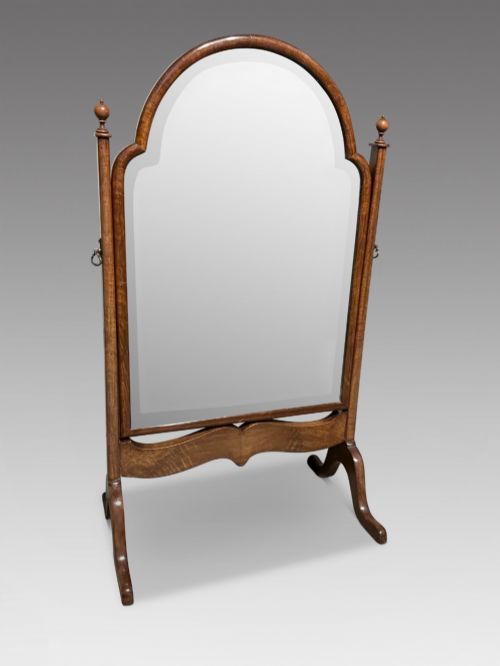
- A full-length mirror hung in a frame that allows it to swing. These tall glasses often stand on floor supports.
- Toilet mirror
- A smaller mirror designed to sit on a table, chest, or dressing desk. They frequently feature a swing mechanism between upright posts.
- Burr walnut
- A specialised timber cut from growths on walnut trees, prized for swirling grain patterns. Cabinet makers utilised these veneers for decorative surfaces.
- Marquetry
- Decorative inlay work using various wood veneers to create pictorial patterns. Dutch examples often display floral marquetry.
- Bureau fitment
- A small desk section with drawers and pigeonholes incorporated into the base of a mirror stand. This combines writing facilities with a dressing glass.
Brown Walnut Dressing Mirror: Frequently Asked Questions
What is the difference between a toilet mirror and a cheval mirror?
A toilet mirror is designed for tabletop placement, usually featuring a swing glass mounted on a small frame or chest base.
A cheval mirror stands directly on the floor, providing a full-length reflection within an adjustable frame.
How do I identify an 18th century walnut dressing mirror?
Eighteenth-century examples typically display Queen Anne or George II styling, characterised by shaped mirror plates, figured walnut veneers, and candle slides or small drawer bases.
Construction details often include traditional hand-cut joinery and period hardware without modern fixings.
Where should I place a dressing mirror in a bedroom?
These mirrors suit placement on dressing tables, chests of drawers, or directly on the floor depending on whether the piece is a table-top swing glass or a cheval format.
Positioning them near natural light sources enhances their reflective utility while displaying the timber grain.
What styles are available in walnut dressing mirrors?
The selection encompasses Queen Anne, Georgian, Victorian, Edwardian, and Art Deco styles, alongside revival pieces from later periods.
Variations include marquetry decoration, barley twist supports, and integrated bureau compartments.